 Города и дороги
Description
Gateway to the Turkish Riviera — beaches, the old quarter of Kaleiçi and the ski slopes of the Taurus mountains.
Wiki
Antalya is the largest city on Turkey's Mediterranean coast and the unofficial capital of the Turkish Riviera. Spread out at the foot of the Taurus mountains along the bay, it combines the legacy of ancient civilisations, the feel of an eastern port and a resort infrastructure that serves millions of visitors a year.
Overview and climate
The city and its metropolitan area are home to around 2.5 million people, and Antalya province is one of the most visited parts of the country. The climate is Mediterranean: hot dry summers and mild rainy winters. The sun shines almost 300 days a year, and the swimming season runs from May to October, when the water reaches +26…+28 °C. What makes the region unusual is that the snow-capped peaks of the Taurus are less than an hour from the coast, so you can ski in winter and swim in summer.
Kaleiçi, the old town
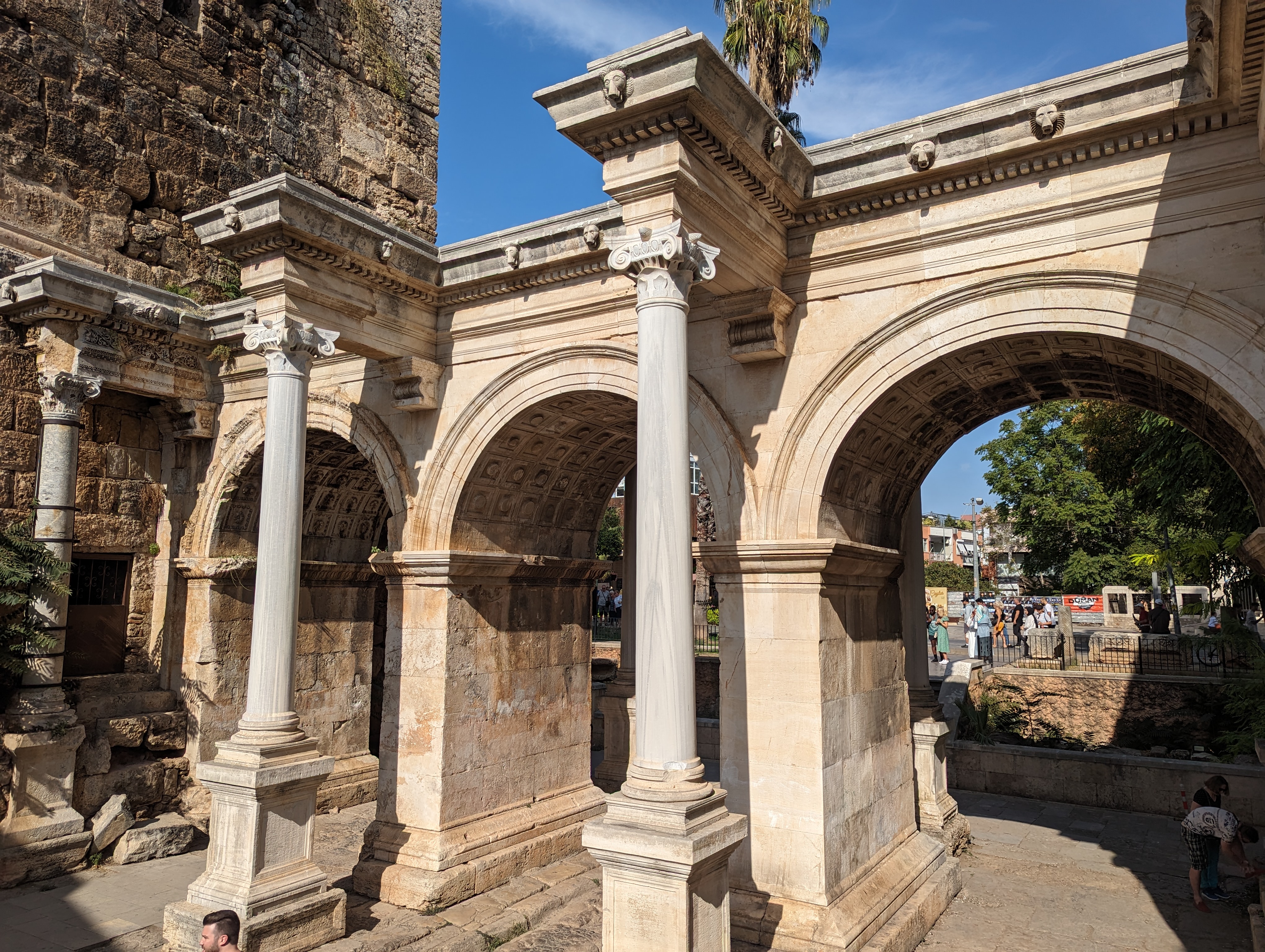
The heart of the city is Kaleiçi, the old quarter inside the ancient walls. Its maze of cobbled lanes holds layers of the Hellenistic, Roman, Byzantine and Ottoman eras. Restored nineteenth-century wooden mansions stand here alongside small mosques and a snug yacht harbour. Antalya's emblem is Hadrian's Gate (2nd century AD), a three-arched marble passage raised for the visit of the Roman emperor. Nearby rise the fluted Yivli Minaret, a fine piece of Seljuk architecture, and the Hıdırlık Tower, which served as both lighthouse and fortification. A walk through Kaleiçi takes a few hours and leads naturally to the viewpoints above the sea.
Beaches and nature
- Konyaaltı — a pebble beach several kilometres long west of the centre, with a striking mountain panorama on the horizon.
- Lara — a sandy strip to the east, where the large all-inclusive hotel complexes are concentrated.
- Upper and Lower Düden waterfalls — the Düden river forms rapids in the city park and then drops straight into the sea from a rocky cliff.
- Köprülü Canyon and Kurşunlu waterfall — pockets of nature just outside town, popular for rafting and walking.
Museums and culture
The Antalya Archaeological Museum is considered one of the richest in Turkey: its halls are filled with statues, sarcophagi and mosaics unearthed at Perge, Aspendos and Side, including the famous gallery of Roman gods. City life centres on Republic Square, the palm-lined boulevards and the quarters where tea houses sit next to craft shops. In summer the ancient theatre at Aspendos hosts an international opera and ballet festival.
Food
Local cooking blends Mediterranean and Anatolian traditions. Try the fresh fish and seafood, köfte, an array of meze, and gözleme and pide flatbreads. Meals end with baklava, Turkish delight and strong tea served in tulip-shaped glasses. The markets overflow with citrus, pomegranates, olives and spices.
Day trips
- Aspendos (about 50 km) — a 2nd-century theatre, among the best preserved anywhere, which seated up to 15,000 and retains almost untouched acoustics.
- Perge (about 18 km) — extensive ruins with colonnaded streets, gates, an agora and a stadium.
- Side — a seaside town where the Temple of Apollo stands right at the water's edge.
- Pamukkale (about 3 hours away) — snow-white travertine terraces and the ruins of ancient Hierapolis, a UNESCO World Heritage Site.
- Olympos and the Chimaera — an ancient city in a pine forest and the natural flames that break from the mountainside.
Practical information
Antalya's international airport takes a great many direct flights, especially in high season. Havaş shuttle buses and taxis run from the airport to the centre, and a modern tram serves the city. A good five-day plan covers Kaleiçi and the museum, time on Konyaaltı and Lara beaches, and trips out to Aspendos, Perge and Pamukkale. The currency is the Turkish lira; cards are widely accepted in tourist areas, but it is worth carrying some cash for markets and transport.