
Bosnia and Herzegovina
A Balkan gem where East meets West quite literally: in Sarajevo, mosques stand beside Orthodox churches and Catholic cathedrals. One of the most affordable countries in Europe, with superb landscapes, Ottoman and Austro-Hungarian architecture, wonderful food and welcoming people. Traces of the 1990s war are still visible, and they are part of what makes the country feel so real.
Where to go
#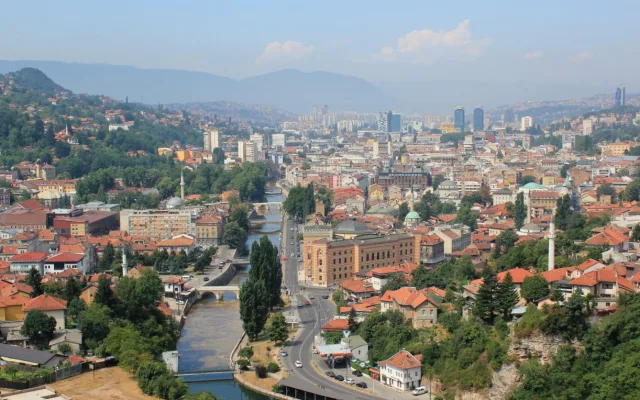
Sarajevo
Sarajevo is the multicultural capital of Bosnia and Herzegovina, where mosques and Orthodox cathedrals stand side by side on the same street, representing a unique fusion of Eastern and Western traditions.
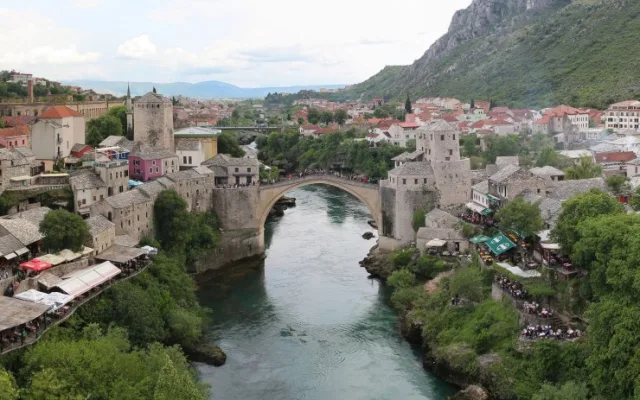
Mostar
Mostar is known for its legendary Stari Most (Old Bridge) spanning the Neretva River. The city also preserves the Ottoman quarter of Kujundžiluk.
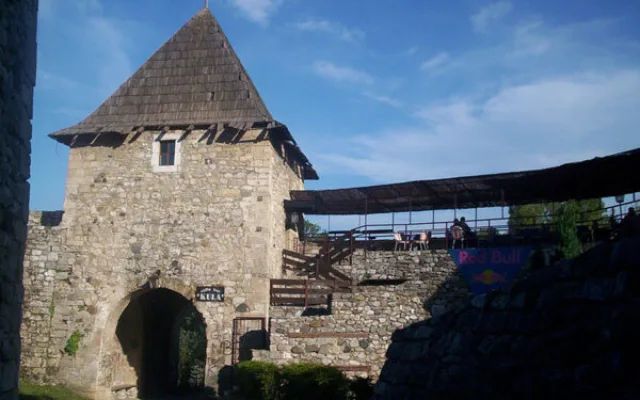
Banja Luka
Banja Luka — the capital of Republika Srpska, known for its Kastel fortress, whitewater rafting on the Vrbas river, and leafy parks.
What to see
#The Old Bridge in Mostar is the undisputed headline act, and where you watch divers take the plunge for tips from the crowd below.
Bascarsija in Sarajevo feels like Istanbul, with coppersmiths hammering in their workshops and the smell of coffee everywhere.
Kravica waterfall in the south is a huge natural amphitheatre, and one of the few big falls anywhere you are actually allowed to swim in.
Blagaj tekke is the easy day trip from Mostar, worth it for the sight of a whole river appearing from under a cliff.
The war tunnel under Sarajevo airport tells the story of the three-year siege of the city better than any museum text could.
The bobsleigh track on Mount Trebevic has turned into an enormous open-air artwork, every metre of concrete covered in graffiti.
Wine around Trebinje. Dozens of small family wineries in the surrounding hills run tastings of the local grape varieties, and most of them want no booking.
Prices
#Currency: the convertible mark (BAM) is pegged to the euro, so prices convert in your head without effort and the rate never moves.
Cards: Visa and Mastercard are accepted in hotels, larger restaurants and supermarkets in the cities. Amex is rarely useful anywhere in the country.
Cash rules here. Taxis, bakeries, bus tickets, market stalls and most guesthouses take marks in cash only. Draw money at a bank ATM and never assume a card will be enough.
Exchange: euros change everywhere at the fixed rate, so bring them rather than dollars. Bank branches and official exchange offices are the safe options, and the ones charging no commission are worth looking for.
Tipping: round up or leave about 10% for good service, in cash, since the card terminal usually offers no way to add it.
| Item | Price (USD) |
|---|---|
| Coffee | 2.50 |
| Cevapi | 7.00 |
| Burek | 3.00 |
| Beer | 2.50 |
| Tram ticket | 1.00 |
| Lunch | 25.00 |
| Bottle of wine | 8.00 |
| Fridge magnet | 2.00 |
| Taxi ride | 5.00 |
| Museum entry | 4.00 |
| Train ticket | 8.00 |
| Water | 0.80 |
| Dinner | 18.00 |
| Hotel room | 45.00 |
Getting around
#Getting there. Sarajevo takes budget flights from Istanbul with Pegasus and AJet, plus European low-cost links, and Tuzla airport is another cheap entry point. Many travellers instead fly to Dubrovnik or Split in Croatia and drive across, which takes a few hours and gives you the coast as a bonus.
Trains. The Sarajevo to Mostar line is one of the loveliest in Europe, running through canyons and over mountain viaducts. It goes twice a day.
Buses. Comfortable coaches connect the cities, with tickets sold at station counters for cash marks.
Luggage. Expect to hand the driver 1 to 2 marks for each bag that goes in the hold; it is normal and not a scam.
City transport. Sarajevo runs modern trams and trolleybuses, with tickets from the driver or from kiosks.
Taxis. Apps such as MojTaxi work well in the cities, while in Trebinje cars wait at designated ranks instead.
Car hire. For the waterfalls a car is much the best answer, and the local police do formally require an International Driving Permit alongside your licence.
Roads. There are several toll sections on the main routes, but they cost little and save real time.
Where to stay
#Guesthouses. Family-run places are the most characterful option, and the hosts will very often press coffee on you before you have unpacked.
Sarajevo districts. For history, look for a room in Bascarsija; for comfort and parking, the newer centre works better.
Mostar old town. Plenty of atmospheric Ottoman-style hotels, though in summer the music from the bars carries well into the night.
Heating. In private rentals winter heating is often weak, so confirm that there are heaters before you book a cold-season trip.
Parking. Streets in the old centres are extremely narrow and finding a space is a genuine quest if you are driving.
Registration. Every foreign visitor must be registered with the authorities within 48 hours of arrival. Hotels do it automatically, but if you rent a private apartment, make the owner take you to register or handle the paperwork, because the fine on departure can reach several hundred euros.
Booking. The usual international platforms all work here, and small guesthouses often answer email or WhatsApp faster than they update their listings.
What to eat
#Cevapi. The national dish: small grilled beef sausages served in soft somun bread with raw onion and a bowl of kajmak.
Burek. A work of art in paper-thin pastry, filled with meat, cheese or spinach, sold in dedicated bakeries that do nothing else.
Smoking. People smoke almost everywhere in the Balkans, and finding a non-smoking room in a traditional place can be difficult.
Coffee. Bosnian coffee is brewed in a copper dzezva and served with a cube of Turkish delight. Drinking it fast misses the entire point.
Meat. Spit-roasted lamb, called pecenje, is adored here and cooked expertly at roadside restaurants outside the towns.
Drinks. Try the local Zilavka and Vranac wines, and the fruit rakija that comes in every conceivable variety.
Sweets. Turkish influence shows in the volume of baklava and tulumba, both made very sweet and very syrupy.
Safety
#Landmines. The country's one genuine peculiarity is that mined ground remains in rural areas, so never step off surfaced roads and marked paths.
Warning signs. The red "Pazi Mine" skull signs are not decoration. Going past a barrier or into an abandoned building can kill you.
Cities. Pickpockets work the tourist areas of Sarajevo and Mostar, so watch your bag in crowds and on trams.
Hiking. Use marked trails only, and take a licensed mountain guide for anything ambitious.
Driving. Local drivers are aggressive and the mountain switchbacks demand full concentration and some skill.
Wildlife. Bears and snakes live in the remote forests, though staying on the trails makes an encounter very unlikely.
Demonstrations. Protests happen in the capital. They are usually peaceful but can shut down traffic for hours, so check before a transfer.
Etiquette and culture
#Hospitality. Bosnians are among the warmest people in Europe and will genuinely go out of their way to point you to a street or a cafe.
Religion. Mosques, Orthodox and Catholic churches coexist peacefully and produce a cultural landscape you find almost nowhere else.
Etiquette. Take your shoes off entering a mosque or a private home unless your hosts say otherwise.
Merak. The local philosophy of savouring the moment, which licenses sitting for hours over one coffee watching the world go past.
Conversation. Avoid politics and the details of the 1990s war. The wound has not healed and it is not yours to prod.
Holidays. Religious dates are marked seriously, and government offices frequently close around them.
Pace. Nobody hurries. Restaurant service will feel slow if you come from somewhere brisk, and getting annoyed will not speed anything up.
English. Younger people in the cities and hotel staff speak it well; in villages, gestures and goodwill fill the gap.
Connectivity
#Language. Bosnian, Croatian and Serbian are near-identical in practice, so any phrasebook for one covers the others and most menus.
Internet. City centres have free Wi-Fi, and in cafes the password is usually printed on your receipt or propped up on the table.
SIM cards. For a longer trip buy a local m:tel or BH Telecom SIM; tourist bundles are sold in ordinary newspaper kiosks.
Roaming. Bosnia is outside the EU, so an EU phone plan will charge you extra here. Check the daily cap or buy local data instead.
eSIM. An eSIM from Airalo or a similar provider covers the country and is the fastest option for a short visit.
Gestures. Bosnians are expressive, talk with their hands and enjoy long, unhurried conversations with people they have just met.
Slang. You will hear "hajde" constantly, meaning come on or let's go, applied to almost any situation.
Politeness. Opening with "dobar dan" instead of English opens doors and noticeably improves how you are treated.
Phrasebook
#| English | Bosnian | Pronunciation |
|---|---|---|
| Good day | Dobar dan | DO-bar dan |
| Thank you | Hvala | HVA-la |
| Please | Molim | MO-lim |
| Yes / No | Da / Ne | da / neh |
| Sorry, excuse me | Izvinite | iz-vi-NEE-teh |
| Where is...? | Gdje je...? | g-dyeh yeh? |
| How much is it? | Koliko košta? | KO-li-ko KOSH-ta? |
| The bill, please | Račun, molim | RA-choon, MO-lim |
| Help | Pomoć | PO-moch |
| Water | Voda | VO-da |
| Beer | Pivo | PEE-vo |
| Tasty | Ukusno | OO-koos-no |
| Good | Dobro | DO-bro |
| No problem | Nema problema | NEH-ma pro-BLEH-ma |
| Coffee | Kafa | KA-fa |
| Goodbye | Doviđenja | do-vee-JEH-nya |
| One / Two | Jedan / Dva | YEH-dan / dva |
| Slowly, take it easy | Polako | po-LA-ko (slang) |
| Deep pleasure, a treat | Ćejf | chayf (slang) |
| Mate, buddy | Jarane | ya-RA-neh (slang) |
| Come on, let's go! | Hajde! | HIGH-deh! (slang) |
| Shop | Prodavnica | pro-DAV-nee-tsa |
Good to know
#Tap water. It is clean and drinkable in the towns, and refilling a bottle from the tap is entirely normal.
Registration. Remember the 48-hour rule for foreign visitors. Hotels handle it; private landlords sometimes forget, and the fine falls on you at the border.
Footwear. For the cobbles of Mostar and Sarajevo pick shoes with a thick sole, since thin canvas trainers are punishing.
At the tekke. Women are handed a skirt and headscarf at the entrance in Blagaj, so there is no need to carry your own around all day.
Power sockets. Standard European type C and F at 230 volts. Travellers from the UK, US or Australia need an adapter.
Crossing the border. Driving in from a neighbouring country, check that the hire company has given you a valid green card insurance document.
Weather. Mountain weather turns quickly, so carry a light jacket even in summer for evening walks and viewpoints.
Frequently asked questions
#Many Western passports enter visa-free for short stays, and holders of a valid Schengen visa are generally admitted too, but check your own passport's rules before booking. Your passport should be valid three months beyond departure.
The easiest route is a budget flight into Sarajevo, often via Istanbul, with Tuzla as a cheaper alternative airport. Flying to Dubrovnik or Split in Croatia and driving across the border also works well.
Broadly yes, with very low violent crime. The two things to respect are landmines in rural areas and the demands of mountain driving.
Cards work in hotels, supermarkets and larger restaurants, but this is a cash country in daily life. Keep marks on you for taxis, bakeries, buses and small guesthouses.
Start in Sarajevo, which connects to everywhere else by bus and train. Mostar deserves a couple of nights of its own for the Herzegovina region around it.
Any bank branch or official exchange office. The mark is fixed against the euro, so the only variable is commission, and plenty of places charge none.
Yes. Intercity buses are frequent and comfortable and the Sarajevo to Mostar train runs twice daily. Only remote nature parks and waterfalls are awkward without your own wheels.
Yes. The Olympic centres at Jahorina and Bjelasnica have good runs and modern lifts within easy reach of the capital, and both lift passes and accommodation cost far less than in the Alps.
Yes, but with restrictions. Registration is mandatory for drones from 250 g — lighter models can fly without it. You also need to pass a test and hold a pilot certificate. Rules are aligned with EASA: operator registration from 250 g and for any drone with a camera, plus the online test. National regulators word this differently — check the local authority before you travel. Rules for other countries are in the drone ranking by country.
Updated
The data on this page goes out of date. Visa rules and permitted stays, border requirements, prices and budgets, transport and local conditions all change fast, and we do not re-check every page every day. We show the date of our last check where we have one, but before you travel, verify with official sources: the country’s consulate, its immigration service, its e-visa portal and your carrier.