 Города и дороги
Description
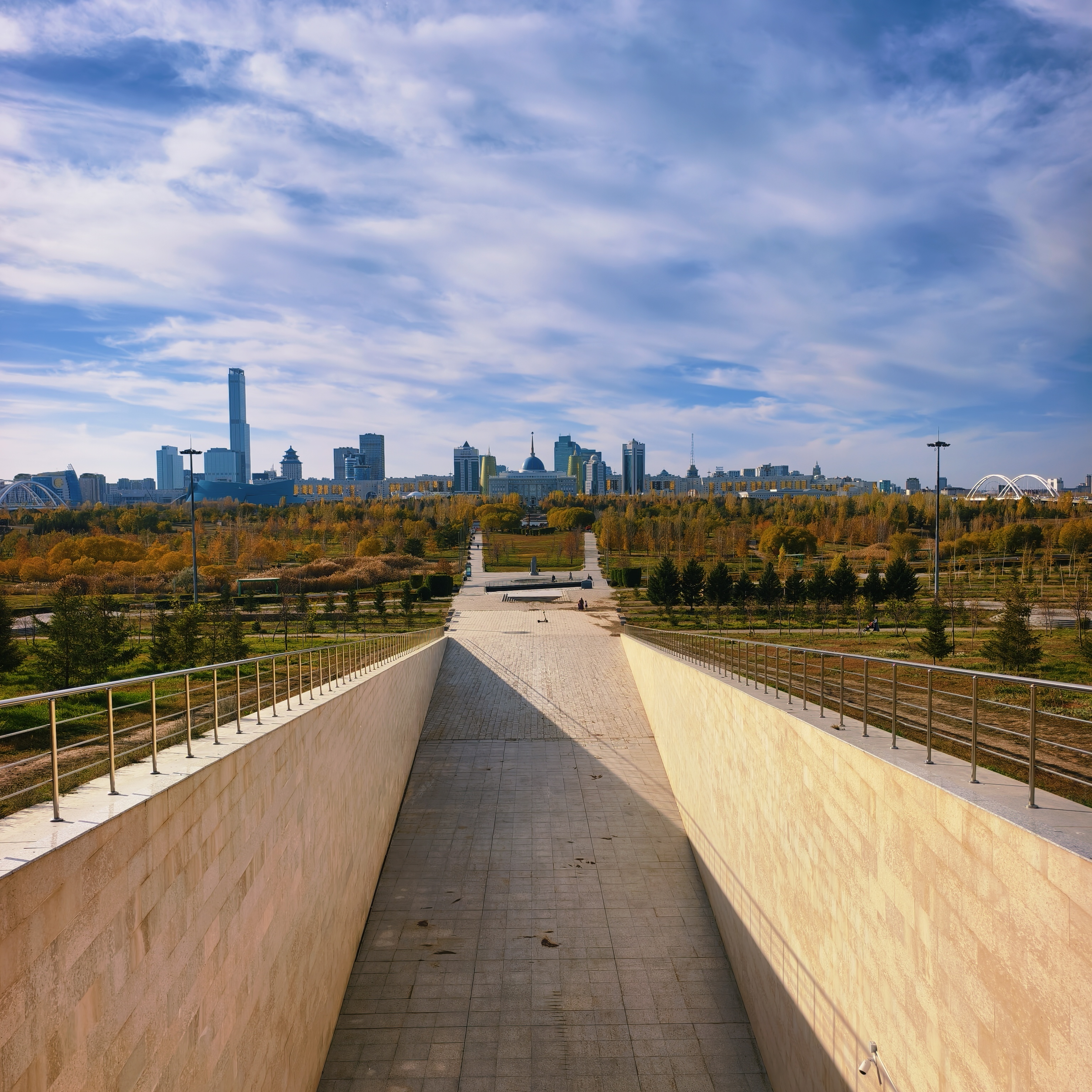
A capital invented and built from nothing on the bare steppe: Bayterek, Khan Shatyr and a parade axis of glass towers.
Wiki
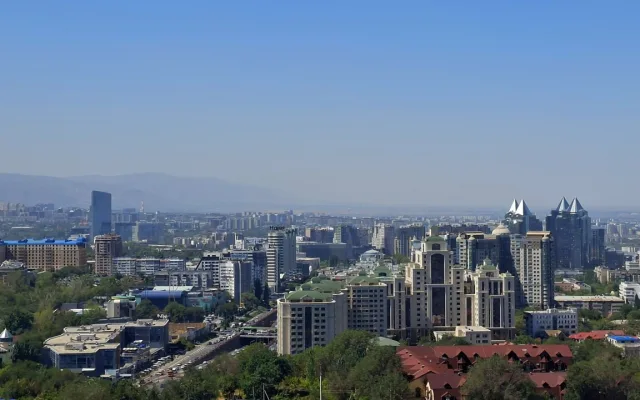
Astana is that rare thing, a capital conceived and built from scratch on empty steppe, so what you come to see is not antiquity but ambition: how a manifesto of a city was grown out of nothing in a couple of decades. Two days is enough for everything that matters, as long as you grasp that the distances here are enormous and "the centre" is a loose idea.
How the city works
Astana is split by the Ishim river (Esil in Kazakh). The left bank holds the new administrative centre: Bayterek, Khan Shatyr, the government buildings and the ceremonial axis of avenues. The right bank is the old Tselinograd and Akmola — livelier, more lived-in, with ordinary districts, markets and normal city life.
The thing to understand in advance is that this is not a comfortable city to walk. The avenues were laid out for cars and ceremonial photographs, not for pedestrians: a single block can run for a kilometre, there is almost no shade, and the steppe wind never stops. The sights are far apart, and between them you take public transport or a taxi.
What to see in two days
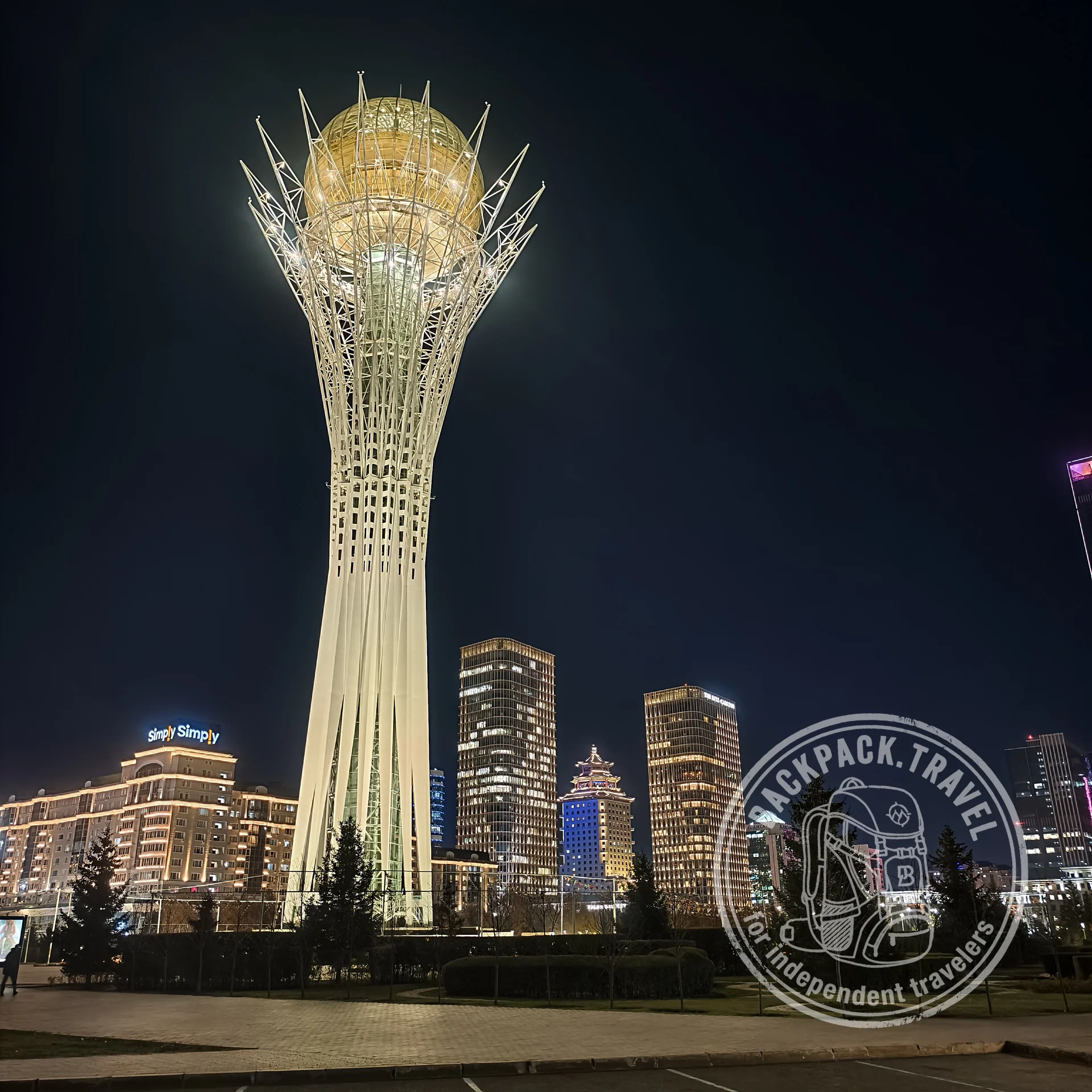
- Bayterek — an obligatory stop, though the value is not the tower itself but the view from the observation deck: from up there the plan of the city and the symmetry of the left bank finally make sense.
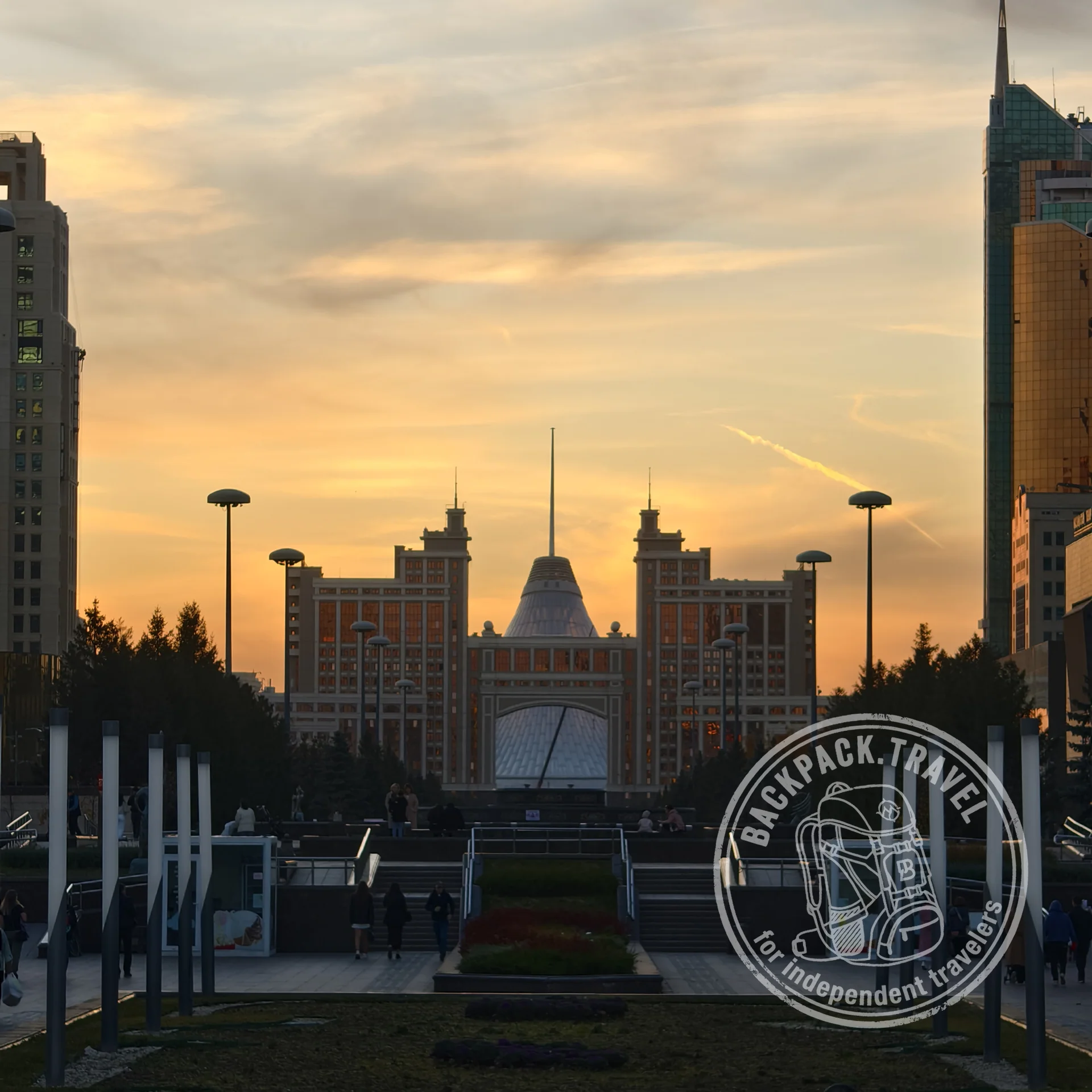
- Khan Shatyr — worth going into even if you have no interest in shopping. It is Norman Foster's giant tent, warm all year round, and a good place to sit out either the heat or the cold.
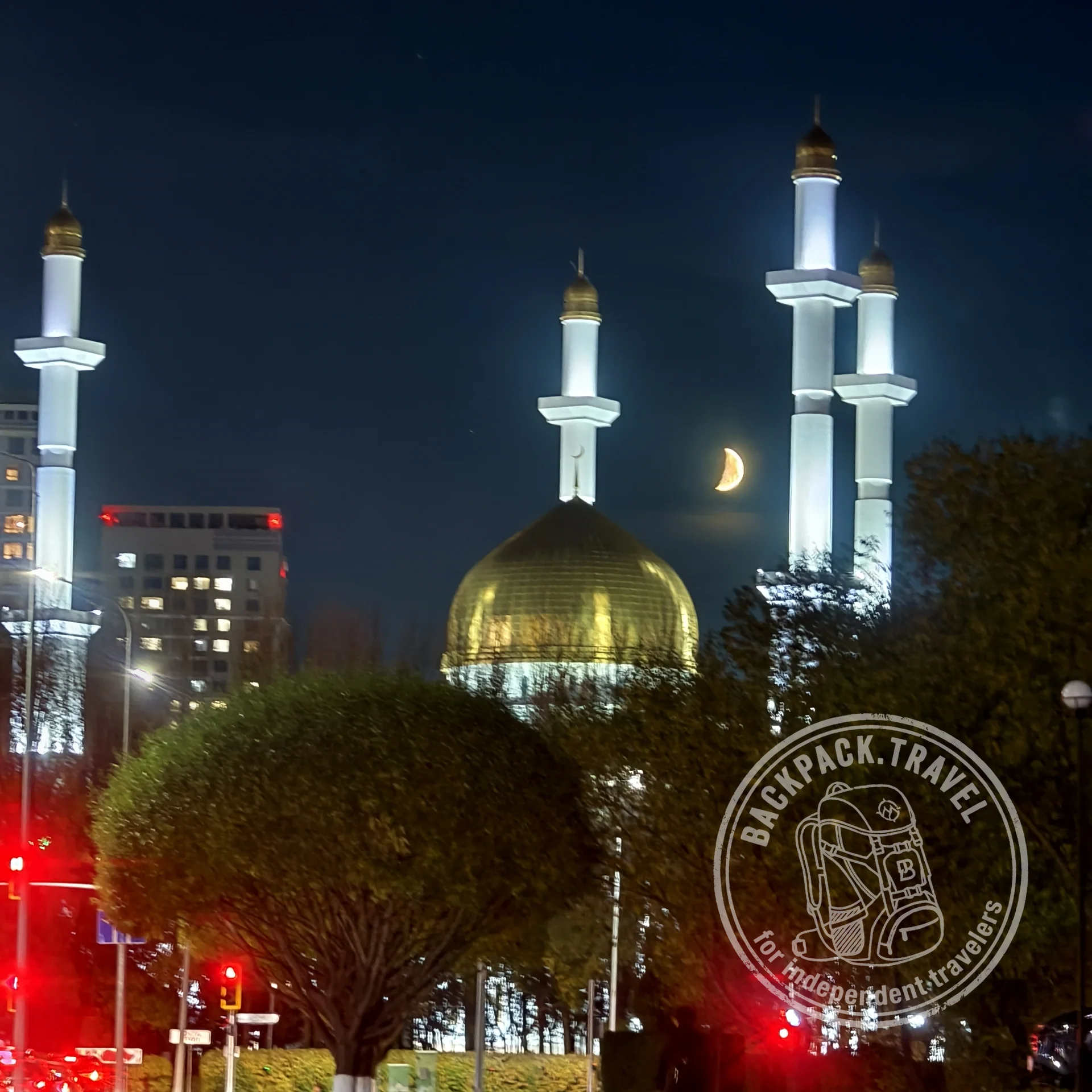
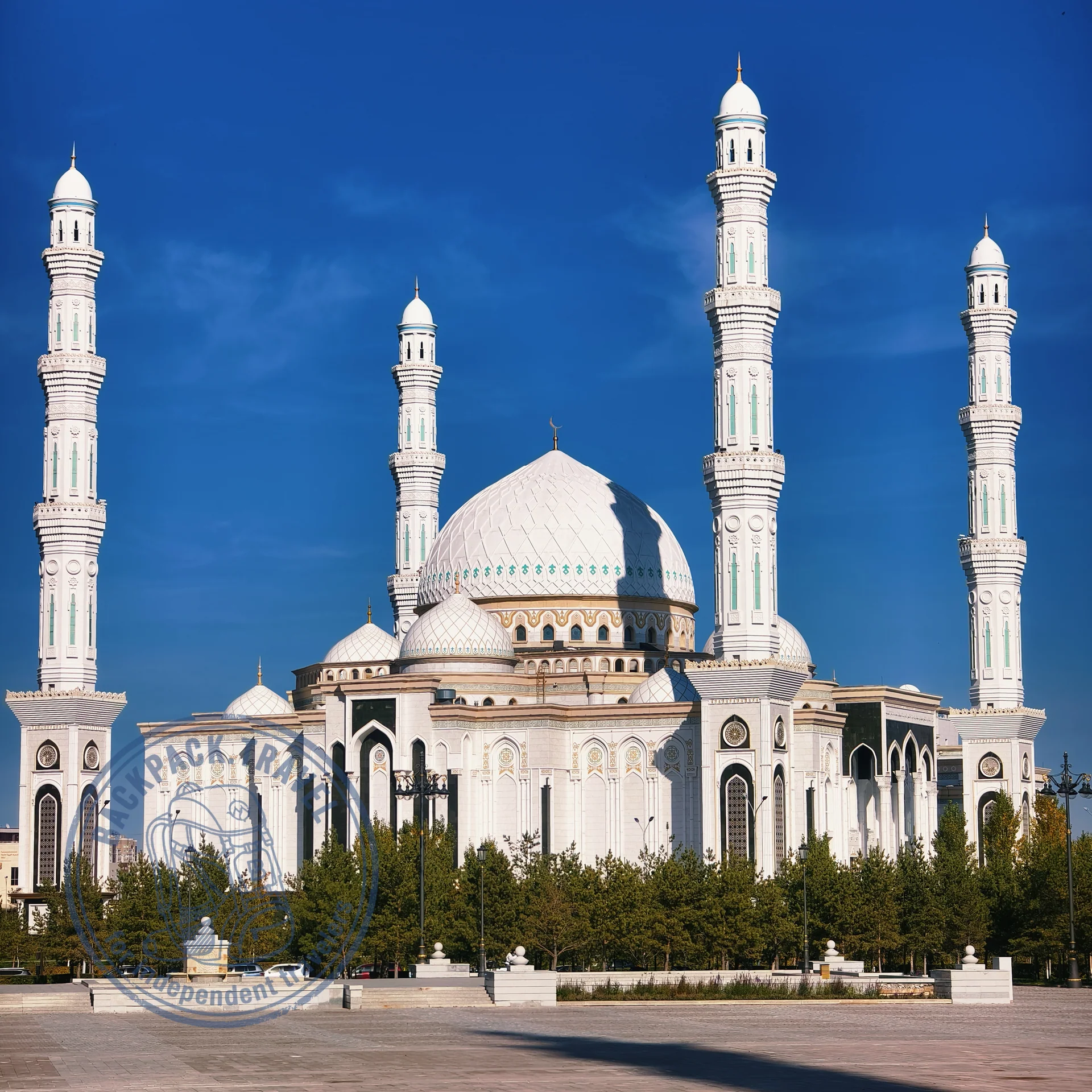
- The Hazrat Sultan Mosque and, on the same axis, the Palace of Peace and Reconciliation (the glass pyramid) — they stand close together and can be done in one go.
- Nur Alem — the EXPO sphere. Interesting for the architecture and the view from the upper floors; the "future" exhibition is a matter of taste.
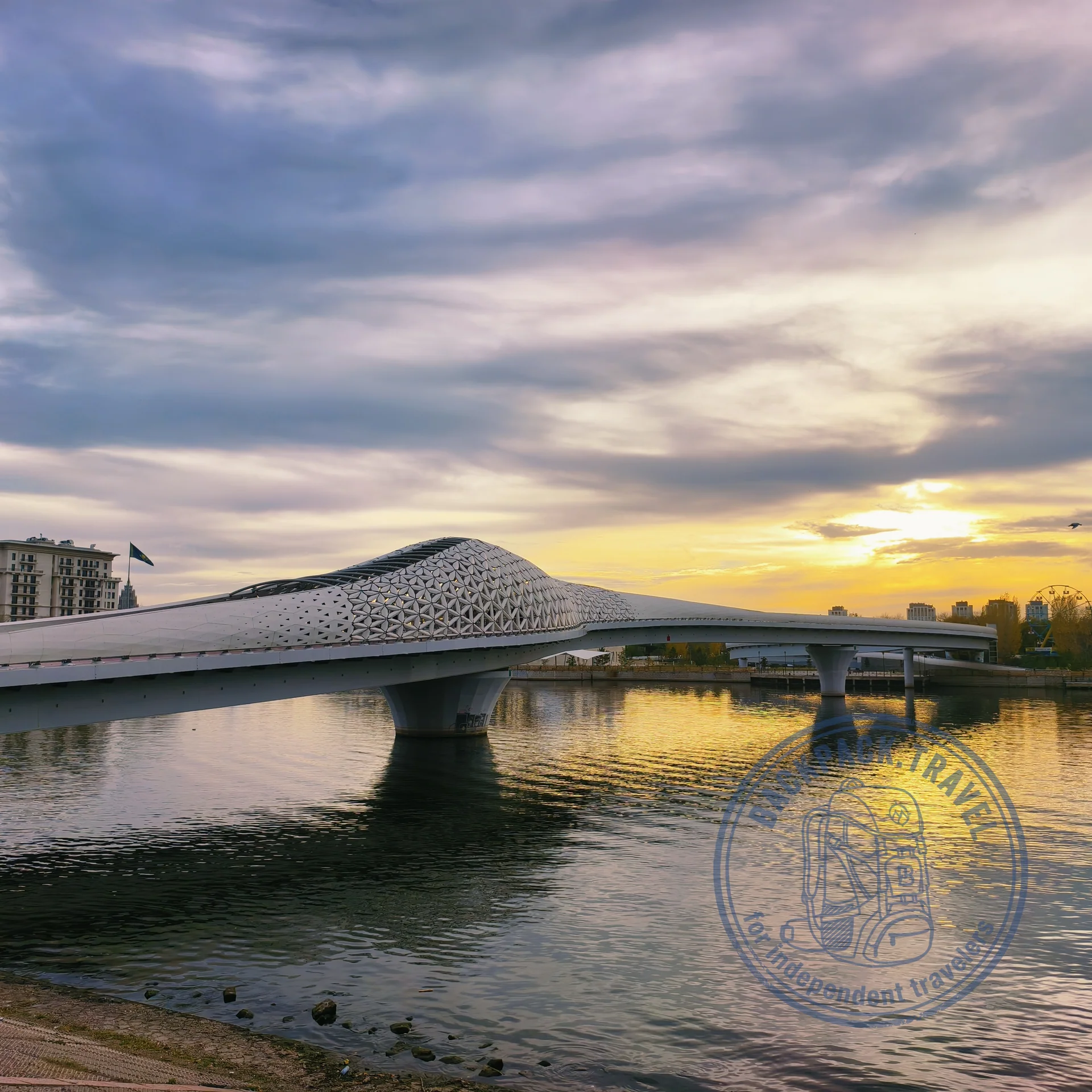
- The Ishim embankment — one of the few places where it is simply pleasant to walk in the evening, especially at sunset.
A sensible first day is the whole left-bank axis (Bayterek → mosque → Khan Shatyr). The second day is the right bank and the embankment, to see that Astana is more than ceremonial scenery.
One thing that helps: most of the headline buildings are strung out along a single straight line. You are not criss-crossing the city, just moving along the axis.
Where to stay
The obvious choice is the left bank, near Bayterek and Mangilik El Avenue: everything important is a walk or a short ride away. If you want cheaper and livelier, take the right bank, but budget for the travel time. Accommodation is inexpensive for a capital; there are few hostels, but plenty of decent flats and hotels.
Transport
From Nursultan Nazarbayev Airport (NQZ) into the centre, take a taxi through Yandex Go (fast and cheap) or the city bus if you are counting every tenge. Around town Yandex Go is the backbone: cheap and it covers everything. Buses and the BRT run well enough, but the routes take some working out as a visitor; you pay by card or app.
Hiring a car only makes sense if you plan trips out of town — within Astana itself a car is more burden than help, given the parking and the distances.
Food and prices
Astana feels inexpensive for a traveller. The budget option is the canteens, ashkana in Kazakh: a filling home-cooked lunch for very little. Do try beshbarmak, manty, plov and baursaki; kumys and shubat are an acquired taste. The coffee scene is surprisingly good, with plenty of speciality places in the new centre.
One tip: restaurants next to the main sights are pricier and more touristy. Walk a block or two away, or cross to the right bank, where it is cheaper and more genuine.
When to go
- May to September is the only genuinely comfortable window: warm, with very long daylight and near-midnight dusk in June.
- Winter is an ordeal: down to −30 to −35 °C with wind. You can still come, and the city is built for it (heated malls, Khan Shatyr, indoor walkways), but outdoor sightseeing becomes a series of dashes between buildings.
- The shoulder seasons are deceptive: the steppe wind makes even +5 °C feel considerably colder.
Common mistakes
- Underestimating the distances and expecting to walk everything — you will end up exhausted and either frozen or overheated.
- Allowing too many days: ceremonial Astana can be seen in two, after which it starts to repeat itself.
- Arriving in winter without serious clothing — the cold here does not forgive ordinary city coats.
- Judging the city by the left bank alone: without the right bank the impression is a postcard, and an incomplete one.
In short
Astana is not about depth or history but about scale and experiment: worth seeing once, to understand what a capital built as a statement looks like. Two days, a base near Bayterek, Yandex Go to get around and lunch in the canteens, and the city opens up without costing much.