Description
One of the oldest continuously inhabited capitals in South America, with an affordable way of life, a colonial waterfront, and warm locals.
Wiki
Asunción is a rare capital where Latin America feels unvarnished and free of tourist mark-up: the city is slow, cheap, and unpretentiously welcoming. Two days are enough to walk the historic centre on foot, sit with a tereré on the waterfront, and understand why independent travellers come here at all — usually en route to Iguazú, the Jesuit missions, or north to the Pantanal.
What's actually worth seeing
The historic centre is compact — all the key spots can be covered on foot in half a day.
- Casa de la Independencia — a small colonial house, entry is usually free or a token fee; interesting not for its scale but because it is literally the birthplace of the country. Allow 20–30 minutes.
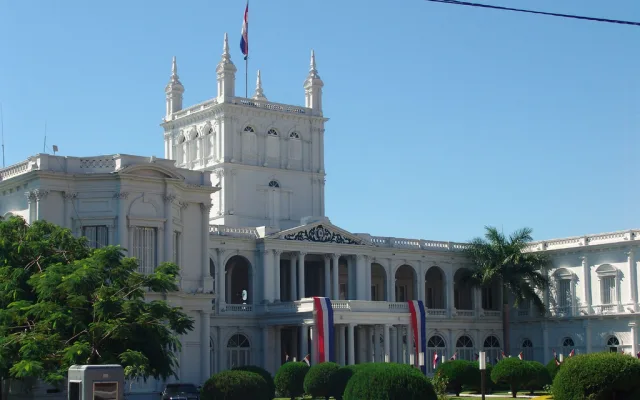
- Palacio de los López — most impressive from outside in the evening when lit up; no entry (it's the working presidential residence). Great for photos from the water or from the waterfront.
- Panteón de los Héroes — stands on the central square next to the pedestrian streets, easy to combine with a stroll.
- Mercado 4 — come here not for souvenirs but to see the real city: stalls with fruit, herbs for tereré, spices, and cheap food. Keep your belongings close and don't flash your camera or phone unnecessarily.
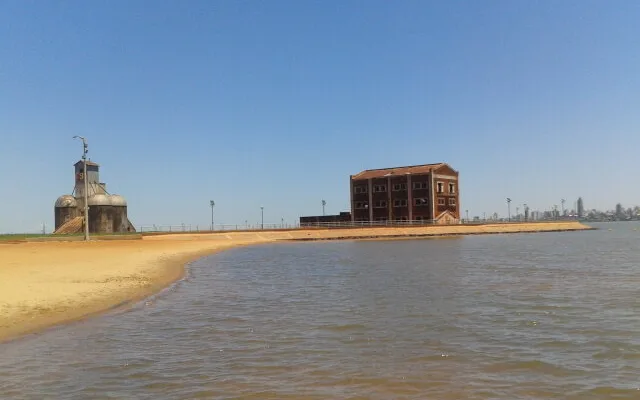
- Costanera — the waterfront is an evening destination: sunset over the river, locals with flasks, air cooling after the day's heat. Nothing much to do there in the midday heat.
Honestly: there aren't many postcard views in Asunción, and that's fine. The city's value lies in its atmosphere and prices, not in a must-see checklist. One full day covering the centre and the market takes care of the essentials.
Getting there and getting around
Silvio Pettirossi Airport (ASU) is ~15 km to the northeast. The cheapest option is Uber/Bolt — both work and are noticeably cheaper than street taxis; book in the app to avoid haggling. City buses run from the airport too, but with luggage and no local knowledge that's really for the seasoned traveller.
Within the city:
- Uber/Bolt — the main option; prices are low and it's easier than hailing a cab.
- Buses — very cheap, but you need small change or a Jaha card, routes aren't obvious, and the buses themselves are old and run without a fixed timetable. For a couple of days it's simpler not to bother.
- On foot — the centre is small, but pavements are uneven and walking in the heat is brutal; plan outings for the morning and evening.
The intercity bus terminal (Terminal de Ómnibus) is where you catch buses around the country and to neighbouring countries. Encarnación is about 5 hours away; Ciudad del Este (the border crossing to Brazil and Argentina, and the gateway to Iguazú) is also reachable by bus.
Where to stay and how many days
- Centro Histórico — everything is within walking distance and there's plenty of budget accommodation, but streets empty out in the evening and some blocks look run-down. Convenient in the day; avoid aimless wandering at night.
- Villa Morra / Las Mercedes — modern districts with cafés, shopping centres, and a safer feel in the evenings; further from the sights but more comfortable for overnighting. A good compromise if you're using Uber.
Two days is the sweet spot. One day for the centre and market, the second for the waterfront, cafés, and a slower pace — or as a buffer before moving on. Asunción rarely calls for more than two days.
Food, money and prices
The city is genuinely cheap by the standards of a continental capital. Make a point of trying chipa (sold literally everywhere, including on buses), sopa paraguaya, and asado at a local parrilla. Tereré is not a tourist attraction — it's a way of life: locals carry a flask and bombilla all day long, and it's the best way to get through the heat.
Money practicalities:
- The currency is the guaraní; notes carry a lot of zeros — keep small denominations handy for the market, buses, and street food.
- Cards are accepted in shopping centres and restaurants in Villa Morra, but at the market and in small places it's cash only.
- The savings are obvious: eat at parrillas and the market rather than mid-range restaurants; the price difference is substantial.
When to go and safety
The best time is April to October: bearable temperatures and drier weather. Summer (December–February) brings fierce heat and high humidity — walking around in the middle of the day is nearly impossible, so plan everything for early morning and after sunset.
Safety follows the standard pattern for a large Latin American city: pickpockets at markets and in crowds, avoid displaying electronics and jewellery, and take Uber at night rather than walking through empty blocks in the centre. Stick to bottled water. Paraguayans are generally friendly and relaxed — aggression towards tourists is rare, and the language barrier (Spanish plus Guaraní) is easily managed with basic Spanish and a phone.
A common mistake is arriving in Asunción expecting a showcase city full of landmarks and leaving disappointed. The right mindset: this is a quiet, cheap, lively base for a couple of days and a convenient point on a Paraguay itinerary — not a destination in itself.