Bishkek
KyrgyzstanDescription
The Kyrgyz capital and the main staging post for the Tien Shan: Ala-Too Square, Osh Bazaar and Ala-Archa National Park an hour away.
Wiki
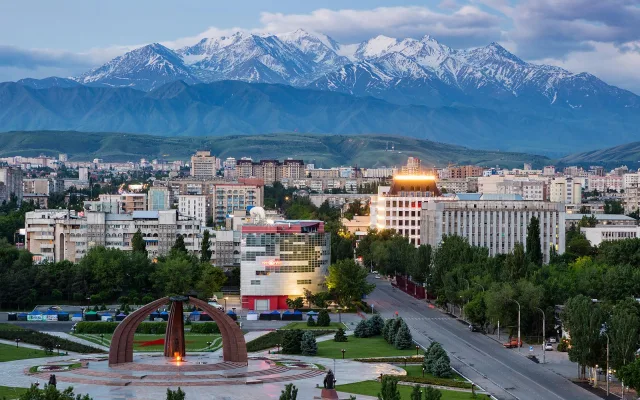
The Kyrgyz capital is a rare case where the "gateway to the mountains" is more interesting than the city itself: Bishkek is what you use to acclimatise, stock up and catch a ride into the Tien Shan. Even so, a couple of days here can be filled easily enough between the bazaar, the parks and a first trip into the hills.
Why come, and how long to allow
Bishkek is not a museum city but a convenient logistics hub. People fly in, sleep off the journey, top up their gear and food, and find transport to Issyk-Kul, Ala-Archa or Karakol. Two days is plenty: one for an unhurried look at the centre and the bazaar, one for an excursion to Ala-Archa National Park. If you are heading straight into the mountains, you can skip through Bishkek in a day and save the best of it for the way back.
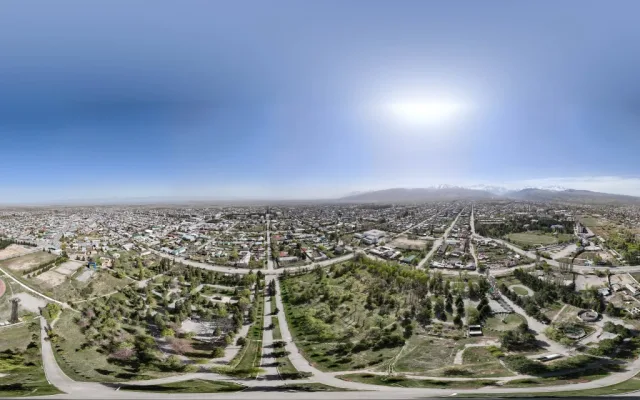
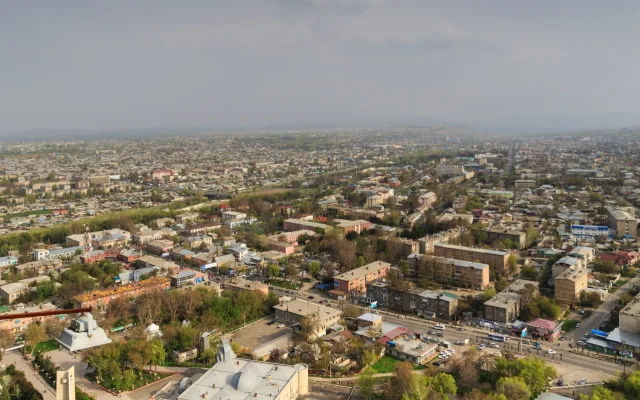
The layout is Soviet and logical: wide straight avenues, blocks at right angles, a lot of shade from the trees. The centre is compact — you can genuinely walk from Ala-Too Square to Osh Bazaar.
What to see
- Ala-Too Square — the heart of the city, with the statue of Manas and the flagpole with its honour guard. The changing of the guard is short but worth catching; times are posted locally.
- Osh Bazaar — the thing to get up early for. Not a souvenir stall but a working market: loose spices, kurut (dried salted curd balls), chuchuk horse sausage, knives, felt kalpak hats. A good place to buy dried fruit and nuts for the road and to price up gear.
- Panfilov Park and Victory Park — shade, benches, old fairground rides. Useful in the heat as a break between walks.
- The National Historical Museum on Ala-Too Square — Kyrgyz history, the Manas epic and nomadic culture; worth an hour if you want context for the region.
- Oak Park (Dubovy Park) next to the centre — a short walk with an open-air artists' market.
The real headline attraction is not in the city but an hour outside it.
Ala-Archa — the reason people come
The national park lies 30–40 km to the south. Tarmac runs to the gate; beyond that there are trails of every grade, from an easy hour along the river to a serious full day up to the Ak-Sai waterfall or the glacier. Without your own car, take a taxi for the day with waiting time, or find people to share with at your hostel — there is no regular public transport all the way to the park. There is an entrance fee at the gate. Even in summer it is cool higher up, so carry a layer and water.
Getting there and getting around
Manas Airport (FRU) is 30 km from the city. The cheapest way in is minibus route 380; a taxi costs considerably more, and it is better ordered through Yandex Go than taken from the arrivals door, where you can easily pay two or three times the going rate.
Around town, Yandex Go works well — cheap, reliable, and it takes the negotiation out of the fare — alongside the marshrutkas, where you pay as you get off. The centre is walkable. For the mountains, hiring a car, or a car with a driver for the day, is more practical.
Long-distance minibuses and shared taxis for Issyk-Kul and Karakol leave from the eastern and western bus stations. Come in the morning: they go when they fill up, not to a fixed timetable.
Food
The cooking is hearty and meat-heavy: beshbarmak, lagman, manty, plov, shashlik, samsa. Kurut and kumys are an acquired taste but worth trying once. Canteens and ashkana cafés feed you well and cheaply; a restaurant dinner costs more but is still inexpensive by most travellers' standards. Vegetarians have a harder time — the reliable fallbacks are meat-free lagman, vegetable salads and baked goods.
Money
The currency is the Kyrgyz som, and cash rules: markets and marshrutkas will not take a card. There are ATMs in the centre; withdraw local currency rather than dollars. Bishkek is one of the cheapest capitals in the region — accommodation, food and transport all cost little. The main line in a backpacker's budget is transfers into the mountains, especially travelling alone; find people to share with and it is several times cheaper.
When to go
May to September is the window: warm, dry, and the mountain trails are open. July and August are peak season on Issyk-Kul and in the high country, though Bishkek itself is hot and dusty then. Late May to June and September are ideal — comfortable temperatures and fewer people. In winter (December–March) it is cold, and the city fills with smog from heating, which makes it a poor time for walking around.
Where to stay, and what to watch for
Stay in the centre, around Ala-Too Square and Chuy Avenue: everything is walkable from there and transport is easy to catch. The hostels are cheap and double as an informal exchange for finding people to share mountain trips with.
- Cross the road carefully: drivers give way reluctantly, and in places there are few crossings.
- Pavements are uneven and the irrigation channels along them are open — watch your feet.
- Street food from the bazaar is normal, but pick stalls with turnover.
- Don't flash cash at the market, and haggle calmly — souvenir prices are marked up for visitors.