Description
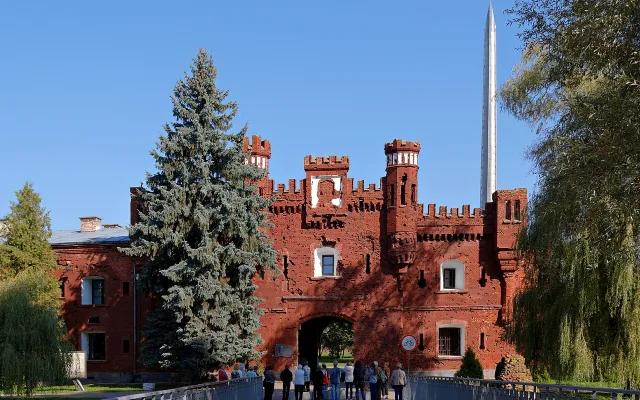
Brest is a city on the border with Poland, known for the Brest Fortress, its World War II memorial complex, and the pedestrianised Sovetskaya Street.
Wiki
Brest is the westernmost city in Belarus, sitting right on the Polish border — for many travellers it is the first or last stop between the EU and the post-Soviet world. It is a small, unhurried place with two main draws: the colossal Brest Fortress and a pleasant old centre built around the pedestrian street of Sovetskaya.
Why come and what to actually see
- Brest Fortress — the main reason people make the trip. This is a vast memorial complex on the site of the June 1941 defence, not a single-room museum. Allow at least half a day: the monumental sculptures ("Courage", "Thirst"), the ruined barracks, the Kholmsky Gate riddled with bullet holes, and the St Nicholas Garrison Church. Entry to the grounds is free; individual museums inside charge separately. The atmosphere is powerful even without a guide.
- Museum of Berestye — located within the fortress grounds, an archaeological pavilion built over an excavated wooden town from the 13th century. An unusual format: you look down on genuine log structures preserved under a roof. Worth it if you are interested in more than just the war.
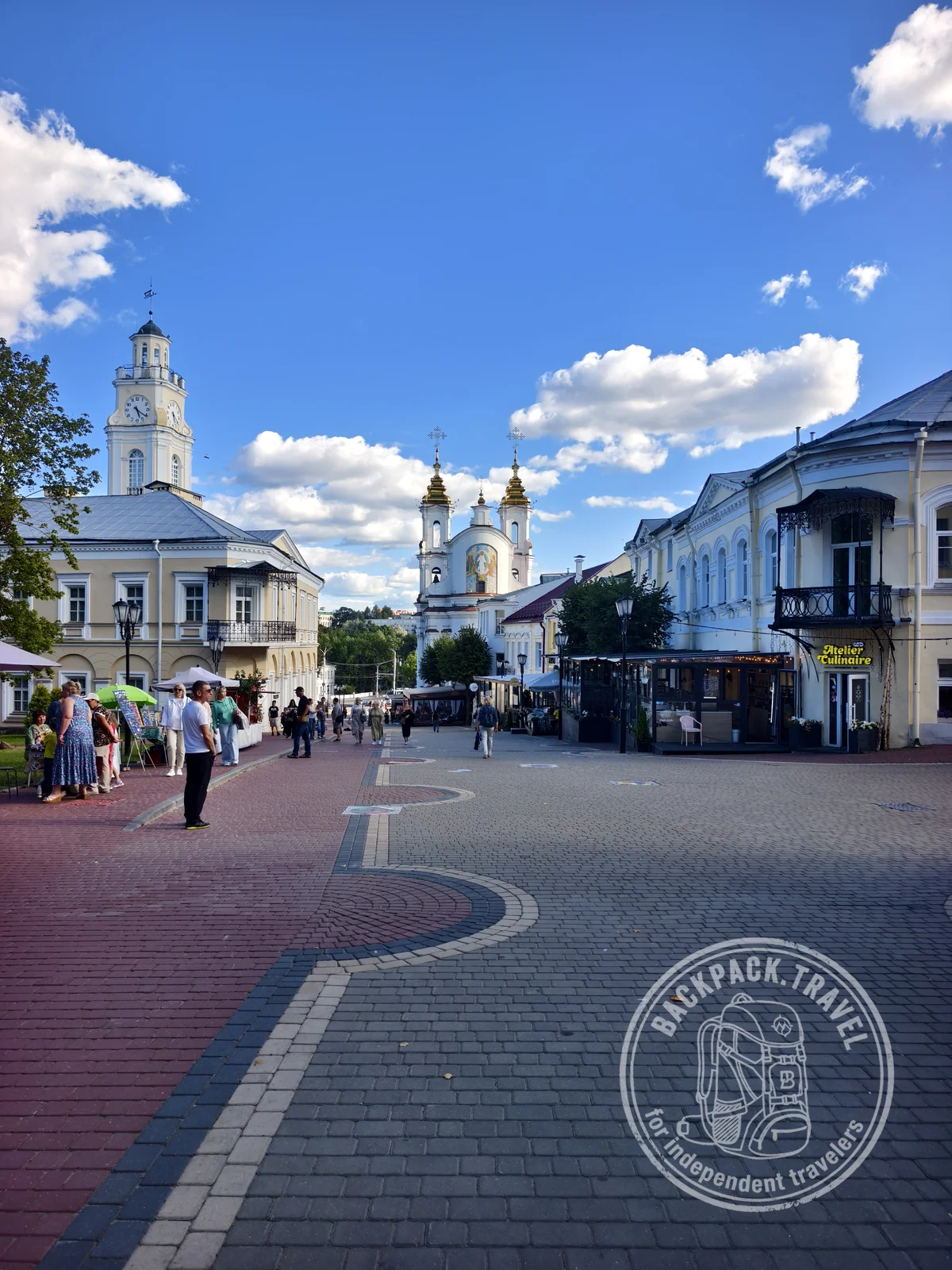
- Sovetskaya Street — the pedestrian spine of the centre, Brest's answer to a European promenade. Restored façades, cafés, benches. The highlight is the lamplighter: every evening a person in period uniform lights the kerosene street lamps by hand. Come at dusk — it is the only ritual of its kind in the country.
- The Alley of Wrought-Iron Lanterns runs along Gogolya Street, a couple of blocks from Sovetskaya: more than forty hand-forged lamps, eight of them illustrating Gogol's stories. Together with the small sculptures on Sovetskaya itself, it makes for an enjoyable stroll.
Two days is plenty: one for the fortress and Berestye, one for the centre and the general rhythm of the city.
Getting there
Brest is a major rail junction, and the train is the main way to arrive. There are direct services to Minsk several times a day, including fast trains, as well as international trains towards Poland. The railway station is a handsome monumental building and stands close to the centre.
The international road crossing into Poland (Terespol) runs through Brest. If you are continuing into the EU by car or bus, build in extra time: border queues are unpredictable and can range from a couple of hours to much longer.
The city's own airport is of little practical use for tourists — flying into Minsk and continuing by train makes far more sense.
Getting around
The centre is compact: the station, Sovetskaya Street, and the fortress entrance are all within comfortable walking distance of each other. City buses and minibuses run throughout town, but for a typical tourist itinerary you will rarely need them. The walk from the centre to the fortress — through a park and along the main avenue — takes about 20–30 minutes and is pleasant in itself.
Where to stay
The best base is around Sovetskaya Street and the central area. From here you can walk to the fortress, the station, cafés, and the evening lamplighter. The choice of accommodation is more limited than in Minsk: a handful of hotels and a good number of apartments for short-term rental. Staying right next to the fortress is not particularly useful — it is quiet and empty there after dark.
Money, food, and prices
Brest feels cheaper than Minsk and noticeably cheaper than neighbouring Poland. Lunch at a café, coffee, groceries — all budget-friendly by European standards.
- Cash in Belarusian roubles is more convenient; cards are accepted in many places but not everywhere, particularly at smaller spots.
- Look out for draniki (potato pancakes), machanka (pork stew with flatbread), and local baked goods. Sovetskaya has cafés to suit every budget, from canteen-style diners to sit-down restaurants.
- The fortress grounds and the centre are free to walk around — you only pay for museum entry. This makes the city easy on a tight budget.
When to go
The best time is late spring and summer: warm, green, long days, and the lamplighter doing his rounds in comfortable weather. The fortress makes a strong impression in winter too, but the site is open and exposed to the wind — dress warmly. 22 June (the anniversary of the start of the 1941 defence) brings large commemorative events to the fortress — atmospheric, but expect crowds.
Safety and practical notes
- Brest is a calm and safe city, including in the centre after dark. Ordinary awareness is all you need.
- The fortress covers a large area and much of it is open-air — wear comfortable shoes.
- Check current visa and border crossing requirements well in advance. The city's position on the border means rules and crossing conditions can change; do not assume you can make a casual day trip into Poland without verifying the situation first.
- Mobile coverage and data are reliable in the city; pick up a local SIM if you are staying for an extended period.
Common mistakes
- Budgeting only an hour or two for the fortress — the complex is enormous and a rushed visit gives no sense of the place.
- Coming as a day trip from Minsk — doable, but tiring; an overnight stay lets you see the city in the evening and catch the lamplighter.
- Relying solely on cards — keep some cash on you.
- Treating Brest as just the fortress — many visitors reduce the city to one sight and miss out; the centre is genuinely enjoyable in its own right.