 Города и дороги
Description
A small town in Gilan at the foot of the Talysh Mountains, the starting point for the climb to Rudkhan Castle and the way into the Hyrcanian forests. Known for its local kolucheh cookies.
Wiki
Fuman is a small town in Gilan Province in the north of Iran, with about 36 thousand residents, 21 km west of Rasht and practically at sea level at the foot of the Talysh Mountains. It is not a sight in itself: people come here as a base from which to climb to Rudkhan Castle and to drive on to the mountain village of Masuleh. Gilan is the rainiest part of Iran, with a humid subtropical climate and no dry season, rice paddies and tea gardens instead of the desert familiar from the rest of the country. Historically Fuman was the capital of Biyeh-pas, the western half of Gilan, until roughly the 1570s, when the capital was moved to Rasht.
Rudkhan Castle
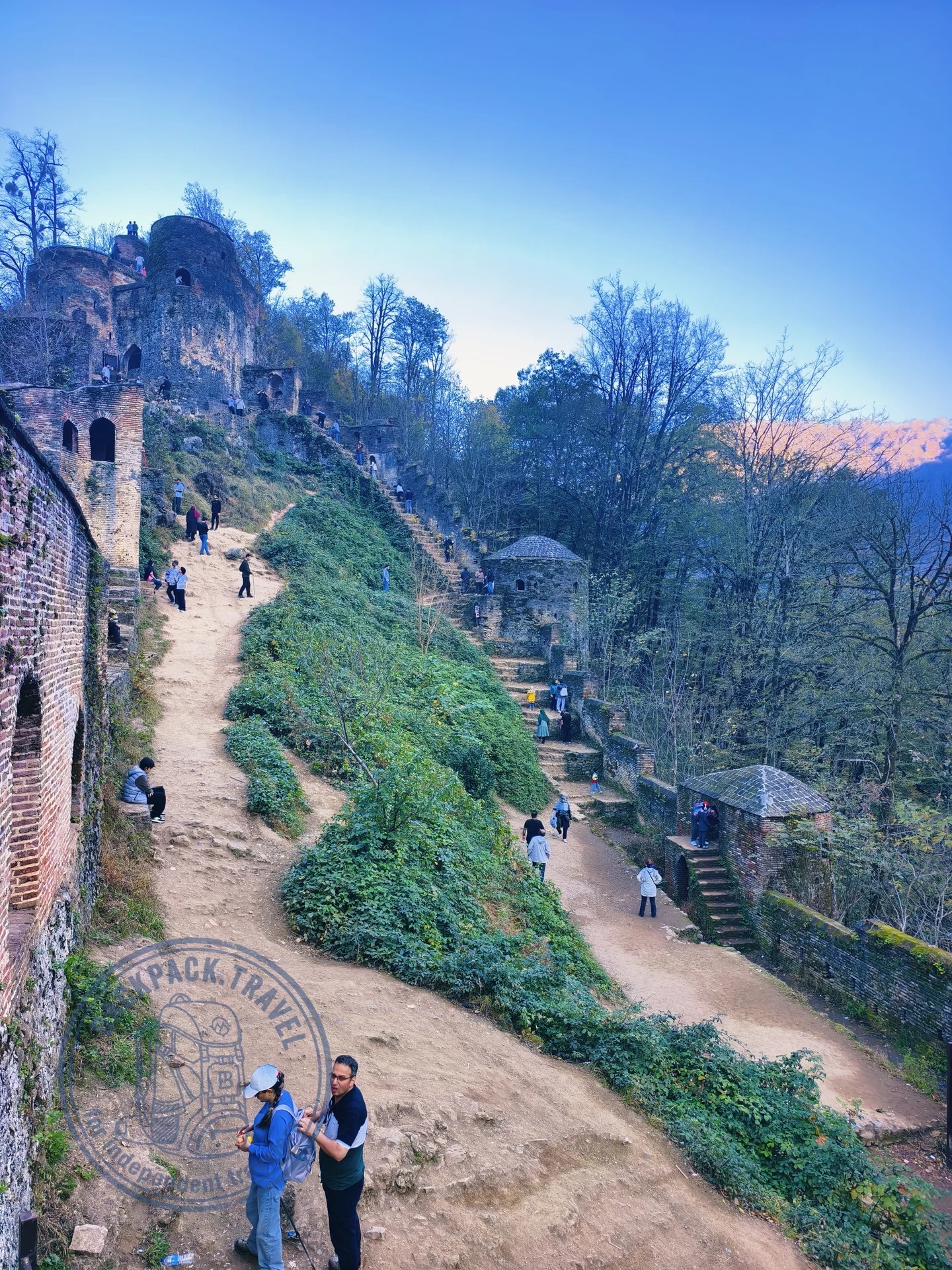
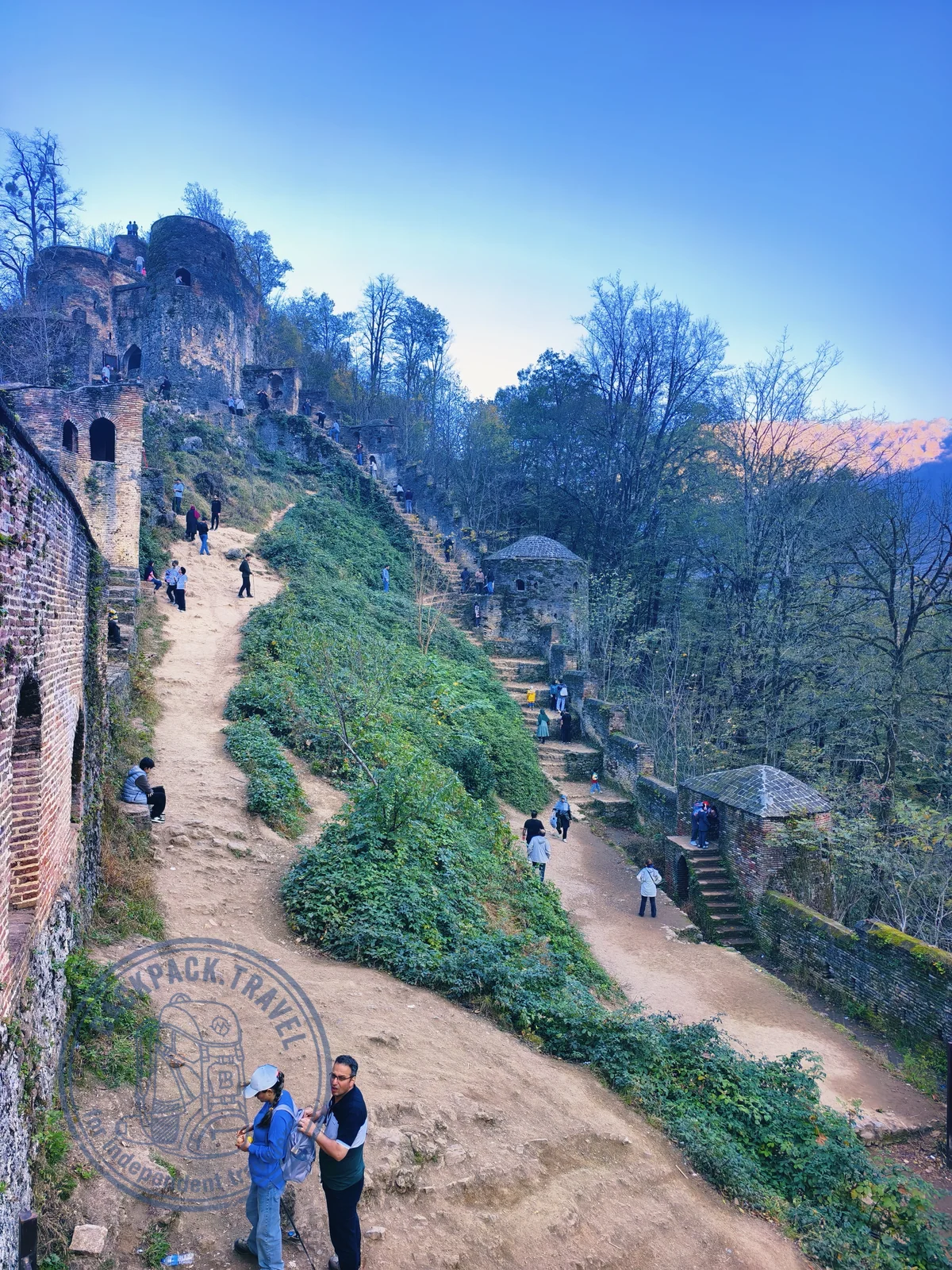
This is the main reason to come. Rudkhan Castle stands some 20 to 25 km southwest of the town, in wooded mountains, on two summits about 700 meters high. Its founding is placed in the Sasanian era while its present form took shape in the 11th and 12th centuries; the site covers about 2.6 hectares and the walls run for nearly a kilometer and a half.
What to know in advance:
- The climb is not a quick one. From the parking lot a path of two to three kilometers leads up, almost entirely in steps. It takes an hour and a half to two hours to the top, and you should allow three or four for the round trip with a look around.
- There is confusion about the steps. The historic stairway had around 935 of them, which gave rise to the nickname "the castle of a thousand steps". The rebuilt stairway you will actually walk has some 1,600.
- After rain the stone is slippery, and in Gilan it rains all year round. You need proper shoes, and the wooden staffs sold at the entrance are not a souvenir.
- Entry is charged, and the rate for foreigners is higher than the local one. The best time is spring and autumn, since summer is muggy and the climb is harder in winter.
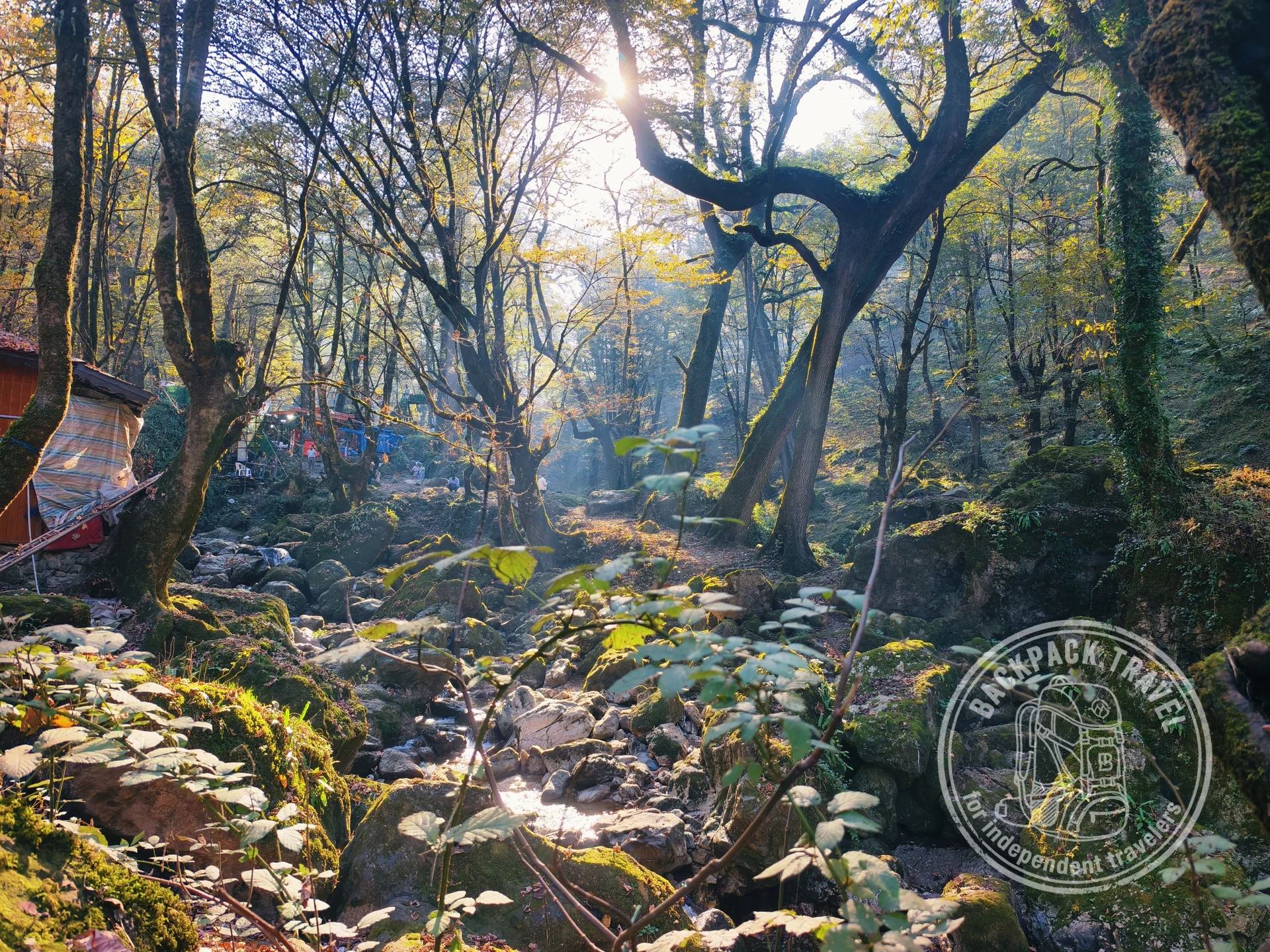
The castle stands in the middle of the Hyrcanian forests, a relict massif tens of millions of years old that was added to the UNESCO list in 2019 and extended in 2023 with the Azerbaijani section. The Gasht-e Rudkhan area belongs to the protected zones of the site. Note the wording carefully: what UNESCO protects is the forest, not the castle.
Masuleh and kolucheh
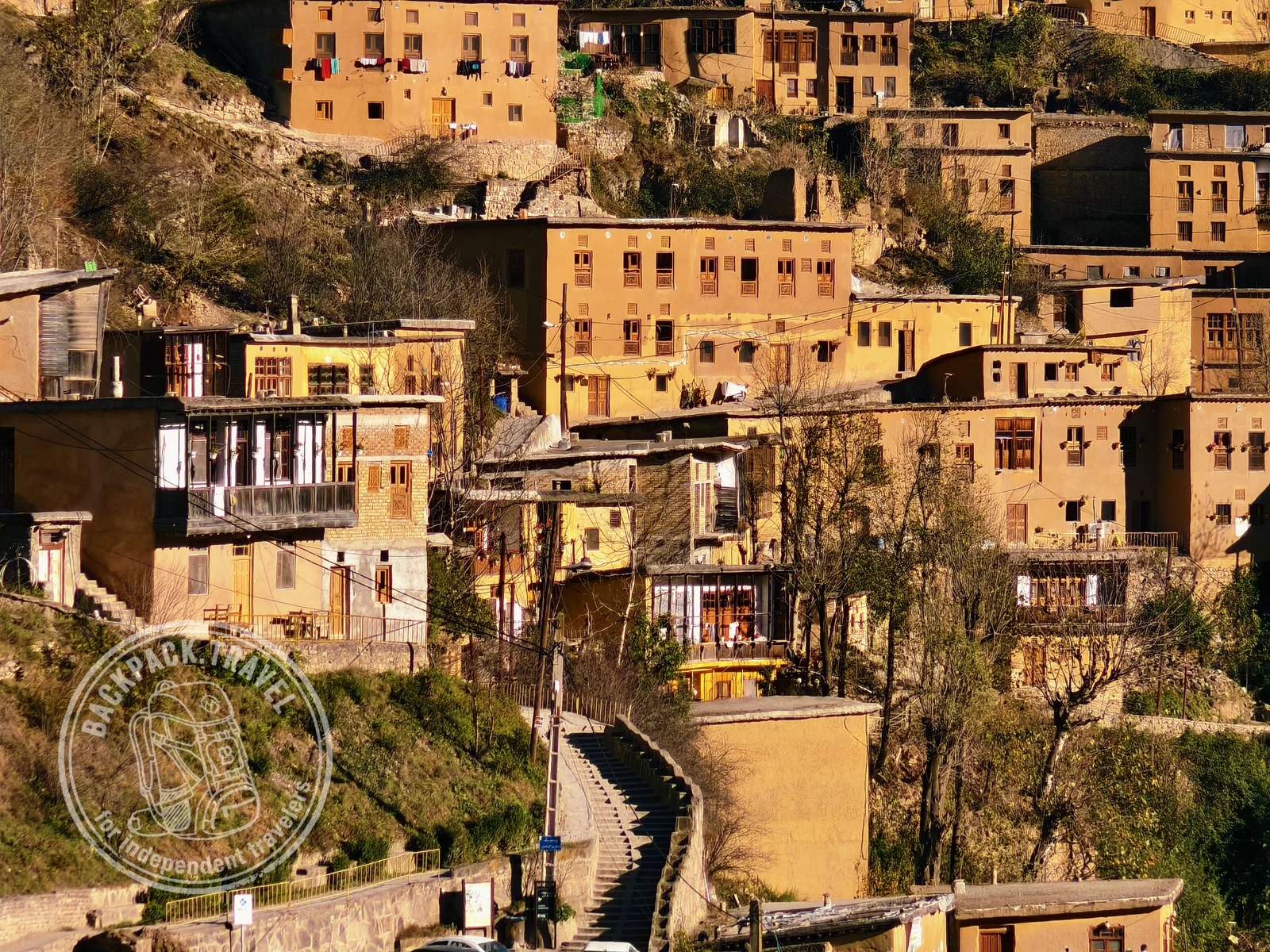
Thirty-two kilometers west of Fuman, at an altitude of about 1,050 meters, lies Masuleh, a village famous for the fact that each house's yard serves as the roof of the one below. There are no streets in the usual sense: people walk over the roofs and cars are not allowed inside. Since 2007 it has been on the UNESCO tentative list, though not on the main one. The village is slowly emptying, and fewer than four hundred permanent residents are left. The road from Fuman is mountainous and paved.
Kolucheh is the Gilan cookie, and the Fuman version is considered the benchmark: the thinnest and largest in Iran, twelve to fifteen centimeters across, filled with walnut, sugar and cinnamon and stamped with a spiral pattern on top. Fuman kolucheh has no date filling, which belongs to a different variety from other towns. The shops line the road towards Masuleh, and stopping for a box of them is an obligatory ritual for anyone passing through.
How much time to allow
In a single day from Rasht you will manage either the castle or Masuleh. Combining them is possible but turns into a race, and Rudkhan takes energy. Two days are the optimum, one for the castle and the second for Masuleh with an unhurried drive. Fuman itself has a few ecolodges, including some among the tea plantations on the road to Masuleh, but most visitors base themselves in Rasht, where the choice is wider.
From Rasht to Fuman there are savaris, shared taxis that leave once they fill up, and the drive takes around half an hour. From Fuman its own savaris run directly both to Rudkhan and to Masuleh, so a guide is not strictly needed. Russian citizens can enter Iran without a visa only as part of an organized group and for a limited period, while independent travelers need a visa, so check the current status before the trip.
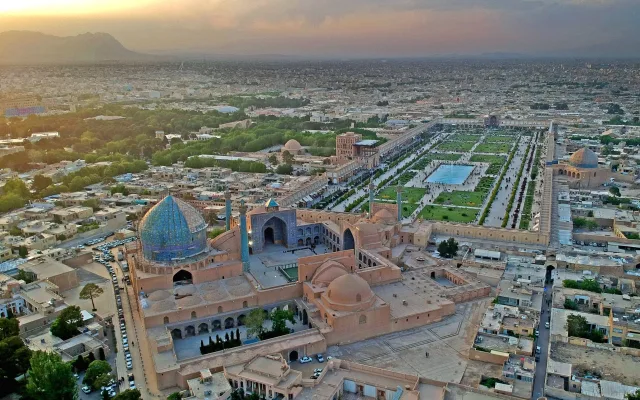
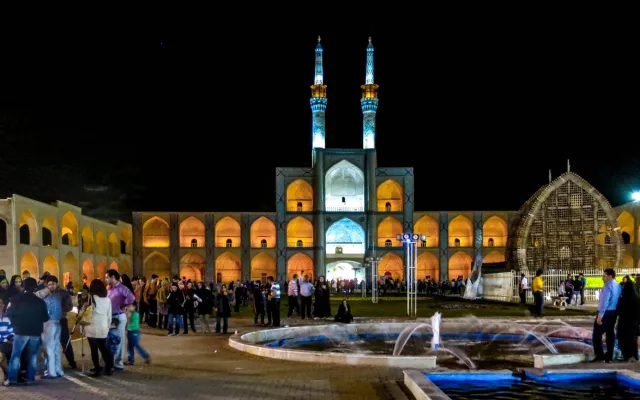
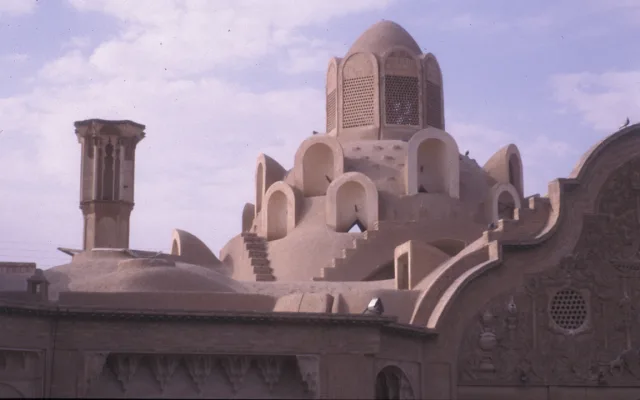
Who won't enjoy it: if you are coming to Iran for antiquities, mosques and tilework, Gilan will surprise you in the opposite direction, because there is no Isfahan and no Yazd here, only forest, rain and wooden houses. The climb to Rudkhan is a full trek of fifteen hundred steps, hard going with bad knees or in the heat, and there is no cable car to the top. There is nothing to look at in Fuman itself, since it is an ordinary provincial town with a lucky location and good cookies rather than sights of its own. And rain is possible here in any season, so planning by the forecast is pointless.