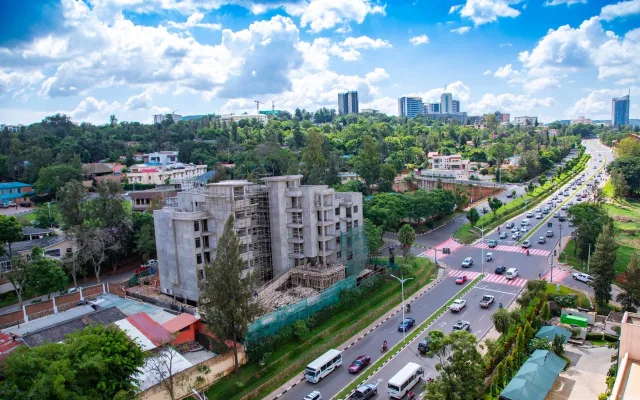
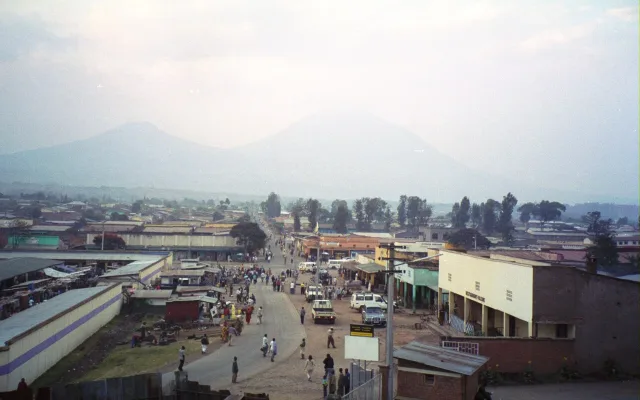
Description
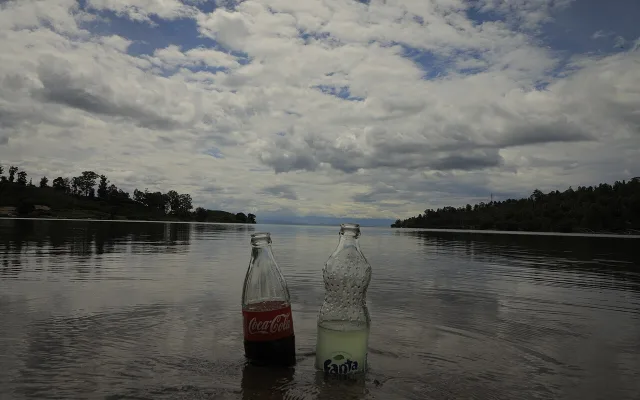
A resort town on the shore of Lake Kivu by the border with the DR Congo — beaches and hot springs.
Wiki
Gisenyi is a resort town in north-western Rwanda, spread along the eastern shore of Lake Kivu right on the border with the Democratic Republic of the Congo. With its sandy beaches, mild climate and proximity to the volcanoes, it is one of the most popular places to relax in the country.
General information
Gisenyi belongs to Rubavu District and serves as its main settlement; the district as a whole is sometimes called Rubavu after its administrative centre. The town lies at an altitude of about 1,460 metres above sea level, which tempers the equatorial heat and keeps the air fresh all year round. The Congolese city of Goma adjoins its western edge, separated only by the border crossing — the two settlements effectively form a single urban area around the bay.
Gisenyi is considered one of the best-appointed resorts in Rwanda. The lakefront, shaded streets with colonial buildings and villas, and the greenery of tropical gardens create a calm, unhurried atmosphere that contrasts with the bustle of the capital, Kigali.
Nature and Lake Kivu
The main attraction is Lake Kivu, one of the African Great Lakes, stretching along a tectonic rift. Its waters are warm and calm and, unlike many African lakes, free of crocodiles and hippos, which makes swimming safe. The bottom of the lake holds dissolved methane and carbon dioxide — a rare geological phenomenon which places Kivu among the so-called "exploding" lakes.
The shoreline at Gisenyi consists of wide sandy beaches with palm trees, where you can swim, sunbathe and watch the sunsets over the water. Nearby are thermal springs, which come to the surface because of the region's volcanic activity; local people have long used their warm mineral water.
To the north of the town rise the volcanoes of the Virunga massif, including the active Nyiragongo on the Congolese side, whose glow is sometimes visible at night.
History
The settlement developed in the colonial period, when the territory was part of German East Africa and then, under Belgian administration, of Ruanda-Urundi. Europeans valued the cool climate and the scenic shore of Kivu, and built residences and rest houses here. Individual examples of the architecture of that time survive along the lakefront. After Rwanda gained independence in 1962, the town kept its reputation as a resort centre.
Things to do
- Beach time — swimming in the warm lake, walking the lakefront, relaxing under the palms.
- Water activities — boat and kayak trips, excursions to the offshore islands, fishing. In the evening you can watch the traditional boats of local fishermen setting out with their singing.
- The hot springs — visiting the thermal outflows not far from the shore.
- The Bralirwa brewery — Gisenyi has a large plant producing the well-known Rwandan beer and soft drinks.
- Excursions to the volcanoes — the town is a convenient starting point for trips to Volcanoes National Park, home to mountain gorillas.
Practical information
The easiest way to reach Gisenyi is from Kigali: the distance is around 150 kilometres, and the drive along the surfaced mountain road takes several hours through scenic terraced hills — Rwanda is not called "the land of a thousand hills" for nothing. There are regular bus services. The border crossing gives access to Congolese Goma, but before making that trip you should check visa rules and conditions in the border area in advance.
Two days are enough to see the main sights at an unhurried pace: devote the first day to the beaches, the lakefront and a boat trip on the lake, and the second to the thermal springs and the surrounding area, or to a day trip towards the volcanoes. The best time to visit is the dry seasons (roughly June to September and December to February), when there is less rain.
Food
Local cooking reflects the general traditions of Rwanda: the staples are beans, plantains, sweet potato, cassava and maize. On the lake, fresh fish is prized, above all the small sardine known as isambaza, which is fried and served as a local delicacy. Brochette — skewers of goat or chicken — is widespread. Popular drinks include coffee and tea grown in the country's highland districts, along with the products of the town's brewery.
The feel of the town
Gisenyi combines the luxury of a tropical resort with the everyday life of a Rwandan provincial centre: markets, busy little streets, friendly people. The combination of lake scenery, volcanic mountains on the horizon and a mild climate makes the town a memorable destination for anyone who wants to see the less touristy, natural side of Rwanda.