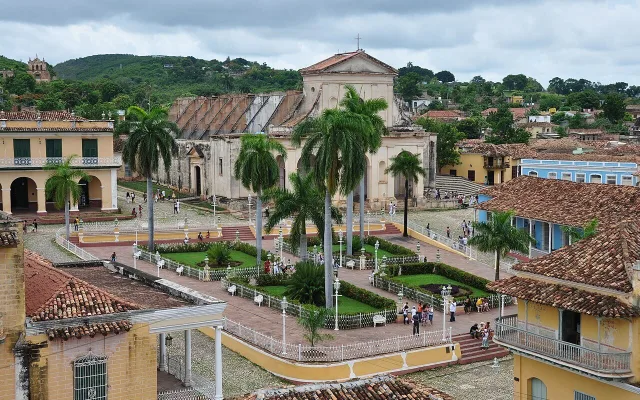
Description
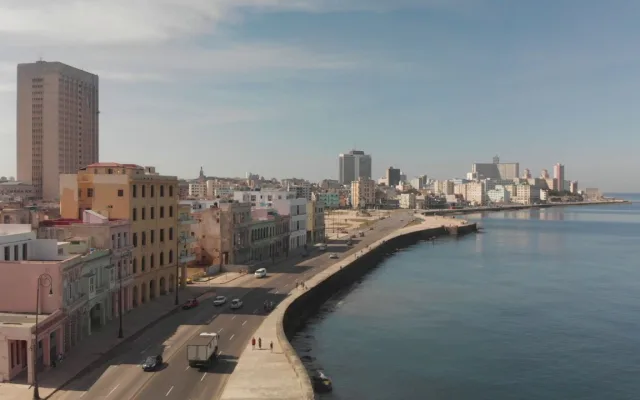
Cuba's capital frozen in the amber of the 1950s: pastel retro cars, the Malecón at sunset, rum at El Floridita, and salsa on every corner.
Wiki
Havana is the capital of Cuba and the largest city in the Caribbean, stretching along the bay of the same name on the island's north-west coast. Founded by the Spanish in 1519 as San Cristóbal de la Habana, the city spent four centuries as the key port on the route carrying gold and silver from the Americas to Europe, and today feels as though time has stood still: peeling pastel façades, chrome-trimmed 1950s Chevrolets, and the sound of son on every street corner.
A brief history and overview
Its strategic position at the entrance to the Gulf of Mexico made Havana both wealthy and vulnerable: pirates sacked it repeatedly before the Spanish Crown encircled it with massive walls and forts. The city's economic golden age came in the nineteenth century during the sugar boom, when palaces, theatres, and colonnaded streets were built. After the 1959 revolution private construction all but stopped, which paradoxically preserved the historic centre in amber. The metropolitan population is around 2.1 million. The city is divided into municipalities, of which three matter most to travellers: colonial Habana Vieja, the grand Centro Habana, and the spacious residential Vedado with its mid-century apartment blocks.
Habana Vieja and the main squares
Old Havana was inscribed on the UNESCO World Heritage List in 1982 and is being gradually restored. Its heart is four squares linked by narrow streets:
- Plaza de la Catedral, with its Baroque Cathedral of Saint Christopher built from porous coral stone;
- Plaza de Armas — the oldest square, home to a second-hand book market and the Palace of the Captain Generals;
- Plaza Vieja, with vivid arcades where Baroque and Art Nouveau sit side by side;
- Plaza de San Francisco by the harbour, with its basilica and bell tower.
Along the waterfront stand fortresses: the Castillo de la Real Fuerza, topped by the city's weathervane symbol La Giraldilla, and the imposing Fortaleza de San Carlos de la Cabaña on the far side of the bay, where a cannon-firing ceremony (cañonazo) is performed every evening.
What to see beyond the centre
- The Malecón — an eight-kilometre seafront boulevard that becomes a communal living room in the evenings, filled with fishermen, couples, guitarists, and ocean spray.
- El Capitolio — a magnificent domed building reminiscent of the US Capitol; reopened after a lengthy restoration.
- The Museum of the Revolution in the former presidential palace, with a glass pavilion housing the yacht Granma.
- Necropolis Cristóbal Colón — a grand nineteenth-century cemetery of marble chapels and sculpture.
- Fábrica de Arte Cubano (FAC) — a converted factory where exhibitions, concerts, and bars come together each evening; the defining venue of Havana's contemporary cultural scene.
- Vedado, with its Plaza de la Revolución, the Hotel Nacional, and tree-lined boulevards.
Food, rum, and cigars
Cuban cooking is straightforward and filling: ropa vieja (slow-braised shredded beef), rice with black beans (moros y cristianos), fried tostones, pork, and seafood including lobster. The drinks of choice are the mojito, the daiquiri, and Havana Club rum — the classic cocktails are served at the bars immortalised by Hemingway, above all El Floridita. Eating at a paladar — a private family restaurant — is usually a better and livelier experience than a state-run establishment. The island's other great pride is tobacco: Cohiba, Montecristo, and Partagás cigars can be bought at official Casa del Habano shops, where authenticity is guaranteed.
Practical tips
Following the currency reform and the abolition of the convertible peso (CUC), tourists effectively pay in cash dollars or euros; cards issued by Western banking systems do not work in Cuba, and ATMs are unreliable — bring enough cash with you. José Martí International Airport (HAV) is about 15 km from the centre. Getting around town means taxis, coco-taxis, or vintage American cars. A ride in an open-top classic convertible along the Malecón is an attraction in itself, at $25-40 an hour. A meal at a paladar costs $8-15, dinner with lobster $20-35, and a cocktail in an Old Havana bar $5-8. Prices are as of 2026.
How much time to allow
Five days is enough to get a real feel for the capital without rushing. The first two days fit naturally around walking Habana Vieja and its squares; the third around Vedado, the Capitolio, and the museums; the fourth along the waterfront, the forts, and an evening at FAC; and the fifth is best left for a leisurely coffee, buying cigars and rum, or a day trip to the Playas del Este beaches or the Viñales valley.