 Города и дороги
Description
The westernmost city in China and the main Uyghur city of Xinjiang: a mud-brick old town, Id Kah Mosque and rows of bazaar stalls at the crossroads of the routes into Central Asia, Pakistan and Kyrgyzstan.
Wiki
Kashgar (Kashi in Chinese) is the westernmost large city in China: the borders with Kyrgyzstan and Tajikistan are closer from here than Urumqi is. The oasis, at an altitude of around 1,270 metres, was a Silk Road hub for more than two thousand years; in 1759 it was taken by Qing troops. In the 2020 census Uyghurs made up about 86% of the population. People come here for the mud-brick quarters, the bazaars and the sense that Central Asia begins just past the edge of town.
What to see in the city
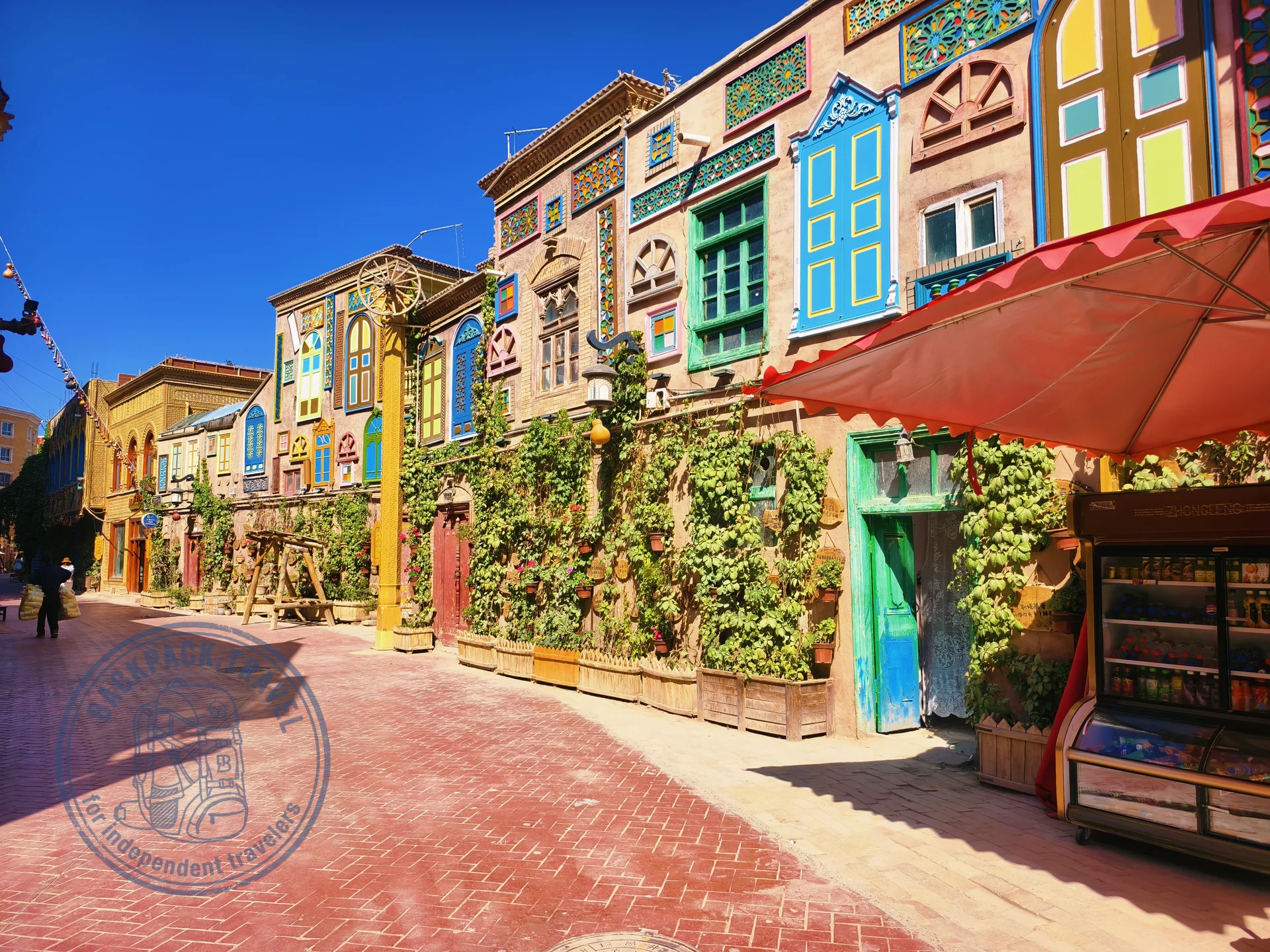
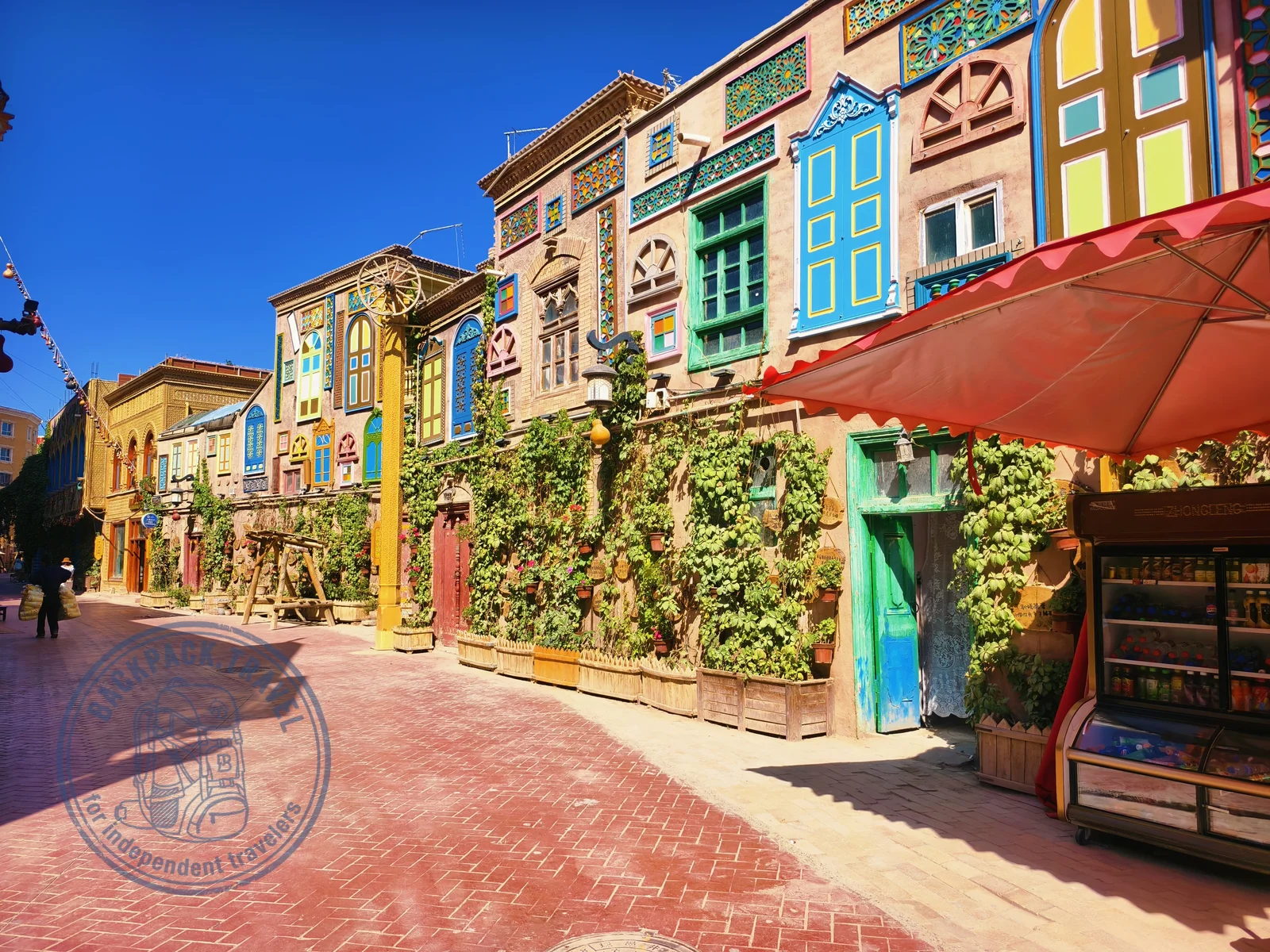
- Kashgar Old Town is the core of any trip here: a maze of lanes, mud-brick and brick houses, workshops and small shops. It holds top-category (5A) tourist zone status and entry is free. The context matters: since the late 2000s a large-scale programme of demolition and rebuilding has been under way. The authorities explained it by the earthquake risk of the old buildings, while human rights campaigners believe a significant part of the authentic urban fabric has been lost. On the ground you will see a mix of living lanes and quarters rebuilt from scratch in an old-fashioned style.
- The East Gate of Kashgar Old Town is the ceremonial entrance. In the mornings a costumed "opening of the city" ceremony is staged here; it is a set piece for visitors, but it draws a crowd.
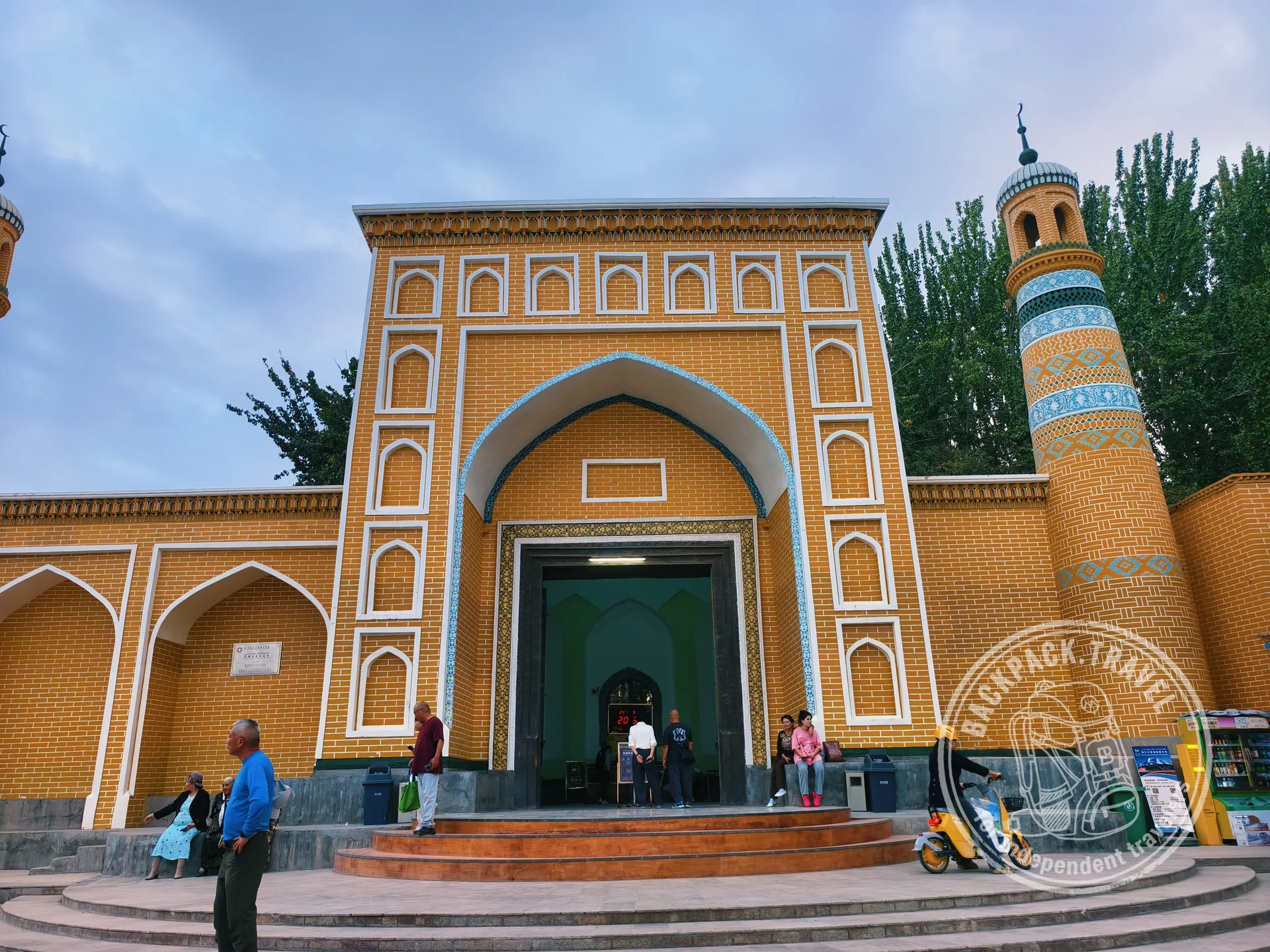
- Id Kah Mosque is the congregational mosque and the largest in China by area, occupying a site of about 1.68 hectares. Visitors are allowed inside outside prayer times.
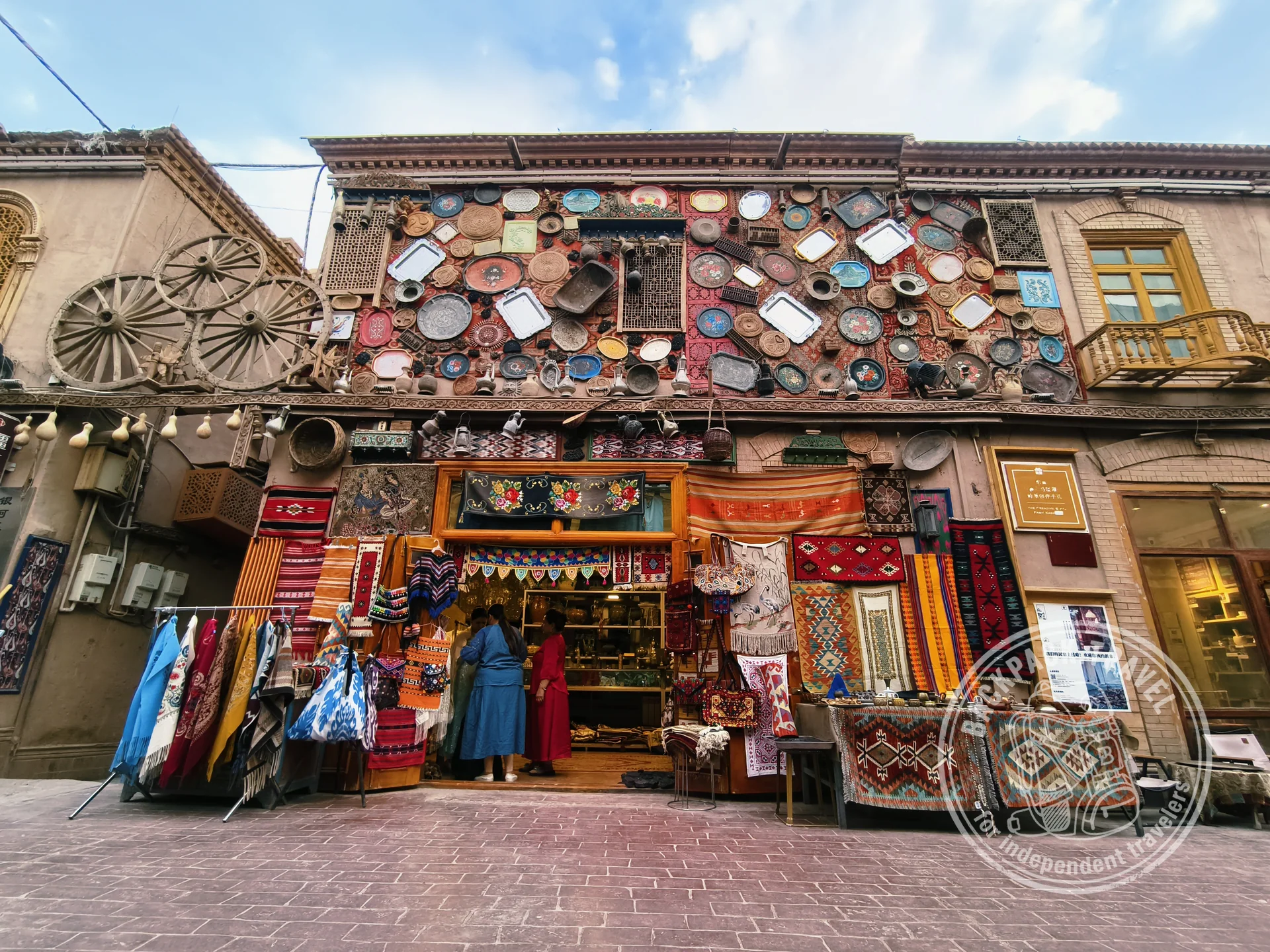
- The craftsmen's street in Kashgar is a run of workshops where smiths beat copper vessels and others make knives, saddles and musical instruments. Some of the work is done for tourists and some of it is entirely real.
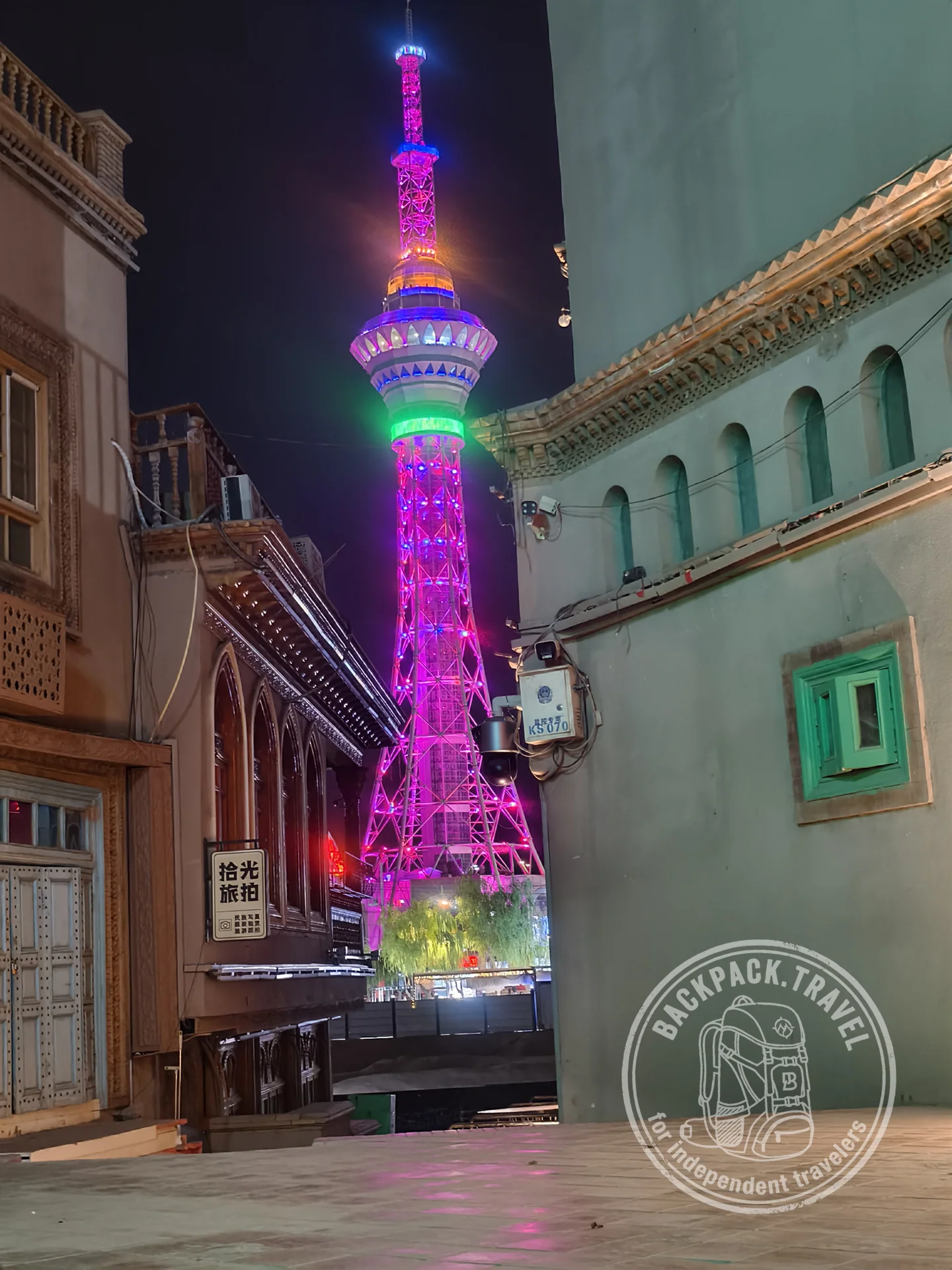
- Kunlun Tower is a modern observation tower beside the old town, opened in 2023 and 169 metres high.
- The Afaq Khoja Mausoleum stands 5 km to the east, a tiled tomb of the Khoja family that ruled here in the 17th and 18th centuries. Tradition holds that the "Fragrant Concubine" of the Qianlong Emperor is buried here, though researchers think otherwise.
The main bazaar is the Sunday livestock market, 6 km from the centre: sheep, goats, camels and horses. It works on Sundays only, from early morning until the first half of the day. This is a working market rather than a piece of decoration. The town's Sunday bazaar has been reorganised and partly moved, so do not expect the single great trading ground described in older guidebooks.
The Chinese section of the Karakoram Highway begins at Kashgar, running to Karakul Lake and high-altitude Tashkurgan. This is a border zone and a foreigner needs a separate permit; the rules change, so allow several days for the paperwork.
How much time to allow
In a single day you can take in the old town, Id Kah Mosque and the craftsmen's street, but you will pass straight through them without stopping. Two days already make for an unhurried format: they add the Afaq Khoja Mausoleum, the viewing platform on Kunlun Tower and walks through the lanes in the morning and the evening, when there is more life there than in the middle of the day. A third day makes sense if one of them falls on a Sunday and you go out to the livestock market. For the Karakoram Highway with Karakul Lake and Tashkurgan, allow a week: the trip itself takes two or three days, plus the time needed for the permit.
Plan your route so that you reach the city by Sunday. Without the market Kashgar loses a noticeable part of its point: it is there that you can see the oasis still lives on trade rather than on tourism.
Getting there and what to keep in mind
Kashgar is the only city on the Silk Road route that high-speed trains do not reach. Ordinary services run to Urumqi, a night on the rails and anywhere from 11 to 17 hours; flying is faster. Further east — Turpan, Hami, Dunhuang, Jiayuguan, Zhangye — you travel on the high-speed line out of Urumqi.
- The region runs on Beijing time, but locals use the unofficial "Xinjiang time", two hours behind. Check which one is meant.
- Document checks are routine, so carry your passport with you. You can only stay in hotels licensed to accept foreigners, and that is something to establish before you arrive.
- Summer is hot and dusty, winter is cold. Late April to June and September to October are the best windows.
- Cash has been almost completely displaced by payment from your phone.
Who won't enjoy it
If you are coming for the untouched medieval city of photographs taken twenty years ago, you will be disappointed: a significant part of old Kashgar has been rebuilt, and the difference between a genuine lane and a modern replica is obvious at once. Anyone with little patience for bureaucracy will find the trip tiring, because the searches, the restrictions on accommodation and the permit regime in the border area all eat up time, and an improvised itinerary does not work here. But if you are interested in Uyghur culture, crafts and a living bazaar economy rather than architecture alone, Kashgar remains the most rewarding place in Xinjiang.