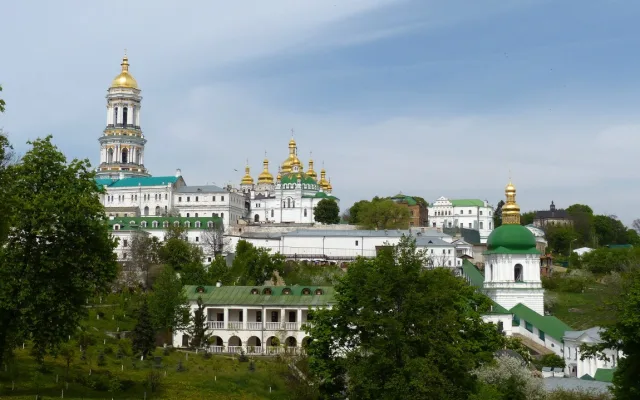
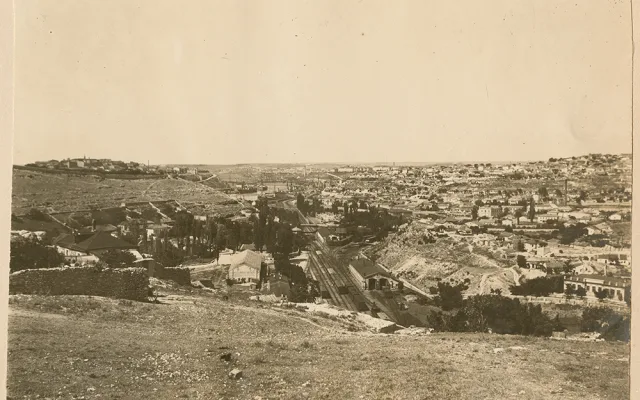
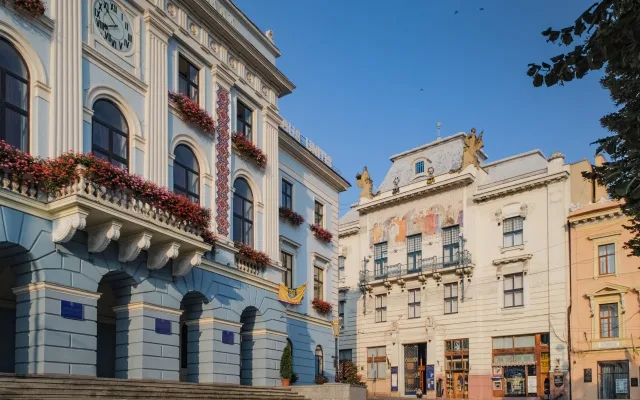
Description
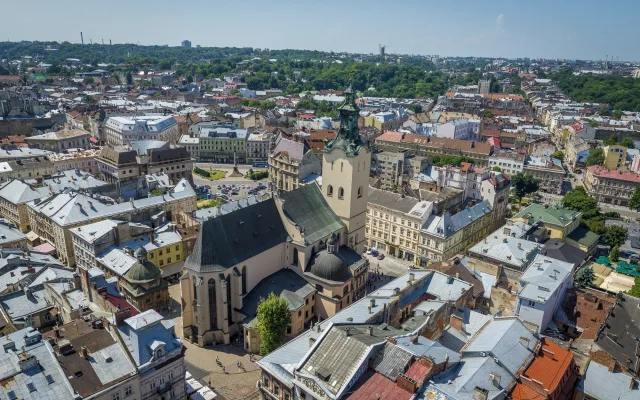
The jewel of western Ukraine — a medieval centre, coffee culture and Armenian churches.
Wiki
Lviv is the largest city in western Ukraine and the unofficial cultural capital of Galicia. Set about 70 kilometres from the Polish border, it combines a medieval street plan, a rich architectural inheritance and the particular atmosphere of a Central European town, where the echoes of several eras and peoples still sound on the narrow paved streets.
History and identity
The city was founded around 1256 by the Galician-Volhynian prince Danylo Romanovych and named after his son Lev. Over seven centuries Lviv changed hands many times: it belonged to the Kingdom of Poland and the Polish-Lithuanian Commonwealth, was a free trading centre on the route between East and West, and from the end of the 18th century spent almost a century and a half as the capital of the Austrian crown land of Galicia and Lodomeria, under the name Lemberg. It is the Habsburg period that gave it its present appearance — boulevards, coffee houses, an opera house in the Viennese manner.
Lviv was multinational for centuries: Ukrainians (Ruthenians), Poles, Jews, Armenians and Germans all lived here. The Armenian colony appeared as far back as the Middle Ages and left its mark on architecture and trade. This mixed memory explains why Galicia feels different from the eastern regions of the country — with its own speech, its religious tradition (the Greek Catholic Church holds strong positions) and its orientation towards Central European culture.
What to see
The historic centre is on the UNESCO World Heritage list as a rare example of a preserved medieval city.
- Rynok Square — the heart of the Old Town: the forty-four kamienica town houses of the 15th to 18th centuries, each with its own history, and the Town Hall with its viewing tower.
- The Lviv Opera House, named after Solomiya Krushelnytska — a neo-baroque jewel of the turn of the 20th century, with a richly decorated interior.
- The High Castle — a hill topped by an artificial mound, with the remains of fortifications and the best panorama over the tiled roofs of the centre.
- Lychakiv Cemetery — an open-air necropolis-museum with the graves of Ivan Franko, Solomiya Krushelnytska and many cultural figures.
- The Armenian Cathedral of the 14th century — a quiet courtyard, ancient walls and murals by Jan Henryk Rosen.
- The Dominican Church — a striking baroque church with a dome, along with the Latin Cathedral and the Boim Chapel beside it.
- The Pharmacy Museum "Under the Black Eagle" — a working pharmacy with interiors from past centuries and "alchemical" cellar rooms.
- A walk along Svobody Avenue, the squares by the opera house and the tangle of lanes around Rynok gives a coherent sense of the city.
Coffee culture and food
Lviv is proud of its coffee tradition: the city is linked with the legend of Yuriy Kulchytsky, who is credited with opening one of the first coffee houses in Vienna after the Turkish siege of 1683. Today dozens of atmospheric coffee houses offer strong coffee, their own roasting and characteristic desserts — from strudel to Austrian-style pastries.
The local Galician cooking is a Ukrainian base with Polish and Austrian notes. It is worth trying borsch, varenyky, deruny, banosh, home-made sausages and smoked meats, and for something sweet the Lviv syrnyk and the chocolate for which the city is also known. To get a feel for everyday life, look in at the Krakivsky market, where local produce is sold.
Practicalities
Three days are enough to see the essentials without hurrying. It makes sense to devote the first day to the Old Town — Rynok Square, the churches and the climb up the Town Hall; the second to Lychakiv Cemetery, the High Castle and the museums; and to leave the third for the coffee houses, the markets and walks in the parks, among which Stryiskyi Park and the Park of Culture stand out.
The centre is compact and good for walking, but the cobbled streets call for comfortable shoes. There is a tram network and there are marshrutkas. When planning a visit, check the current security situation and entry rules in advance, since these can change.