Description
A historic city in northern Iran, briefly the Safavid capital, and the gateway to the Alamut valley of the Assassins.
Wiki
Qazvin in northern Iran is usually driven straight through on the road from Tehran to the Caspian — and that is a mistake. For a little over forty years it was the Safavid capital, before Shah Abbas moved the court to Isfahan, and a palace pavilion, a gateway and the layout of the centre survive from that period. Then there is the main practical reason to stop: the road into the Alamut valley starts here.
What to see in the city
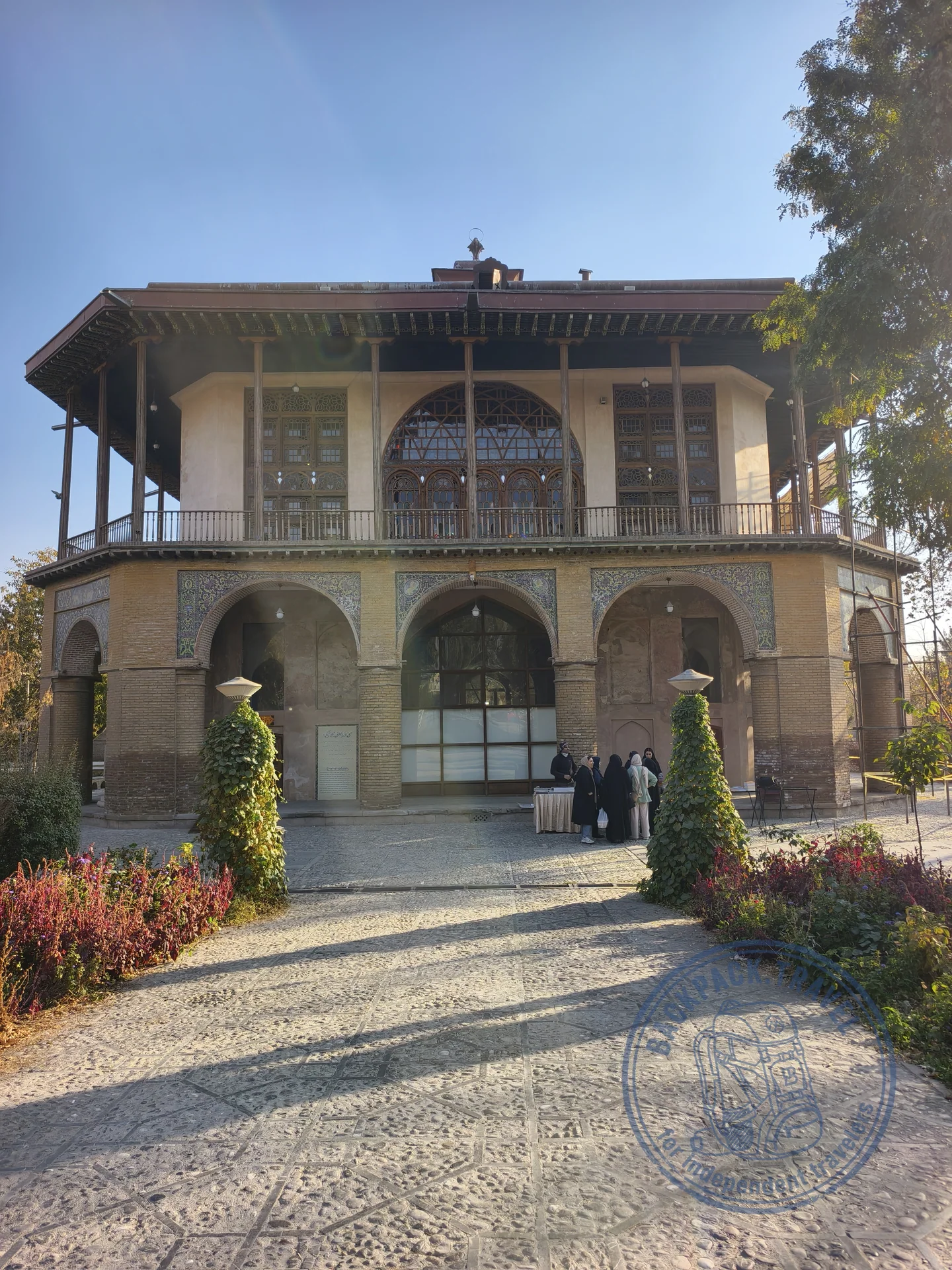
- Chehel Sotoun (locals call it Kolah Farangi, "the European hat") — a two-storey Safavid pavilion in the middle of a garden, the only surviving building of the palace complex of Shah Tahmasp I. Inside is a calligraphy museum; outside, the painted ceilings of the galleries.
- The Ali Qapu gate — the ceremonial portal of the same palace quarter, now standing alone in the middle of a street.
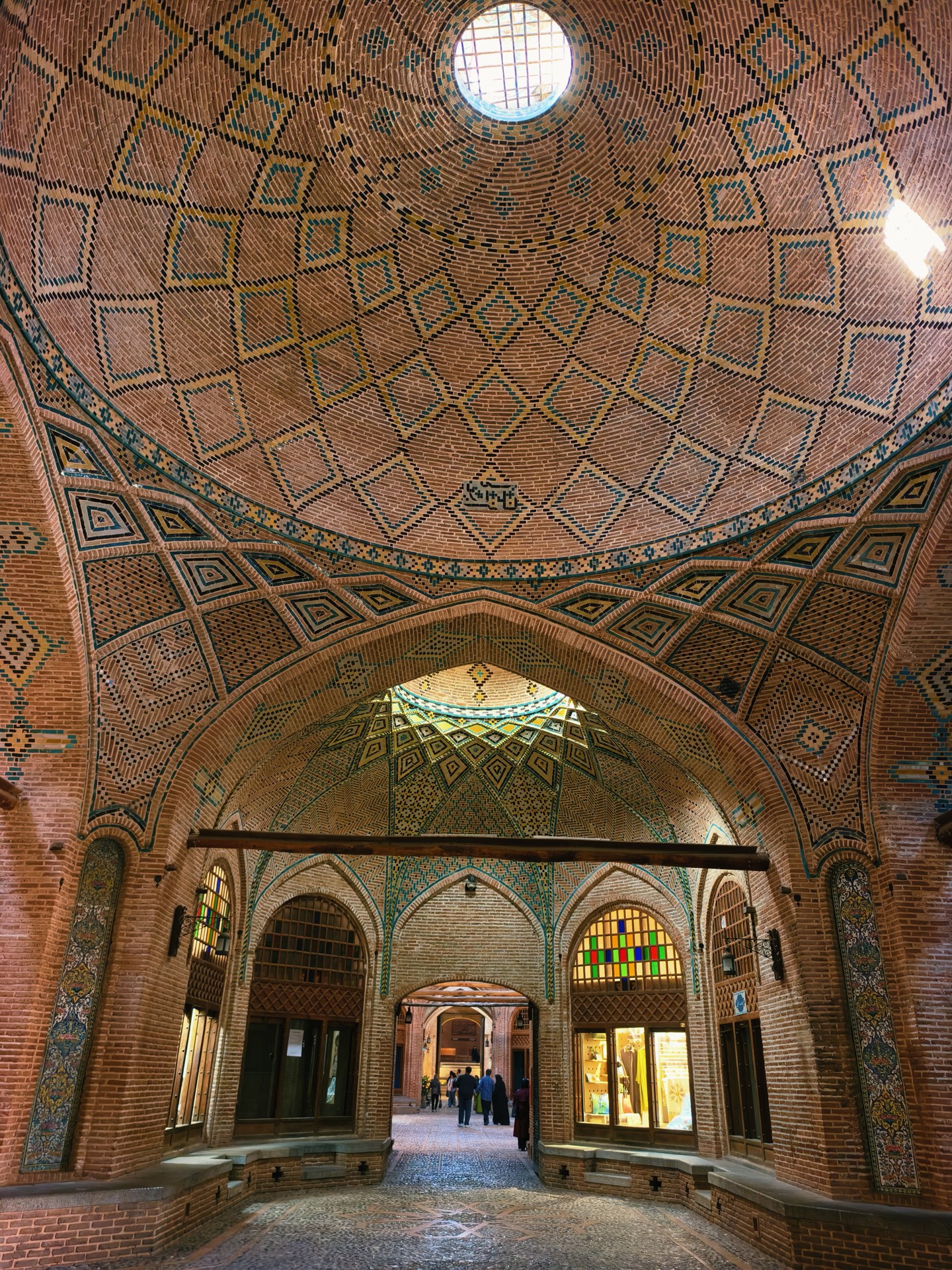
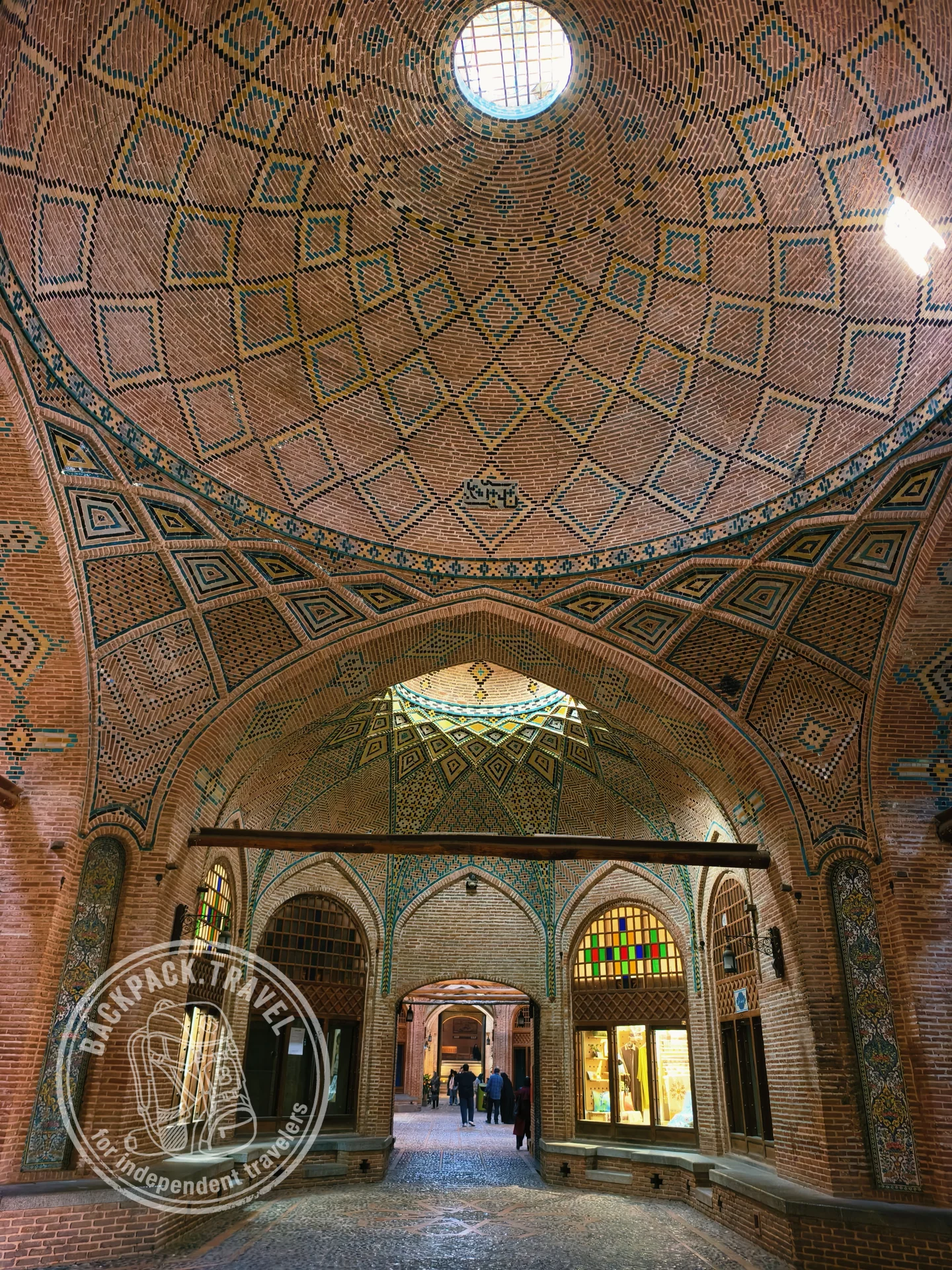
- The Saad al-Saltaneh caravanserai — an enormous covered caravanserai of the Qajar period, one of the largest surviving in Iran. Restored, it now holds shops, tea houses and courtyards with fountains; in the evening the whole city comes here.
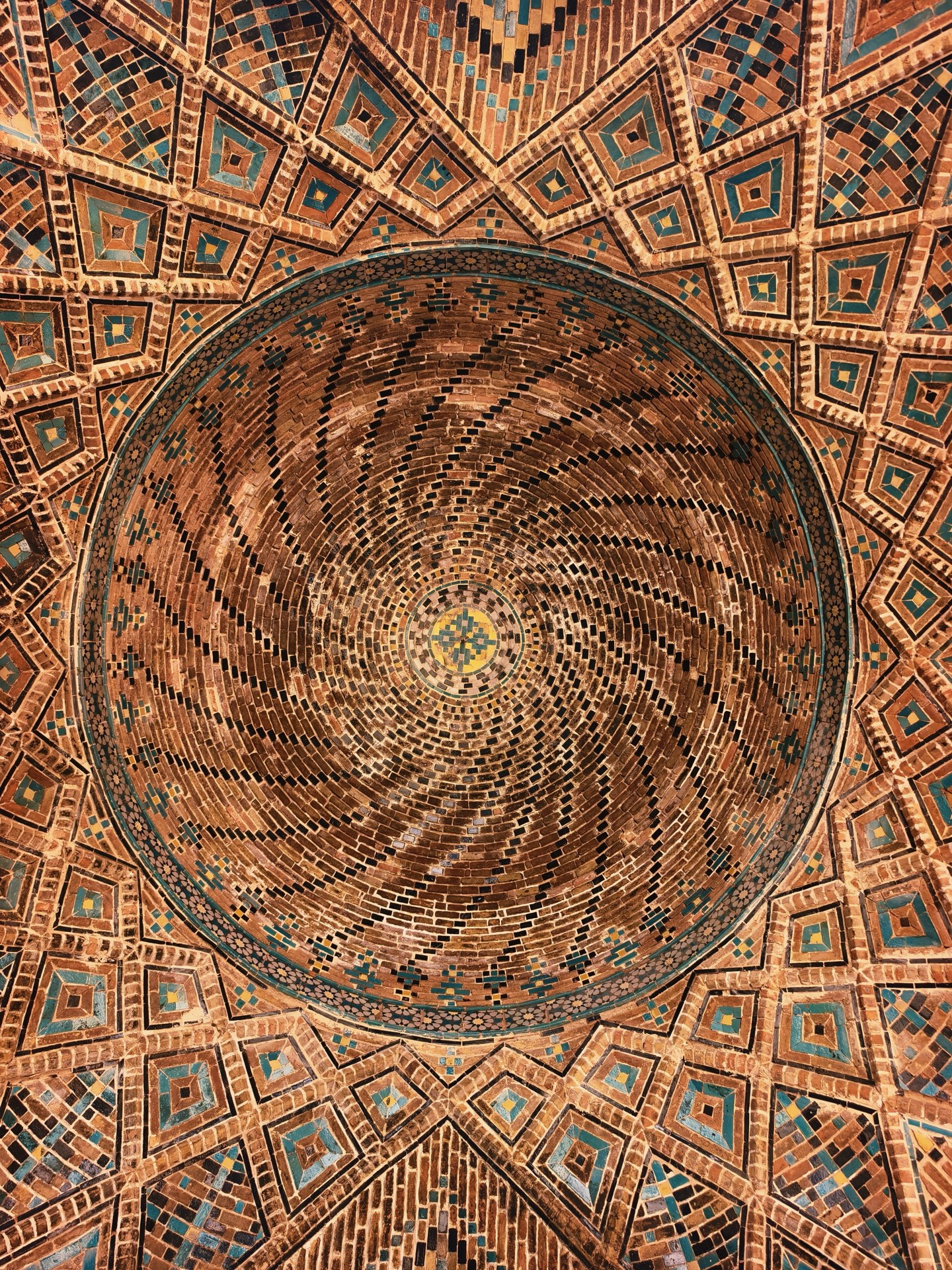
- The Friday Mosque (Masjed-e Jameh, also called Atiq) — one of the oldest in the country: a Seljuk domed chamber of the 11th and 12th centuries built over earlier structures.
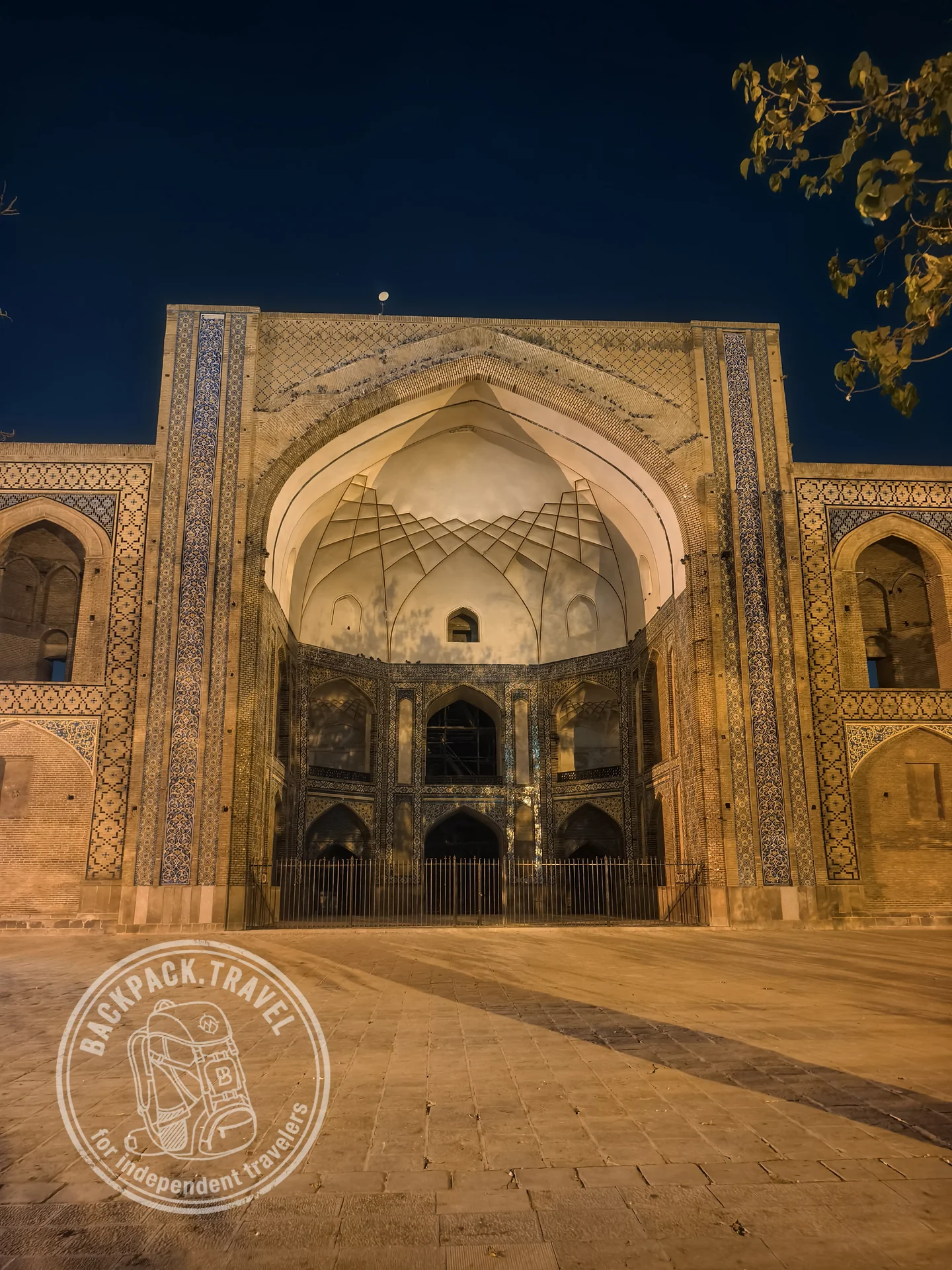
- Al-Nabi Mosque (the Shah Mosque) — Qajar, with a vast rectangular courtyard and symmetrical iwans; the scale is unexpected in a city this size.
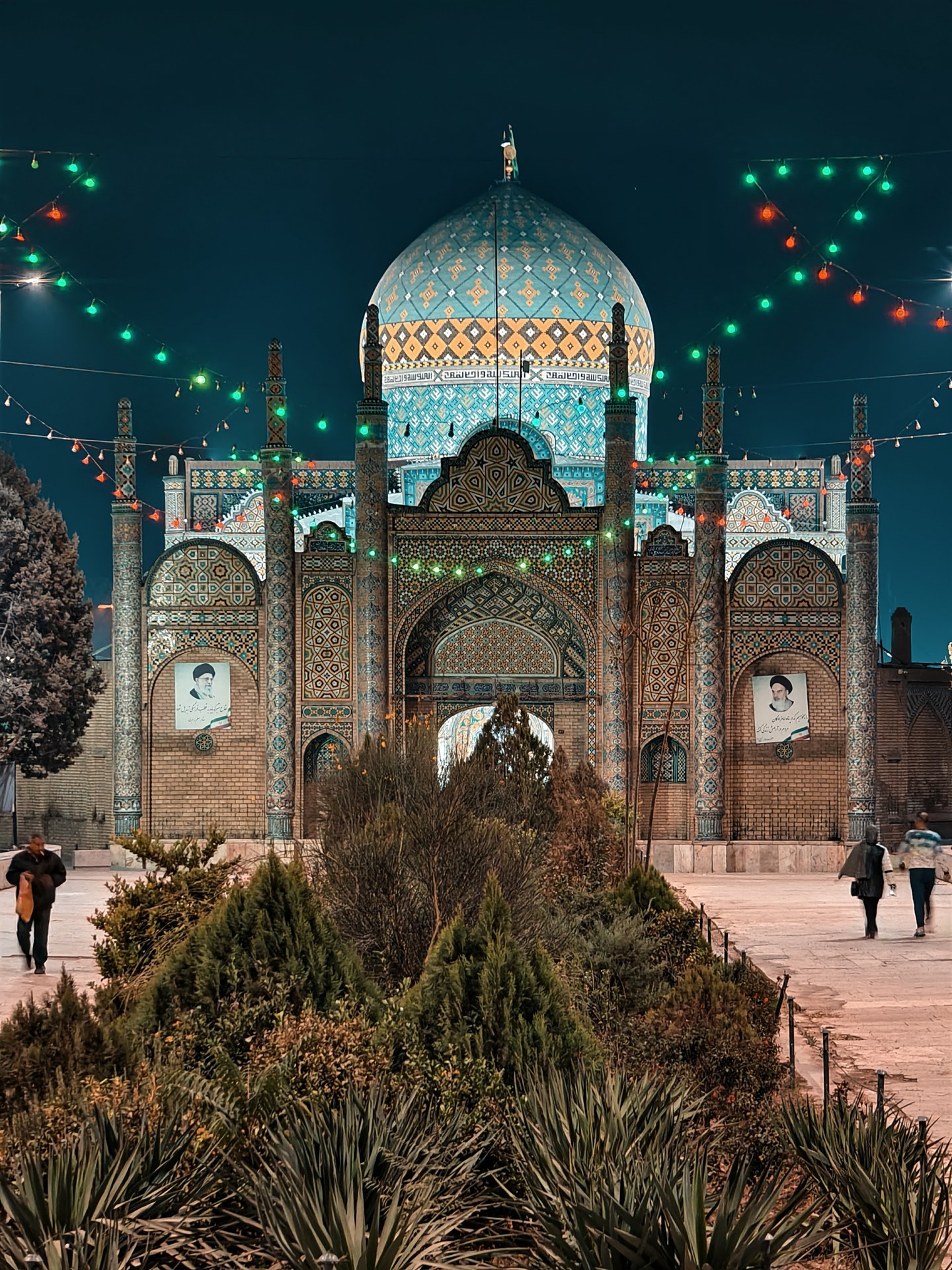
- Peighambariyeh — a shrine with a turquoise dome over the tombs of four Old Testament prophets. Open to visitors, free of charge.
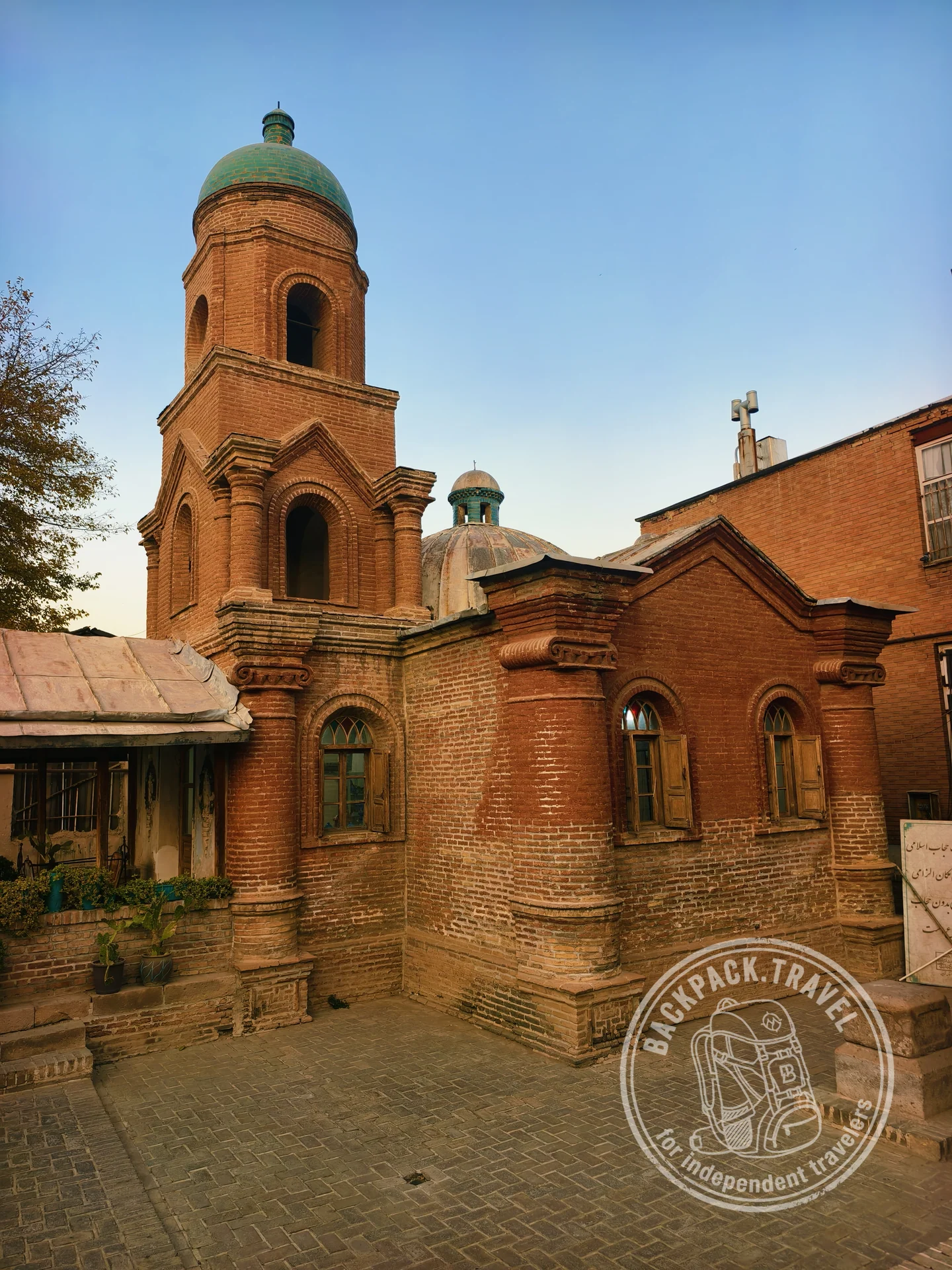
- The Cantor Church — a small Orthodox church with a bell tower, built in the early 20th century for Russian engineers and railway workers. It is now a museum.
- Hosseiniyeh Aminiha — a wealthy 19th-century merchant house with mirrored halls, used for mourning ceremonies.
All of the above fits into one unhurried day; the centre is compact and walkable.
Alamut
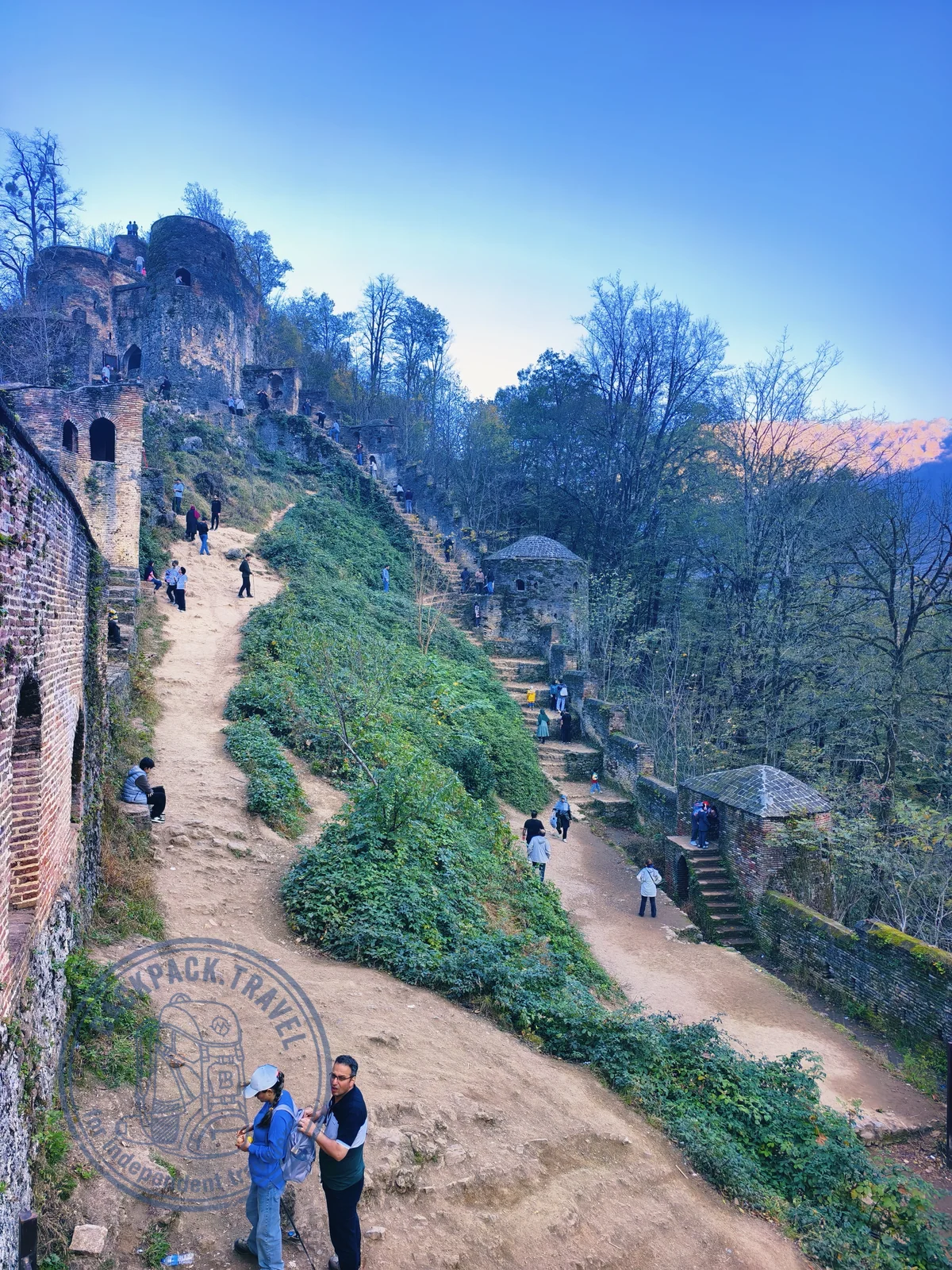
The main reason to stay a second night. Alamut Castle was the stronghold of the Nizari Ismailis, whom European chroniclers called the Assassins. Hassan-i Sabbah held it from the end of the 11th century, and in 1256 it fell to the Mongols under Hulagu. What remains are foundations, cisterns and passages cut into the rock along a long stone ridge, reached by a steep stairway. You go not for the ruins but for the view from them.
In the same valley:
- Lambsar Castle — larger than Alamut and almost deserted;
- Lake Ovan — a mountain lake in a bowl between ridges;
- Garmarud — a village deep in the valley, the start of treks over the Salambar pass to the Caspian coast and on towards Masuleh.
It is about 100 km of switchbacks from Qazvin to Alamut, roughly two hours each way. There is no public transport: people hire a car with a driver for the day. In winter the passes fill with snow and part of the road closes.
Food
Qazvin is known for its own baklava, unlike the Turkish kind: dry, cut in diamonds, flavoured with cinnamon and without syrup, sold by the box in the confectioners. Among local dishes, try gheymeh Nezami (a thick stew of split peas and meat) and ash, the soup, which is made thicker here than elsewhere. In and around the caravanserai there are plenty of tea houses with water pipes and live music in the evening.
Logistics
- From Tehran — about 150 km of motorway, with buses every hour from the Azadi terminal and a journey of two to two and a half hours. There are trains as well.
- Onward north — the road to Rasht and the Caspian runs through Qazvin, which makes it a convenient stop on a Tehran-Caspian-Tabriz route.
- In the city — taxis and local ride apps such as Snapp; distances are short.
- Money. Foreign cards do not work in Iran: bring cash and change it locally, or get one of the local prepaid tourist cards. Prices are easier to reckon in toman (1 toman = 10 rials), although price tags use both.
When to go
April and May, September and October. Qazvin sits at about 1,300 m at the foot of the Alborz, so the summer is easier than Tehran's and the winter is a real one, with snow — and with the Alamut road closed.
Common mistakes
- Planning Alamut as a half-day: with the drive and the climb it is a full day.
- Expecting Isfahan's grandeur — Qazvin is smaller in scale, and its value is the density of different eras within a few blocks.
- Counting on a bank card.
- Coming on a Friday, when some museums and shops are shut.