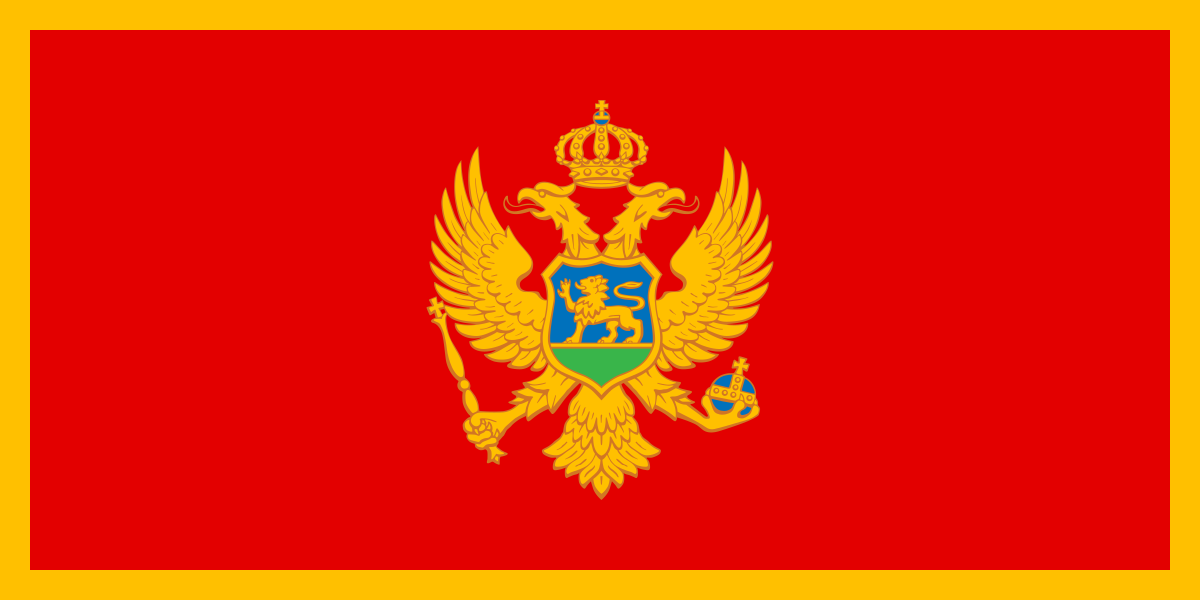
Montenegro
MEA small Balkan country with enormous variety: the Adriatic coast, the deepest canyon in Europe, medieval towns and mountain monasteries, all within a couple of hours of one another. Montenegro uses the euro without being in the EU. The coast gets pricey in summer, but out of season and up in the mountains the prices are among the lowest in Europe.
Where to go #
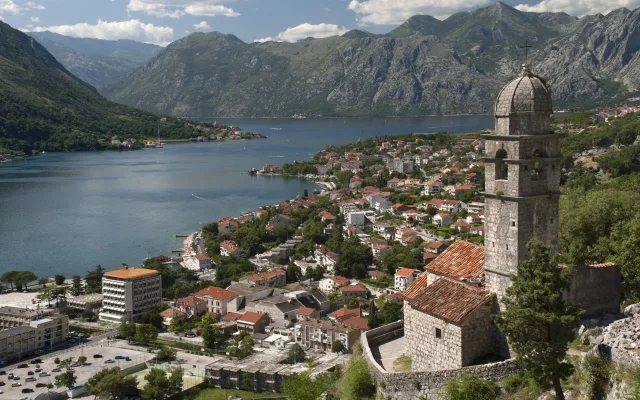
Kotor
A medieval Venetian town set in a fjord-like bay, encircled by ancient walls with a scenic climb to the Fortress of St John.
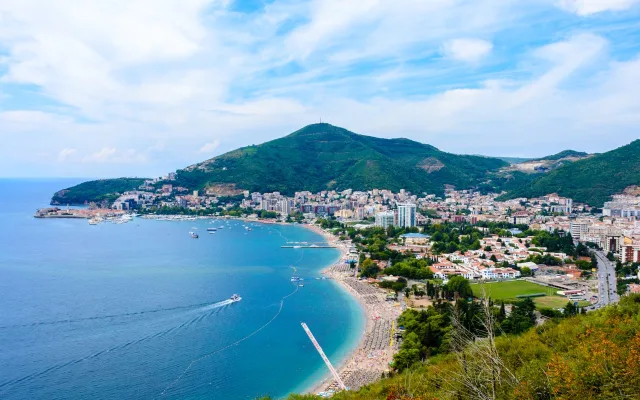
Budva
The Montenegrin Riviera, with an ancient walled town, white beaches and a lively summer club scene on the Adriatic.
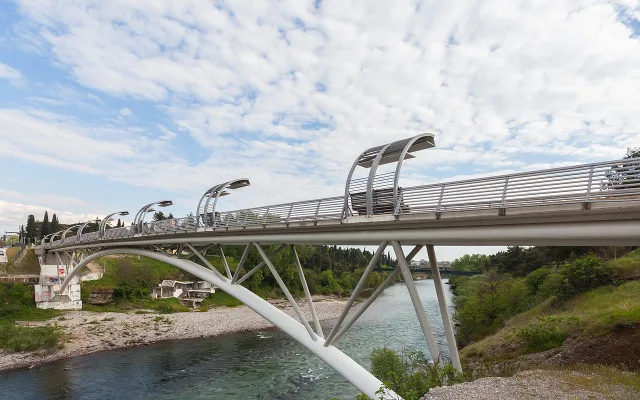
Podgorica
The modest capital of Montenegro — ancient Doclea, the Millennium Bridge and the Cathedral of the Resurrection of Christ.
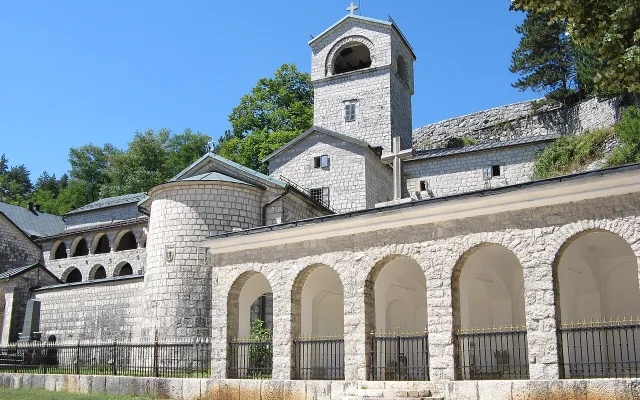
Cetinje
The historic royal capital — the monastery, the museums and the residence of the Njegoš dynasty.
What to see #
Where to go: the Bay of Kotor is compulsory, a set of Norwegian fjords transplanted into the subtropics. Take a boat for 20 euros and tour the landmark islets, including the famous church of Our Lady of the Rocks.
What to see: the fortress of St John above Kotor demands 1,350 steep steps. The view at sunset repays every one of them, and the trail ticket costs about 8 euros.
Worth the trip: Durmitor National Park offers alpine meadows and eighteen crystalline glacial lakes. Black Lake is the most accessible, with an easy and beautiful path looping around it.
Doable in a day: the Tara river canyon is 1,300 metres deep and spanned by the legendary Djurdjevica arch bridge. Rafting on very clean water is popular, as is the zipline across the gorge for 20 euros.
Where to go next: Ostrog monastery is driven straight into a vertical cliff high above the valley. It is a working pilgrimage site with free entry, but the dress code is strict and shoulders must be covered.
What to see on the water: Lake Skadar is best explored by boat, watching for rare Dalmatian pelicans among the lilies. A group tour costs 20 euros, and afterwards the local farm wine is worth an hour.
Worth a photo stop: Sveti Stefan is the most recognisable island-hotel in the world, tied to the shore by a slim causeway. You cannot go in without a room booking, but the classic shot from the beach costs nothing.
Prices #
Currency: Montenegro uses the euro unilaterally, though it is not in the eurozone. Prices are quoted in euros everywhere and nothing else circulates.
Cards: contactless Visa and Mastercard work in supermarkets, larger restaurants and chain petrol stations. In mountain villages, at markets and in the small bakeries called pekare, you need cash.
Costs: the coast in peak summer costs twice what the north does. In July, Budva and Kotor rival Italy on the bill, while in the mountains a filling lunch still runs 10-12 dollars.
ATMs: available in every town, but a single withdrawal can carry a fee of up to 5 euros. Take out larger amounts at once, or use a Wise or Revolut card with a free monthly allowance.
Tipping: about 10% of the bill for good service. Montenegrins often just round up and walk away rather than wait for coins on a saucer.
| Item | Price (USD) |
|---|---|
| Lunch in a kafana | 13 |
| Dinner for two | 50 |
| Cappuccino | 2.8 |
| Fresh burek | 1.9 |
| Beer 0.5 l | 3.5 |
| Bus ticket | 5.5 |
| Taxi across town | 7 |
| Car hire per day | 38 |
| Litre of petrol | 1.8 |
| Fridge magnet | 2.5 |
| National park entry | 4.8 |
| Kilo of prsut | 19 |
| Bottle of wine | 8 |
| Train to Bar | 4 |
Getting around #
Getting there. Tivat and Podgorica take budget flights from London, Berlin, Vienna, Milan and much of Europe, heaviest in summer. Dubrovnik in Croatia is the other common gateway, about two hours from Kotor by road, and worth checking when Montenegrin fares spike.
Buses. The cheapest way to move between resorts, running frequently and to a published timetable. Search on Busticket4.me, though the e-ticket often has to be swapped for a paper one at the station desk.
Car hire. A car buys real freedom in the mountains, where public routes thin out or vanish. Rates start around 20 euros a day when booked ahead through local firms.
Roads. Main routes are in good condition, but expect narrow switchbacks and tight bends above drops. The only toll is the Sozina tunnel at 2.5 euros, which cuts a serious amount off the run to the sea.
Taxis. From Tivat airport to Kotor costs 15-25 euros from the official rank. The big ride-hailing apps do not operate here, so always agree the fare before getting in.
Trains. The scenic line from Podgorica to Bar passes Lake Skadar and climbs through the mountains. It is slow, but the ticket is cheap and the window does the work of a sightseeing tour.
Ferries. The Kamenari to Lepetane crossing spans the bay in five minutes and saves an hour of driving round it. Foot passengers go free and a car costs about 5 euros, paid to the driver in cash.
Fines. Traffic penalties are severe, especially for speed and alcohol. The blood limit is 0.2, which in practice means no drinking at all before driving.
Where to stay #
Apartments. The dominant format, and easiest to find through the international booking platforms. In 2026 a decent room with a sea view starts around 45 euros a night depending on season.
Kotor old town. Sleeping inside the walls is atmospheric but noisy, with bars running late. Cars cannot enter the historic centre either, so luggage gets carried over old cobbles by hand.
Dobrota. This long suburb of Kotor suits a quieter independent stay. There is easy access to the water, plenty of parking and everything important is within walking distance.
Muo. The fishing village directly opposite Kotor has the best panoramic views of the town walls. Prices run below the old town and the atmosphere is far calmer and more genuine.
Mountain huts. In the north around Zabljak you can stay in traditional katun cabins of wood and stone. Simple places with no frills, but the views of the Durmitor peaks make up for it.
Booking. In summer demand outstrips supply and the good places go a couple of months ahead. For July or August, do not expect to turn up and find anything worth having.
Parking. If you hire a car, book only accommodation with its own space. Free parking on the narrow coastal streets is effectively impossible and the fines are steep.
What to eat #
Grilled meat. Try cevapcici, fragrant grilled minced-meat sausages served with raw onion. Portions in a local kafana are enormous, and one plate with a side often feeds two hungry adults.
Prsut. Ham air-cured in the mountains is the national delicacy. It is sliced translucently thin and served with home-made cheese and olives as the classic starter.
Restaurants. Places around the Bay of Kotor always have fresh fish and mussels from the local farms. Avoid the showy spots on the Budva seafront, where prices are inflated and the cooking loses to a simple konoba.
Bakeries. Have breakfast at a pekara, buying hot burek with cheese, meat or spinach for a couple of euros. It is the fastest and most reliable fuel before a mountain walk or a day at the beach.
Drinks. Montenegro is known for the dense red Vranac and for fruit rakija in many forms. Coffee is drunk Turkish style or as espresso, and one cup can occupy several hours.
Cheese. The mountains supply excellent rich cheese, matured in oil or in cloth sacks. Njegusi cheese is the one visitors buy, for its bright, concentrated flavour.
Local cooking. It is simple, filling and unpretentious, closer to good home food than to restaurant craft. Order corba, a thick fish or veal soup that costs little and satisfies completely.
Safety #
The general picture. The country is extremely safe and walking at night is comfortable even in remote districts. Locals are warm towards visitors and serious street trouble is rare.
Driving. The one real danger is the aggressive local style on narrow mountain switchbacks. Concentrate, do not try to keep up, and let faster cars past whenever you can.
The sea. Wild stretches of coast are full of sea urchins, whose spines can end a holiday. Wear thick swimming shoes and do not swim past the buoys on town beaches.
Sun. The Adriatic sun is deceptive and half an hour on the promenade will burn you. Use high-SPF sunscreen and wear a hat through the middle of the day.
Theft. Crime is low, but crowded Budva beaches attract occasional pickpockets. Do not leave phones and wallets unattended when you go for a swim or a drink.
Mountains. Weather in the national parks turns in minutes and the rocky paths get very slippery. Do not hike alone or without offline maps, and always carry water and something warm.
Water. Tap water in most coastal towns is drinkable, though many visitors prefer bottled. Dehydration comes fast in the summer heat, so keep a supply with you.
Etiquette and culture #
Polako. The central concept in local culture, meaning slowly, take your time. It is a whole way of living where nobody rushes, the waiter takes a while to reach the table and business waits for conversation.
Hospitality. Montenegrins are generous and may invite you into their home simply because you asked for directions politely. Refusing offered food or home-made rakija is poor form and can genuinely offend.
Religion. Orthodoxy matters here, and monasteries and churches are busy places. Visiting them, cover shoulders and knees, keep quiet and respect the customs.
Cats. In Kotor cats are the unofficial symbol, living everywhere on the old marble streets. The whole town feeds them, they appear on every souvenir and there is even a museum devoted to them.
Family. Respect for elders and strong family ties underpin society. You constantly see three generations eating together in restaurants or strolling the waterfront as a group.
Celebrations. Montenegrins love a lavish party with live music and folk dancing until dawn. Stumbling into a local wedding or a town festival shows you the real energy of the place.
Pride. People are fiercely proud of their long history and independence, so avoid political argument. Respect the flag and the traditions and you become a welcome guest anywhere.
Connectivity #
Language. Montenegrin is a South Slavic language, effectively the same as Serbian, Bosnian and Croatian, so one phrasebook covers the region. Younger people and anyone in tourism speak good English.
Learn three words. A simple "hvala" instead of thank you, or "zdravo" instead of hello, changes how you are treated in markets and small shops immediately.
Mobile data. Coverage reaches nearly the whole coast and 4G works even in the mountains. Inside the old towns the signal drops occasionally because the stone walls are extremely thick.
SIM cards. Buy one at any newspaper kiosk or from the One and m:tel shops. Activating a tourist bundle with plenty of data requires your passport.
Roaming. Montenegro is outside the EU, so an EU plan may charge extra here despite the euro; check your operator's Western Balkans terms or buy local data instead.
Wi-Fi. Free access is in practically every cafe and guesthouse. Speeds are usually fine for remote work, though evening congestion in peak season slows things down.
Navigation. For walking routes in Durmitor download offline maps, since forest coverage is patchy. Google Maps handles the main roads well but will occasionally route you onto a narrow gravel track.
Phrasebook #
| English | Montenegrin | Pronunciation |
|---|---|---|
| Good day | Dobar dan | DO-bar dan |
| Hi | Zdravo | ZDRA-vo |
| Thank you | Hvala | HVA-la |
| Please | Molim | MO-lim |
| Yes / No | Da / Ne | da / neh |
| Good | Dobro | DO-bro |
| How much is it? | Koliko košta? | KO-li-ko KOSH-ta? |
| The bill, please | Račun, molim | RA-choon, MO-lim |
| Tasty | Ukusno | OO-koos-no |
| I understand | Razumijem | ra-ZOO-mi-yem |
| Sorry, excuse me | Izvinite | iz-vi-NEE-teh |
| Goodbye | Doviđenja | do-vee-JEH-nya |
| Water | Voda | VO-da |
| Beer | Pivo | PEE-vo |
| Come on, let's go | Ajde | AI-deh (slang) |
| Deal, agreed | Važi | VA-zhee (slang) |
| Slowly, take it easy | Polako | po-LA-ko (slang) |
| Beautiful | Lijepo | LYEH-po |
| Help! | Upomoć | oo-PO-moch |
| Where is it? | Gdje je? | g-dyeh yeh? |
Good to know #
Registration. Every foreign visitor must be registered with the police or a tourist office within 24 hours of arrival. Hotels do it automatically; in a private apartment, make the owner register you and check it was done, because staying unregistered means a large fine on departure.
Tourist tax. The charge is usually 1 euro per adult per night, half for 12- to 18-year-olds and nothing for younger children. It is paid at a tourist information point or at a post office against the receipt you are given.
Emergency help. The single number for all services is 112 from any mobile. Operators generally speak English.
Transport sites. Bus timetables for the whole country live on Busticket4.me, with online tickets. For car hire, Localrent works with the local firms rather than the global chains.
Airports. Tivat is only 8 km from Kotor and Podgorica 12 km from the capital's centre. There is no convenient bus link from either, so arrange a transfer or taxi in advance.
Opening hours. Shops and banks close entirely on Sundays, so plan purchases around that. On weekdays the large supermarkets stay open late, often until 22:00.
Insurance. Cover is not formally required for entry, but medical treatment for foreigners is expensive. Take a policy that includes mountain activities so a hiking injury does not cost hundreds of euros.
National parks. Entry to Durmitor or Lovcen costs about 3-5 euros per person, which maintains the trails. Rangers do check tickets on the popular routes.