
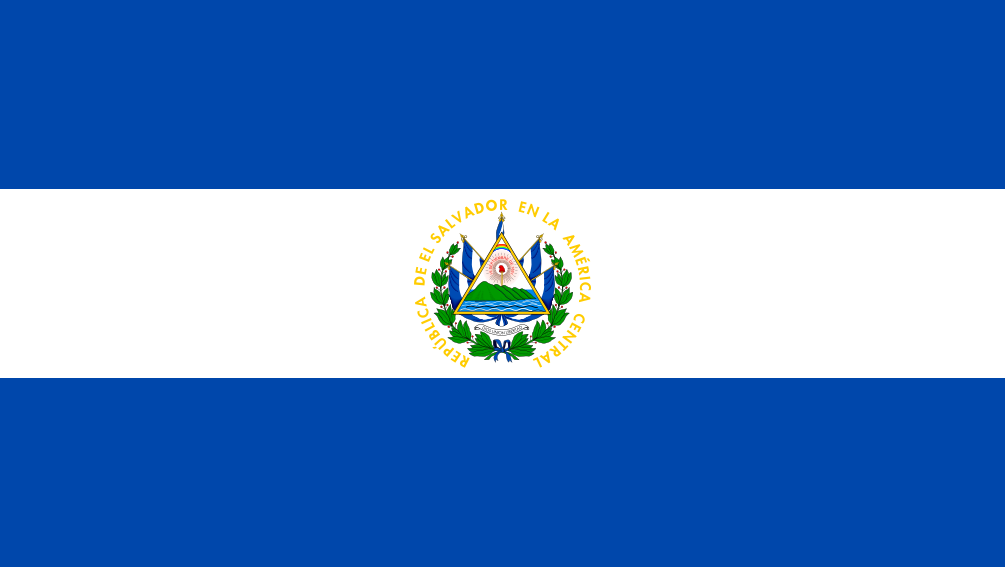
Safety in El Salvador
A rating built from four independent indices, plus scams, laws and what to do when something happens
Rating calculated from the indices below
Indices checked on 10.08.2026
Position in global indices
Save these before you fly
The general picture
Overall: Crime has fallen dramatically in recent years and the country is now calmer than its neighbours. Tourist areas are visibly patrolled.
In the capital: Do not wander into the poorer outlying districts. Stay in the central neighbourhoods and keep expensive equipment out of sight in a crowd.
After dark: Rule out intercity travel once the sun goes down. Highway lighting is poor and animals on the road are a real hazard.
The ocean: The Pacific here is treacherous, with powerful rips. Never swim alone on an unpatrolled beach and pay attention to the warning flags.
Getting help: For any problem, look for the tourist police. Officers in the dedicated uniform are trained to help foreigners and often speak some English. Check your own government's travel advisory before you book.
Health: Do not drink the tap water even in expensive places. Buy bottled water for drinking and for brushing your teeth.
How tourists get scammed
El Salvador has undergone a radical transformation: a country that topped world homicide rankings for years has sharply reduced violent crime since the introduction of the state of exception. The change is real and acknowledged by international observers, though its cost is the subject of serious human rights debate.
What this means in practice. The streets of San Salvador, until recently controlled by gangs, have become accessible. Tourism is growing and the surf coast is developing. Urban caution is still needed: pickpockets, car break-ins and fraud have not disappeared.
Taxis. Apps work; street cars should not be taken.
ATMs. Withdraw in daylight inside banks.
Surf camps. El Tunco, El Sunzal, Punta Roca. The industry is young and quality varies.
Currency. The US dollar and bitcoin as legal tender. In practice almost everything is settled in dollars, and bitcoin is not universally accepted.
What gets you fined or jailed
The state of exception. In force since 2022 and periodically extended. It suspends a number of constitutional guarantees: detention without warrant, restricted access to a defence, and extended custody periods. For a tourist this means a heavy security presence and that detention on suspicion happens more easily than in an ordinary legal system.
Tattoos. A Salvadoran specificity: tattoos have historically been associated with gangs, and people have been detained on that basis under the state of exception. A tattooed foreigner may be stopped for checks. Worth knowing in advance.
Photography. Do not film soldiers, police or detentions.
Drugs. The law is strict.
Drones. Permission is required.
Volcanoes and nature. Santa Ana and Izalco are active volcanoes; ascents go with a guide and park permission.
Roads. Driving between towns at night is still best avoided, though the situation has improved.
Health: vaccines, medicines, care
Vaccinations. Hepatitis A and typhoid are advised. A yellow fever certificate is required from arrivals out of endemic countries.
Dengue, chikungunya and Zika. Present, with outbreaks in the rainy season.
Water. Bottled only.
The sea is the main physical risk. El Salvador's Pacific coast is known for powerful surf, which is precisely why people come. For ordinary swimming those same waves and rip currents are dangerous, and lifeguards are few. Drownings occur regularly.
Sun. Tropical UV.
Volcanoes and earthquakes. The country is seismically active with live volcanoes. Follow warnings.
Healthcare. San Salvador has acceptable private clinics. Anything serious means evacuation. Insurance is needed.
Emergency number is 911.
Police: how to handle them
El Salvador has changed radically, and homicide figures have fallen several-fold. But the nature of that safety is particular.
Police and military presence is very heavy. Patrols, checkpoints and document checks are everywhere. For a tourist this is more a safety factor than otherwise, but it looks unfamiliar.
The state of exception. It means detention happens more easily and legal guarantees are limited. This applies to foreigners too. Always carry documents.
Tourist police. POLITUR operates in El Tunco, Suchitoto, Santa Ana and other tourist points.
Reporting theft. Reports are taken and certificates issued.
What actually matters. El Salvador today is among Central America's safest countries for street crime, and that is measurable fact rather than propaganda. It is simultaneously a country with suspended legal guarantees, which is worth knowing. For an ordinary tourist the trip passes calmly.
Emergency number is 911.
What else to check
The rating is built from open international indices and foreign-ministry advisories; links to the primary sources are in the cards above. Conditions change faster than annual reports come out — check current travel advice before you go.