
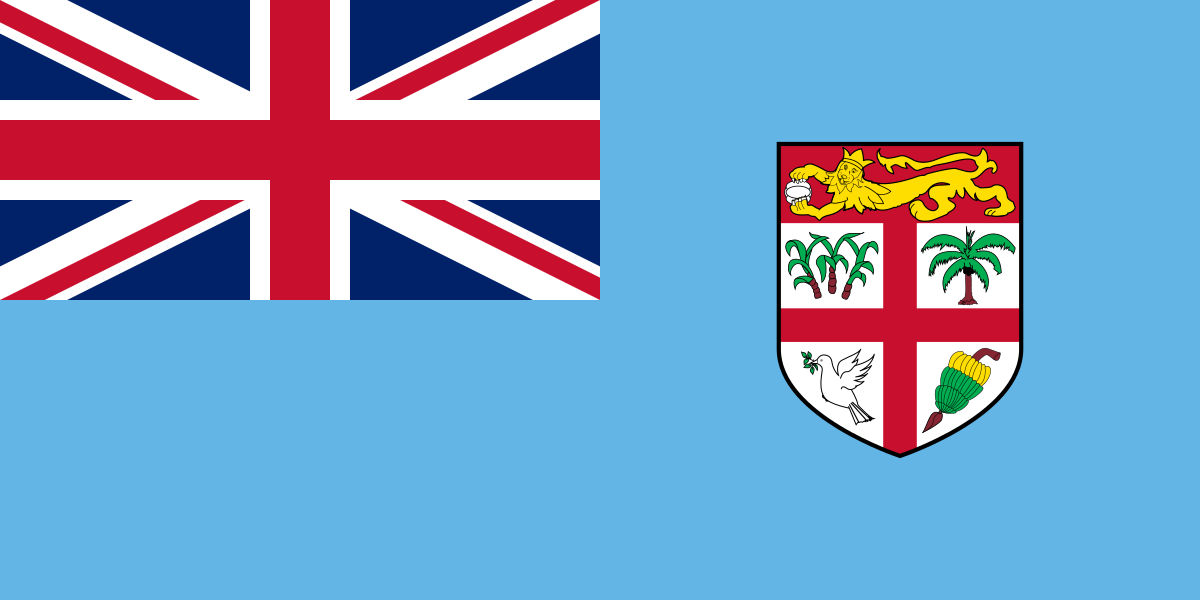
Safety in Fiji
A rating built from four independent indices, plus scams, laws and what to do when something happens
Rating calculated from the indices below
Indices checked on 10.08.2026
Position in global indices
Save these before you fly
The general picture
In the towns: crime is moderate, but don't walk alone in Suva or Nadi after dark. Pickpockets work the crowds at markets and busy bus stations.
Currents: always ask locally about tides before swimming out to a distant reef. The channels between islands run hard and can carry even a strong swimmer out to open water.
Cyclones: the season runs November to April, bringing severe storms and flooding. Check the official forecast before any small-boat trip, and take resort warnings seriously.
Sun: equatorial sun burns fast even under cloud. Use maximum-factor cream and stay off open beaches in the middle of the day.
In the water: never touch coral or the brightly coloured things living in it. Reef cuts heal slowly and get infected easily, so wear reef shoes to get in and out.
Drinking water: tap water is broadly safe in the main towns, but on the islands buy bottled. That one habit prevents most holiday stomach problems.
Healthcare: modern hospitals exist only on Viti Levu. Take insurance that covers helicopter transfer from remote areas, and check your own government's travel advisory before you go.
How tourists get scammed
Fiji is a calm country with friendly people. Violent crime against tourists is limited and the schemes are mild.
"Swordsmen" in Nadi and Suva. A local classic: a friendly man starts a conversation in the street, asks your name, then carves it into a wooden mask or sword and hands it over "as a gift". A demand for money follows, sometimes insistently. Do not give your name to strangers in the street and take nothing into your hands.
Kava ceremonies. A genuine Fijian tradition and a good experience. But tourist venues charge many times over, and sometimes the "ceremony" ends with a demand for a village donation. Confirm the price.
Taxis. Meters exist but are not always switched on. Ask for the meter or agree beforehand.
Island excursions. The Yasawas and Mamanucas are reached by boat transfer. Check whether the return is included.
Theft in budget accommodation. Fiji's main problem is not assault but theft from shared rooms and from the beach.
What gets you fined or jailed
Drugs. The law is strict and Nadi airport is screened thoroughly.
Biosecurity. Importing food, seeds, plants and wooden items is regulated, and everything must be declared. Wooden items are checked on departure too.
Drones. Permission is required, and flights over villages and resorts need clearance.
Village etiquette. Visiting a Fijian village has rules: bring a sevusevu (usually kava), remove hat and sunglasses, do not touch anyone's head, and dress modestly with shoulders and knees covered — a sulu is advisable for women. Entering a village uninvited is not done.
Coral and marine life. Collecting coral and shells is prohibited.
Land. Most land in Fiji is under communal ownership. A beach in front of a village may be communal, and asking permission is the norm.
Roads. Driving is on the left, and nobody drives between towns at night.
Health: vaccines, medicines, care
There is no malaria. Fiji is malaria-free and prophylaxis is unnecessary.
Dengue, chikungunya and Zika. Present, with outbreaks. Repellent is needed.
Leptospirosis and typhoid. Outbreaks occur after flooding. Do not swim in muddy fresh water after rain.
Vaccinations. Hepatitis A and typhoid. A yellow fever certificate is required from arrivals out of endemic countries.
Water. Safe in resort areas and Nadi; bottled in villages.
The sea. The reefs are beautiful and dangerous: coral cuts heal slowly, and stonefish and sea urchins lie in the shallows. Reef shoes are essential. Currents in the reef passes are strong.
Cyclones. The season runs November to April. Fiji takes hits regularly and hard.
Healthcare. Suva and Nadi have private clinics at a basic standard. A hyperbaric chamber exists, but divers need separate insurance. Anything serious means evacuation to Australia or New Zealand.
Emergency numbers: 911; 917 for police.
Police: how to handle them
Fiji is a calm country and the police are correct with tourists.
Reporting theft. Reports are taken and certificates issued. English is official.
Suva at night. The capital requires urban caution after dark: the areas near the market and the port are not for walking. Nadi and the resort islands are calm.
Political history. Fiji has been through several military coups, but conditions are now stable. Politics is best not discussed with locals: relations between Indigenous Fijians and Indo-Fijians are a sensitive subject.
Island resorts. Crime does not exist as a phenomenon on the private islands.
What actually matters. Fiji's main risks are the reef, cyclones and distance from serious medical care. People here are exceptionally friendly, and "Bula!" in the street is a greeting rather than the opening of a scheme.
Emergency number is 911.
What else to check
Updated
The rating is built from open international indices and foreign-ministry advisories; links to the primary sources are in the cards above. Conditions change faster than annual reports come out — check current travel advice before you go.