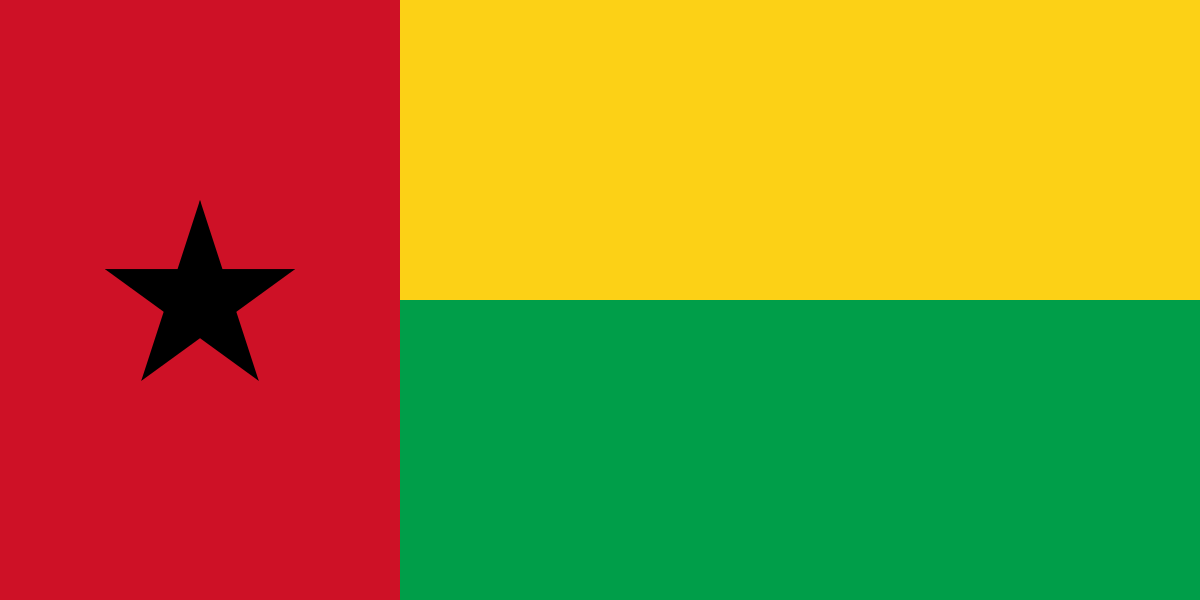
Guinea-Bissau
GWA tiny Portuguese-speaking state in West Africa holding one of the last untouched archipelagos on the continent, the Bijagós. Saltwater hippos, sea turtles, mangrove forest, dozens of uninhabited islands and the animist traditions of the Bijagó people. The country is politically unstable but strikingly friendly to the few travellers who make it here. One of the least visited places on the planet.
Where to go #
Bissau
The capital opens with the colonial texture of Bissau Velho, and the old centre, where the arcades are slowly being swallowed by greenery, is what you come for. It is the entry point, and the place everyone leaves from to reach the islands.
Bubaque
The transport hub of the Bijagos archipelago. There are a couple of cafes here, enough to sort out an island trip in a day. The town is dusty but alive.
Bolama
People come to this town for the ruins of the old capital. The architectural decay creates an atmosphere of abandoned paradise. If you want beautiful ruin and do not know where to go for it, this is your answer.
Cacheu
The oldest settlement in the country, with a fort and thick mangroves around it. What to see in Cacheu is the slave trade memorial. The road from the capital takes about three hours by shared minibus.
Varela
A village with the best beaches in the region. People come for white sand and the near-total absence of other people. This is a place for quiet and genuinely wild coast.
Gabu
A town in the east that works as an important trading centre. The local market, where several cultures overlap, is worth a trip. This is where you see life without any polish on it.
What to see #
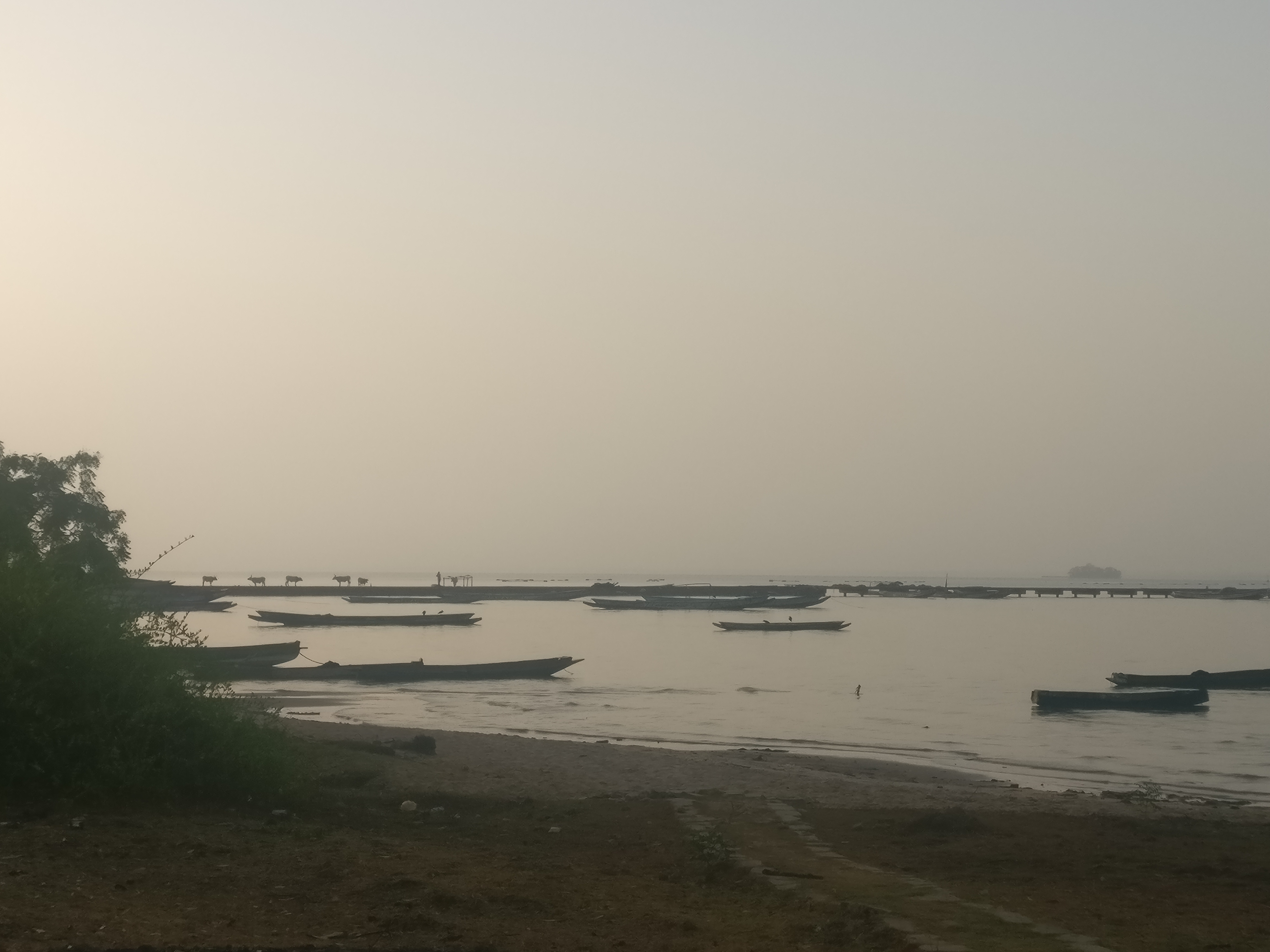
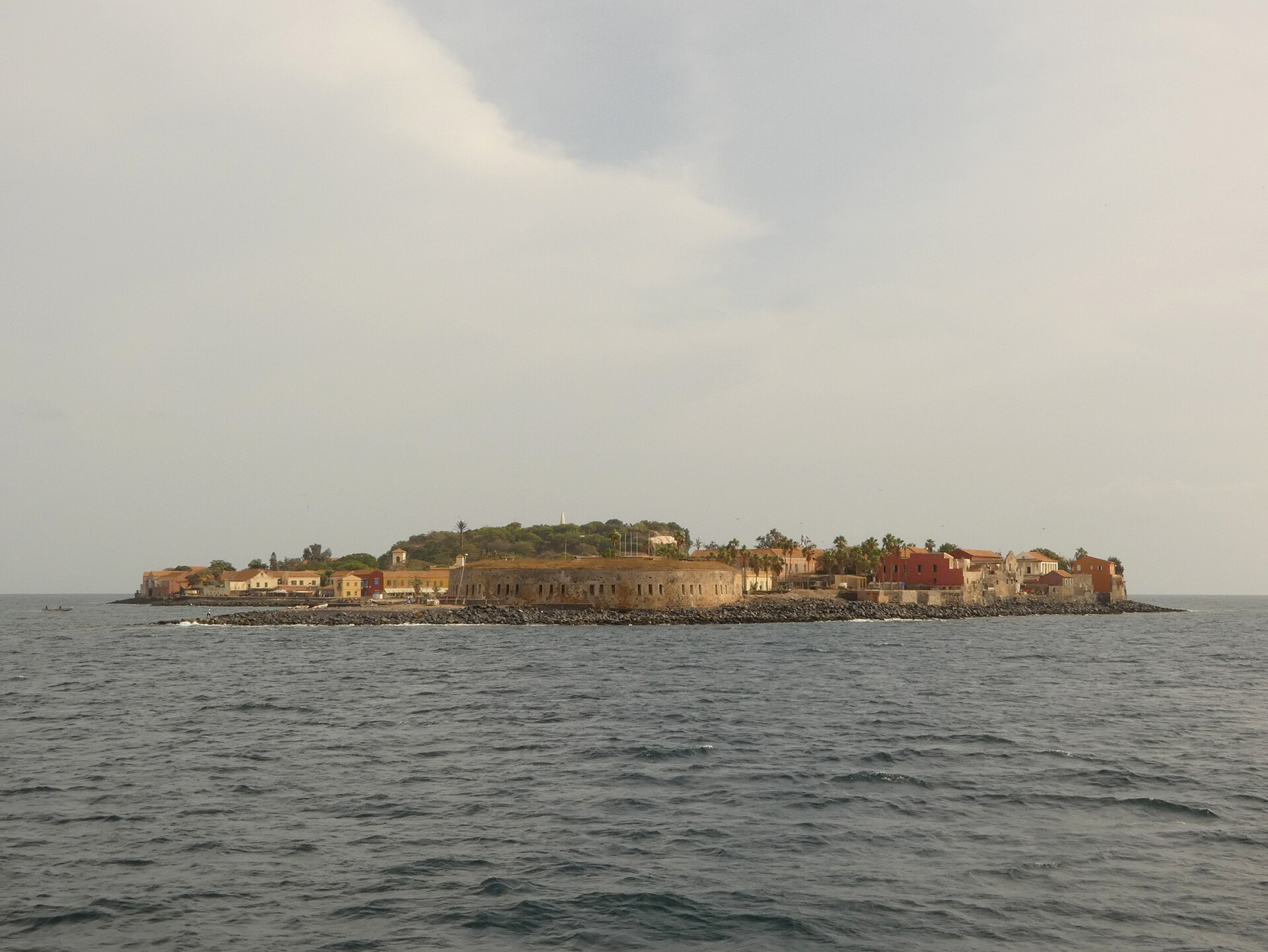
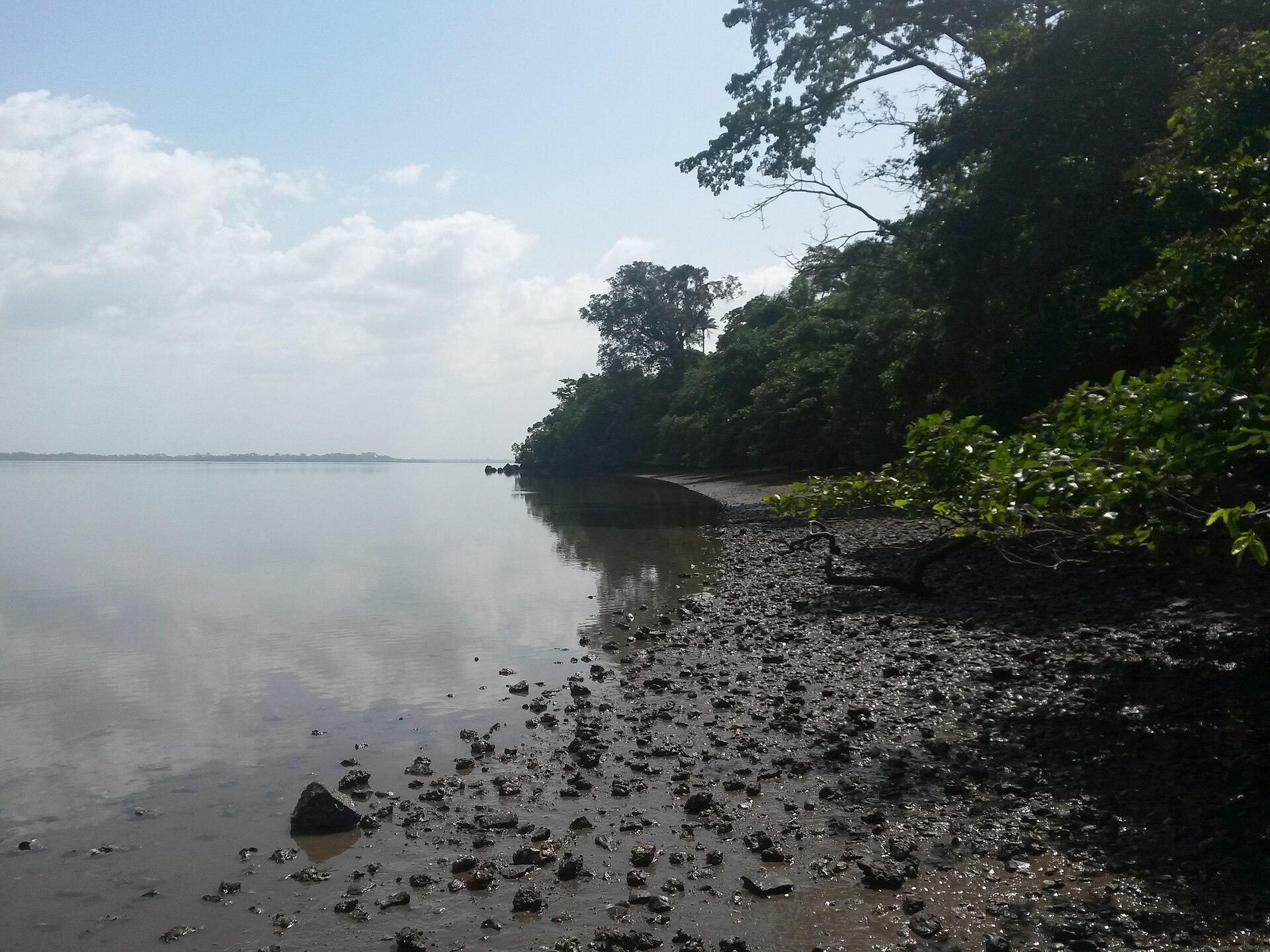
Bijagos archipelago: This is the reason to make the trip at all. Eighty-eight islands hold unusual wildlife and living animist tradition. Most are uninhabited, which gives the whole place a sense of discovery.
Orango National Park: The place to see the saltwater hippos, which exist almost nowhere else. They come out onto the beaches at sunset, and it is a genuinely rare sight. If you want wildlife, this is where to go.
Joao Vieira marine park: You can watch green turtles nesting in a single day here. It is the key destination for anyone travelling for the ecology. The snorkelling opens up an untouched and very rich underwater world.
Bandim market: In Bissau this stands in for every museum in the country. The vast maze of stalls is where you see real daily life. Everything is sold here, from bright printed cloth to freshly roasted cashews.
Cacheu fort: A historic site that speaks directly to the slave trade era. The ruined walls make a powerful impression. To understand the country's colonial past, this visit is essential.
Cantanhez forest: The south holds the last real stands of jungle in the country. What to see here is chimpanzees in their own habitat. The flora of this wild region is genuinely startling.
Prices #
Currency: The country uses the West African CFA franc, pegged firmly to the euro. It is a shared regional currency, so leftovers travel fine into neighbouring Senegal. The rate has been stable for decades.
Cards: Plastic is close to a useless accessory here. The Ecobank machines in Bissau sometimes dispense cash, but they are often out of order or refuse foreign cards outright, so plan on carrying cash for the whole trip.
Exchange: Bring euros; they get the best rate at banks or with the dealers at Bandim market. US dollars are taken reluctantly and at a poor rate. Keep plenty of small notes for taxis and minibuses.
Costs: Mainland prices are low, but everything doubles on the islands, where food, fuel and fresh water all arrive by boat from the capital. Budget travellers should reckon on at least fifty dollars a day.
| Item | Price (USD) |
|---|---|
| Lunch at a local cafe | 4.0 |
| Local beer 0.5l | 1.2 |
| Bottled water 1.5l | 0.5 |
| Taxi across Bissau | 3.0 |
| Street portion of rice | 1.5 |
| Strong espresso | 0.8 |
| Motorboat hire for a day | 60.0 |
| Kilo of cashew nuts | 1.0 |
| Ferry ticket to Bubaque | 4.5 |
| Local SIM with data | 2.0 |
| Simple guesthouse in the capital | 15.0 |
| Dinner of grilled sea fish | 10.0 |
| Short candongo ride | 0.6 |
| Night in an island eco-lodge | 50.0 |
Getting around #
Shared minibuses: Intercity travel runs on candongas, ancient Mercedes and Peugeot vehicles. They leave when they are full, which can take hours. It is always cramped, but it is the cheapest way to move.
The ferry: A weekly boat connects Bissau with the Bijagos archipelago. It leaves the Ponta Cais jetty on Fridays and comes back on Sundays. The crossing to Bubaque takes around four hours.
Small boats: Wooden pirogues do the island-to-island hops. It is slow and not always dependable during the rains. Chartering a fast boat privately costs a lot but saves enormous amounts of time if you want to see the parks.
In the capital: Blue and white taxis and blue minibuses cover Bissau. There are no meters, so agree the price before you get in. A ride within the centre usually comes to a couple of dollars for a visitor.
Car hire: Finding a self-drive car is practically impossible. If you need a 4x4 to head north, the workable route is arranging a private owner through your hotel. Roads outside Bissau are frequently in poor shape.
Flights: Osvaldo Vieira international airport sits nine kilometres from the centre, and a taxi is the only way in. There are no scheduled domestic flights to the islands.
Where to stay #
The capital: Bissau has the widest choice, from expensive business hotels down to simple pensions. Look for places with their own generator, because power cuts in the city are the norm. Air conditioning runs on a schedule.
The islands: Bubaque and Bolama have a handful of guesthouses with minimal comforts. Be ready for a shower that turns out to be a bucket of water. A mosquito net over the bed is not optional here.
Lodges: Remote islands like Rubane and Orango have eco-camps. Prices are European, because every resource is shipped from the mainland. It is the best option if you want comfort in the middle of untouched country.
The provinces: Finding a bed in Cacheu or Bafata is harder. It usually means guest rooms at a Catholic mission or a private house. There is no service to speak of, but you see how people actually live.
Booking: The big booking sites see only a fraction of the capital's hotels. For island accommodation, message owners directly on WhatsApp. Turning up and finding a room works, except during carnival when everything is taken.
Conditions: Hot water is rare outside the most expensive hotels in Bissau. Electricity generally runs from six in the evening until midnight. Carry a large power bank and keep it charged.
What to eat #
The staple: Local cooking rests on rice, fish and palm oil. The signature dish is jagacida, rice cooked with beans and vegetables. It is filling, cheap and sold at street stalls on every corner.
Delicacies: Try the oysters, harvested straight off mangrove roots, grilled over coals or served in a hot sauce. It is a genuinely unusual product, though it is worth checking they are freshly cooked before you order.
Soups: Caldo de mancarra is a thick stew built on peanut paste with chicken or fish. It is fragrant and very sustaining. You will normally find it at lunchtime in small family cafes.
Cashews: The country is one of the world's largest producers. In harvest season you can try the fresh cashew fruit and the wine pressed from its juice. The nuts are roasted right there on the street, as fresh as they come and costing almost nothing.
Drinks: The local spirit is cana, a cane distillate. Palm wine is drunk everywhere and ferments fast in the heat. Coffee comes Portuguese style, a very strong espresso.
Fish: On the Bijagos, order grilled barracuda or sea bass. It arrives straight from the fishermen's boats. It is usually served with a large mound of rice and a fiercely hot piri-piri sauce.
Safety #
Politics: The situation has stayed unsettled since the events of 2025. Steer clear of any political gathering or concentration of soldiers in the capital. Demonstrations can start with no warning and turn violent quickly, so check your own government's travel advisory before you book.
Crime: Violent crime against visitors is rare, but pickpocketing in Bissau is constant. Bandim market calls for particular care. Do not carry expensive kit or large sums of cash in plain sight.
Unexploded ordnance: Some eastern provinces still hold unexploded munitions. Never step off established paths in rural areas. Warning markers may have disappeared long ago.
Health: Malaria is the main threat to travellers. Use repellent and always sleep under a net. Medical services in the country are in poor shape, and anything serious means an urgent flight to Senegal or Europe.
Water: Drink bottled water only. Ice in street cafes carries the same risk. Wash all fruit carefully and keep on top of hand hygiene to avoid serious stomach infections.
The ocean: Currents around the islands can be strong and deceptive. Swimming off the uninhabited Bijagos beaches needs care, since there is nobody watching. Keep an eye on the tides so you are not cut off from shore.
Etiquette and culture #
Religion: Islam, Christianity and ancient animism coexist here in a way that surprises most visitors. On the Bijagos, belief in ancestral spirits outweighs the world religions. Sacred groves and masks are central to daily life.
Matriarchy: Some islands in the archipelago retain elements of matriarchal organisation. Women there choose their husbands and control resources. It is a social structure with few parallels in Africa.
Carnival: The cultural event of the year falls in February. The streets of Bissau fill with people in extraordinary masks built from bulls' heads. It is a mixture of Portuguese tradition and African mysticism, and it should not be missed.
Music: The national rhythm is gumbe. This energetic music pours out of every speaker in Bissau. It pulls the different ethnic groups together and is the real pulse of this small Atlantic country.
Etiquette: Arriving in an island village, the convention is to find the chief first. A polite greeting and a small gift open a great many doors. Photographing people without asking is strongly discouraged.
Language: Guinean Creole is not simply a means of communication, it is a marker of national identity. Despite the Portuguese inheritance, this is what people speak and sing in. A couple of phrases in Creole changes how you are treated instantly.
Connectivity #
Mobile: Two operators cover the country, Orange and MTN. A SIM is sold at any kiosk in Bissau and registration needs your passport. Reliable 4G exists only in the capital and the larger towns.
Internet: Connection speeds fall away sharply outside Bissau. On the far Bijagos islands there may be no signal at all for days at a stretch. Hotel Wi-Fi is intermittent and depends entirely on the generator.
Electricity: Power is the country's great shortage. Sockets are the European type, but voltage fluctuates badly. Bring serious power banks and charge everything the moment the mains come back on.
Out on the islands: Heading to the archipelago, warn people at home that you may be unreachable. Radio between boats is still an important channel. In an emergency, the people you can count on are the locals around you.
English and Creole: English is barely spoken outside a few hotels in the capital, and Portuguese or Creole will serve you far better. Menus and signs are in Portuguese, so an offline translator earns its keep.
Phone manners: Conversations in public are loud and animated. Do not be surprised when the person next to you in a taxi discusses their business at full volume. Bissau-Guineans are open and highly sociable.
Phrasebook #
| English | Portuguese | Pronunciation |
|---|---|---|
| Hello | Olá | oh-LA |
| How are you? | Como está? | KOH-moo shtah |
| Thank you | Obrigado | oh-bree-GAH-doo |
| Please | Por favor | poor fah-VOR |
| Yes | Sim | seeng |
| No | Não | nowng |
| Water | Água | AH-gwa |
| Food | Comida | koo-MEE-da |
| How much is it? | Quanto custa? | KWAN-too KOOSH-ta |
| Expensive | Caro | KAH-roo |
| Help | Ajuda | ah-ZHOO-da |
| Friend | Amigo | ah-MEE-goo |
| Where is the port? | Onde está o porto? | ON-dee shtah oo POR-too |
| Beer | Cerveja | ser-VAY-zha |
| Fish | Peixe | PAY-shuh |
| The bill, please | A conta, por favor | a KON-ta poor fah-VOR |
| Beautiful | Bonito | boo-NEE-too |
| Foreigner, white person | Branco | BRAN-koo |
| No problem | Sem problemas | seng proo-BLEH-mash |
| All right, OK | Está bem | shtah BAYNG |
Good to know #
Consular cover: Very few countries maintain a mission in Bissau, and most handle the country from Dakar in neighbouring Senegal. Find out which post covers your nationality and write its emergency number down somewhere other than your phone.
Health: Bring a supply of antimalarial medication with you. Malaria test kits are sold in Bissau pharmacies, but their quality is uncertain. On the remote islands there is no medical help of any kind.
Clothing: Choose light natural fabrics. In the north, where the population is more heavily Muslim, cover shoulders and knees. On the islands attitudes are relaxed, though traditional villages do not appreciate too little clothing.
Tides: The tide table governs everything on the Bijagos. Boats move only on high water; otherwise they simply stick in the mud. Download a tide app before you lose reliable internet.
Souvenirs: The best buys are Bijago wooden masks and pano di pinti cloth. Do not buy anything made from turtle shell, which will be seized at customs. Roasted cashews are the simplest and best gift to take home.
Photography: Do not point a lens at bridges, police or anything military. It can lead to detention and a lengthy conversation. Always ask "pode?" before photographing anyone.