
Iraq
The cradle of civilisation — Mesopotamia, the land between the Tigris and the Euphrates, where writing, mathematics and the first cities began. Babylon, Ur and Nineveh put history within arm's reach. Kurdistan in the north offers mountains, canyons and hospitality, while the holy cities of Najaf and Karbala draw millions of pilgrims. Iraq is slowly opening to tourism and remains one of the most unconventional destinations anywhere.
Where to go
#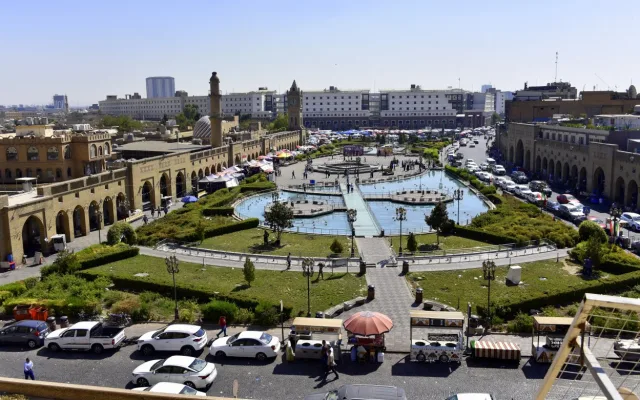
Erbil
The capital of Iraqi Kurdistan: a UNESCO-listed citadel on an artificial mound, the Qaysari Bazaar at its foot, and the Kurdish mountains a couple of hours away.
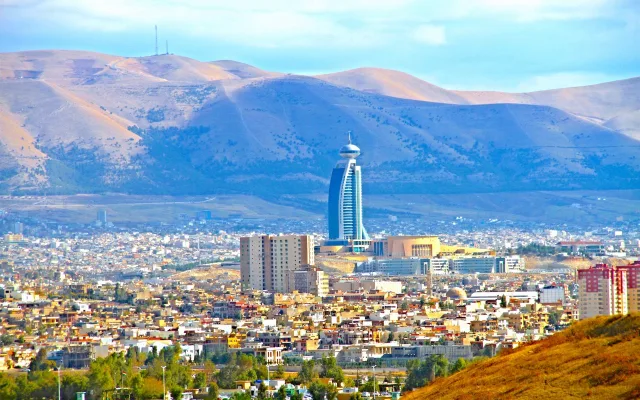
Sulaymaniyah
The cultural capital of Iraqi Kurdistan: the country's second-largest museum, the Amna Suraka prison memorial, a huge covered bazaar and green mountains on three sides.

Baghdad
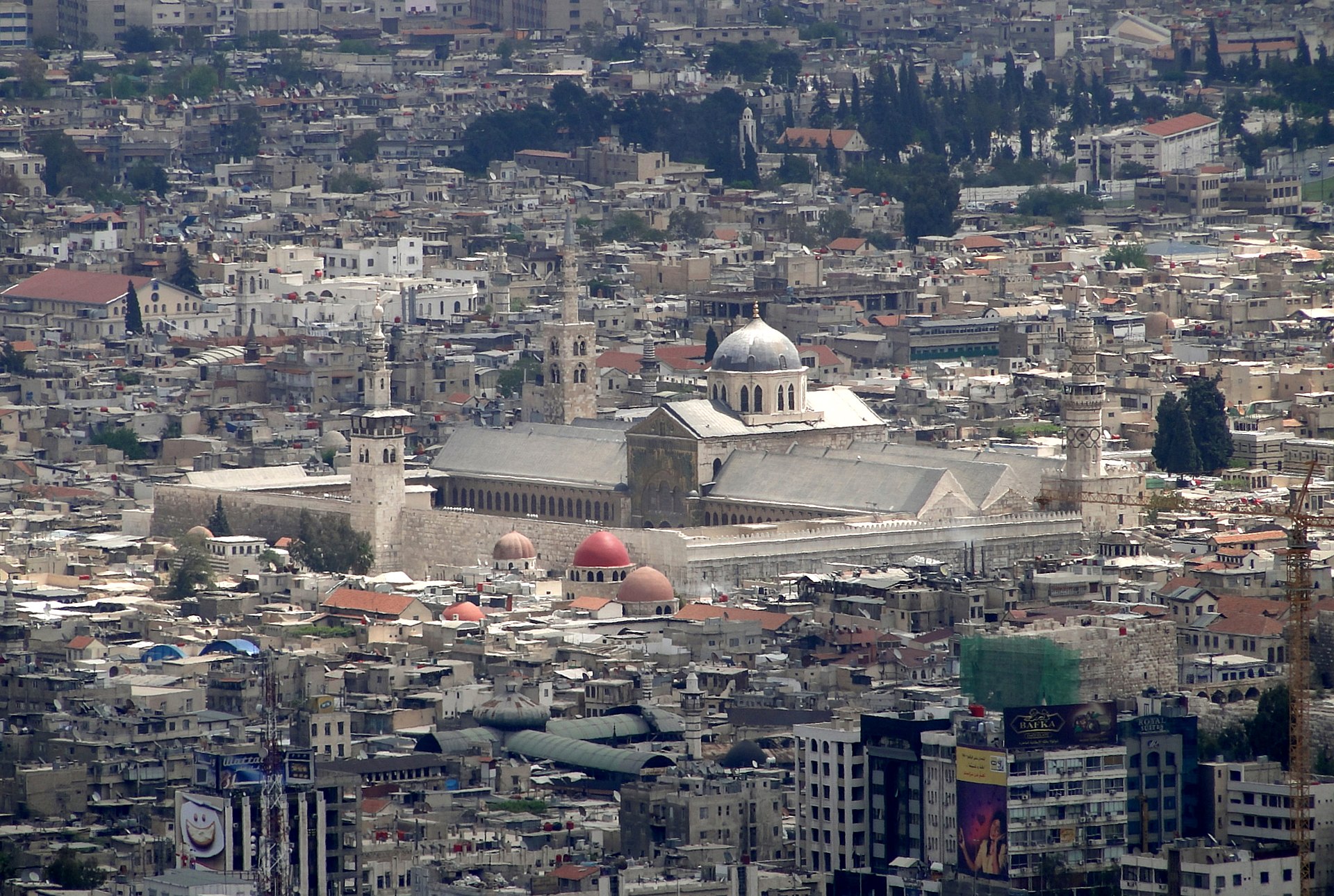
Baghdad is the capital of Iraq, on the river Tigris. Among its sights are Al-Mutanabbi Street, the Al-Kadhimiya mosque and the National Museum.
What to see
#Ancient Babylon: Come here to see the reconstructed Ishtar Gate and to walk the processional way of Nebuchadnezzar. Climb up to Saddam's abandoned hilltop palace as well, purely for the panorama over the ruins.
The Ziggurat of Ur: If you are asking what to see from deep antiquity, this 4,000-year-old pyramid in the desert is the answer. Set out from Nasiriyah early in the morning and you can cover the base and the excavations in a day.
The Chibayish marshes: Worth a detour for boat rides between reed houses. The Marsh Arabs have kept a way of life that goes back to the Sumerians, and you can spend the night in a traditional Madan reed house.
Lalish: For something genuinely mystical, head to the main Yazidi sanctuary in the mountains of Kurdistan. You walk barefoot over the old stones here, light candles and tie knots for luck among the stone temples.
Rawanduz canyon: Head north for vertiginous views and waterfalls. This is the country's best piece of nature, with a spectacular road threading through gorges and high passes.
Samarra: A day trip from Baghdad gets you to the spiral Malwiya minaret. The shape is unique and the scale of the ninth-century mosque is hard to take in, even with part of the complex under restoration.
Prices
#Currency: The Iraqi dinar is the local money, but Baghdad and Kurdistan happily take US dollars. Carry a thick stack of small notes, because change is rarely given back in USD.
Exchange: Change money in the "sarrafi" shops in the markets rather than at a bank, where the rate is worse. The official rate in 2026 sits at around 1,310 dinars, and the street rate can run higher.
Cards: Bank cards are close to useless here, and card terminals barely exist even in the capital. Wise and Revolut make no difference to that, so bring cash dollars in new blue-series notes, since older designs are often refused.
ATMs: Erbil has working machines, but they usually dispense dinars only and charge heavily. If you are heading south or into the holy cities, a cash reserve is not optional.
| Item | Price (USD) |
|---|---|
| Kebab at a street stall | 3 |
| Fish dinner | 12 |
| Glass of tea | 0.4 |
| Coffee in a cafe | 2 |
| Visa on arrival fee | 77 |
| Train to Basra | 23 |
| SIM card | 10 |
| Litre of petrol | 0.5 |
| Entry to Babylon | 19 |
| Careem ride across town | 4 |
| Bottle of water | 0.3 |
| Copper coffee pot | 15 |
| Kilo of dates | 2 |
| Boat trip in the marshes | 20 |
Getting around
#Getting in: Baghdad and Erbil handle almost all international arrivals, and travellers from Europe or North America usually connect through Istanbul, Dubai, Doha or Amman. Erbil is the softer landing of the two.
Garages: Between cities you move by shared taxi, leaving from the bus yards everyone calls garages. Look for the van with your destination on a sign and wait for the seats to fill.
Apps: For getting around Baghdad or Erbil, download Careem. It behaves like any ride-hailing app you already know, with a fixed price, driver details and the option to pay cash.
Rail: The overnight train from Baghdad to Basra is a comfortable way to cross half the country. Book a sleeper compartment in advance at the station; the service is decent and the landscape out of the window is mesmerising.
Checkpoints: Expect frequent document checks by soldiers on the highways. Keep your passport within reach and never photograph fortifications, which is what turns a two-minute stop into an hour of questions.
Renting: Self-drive rental in the Arab part of the country is buried in paperwork and rarely worth chasing. Kurdistan is easier, though driving yourself takes nerve in the chaotic traffic.
Flying: To get from the south to the north quickly, Iraqi Airways and Fly Baghdad run domestic routes. Baghdad to Erbil takes an hour and spares you a long day of checkpoints.
Where to stay
#Booking: The big booking sites really only cover the northern cities. For a room in Baghdad or Basra you will often end up messaging hotels directly on WhatsApp or tracking them down on social media.
City hotels: In the capital, look in Karrada or around Saadoun Street. A decent room runs about 40 to 60 dollars and breakfast is almost always folded into the price.
How it works: In cheaper Iraqi places you pay per person rather than per room. Windows sometimes open onto a blank wall or an internal corridor, so look at the room before you hand over any money.
Holy cities: Najaf and Karbala are geared to pilgrims, with plenty of options right against the shrine walls. Conditions are simple but clean, and prices multiply during religious festivals.
Kurdistan: Erbil offers the widest choice, from modern towers to friendly guesthouses in the Christian quarter of Ankawa. It is the most comfortable base in the country, with infrastructure that feels familiar.
Something stranger: Out in the Chibayish marshes you can sleep in a reed hut belonging to a local guide. It is spartan, with mattresses on the floor, but the immersion is total.
What to eat
#Masgouf: The national dish is carp splayed open and baked over an open fire. The best of it is served in the restaurants along Abu Nuwas riverside in Baghdad, where the fish cooks in front of you for roughly two hours.
Hygiene: Eat where the locals are eating and wash your hands before every meal. Peel fruit and vegetables yourself and stick to bottled water, which is what keeps a trip on track.
Breakfast: In the mornings look for stalls selling kahi, a flaky pastry with thick buffalo-milk cream and honey. It is filling and costs almost nothing, but get there early, because by nine it has usually gone.
Street food: In the bazaars try the Iraqi kebabs and dolma wrapped in vine leaves. Portions are enormous, and the meat arrives with a free mountain of herbs, fresh flatbread and turshi pickles.
Drinks: Order laban rather than reaching for the word you might know from elsewhere. The older name for the drink sounds crude to Arabic speakers, so stick to this one and save yourself an awkward moment.
Tea: Strong black tea with an alarming quantity of sugar is the backbone of social life. It will be offered to you in shops and in people's homes, and refusing the first glass is genuinely rude.
Safety
#Regional differences: Kurdistan is calm to the point where night walks are normal. Central and southern Iraq are more complicated, though foreign visitors are met with real warmth almost everywhere.
After dark: Moving between cities after sunset is a bad idea. The risk of trouble on an empty highway or of getting stuck at a closed post is higher, so plan every transfer for daylight.
Photography: Photographing soldiers, police, government buildings and oil installations is absolutely forbidden. Even an accidental frame with a derrick in the background can lead to detention.
Checkpoints: Be ready for dozens of road checks. Stay polite, do not argue with soldiers, and say your nationality clearly and cheerfully, which usually ends the conversation.
Shrines: Security is heavy in Karbala and Najaf and you will be searched at the mosque entrances. Leave cameras and large bags in the storage lockers rather than attracting the guards' attention.
Crowds: During religious festivals such as Arbaeen the crush in these cities goes beyond anything you have seen. If you dislike crowds, avoid the south on those dates.
Advisories: Conditions shift by province, so read your own government's travel advisory before you commit to a route.
Etiquette and culture
#Hospitality: You will run into a generosity that means strangers paying for your lunch or pulling you in for tea. It is sincere, so thank people properly, with your right hand pressed to your heart.
Dress: Men should skip shorts even in brutal heat, as they read as disrespectful. Women are better off in long skirts in the Arab part of the country, and a chador is required in the holy cities.
Religion: Take your shoes off in a mosque, keep your voice down and stay out of the way of anyone praying. Non-Muslims may be barred from the innermost halls, but the courtyards are open to everyone.
Etiquette: Never eat or pass anything with your left hand, which is considered unclean. When you enter a room, greet the oldest person present first; it marks you out as someone who has paid attention.
Ramadan: During the fasting month daytime life slows to nothing and many cafes stay shut until sunset. Kurdistan is more relaxed, but in the south show some solidarity and do not eat openly in the street.
Kurdish identity: The north is proud of its autonomy and its language. Showing that you know the difference between the regions goes down well, especially around Newroz in March.
Connectivity
#SIM cards: The main operators are Zain and Asiacell. Any phone shop will sell you a card against your passport, a month of data costs roughly 10 to 15 dollars, and 4G holds up well.
eSIM: If you would rather land connected, an eSIM from Airalo or a similar provider covers Iraq and saves you the shop visit on day one. A local card still works out cheaper for a longer stay.
Language: English is spoken in hotels and by younger people in Erbil. In the provinces and the south you will need a few Arabic phrases or a translation app to get anywhere with taxi drivers.
Access: Messaging apps work fine and video calls go through without trouble. Having a VPN installed is worth it anyway, since access to individual services is sometimes restricted.
Navigation: Google Maps is decent, but download offline Maps.me packs for checkpoint zones and areas without signal. It also helps you show a driver exactly where you want to be dropped.
Slang: Iraqis answer almost any plan with "inshallah". Do not read it as a refusal; it is simply how time and future events are talked about here.
Social media: Facebook and WhatsApp dominate. If you have a contact for a guide or a host, message them there, because it is by far the fastest way to get an answer.
Phrasebook
#| English | Arabic | Pronunciation |
|---|---|---|
| Hello | مرحبا | MAR-ha-ba |
| How are you? | شلونك؟ | SHLO-nak? |
| Good (Iraqi slang) | زين | ZAYN |
| Thank you | شكراً | SHOOK-ran |
| How much is it? | شكد؟ | SHGAD? |
| Expensive | غالي | GHAA-li |
| Yes | نعم | NA-am |
| No | لا | LAA |
| Friend | صديق | sa-DEEQ |
| Please | من فضلك | min FAD-lak |
| Water | ماي | MAY |
| Tea | چاي | CHAI |
| Delicious! | عاشت ايدك | AA-shat EE-dak |
| Where is...? | وين؟ | WAYN? |
| I swear (slang) | والله | WAL-la |
| Okay / fine | ماشي | MAA-shi |
| Sorry | عفواً | AF-wan |
| Help me | ساعدني | SAA-id-ni |
| Straight ahead | قبل | GA-bal |
| To the right | يمين | ya-MEEN |
| To the left | يسار | ya-SAAR |
| God willing | إن شاء الله | in-SHAA-lla |
Good to know
#Electricity: Sockets are types C, D and G, so buy the adapter before you fly. Rolling power cuts are routine outside Kurdistan when the heat peaks, and hotels run generators to cover them.
Health: The sun is fierce, so a hat and sunscreen are not optional. Pharmacies are everywhere but bring any specific medication with you, and take out insurance that covers repatriation.
Water: Never drink from the tap, and do not brush your teeth with it in cheap guesthouses either. Buy sealed bottles, which cost pennies and are sold on every corner.
The week: Friday is the official day off and many museums close. The markets, on the other hand, are at their loudest and best, especially the book stalls on Al-Mutanabbi Street in Baghdad.
Budgeting: Leave slack in the budget for taxis, which add up faster than anything else. One thing that is overrated: trying to reach Samarra without permission, which can end with a distant look at the minaret and nothing more.
Souvenirs: Dates, copperware, spices and scarves all travel well. Customs may ask for receipts on anything valuable, so keep them if you buy carpets or antiques.
Frequently asked questions
#Many nationalities can now get a visa on arrival at the airports in Baghdad, Basra and Najaf for 77 US dollars, valid for 30 to 60 days. An e-visa is also available through the official government portal for around 160 dollars, and you should check the current rules for your own passport before flying.
Iraqi Kurdistan is considered stable enough for solo travel, while federal Iraq calls for more caution and more planning. The main friction comes from constant checkpoint stops and strict bans on photographing certain buildings and installations.
Not realistically. Card terminals are rare even in Baghdad, so bring enough cash US dollars in new, undamaged notes to cover the whole trip, and treat any working ATM in Erbil as a bonus rather than a plan.
The simplest option is a shared taxi from the Al-Nahda garage in the north of the city, which takes around five hours. Fly Baghdad and Iraqi Airways also run regular domestic flights between the two cities in about an hour.
Solo female travel is entirely doable, particularly in Kurdistan, though in the south it will attract a lot of attention. Stick to a conservative dress code and keep all your movement between cities to daylight hours.
The foreign visitor ticket in 2026 is 25,000 Iraqi dinars, roughly 19 US dollars. That covers the main ruins, the reconstructed Ishtar Gate and the walk up to Saddam's palace on the hill above the site.
If you fly straight into Erbil you get a Kurdish stamp for 75 dollars, but it does not entitle you to travel on to Baghdad. A federal Iraqi visa issued in Baghdad lets you move legally through the whole country.
Private exchange shops in the central markets and on the busy shopping streets give the best rate. The airport rate is traditionally poor, so change only enough there to cover the taxi into town.
Effectively no — flying is banned or out of reach for tourists. Since 2026 the ICAR 124 regulations apply: flights need prior approval from the aviation authority and security agencies. In practice drones are confiscated at airports, Erbil included. Rules for other countries are in the drone ranking by country.
Updated
The data on this page goes out of date. Visa rules and permitted stays, border requirements, prices and budgets, transport and local conditions all change fast, and we do not re-check every page every day. We show the date of our last check where we have one, but before you travel, verify with official sources: the country’s consulate, its immigration service, its e-visa portal and your carrier.