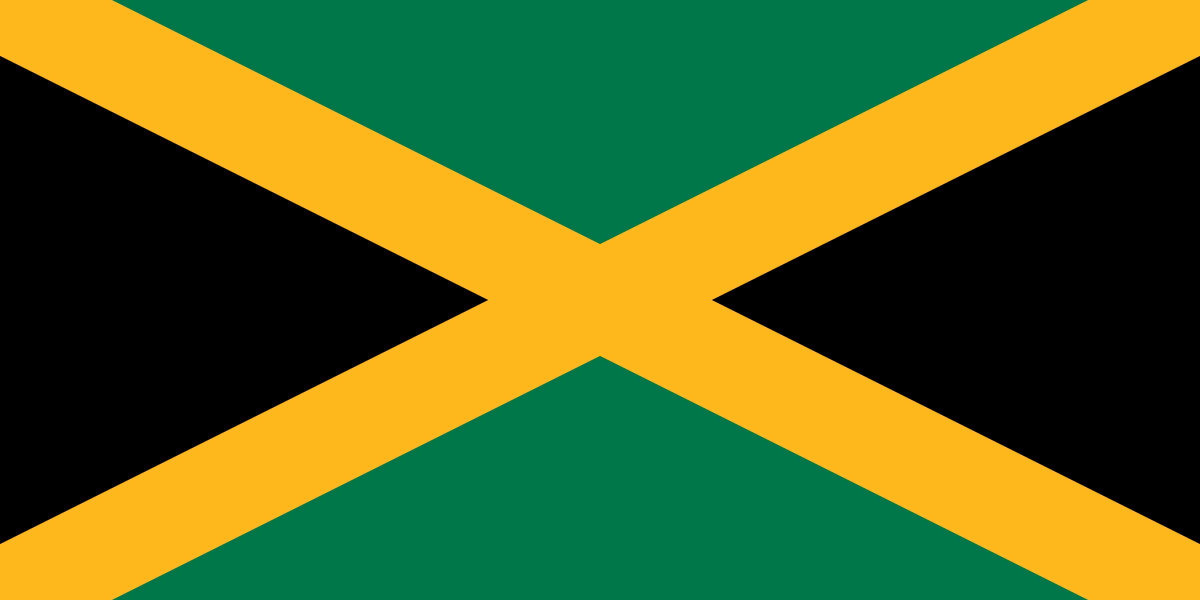
Jamaica
JMThe home of reggae, Bob Marley and the Caribbean groove. Jamaica is the white sand of Negril, the Blue Mountains and their famous coffee, waterfalls, reefs and endless ease. The island is expensive by Caribbean standards, but the no problem, mon attitude makes up for it. English is spoken (though Patois is an experience of its own), cannabis is legal for personal use, and jerk chicken is on every corner.
Where to go #
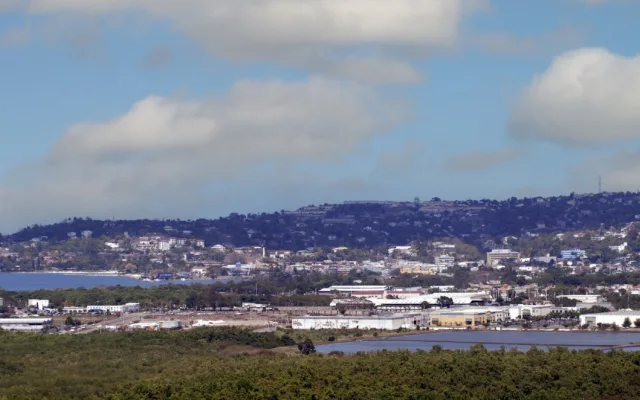
Montego Bay
Jamaica's tourist capital, with the beaches of Doctor's Cave, reggae and dancehall, and the rum bars of the Hip Strip.
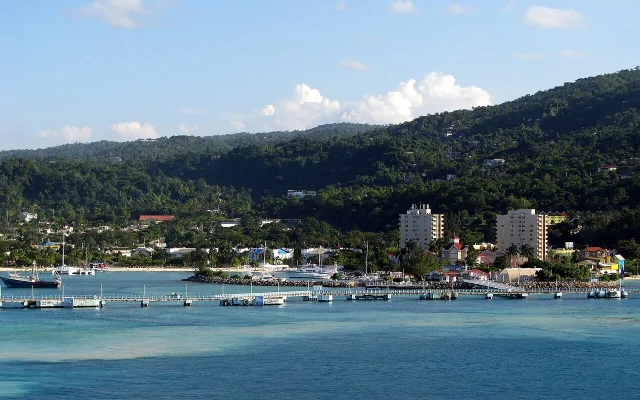
Ocho Rios
A resort town on Jamaica's north coast — Dunn's River Falls, a cruise port and beaches.
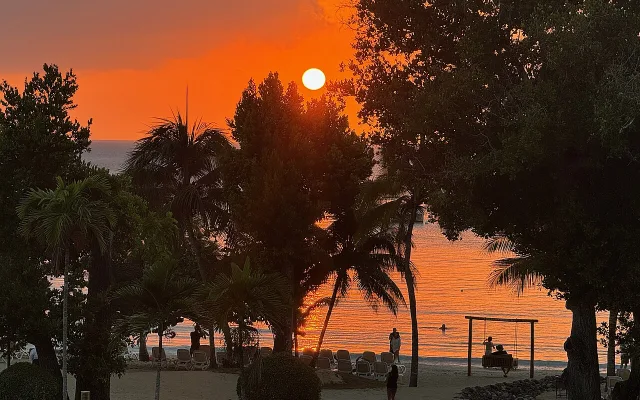
Negril
The famous Seven Mile Beach and sunsets from the cliffs at Rick's Cafe on the island's western tip.
What to see #
The mountains: Head into the Blue Mountains for sunrise at altitude and coffee plantations sitting in cloud. The trek to the peak takes around seven hours, and you will want warm clothing. The air up there is cool and the view over the Caribbean is genuinely staggering.
Music: In Kingston, the Bob Marley Museum on Hope Road preserves his studio and is the obvious pilgrimage. It explains the philosophy behind the rhythm better than any playlist. Inside you see the personal effects of a legend and get a feel for the golden age of reggae.
Waterfalls: For adrenaline, go to Dunn's River Falls, where you climb up through the cascades. The whole route is done as a human chain, holding hands with the strangers ahead and behind. It is an iconic experience, though it fills up whenever a cruise ship is in.
The cliffs: In Negril, spend an evening at Rick's Cafe watching people throw themselves off the rock face into the ocean. It is overrated and unmissable at the same time, with the best sunset view on the island. You can simply sit with a drink, listen to the band and watch the brave.
History: Walk around Port Royal, once known as the pirate capital of the Caribbean. Part of the town slid into the sea after an earthquake, which leaves it with a strange, haunted feel. Today it is a quiet fishing village with a fort and a lot of stories.
The lagoon: Visit Glistening Waters at night, when the water lights up blue with every movement. It is a rare natural phenomenon and best seen on a moonless night. The microorganisms in the water turn every splash into something faintly magical.
Devon House: The mansion in the capital is worth it for the architecture and for the best ice cream in Jamaica. The garden is free to walk and the nineteenth-century interiors show how the island's rich lived. It makes a calm half-day in the middle of noisy Kingston.
Prices #
Currency: The Jamaican dollar is the better unit for day-to-day spending, though US dollars are taken almost everywhere. Exchange bureaux in town give a far better rate than airport desks or hotel receptions, so change only a small amount on arrival.
Cards: Visa and Mastercard work in supermarkets, hotels and larger restaurants, and Amex is accepted at some resorts. For markets, roadside food and route taxis you need cash, so always carry small notes.
ATMs: Machines attached to Scotiabank or NCB branches are the most reliable and safest to use in daylight. Travel cards from Wise or Revolut avoid the double conversion, but check the withdrawal fee, which is charged per transaction.
Tipping: Leave 10 to 15 percent in cafes if a service charge has not been added. Porters and guesthouse housekeepers are usually given a couple of dollars.
Haggling: Halving the asking price on souvenirs and private rides is normal and expected. Polite bargaining at markets is part of the conversation and saves real money over a two-week trip.
| Item | Price (USD) |
|---|---|
| Portion of jerk chicken | 6 |
| Beef patty | 2 |
| Red Stripe beer | 3 |
| Cup of coffee | 4 |
| Lunch at a cookshop | 8 |
| Street coconut | 3 |
| Route taxi ride | 1 |
| Dinner for two | 40 |
| Litre of petrol | 1.5 |
| Loaf of bread | 3 |
| Dozen eggs | 7 |
| Bag of Blue Mountain coffee | 35 |
| Museum entry | 25 |
| Souvenir bottle of rum | 20 |
| T-shirt | 12 |
Getting around #
Route taxis: Cars with red licence plates are your pass into cheap travel between neighbourhoods and towns. They are shared taxis that leave when full and cost almost nothing. It is how the island actually moves, and the best way to meet people.
Coaches: Knutsford Express runs comfortable air-conditioned buses with a toilet between the main cities. Book online a couple of days ahead. It is the most dependable scheduled link between Kingston, Negril and Montego Bay.
Licensed taxis: For an airport transfer with luggage, call JUTA, the licensed operator with fixed rates. Always settle the total before you get in. Unmarked private cars without red plates are a bad idea for solo travellers.
Car hire: Only worth it for confident drivers, given left-hand traffic and a chaotic local style. Mountain roads are narrow and chewed up by tropical rain. Expect sudden manoeuvres from other drivers and livestock in the carriageway.
Bicycles: In Negril or Ocho Rios a rented bike gets you to the quieter beaches on your own schedule. Check the brakes and the chain before you set off into the hills, because the gradients are real.
On foot: Town centres are walkable, but distances are deceptive in the heat and on the slopes. Use offline maps so you do not wander into a neighbourhood you did not intend to visit, and do your walking in the morning.
Boats: Isolated coves are easiest to reach by small motorboat straight off the beach. Agree the return time with the captain and pay at the end. It is the only way to reach some beaches, and the island looks completely different from the water.
Getting in: Montego Bay's Sangster airport takes the bulk of international traffic, with direct services from London, several US and Canadian cities and seasonal charters from mainland Europe. Kingston's Norman Manley airport suits anyone starting in the capital or the east.
Where to stay #
Guesthouses: The best format for independent travel, giving you a family house rather than a resort. Hosts often cook breakfast and can point you to a route taxi driver they trust. Small family-run places are scattered across the whole island at honest prices.
The West End: In Negril, look for a room on the cliffs, where there are plenty of characterful small hotels with ladders straight into the sea. It is cheaper and calmer than the crowded seven-mile beach, and you can snorkel from the doorstep.
Apartments: Airbnb is well established in Kingston and Montego Bay, often as a room inside a gated complex. Having a kitchen cuts the food bill noticeably. Stick to listings with a long review history.
The capital: In Kingston, book in New Kingston or Half Way Tree. Both are considered safe and sit close to the transport hubs. The hotels there are plain and aimed at business travellers, which usually means reliable.
Port Antonio: The east coast is full of small eco-lodges tucked into rainforest. It suits anyone who wants to wake up to birds and the sound of surf. Rooms are simple but the setting does the work.
When to book: In the December to April high season places fill quickly, so book early. Read recent reviews specifically about water pressure and whether the mosquito screens actually work, since these details change from season to season.
What matters: Air conditioning is not a luxury here but the difference between sleeping and not sleeping. On a tight budget, look for a room with a strong ceiling fan and intact window screens.
What to eat #
Jerk: Chicken or pork smoked over pimento wood with searing scotch bonnet pepper. The best of it comes from roadside jerk centres where the smoke rolls off the oil-drum grills. It is the cheapest and most popular thing on the island and it is cooked in front of you.
Ackee: The national fruit is only safe once it has ripened and opened by itself, so never eat it prepared any other way. Cooked with salt cod it produces a filling dish that looks like scrambled eggs, traditionally served at breakfast with boiled green banana and fried dumplings.
Patties: A cheap snack of flaky pastry filled with beef, shrimp or vegetables. Buy them at a chain like Juici Patties where the baking is always fresh and the price is fixed. The bright yellow pastry comes from turmeric and the filling is always spicy.
Curry goat: A legacy of Indian migration that became an essential part of the Jamaican table. The meat is slow-cooked with spices until it falls apart, served over rice and peas. It is aromatic and warming despite the climate.
Seafood: For escovitch fish and lobster, head to the harbourside shacks rather than restaurants. Prices are lower and the catch goes from net to kitchen. The fish is pickled in vinegar with vegetables, which gives it that sharp, sour heat.
Drinks: Cool down with a Red Stripe or a rum punch over ice. Jamaican ginger beer is fierce and entirely natural, and fresh mango and papaya juice is sold on the street all year.
Coffee: A cup of Blue Mountain coffee in a mountain cafe is a ritual worth the money. If you are buying beans as a gift, only buy factory-sealed packs with the quality hologram. The variety is prized for its smoothness and total lack of bitterness.
Safety #
Neighbourhoods: Tourist zones are patrolled, but in Kingston stay well clear of areas like Tivoli Gardens. New Kingston, the business district, is markedly safer than the old town. Do not wander into unfamiliar housing schemes out of curiosity.
At night: After dark, do not walk anywhere, even the short distance between a bar and your room. If someone does attempt a robbery, do not resist; no gadget is worth it. Call a licensed taxi for every movement after sunset.
Valuables: Leave good jewellery and serious cash in the room safe. Take to the beach only what you plan to spend on lunch and a sunbed. Do not flash expensive kit or a roll of notes in a crowded market.
Hustlers: On Negril's beaches you will be approached constantly with offers of weed and souvenirs. A polite but firm no is normally enough. Do not get drawn into a long conversation if you have no intention of buying.
Roads: Take real care crossing the street, since traffic drives on the left and that catches most visitors out. Drivers rarely yield to pedestrians even at marked crossings, so wait until vehicles have actually stopped.
The sea: Currents on the north shore can be strong, so watch the warning flags. Do not swim out past the reef without a guide or a competent partner, and mind the sea urchins and coral.
Insects: Biting midges are common in the forest, so take a repellent that works for mountain hikes. When snorkelling, do not touch marine life you cannot identify. There is nothing here that hunts you, but the small stuff can wreck a week.
Etiquette and culture #
Reggae: Music runs through everything, out of car windows, out of old speakers in shopfronts and just out of the street itself. It is not a genre so much as the island's pulse. Bob Marley is a national hero and children know his lyrics by heart.
Rastafari: The cultural movement, with its locks and its red, green and gold, began here. Treat Rastafarians with respect, because for them it is a deep faith and not a fashion. The teaching centres on peace, unity and living with nature.
Jamaican time: Hurrying is not a local value, and an hour late is within the normal range. Relax into it rather than fighting it. "No problem" will end up being your motto for the whole trip.
Religion: Jamaica is deeply religious with an extraordinary density of churches. On Sundays the streets fill with people in their best clothes heading to service, and it is a serious part of public life.
Ganja: Marijuana is decriminalised for personal use, but smoking it in public places remains illegal. The culture around it is old, but visitors should stay within the rules and not be talked into anything.
Patois: Using a few local words gets you further with Jamaicans than anything else. A simple "Wah gwaan" instantly changes the temperature of a conversation. Interest in the language is read as interest in the people.
Festivals: On 6 February, Bob Marley's birthday, the island turns into one large festival with concerts everywhere. It is a good week to be here if you want music and crowds, and a bad one if you have not booked a room.
Connectivity #
SIM cards: The two operators are Digicel and Flow, both with desks in the airport arrivals halls. Around 15 dollars buys 5GB and coverage in the towns is good. Bring your passport to activate the card.
Data: Guesthouse Wi-Fi is often slow, so mobile data will be what you actually navigate on. Signal drops in the mountains, so download offline maps first. LTE is solid across all the popular resort areas.
eSIM: If your phone supports it, an eSIM from Airalo or a similar provider gets you online before you clear customs. A local SIM is still cheaper for stays over a week.
Language: English is the official language, but the Jamaican Patois you hear on the street takes some getting used to. Just ask people to slow down; they will, cheerfully. All signage is in standard English.
WhatsApp: This is the standard channel for talking to hosts, drivers and small businesses. Almost every operation on the island has a number for messages, and it is the fastest way to check availability or agree a fare.
Plugs: Jamaica uses flat American type A and B plugs at 110 volts. Buy the adapter before you fly and check that your chargers handle the lower voltage.
Photography etiquette: Ask before photographing someone, with a gesture if nothing else. Colourful characters on the beach may well ask for a couple of dollars in return, which is fair enough.
Phrasebook #
| English | Jamaican Patois | Pronunciation |
|---|---|---|
| What's up? | Wah gwaan? | wah GWAAN |
| Everything's good | Everyting criss | EV-ry-ting kriss |
| Thank you / respect | Respect | ri-SPEK |
| Yes | Yeah man | yah man |
| No | No sah | no sah |
| How much is this? | How much fi dis? | how much fi dis |
| Too expensive | Too dear | too DEER |
| Food / to eat | Nyam | nyam |
| Water | Wata | WAH-ta |
| Excellent, all good | Irie | EYE-ree |
| No problem | No problem, mon | no PROB-lem mon |
| See you later | Likkle more | LIK-kl more |
| Safe travels | Walk good | wawk good |
| Brother, mate | Bredren | BRED-ren |
| Sister, female friend | Sistren | SIS-tren |
| Police | Babylon | BAB-ee-lon |
| A lot | Nuff | nuff |
| Go on | Gwan | gwaan |
| Move up a bit | Small up yuhself | smaal up yuh-SELF |
| Awesome | Wicked | WIK-id |
| Come here | Come yah | kum YAH |
| I'm going home | Mi a go a yaad | mee a go a yard |
Good to know #
Water: Do not drink straight from the tap; buy bottled from a supermarket. Local water is fine for brushing your teeth and rinsing fruit. Keep drinking through the day, because the humidity dehydrates you faster than the heat suggests.
Sun: The tropical sun is aggressive and will burn you through cloud. Use SPF 50 and wear a hat. The sensible hours for sunbathing are before eleven and after four.
Mosquitoes: Insects are thick in the jungle and around waterfalls, most active at dawn and dusk. Covered clothing and a decent repellent solve most of it, and a mosquito net over the bed is essential in rural accommodation.
Sundays: Most shops and markets close, leaving pharmacies and duty petrol stations. Buy food and water in advance if you have a full day planned. Large Kingston malls may open on shortened hours.
Medication: Pack a basic kit with antiseptic, rehydration salts and antihistamines. Specific imported drugs are hard to find and expensive on the island. Bring wound dressings too, since cuts heal slowly in the tropics.
Power: Get the American-style adapter before you leave, as they are awkward to find locally. Check your chargers support 110 volts, and note that older guesthouses may only have two-pin sockets with no earth.