
A small but immensely wealthy oil state on the Persian Gulf, with the most valuable currency in the world. Kuwait surprises with futuristic architecture, enormous malls and old souks where time seems to have stopped. It is safe, compact and ideal as a short stopover or an add-on to a wider Gulf trip. Kuwaiti hospitality and very good food come as a bonus.
Where to go
#
What to see
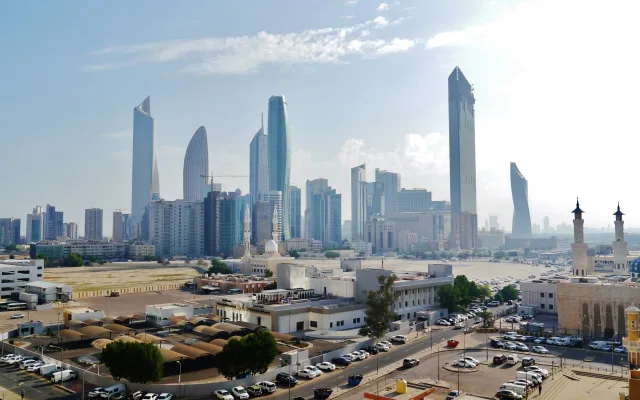
#Kuwait Towers: The first thing to see, and best at sunset. The viewing deck costs 3 dinars, though booking a table in the restaurant gets you up for free. The view over the city at night from 120 metres is genuinely impressive.
Failaka Island: Where to go for history and for extremely unusual photographs of wrecked military hardware. War damage sits alongside ancient ruins, and the Ikarus ferry gets you there for about 15 dinars. It is the most emotionally loaded day trip in the country.
Souk Al-Mubarakiya: The oldest market, worth a visit for spices, dates and atmosphere. Haggle, and eat the street food from the traditional stalls. Bullet holes in some of the walls sit oddly against the wealth on display elsewhere.
The Grand Mosque: Overwhelming in scale, with an interior of marble and teak. Free guided tours run for visitors and women are given an abaya at the door. Non-Muslims cannot enter the main hall during prayers.
Al Shaheed Park: An enormous green space with museums, running tracks and fountains. It is the best place in the city for a slow walk with the skyline behind you, and entry costs nothing.
An honest verdict: The National Museum will disappoint anyone expecting a grand collection. It is small and modest, though worth half an hour for the pearl-diving history. Give the extra time to the Scientific Center instead, with its sharks and hands-on exhibits.
Prices
#Currency: The Kuwaiti dinar is the most valuable currency in the world, pegged to a basket and very stable. One dinar is 1,000 fils, and the quarter and half-dinar notes are what you actually use day to day.
Cards: Visa and Mastercard issued abroad are accepted almost everywhere, from malls to petrol stations, and contactless is standard. Amex is patchier. Small souk stalls and older taxis still want cash, so keep some on you.
Exchange: Change money at the Exchange offices in town rather than at the airport, where the rate is worse. Bring clean US dollars or euros; both convert without argument.
ATMs: Cash machines are on every corner and take foreign cards, but the withdrawal fee on a non-local card can be steep. Wise and Revolut both work and cut the conversion cost.
Tipping: Service is often already on the bill, but 10 percent on top is welcome. In taxis, round up or add 250 to 500 fils. In the souk, bargain hard; the opening price is often double what you should pay.
| Item | Price (USD) |
|---|---|
| Lunch at a cheap cafe | 15.00 |
| Dinner for two with a view | 70.00 |
| Large shawarma | 3.50 |
| Cappuccino | 5.50 |
| 0.5l bottle of water | 0.40 |
| Bus ticket | 1.00 |
| Taxi from the airport | 30.00 |
| Short taxi ride | 8.00 |
| Litre of petrol | 0.35 |
| Night in an apartment | 65.00 |
| SIM card with data | 15.00 |
| Kuwait Towers entry | 10.00 |
| Ferry to Failaka | 48.00 |
| Aquarium ticket | 14.00 |
| Fridge magnet | 4.00 |
Getting around
#Ride-hailing: Careem is the easiest way to get a car, with the price fixed before you set off. Do not flag a taxi in the street, since drivers routinely refuse the meter. A ride across the centre costs 2 to 3 dinars, from the airport around 10.
Buses: The CityBus and KPTC networks cover the capital and the suburbs for about 250 fils. Vehicles are modern and air-conditioned, though the timetable is aspirational. Women and families conventionally take the front section.
Car hire: The best way to move around if you hold an international driving permit. Petrol is almost free, the roads are wide and excellent. Be ready for aggressive local driving and heavy rush-hour traffic.
Ferries: Failaka is served by the private Ikarus company and by state KPTC vessels. Buy tickets in advance at the Marina Park desk with a copy of your passport. The crossing takes about an hour and there is water and snacks on board.
Walking: Moving between districts on foot is essentially impossible, given the heat and the absence of pavements along the highways. Walking is pleasant only on the Corniche and in the parks, and building numbering is confusing enough that you will want a navigation app.
Getting in: Kuwait International (KWI) sits 16 km from the centre and is well connected to Europe, the wider Gulf and South Asia. Most travellers from Europe or North America connect through Istanbul, Dubai or Doha, and Kuwait Airways flies to several European cities directly.
From the airport: Buses 13 and 99 run into the city cheaply, but with luggage a Careem is worth the 8 to 10 dinars.
Where to stay
#Where to stay: Salmiya is the best pick for an independent traveller, with cafes everywhere and the sea nearby. If you want the museums and the towers within reach, choose Sharq. Farwaniya makes sense for a short layover near the airport.
Budget reality: Kuwait is expensive and genuinely cheap rooms barely exist. Aim for apart-hotels with a small kitchen, which cuts the food bill substantially. A clean two or three-star room starts around 60 dollars.
Hostels: Traditional backpacker hostels with dorms effectively do not exist here. What look like guesthouses are usually accommodation for migrant workers and are not suitable for visitors, so pay a little more for a known chain such as Ibis.
Booking: Booking.com and Agoda both work, and their confirmations are accepted for entry formalities. Reception will always want your passport at check-in. Staff at the better hotels speak excellent English and will arrange transfers.
Air conditioning: A working unit in the room is a survival requirement rather than a preference, even in winter. Check for free parking too if you plan to hire a car, since it is not a given downtown.
Breakfast: Hotels usually lay on a substantial buffet mixing Arabic and international dishes, which is good value given the cafe prices outside. Rooms almost always have a kettle, coffee kit and free bottled water.
What to eat
#Machboos: The foundation of Kuwaiti cooking, spiced rice with meat or fish. Portions are enormous and often feed two. The best and most authentic version is in the old restaurants around Mubarakiya souk.
Street food: Shawarma and falafel are sold everywhere and cost very little. Be careful with the chilli sauces and say "no spicy" if you mean it. Mutabbaq, a stuffed flatbread, is the other filling option.
Fish: Kuwait is proud of its seafood, particularly zubaidi. In the waterfront restaurants you choose your fish from the display and it comes back grilled. It is expensive, but the freshness justifies it.
Tea and coffee: Chapati with karak is the cult evening snack and costs almost nothing. Karak is strong spiced tea with milk and Kuwaitis drink it constantly. Arabic coffee, gahwa, comes with cardamom and dates as a gesture of welcome.
Sweets: Try luqaimat, fried dough balls soaked in syrup. Camel-milk chocolate makes a good gift and is sold in Sultan Center supermarkets, and the souks are full of excellent Iranian dates.
One firm rule: Kuwait is completely dry, with no alcohol anywhere at any price. During Ramadan, eating or drinking in public before sunset is prohibited for visitors too, and many restaurants open only for iftar.
Safety
#General picture: Kuwait is one of the safest countries in the world for visitors, women included. Violent crime is extremely rare and walking around in the evening is entirely normal, though basic care with belongings still applies.
Heat: The real danger is the temperature, which hits 50 degrees in summer. Between June and September, more than ten minutes outdoors is genuinely hazardous. Carry water constantly and use sunscreen even under cloud.
Traffic: Cross roads with total attention, because drivers rarely yield to pedestrians. Highway speeds are high and manoeuvres unpredictable. If you drive, drive defensively and wear the seatbelt.
Law: Drug offences carry life sentences or worse and are enforced without exception. Photographing government buildings, royal palaces and military sites is forbidden. For any emergency, dial 112.
Women: Kuwait is liberal by regional standards, but modest clothing is expected. Shoulders and knees covered avoids both unwanted attention and disapproval, and licensed taxis or Careem are the sensible way to travel alone.
Health: Do not drink from the tap. Pharmacies stock plenty of imported medicine, but prescription drugs require a local prescription. Healthcare for foreigners is private and very expensive, so insurance is essential.
Etiquette and culture
#Religion: Islam runs through everything, so respect prayer times and local custom. Never pass food or documents with your left hand. Take your shoes off entering a home or a mosque.
Dress: Local men wear white dishdasha and women black abaya, but nothing of the kind is expected of visitors. Dress conservatively: no short skirts, shorts or low necklines. Malls run their air conditioning brutally cold, so carry a light layer.
Conversation: Kuwaitis are hospitable and may invite you for coffee after a brief exchange. Accept if you can, since it is the fastest route into the culture. Politics and religion are best left alone as topics.
The week: Friday is the sacred day and most businesses close until early afternoon. Life restarts after prayers, when families head to parks and malls. Saturday is the second day off and the working week begins on Sunday.
Public behaviour: Displays of affection, even between spouses, are not welcome and can attract a comment. Loud laughter or shouting in public reads badly, and being visibly drunk is grounds for arrest.
Photography: Always ask before photographing a local person, especially a woman, and never photograph anyone praying. Architecture and public spaces are fair game and Kuwaitis are proud of both.
Connectivity
#Operators: Three networks cover the country: Zain, Ooredoo and STC. Service quality is excellent and 5G reaches almost everywhere, including out in the desert. Buy a SIM at the airport on arrival with just your passport.
eSIM: The most convenient option for a short visit, avoiding any hunt for a shop. Providers offer 5GB for a week at around 6 to 10 dollars, activated instantly by QR code and reliable in practice.
Tariffs: Tourist bundles usually include 10 to 20GB plus some local minutes for 3 to 5 dinars. Free Wi-Fi is available in every mall, hotel and most fashionable cafes, though the speed can disappoint.
Apps: Download Careem for taxis and Talabat for food delivery, which are the two essentials here. Google Maps is accurate and knows the bus routes. The Entertainer app is worth having for restaurant discounts.
Access: All the major messaging apps and social networks work without restriction. WhatsApp and Telegram calls go through freely and no VPN is needed for anything ordinary.
Language: Arabic is official, but English is understood by almost everyone, from cashiers to drivers. Road signs and menus are in both languages, and a couple of Arabic phrases will earn you a genuine smile.
Phrasebook
#| English | Arabic | Pronunciation |
|---|---|---|
| Hello | مرحبا | MAR-ha-ba |
| Peace be upon you | السلام عليكم | as-sa-LAAM a-LAY-kum |
| Thank you | شكراً | SHOOK-ran |
| How are you? | شلونك؟ | SHLOH-nak (to a man) |
| Yes / no | نعم / لا | NA-am / laa |
| Please | من فضلك | min FAD-lak |
| Excuse me | عفواً | AF-wan |
| How much is this? | بكم هذا؟ | bi-KAM HAA-tha |
| Expensive | غالي | GHAA-li |
| Discount | خصم | khasm |
| Where is the toilet? | وين الحمام؟ | wayn al-ham-MAAM |
| Water | ماي | may |
| Coffee | قهوة | GAH-wa |
| Delicious! | !لذيذ | la-THEETH |
| I don't understand | ما أفهم | maa AF-ham |
| Help! | !ساعدوني | saa-i-DOO-ni |
| Hotel | فندق | FUN-duq |
| Market | سوق | sook |
| Okay, fine | زين | zayn |
| Goodbye | مع السلامة | ma-a as-sa-LAA-ma |
Good to know
#Opening hours: Government offices run 7:30 to 14:00. Mall shops open from ten in the morning until ten or eleven at night. On Friday morning almost everything is shut until one or two in the afternoon, when the main prayer finishes.
Electricity: Kuwait uses British type G three-pin sockets at 240 volts. Any supermarket sells adapters and hotel reception will usually lend you one, but bring a universal adapter anyway.
Water: Desalinated tap water is considered clean, but use bottled for drinking and brushing your teeth. Hotels typically provide two bottles per person per day, and in the heat you should carry your own supply regardless.
Souvenirs: Beyond magnets, take home oud perfume oils, good dates and cardamom coffee. Pearl jewellery and traditional hammered metalware make handsome gifts, and camel-milk chocolate is the reliable crowd-pleaser.
Expectations: This is not a nightlife destination and there are no clubs. Everything social happens in restaurants, shisha lounges and vast malls like The Avenues, so come for a calm, safe, unhurried trip rather than a wild one.
Documents: Keep a photo of your passport and your visa or entry approval on your phone, since hotels and some sites ask for them. Border formalities include fingerprints and a photograph on arrival.
Frequently asked questions
#Citizens of the UK, most EU countries, the United States, Canada, Australia and a number of others can obtain a visa on arrival or apply through the official eVisa portal before travelling. Requirements vary by nationality and change periodically, so check yours in advance and have hotel bookings and a return ticket ready.
The Kuwaiti dinar, one of the strongest currencies in the world, divided into 1,000 fils. Foreign-issued Visa and Mastercard are accepted almost everywhere, and ATMs are plentiful, though bringing some dollars or euros to change gives you a cash cushion for the souk.
No. Kuwait is entirely dry: alcohol cannot be bought in shops, hotels or restaurants, and bringing it into the country, including from duty free elsewhere, is a criminal offence with serious consequences.
The Careem app is the easiest and most transparent option, with fixed fares. Buses are very cheap but slow, and hiring a car makes financial sense given how little petrol costs, if you are comfortable with local driving.
No headscarf is required, but clothing should be modest and cover shoulders and knees. Mosques provide a cover-up at the entrance, and a light jumper is genuinely useful indoors because of the fierce air conditioning.
Kuwait has one of the lowest crime rates in the region and is comfortable for solo travellers, including women. Observing local standards of dress and public behaviour is what keeps the experience straightforward.
November to March, when temperatures sit between 15 and 25 degrees and walking around is pleasant. In summer the heat reaches 50 degrees, which makes sightseeing effectively impossible.
Order a Careem, which takes about 20 minutes and costs 8 to 10 dinars. City buses 13 and 99 also run the route, but they only make sense if you are travelling with a light backpack.
Effectively no — flying is banned or out of reach for tourists. Private flying is effectively prohibited, and importing without Interior Ministry approval means seizure at the border. Rules for other countries are in the drone ranking by country.
Updated
The data on this page goes out of date. Visa rules and permitted stays, border requirements, prices and budgets, transport and local conditions all change fast, and we do not re-check every page every day. We show the date of our last check where we have one, but before you travel, verify with official sources: the country’s consulate, its immigration service, its e-visa portal and your carrier.