
Lesotho
The Kingdom in the Sky — the only country in the world lying entirely above 1,000 metres. Surrounded on every side by South Africa, Lesotho is a dramatic mountain landscape of waterfalls, high passes and pastures where riders in traditional Basotho blankets herd their livestock. It has southern Africa's only ski resort, the second-highest single-drop waterfall on the continent and ancient rock art.
Where to go
#Maseru
The capital sits right on the South African border and is worth a stop mainly for kitting yourself out. You can see the palace and buy a blanket at the market. It is the only sizeable town, and every route into the mountains begins here.
Semonkong
A village worth the trip for the waterfall and the abseil down beside it. The herders' way of life survives here, along with the trails used for pony trekking. This is the heart of the highlands and the views are extraordinary.
Mokhotlong
A town in the north-east that acts as the gateway to Sani Pass. People come for the silence and mountain scenery without crowds. Life here has barely shifted in centuries.
Teyateyaneng
The crafts centre, known to travellers as TY. This is where to buy mohair work and the conical hats. It suits an unhurried introduction to Basotho culture.
Afriski
A spot at three thousand metres holding the country's only ski resort. Come in winter for the snow. In summer the village turns into a base for trekking and 4x4 trips.
What to see
#Sani Pass: The legendary switchback road at 2876 metres, worth the trip for the views and for the highest pub in Africa. The climb is only possible in a four-wheel drive, and that rule is enforced at the border post.
Maletsunyane Falls: An astonishing 192-metre cascade near Semonkong, at its best in the rainy season. For anyone chasing an adrenaline hit, there is a record-holding abseil down the cliff alongside the water.
Thaba Bosiu: The sacred flat-topped mountain where the kings are buried. If you want history, this is where to go: guides explain how the fortress stayed unconquered by enemies for decades.
Ts'ehlanyane Park: A mountain forest area with exceptionally clean rivers and good hiking trails. You can do the main routes in a day and see rare plants growing where they belong.
Pony trekking: The authentic way to move through this country and something everyone should try. Riding tough local ponies over the passes, sleeping in villages along the way, is the best way to see the kingdom.
Prices
#Currency: The loti is pegged one-to-one with the South African rand. You can pay in rand in any shop, and change often comes back as a mixture of both currencies.
Cards: Terminals exist only in the larger supermarkets in the capital. Beyond Maseru, cards are useless, so always carry enough cash to cover several days. Amex is not accepted anywhere.
ATMs: You can withdraw in Maseru, but mountain villages have no machines at all. The best approach is bringing rand cash in from South Africa, since loti cannot be changed back into rand once you leave.
Tipping and haggling: Around ten percent in restaurants for good service. At craft markets you can bargain politely, though prices are already fair by any traveller's standard.
| Item | Price (USD) |
|---|---|
| Lunch in a local café | 4.00 |
| Dinner in Maseru | 15.00 |
| Maluti beer in a bar | 1.50 |
| 1.5L bottle of water | 0.60 |
| Taxi across town | 4.00 |
| Minibus into the mountains | 5.00 |
| Simple guesthouse night | 25.00 |
| Mountain lodge per night | 80.00 |
| Day of pony trekking | 35.00 |
| Litre of petrol | 1.20 |
| 4x4 hire per day | 70.00 |
| 204m abseil | 65.00 |
| Mokorotlo hat | 10.00 |
| Basotho blanket | 30.00 |
Getting around
#Between towns: Movement around the country runs on minibuses that leave only when full. There is no timetable, so get to the rank early in the morning if you want to be somewhere by afternoon.
Car hire: Seeing the kingdom properly needs a high-clearance 4x4. Most roads in the interior are gravel, and gravel here becomes very difficult after rain.
Driving: Traffic drives on the left. Take real care on the mountain passes, where barriers are often missing and livestock walks onto the road without warning.
City taxis: Maseru has private operators, and you agree the fare strictly before getting in. A standard trip across the centre rarely exceeds a few dollars.
To Semonkong: The drive from the capital takes about four hours, part of it on dirt. In winter, sections can close because of sudden snow or ice.
Sani Pass: Only four-wheel drive vehicles are allowed through this crossing. Police on the South African side check for it strictly and turn back anyone in an ordinary saloon.
Where to stay
#Planning: Finding a bed in the mountains can be genuinely hard, so book your key stops in advance. The capital has more choice, but outside Maseru your options often narrow to one or two properties.
Mountain lodges: Places like Semonkong Lodge are the centre of everything. They do not just give you a roof but arrange activities, from pony treks to hiring local guides.
Budget rooms: In the larger settlements you will find guesthouses that are basic but clean. Often these are small cottages with a shared shower, perfectly fine for a night on the road.
Village stays: On pony treks travellers sleep in people's homes. It lets you see herders' daily life from the inside, sleep in a stone rondavel and experience real silence.
Heating: Check that rooms have heaters if you are travelling between May and August. Night temperatures in the mountains drop below freezing and there is no central heating anywhere in the country.
Power: Many remote lodges run on solar. Expect the electricity to be switched off overnight and to charge devices during set hours in a communal area.
What to eat
#The staple: The national dish is papa, a stiff maize-meal porridge. You eat it with your hands, dipping into sauces or meat gravy, and it is the cheapest food in any roadside café.
Greens: Papa usually comes with moroho, a stew of wild greens or spinach. It is simple and good for you, and it is what saves vegetarians in a country where meat signals prosperity.
Meat: Do try sesswa, goat or beef slow-cooked until it shreds into fibres. Trout grilled fresh is also popular up in the mountains, though be sure it has been properly cooked through.
Street food: Markets sell grilled braai meat and magwinya, puffy fried dough balls. It is a cheap way to eat on the move, but pick the stalls with a long queue of locals.
Drinks: Maluti beer is the kingdom's pride and does the job after a day on the road. Villages also brew joala, a homemade sorghum beer with a distinctly sour taste and thick texture.
Breakfast: Hotels usually manage eggs and toast, but in villages the morning starts with maize porridge. Coffee outside the capital is generally instant, so bring your own if you care.
Safety
#Overall: In rural areas Lesotho is one of the calmest countries anywhere, and people are pleased to see visitors. Crime is minimal and the real danger comes from the landscape and the weather.
In the capital: Take care around the Maseru bus station, where pickpockets operate. Do not wander dark side streets after dark or display expensive equipment.
Mountain weather: The climate is unpredictable, and a clear morning can turn into freezing rain within half an hour. Always carry warm layers and a waterproof, even when the valley is baking.
Roads: The main cause of incidents is road condition. Avoid driving after dark, when people and livestock frequently walk on unlit highways.
Water: Do not drink tap water in the towns; buy bottled. Mountain streams look clean but must be boiled, since there is grazing land above almost every one of them.
Dogs: The main animal hazard is the herding dogs guarding flocks. If you meet them, avoid sudden movements, do not run, and wait calmly for the owner to appear.
Etiquette and culture
#The blanket: Every man in the mountains wears a wool blanket that serves as both clothing and shelter. The patterns carry meaning, and the maize-cob design is understood as a symbol of wealth.
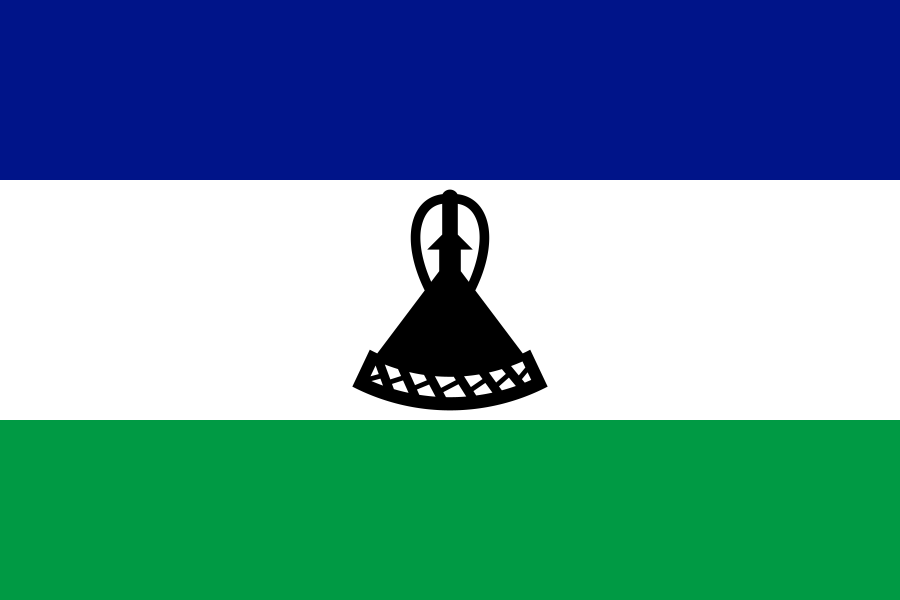
The conical hat: The straw mokorotlo appears on the national flag. It is the best thing to take home as a memento of the mountain kingdom.
Horses: Ponies are not a leisure activity for local people but the only reliable transport. Riding is learned in childhood, and herders look completely fused with their animals.
Greetings: Politeness matters enormously, and a simple "lumela" or "khotso" opens doors. It is normal to greet everyone you pass, and money is handed over with both hands as a mark of respect.
Independence: The Basotho are proud that their country was never conquered. The wisdom of their ancestors preserved the culture and language by uniting the clans on unassailable mountain plateaus.
Music: In the villages you will hear traditional instruments and see ritual dancing. These performances have no tourist gloss; they are part of how the community actually communicates.
Connectivity
#Language: The official languages are Sesotho and English. Communication is easy in the capital, but in remote mountain villages plenty of people speak no English at all.
Mobile: Two operators cover the country, Vodacom and Econet, with the first generally more reliable. Buy a SIM in Maseru with your passport; it is cheap and takes five minutes.
Coverage: 4G is stable in the valleys but disappears as you climb. Be ready for a digital detox, because many passes and gorges have no signal for days at a time.
eSIM: Services like Nomad or Airalo give you data the moment you cross the border. That saves hunting for a working kiosk in small frontier settlements.
Roaming from South Africa: South African SIMs work here, but data tariffs are punishing. Switch roaming off before you cross the border unless you want to empty your balance.
Wi-Fi: Wireless in hotels is rare and often charged for. Mountain lodges may run on satellite, which is slow and good only for email or messaging.
Signage: Road signs and menus are in English, so navigation is straightforward even where conversation is not.
Phrasebook
#| English | Sesotho | Pronunciation |
|---|---|---|
| Hello | Lumela | doo-MEH-la |
| Hello (peace to you) | Khotso | KHOT-so |
| Thank you | Kea leboha | KEH-a leh-BOH-ha |
| Please | Ka kopo | ka KOH-po |
| Yes | E | eh |
| No | Che | cheh |
| How are you? | O phela joang? | oh PEH-la JWANG |
| I'm well | Ke phela hantle | keh PEH-la HAN-tleh |
| How much is it? | Ke bokae? | keh boh-KA-eh |
| That's too expensive! | Ho turu haholo! | hoh TOO-roo ha-HOH-loh |
| Where is the toilet? | Ntloana e kae? | n-TLWA-na eh KA-eh |
| Water | Metsi | MET-see |
| Food | Lijo | DEE-jo |
| Bread | Bohobe | boh-HOH-beh |
| Beer | Joala | JWA-la |
| Help! | Nthuse! | n-TOO-seh |
| I don't understand | Ha ke utloisise | ha keh oo-tlwee-SEE-seh |
| Horse, pony | Pere | PEH-reh |
| Mountain | Thaba | TA-ba |
| White foreigner | Lekhooa | leh-KHOO-a |
| Friend | Motsoalle | mo-TSWA-leh |
| Stay well (goodbye) | Sala hantle | SA-la HAN-tleh |
Good to know
#Consular help: Very few countries keep a mission in Maseru, and most cover Lesotho from their embassy or high commission in Pretoria. Find out which applies to you and save the contacts, because mountain signal will fail exactly when you need it.
Border fee: Foreign visitors entering via Sani Pass pay a compulsory charge of 100 maloti. Payment is normally cash only, taken right at the border gate.
Weather closures: Sani Pass frequently shuts because of snow between June and August. Check road status with your lodge before setting off, so you do not drive for hours to a closed barrier.
Plugs: Sockets are the three-round-pin type M. Buy the adapter in South Africa before you cross, since Lesotho's village shops effectively never stock them.
Opening hours: Most offices and shops close early, around five or six in the evening. Life follows daylight, so plan shopping and anything official for the morning.
Sun: There is no malaria here, but the sun at altitude is brutal. Strong sunscreen and sunglasses are essential even in cold weather, or you will burn your skin and your eyes.
Frequently asked questions
#Many Western passports enter visa-free for short stays, so check your own passport's rules first. Anyone who does need one currently applies by email to the Immigration Department, because the official portal is unreliable, and you will need accommodation bookings, tickets and proof of funds. Allow at least five working days.
Most travellers fly into Johannesburg and drive, which takes roughly five hours to the Maseru Bridge border crossing. Maseru has a small airport with regional connections, but the road route gives you the vehicle you will need anyway once inside the country.
Yes, rand is accepted everywhere at one-to-one with the loti and needs no exchanging. Remember that loti is not accepted back in South Africa, so spend it all before you leave.
Independent travel needs a proper four-wheel drive, since many of the best places sit at the end of rocky dirt tracks. An ordinary saloon will only get you between Maseru and a couple of neighbouring towns on tarmac.
No, and it is not merely advice. There is a post on the South African side that turns back any vehicle without 4x4. The climb is extremely steep and dangerous for unsuitable vehicles, so leave the car below and book a tour.
The falls are fullest and most spectacular in the summer months from November to March, when the rain comes. If your goal is the abseil or pony trekking, choose May to September for dry, settled weather.
The countryside is friendly and crime in mountain villages is close to nonexistent. The precautions that matter are around Maseru after dark, and being properly prepared for sharp temperature swings at altitude.
English is official and understood in hotels and shops in Maseru. In remote mountain settlements, herders often speak only Sesotho, so a handful of phrases from the phrasebook makes a real difference.
Updated
The data on this page goes out of date. Visa rules and permitted stays, border requirements, prices and budgets, transport and local conditions all change fast, and we do not re-check every page every day. We show the date of our last check where we have one, but before you travel, verify with official sources: the country’s consulate, its immigration service, its e-visa portal and your carrier.