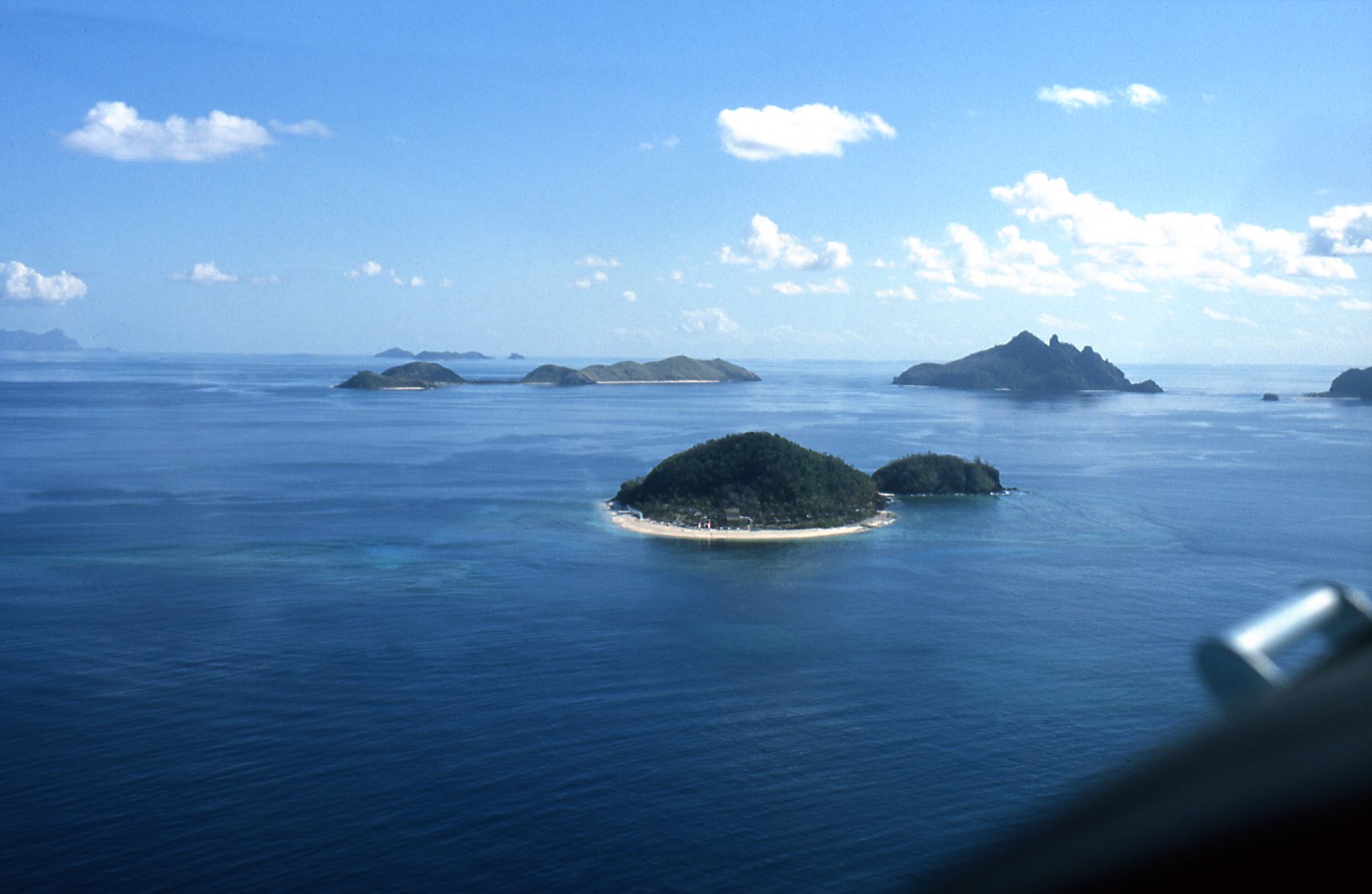

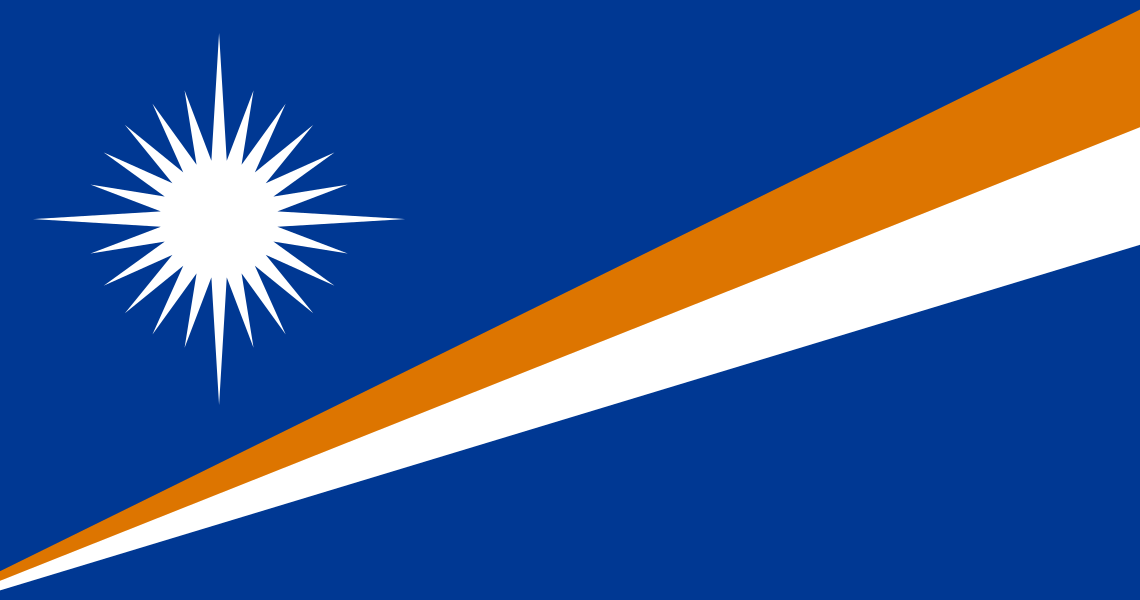
A scattering of 29 coral atolls and 5 islands in the middle of the Pacific — one of the remotest and least visited countries in the world. The Marshall Islands are known for Bikini Atoll, where the United States carried out nuclear tests, and for extraordinary diving on sunken ships and untouched reefs. There are lagoons of impossible turquoise, traditional canoe navigation and the sense of standing at the absolute edge of the earth.
Where to go
#Majuro
The capital sits on a ribbon of land so thin that in places barely three hundred metres separate the open ocean from the lagoon. This is where all the infrastructure lives: banks, the museum and the one proper shopping centre. Give it a couple of days so you can run out to the far beaches and get a feel for the rhythm of atoll life.
Ebeye
The most densely populated island of Kwajalein Atoll is crowded, loud and completely unvarnished. Worth a look for everyday Marshallese life and for the lagoon views, which are extraordinary. From Ebeye it is easy to reach small neighbouring islets with flawless white sand.
Arno
The closest atoll to the capital and an easy boat ride away. Independent travellers come here for untouched nature and for the quiet that Majuro simply does not have. You can stay in a basic guesthouse and watch copra being made the traditional way.
Mili
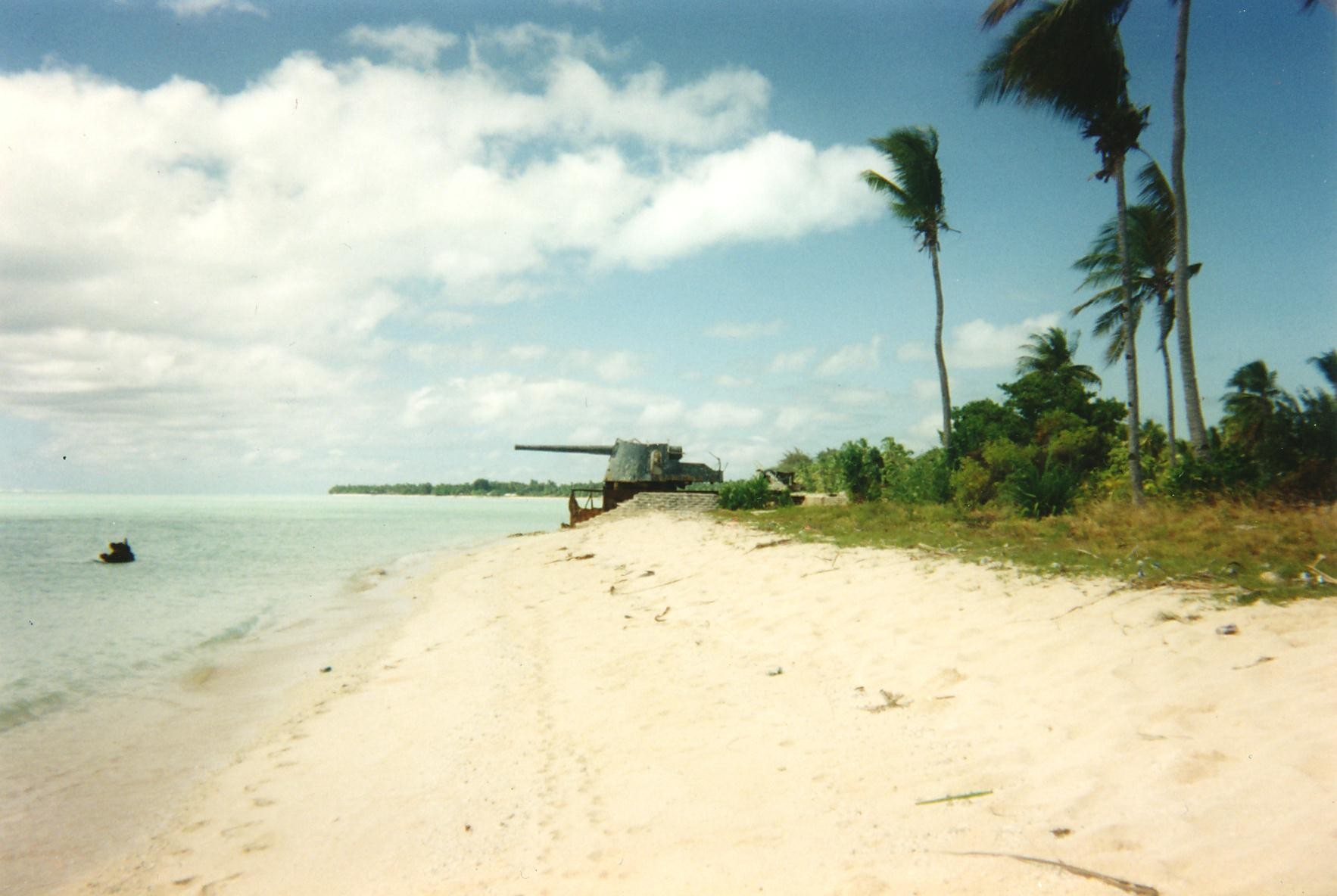
Come here if you care about wartime history: abandoned Japanese fortifications and airstrips are scattered across the atoll. Jungle is slowly swallowing the bunkers and gun emplacements left from the Second World War. The lagoon hides good snorkelling among the wrecked machinery.
Bikini
The legendary nuclear test site is open today only to experienced divers travelling with an organised expedition. On the lagoon floor lie enormous warships, including the aircraft carrier Saratoga. Nobody lives on the island, but a short visit to see the ghost fleet is entirely safe.
What to see
#Wreck diving: The single biggest reason to come is the sunken fleet at Bikini Atoll. Dropping to the carrier Saratoga at fifty metres is the sort of dive people build a career around. Trips run as full expeditions with proper technical support, not as day outings.
Museums: In central Majuro, find the Alele Museum and its collection of stick charts. Ancient navigators read the rhythm of ocean swells off these lattices of sticks and shells, with no instruments at all. It is a small museum that reframes how you think about the Pacific.
Beaches: For the best sand on the capital atoll, head out to the Laura end. You can swim in the lagoon, picnic under the palms and be back in town the same day. The road runs the whole way, so it is an easy trip by taxi.
Culture: Try to catch a race of traditional outrigger canoes. These wa canoes are a national symbol and are still built using techniques passed down within families. Watching one accelerate across the lagoon explains a lot about Marshallese seafaring.
Nuclear legacy: On Enewetak Atoll stands the giant concrete dome capping a nuclear waste pit. It is an eerie thing to look at, a Cold War monument sitting in the middle of the tropics. Access is restricted and needs arranging in advance.
Snorkelling: You do not have to leave Majuro to find coral gardens with turtles and reef sharks. The lagoon is clear enough that you can see the underwater world from the rocks on shore. Bring your own mask, since rental gear outside the dive shops is thin.
Prices
#Currency: The US dollar is the official currency; the islands print no money of their own. Bring a stock of cash in small denominations for markets, taxis and anything outside the capital.
ATMs: Majuro has Bank of Marshall Islands terminals, but they are frequently out of cash. On the outer atolls withdrawing money is not possible at all, so plan your whole trip's cash before you leave the capital.
Cards: Visa and Mastercard are taken in a couple of larger hotels and restaurants in Majuro and nowhere else. American Express is effectively useless here. Wise or Revolut cards work in the same handful of places, so treat them as a backup, not a plan.
Tipping: Tipping is not obligatory, but adding five to ten per cent in restaurants is good manners. Guides and boat crews will always appreciate something extra.
Exchange: Finding a currency exchange desk is close to impossible, so forget about arriving with euros or any other currency. Bring dollars from home, and bring more than you think you need.
| Item | Price (USD) |
|---|---|
| Cafe lunch | 12 |
| Hotel dinner | 50 |
| Beer in a bar | 4 |
| Bottled water 1.5l | 2 |
| Taxi across town | 3 |
| Coffee | 4 |
| Guesthouse per night | 100 |
| Hotel in Majuro | 180 |
| Air Marshall Islands flight | 200 |
| Dive in Majuro | 100 |
| SIM card | 10 |
| 1 GB of data | 15 |
| Boat trip to Arno | 70 |
| Museum ticket | 5 |
Getting around
#Domestic flights: Air Marshall Islands connects the atolls with small aircraft. Schedules shift constantly because of weather or maintenance, so build slack into any itinerary that ends with an international connection.
Getting in: United Airlines runs the famous Island Hopper between Guam and Honolulu, touching down at Majuro and Kwajalein along the way. It is reliable and it is essentially the only route into the country from outside. Book early, because seats on the Hopper sell out well ahead.
Taxis: In Majuro shared taxis replace conventional public transport, at a flat three to five dollars. They work like minibuses, picking up other passengers along the route, which is normal and expected.
Boats: Nearby atolls such as Arno are reachable by motorboat. A private charter is not cheap, so ask around for locals heading that way and split the cost.
Car rental: You can rent a car in Majuro, but there is very little point. There is one road, and a taxi will reach you faster than you will find a parking space.
On foot: Majuro is so narrow you can cross it in a couple of minutes. Walking along the lagoon side is safe and genuinely pleasant, provided the equatorial heat does not defeat you.
Where to stay
#Hotels: The best known option is the Marshall Islands Resort on the lagoon shore. It has a pool and a decent restaurant, and rooms need booking several months out.
In the centre: Hotel Robert Reimers in downtown Majuro is plainer but handier if you want to be near the shops. Think functional rather than scenic, which is fine for short stopovers.
Guesthouses: Small private guesthouses are appearing on Majuro and Arno. Find them through social media or by asking around, because they barely exist on the global booking sites.
Private islands: For solitude, look at Bikendrik Island, a small resort of thatched bungalows. It is the sort of place where you can convincingly believe you are the last person on earth.
Homestays: The remote atolls have no hotels, so a homestay is the only option. Arrange the bed and the meals in advance through contacts in the capital rather than turning up hopefully.
How to book: Email the property directly. Website information goes stale quickly here, and a personal reply from an actual human is far more reliable than an online availability calendar.
What to eat
#Seafood: The backbone of the local table is fresh tuna, mahi-mahi and lobster. Fish is usually grilled and served with a mountain of plain white rice.
Coconut: The nut turns up in everything, from drinking water to sauces. Try coconut crab if you are lucky enough to find it on a menu; it is the local delicacy and it is not always available.
Breadfruit: The fruit of this tree does the job of both bread and potatoes here. It is baked in coals or sliced into crisp chips that come alongside fish.
Pandanus: The local bobo fruit looks strange but is loaded with vitamins. It gets cooked down into a thick sweet paste, or squeezed for a sharp juice that works well in the heat.
American legacy: Marshallese enthusiasm for Spam is not a joke, it is a genuine food culture. Order spam musubi, a block of rice with the ham on top, wrapped in dark seaweed.
Water: Drink bottled or thoroughly boiled water only. The island supply system is old and offers no guarantees for your stomach.
Safety
#Crime: Crime levels are low, though petty theft happens in the busier parts of Majuro. Do not leave bags unattended on the beach and keep hotel windows shut when you are out.
Sun: Equatorial sun is aggressive even under heavy cloud. Use factor fifty and always wear a hat, because heatstroke here arrives quickly and without much warning.
Reef life: When snorkelling, watch for sea urchins and fire coral. A pair of reef shoes will spare your feet some genuinely painful cuts.
Radiation: Background levels on Bikini and Enewetak are within safe limits for visitors, but local produce there is off the menu. Lagoon water is safe for long swims and diving.
Health: Medical facilities are limited across the country, so your travel policy must explicitly cover an air transfer to a hospital abroad. Check that wording before you buy, and carry any regular medication with you. It is also worth reading your own government's travel advisory before you go.
Weather: Storm season can cut transport links without warning. Always keep spare cash and spare days in hand in case you end up stuck on a distant atoll.
Etiquette and culture
#Navigation: Marshallese are regarded as among the finest navigators the Pacific has produced. Their ancestors found pinprick islands by reading how swells refract and bounce off land, hundreds of miles out.
Chiefs: Traditional chiefs, the Iroij, still hold real authority. They control land, and their view on a matter often carries more weight locally than a government decision.
Religion: Sunday church service is the main event of the week and draws in everyone. Dress modestly: shorts above the knee and bare shoulders will not go down well.
Etiquette: Always ask before photographing people or their homes. Locals are extremely friendly but value their privacy, and a request is almost always granted.
Nuclear memory: The testing history at Bikini is a painful subject in many families. Discuss it carefully and do not treat a national tragedy as a piece of entertainment.
Family: Island life revolves around large clans in which everybody is related to everybody. Respect for elders is the unbreakable rule of local society.
Connectivity
#Language: Almost everyone speaks English thanks to decades of American administration, so you will have no trouble getting by. A couple of words of Marshallese, though, will instantly promote you from tourist to honoured guest.
Mobile: NTA is the operator in Majuro, and you buy a SIM at their main office. Coverage vanishes almost the moment you leave the capital, which is worth planning around.
eSIM: Coverage from international eSIM providers such as Airalo is limited here, so do not assume your usual travel eSIM will connect. Check the provider's country list before you fly and treat a local NTA SIM as the primary option.
Internet: Speeds are modest and data is expensive. Download maps, guides and anything you plan to read before you arrive, while you still have decent bandwidth.
Power: Sockets are the American flat-pin type at 120 volts. Anyone arriving from Europe, the UK or Australia needs a plug adapter, and dual-voltage chargers if your devices are fussy.
Post: The islands issue beautiful stamps that collectors chase worldwide. Stop at the Majuro post office and send a paper postcard home; it is a small pleasure and the stamps alone are worth it.
Phrasebook
#| English | Marshallese | Pronunciation |
|---|---|---|
| Hello | Iọkwe | YAW-kway |
| Thank you | Kommool tata | kom-MOL ta-TA |
| Yes | Aet | AH-et |
| No | Jaab | JAH-ab |
| Please | Jouj | JOH-uj |
| Friend (slang) | Jera | JEH-ra |
| Good | Eṃṃan | em-MAN |
| Food | Mōñā | maw-NYA |
| Water | Dren | dren |
| Island | Āne | AH-nay |
| Ocean | Lōmeto | law-meh-TOH |
| How much is it? | Jete wōnān? | JEH-te waw-NAN |
| Where is it? | Ia eo? | ee-AH eh-OH |
| Canoe | Wa | wah |
| Fish | Ek | ek |
| Help me | Jipañ eō | ji-PANG eh-OH |
| Beautiful | Eaorōk | eh-ah-oh-RAWK |
| Sorry | Jolok bōd | jo-LOK bud |
| Goodbye | Bar lo eok | bar lo eh-OK |
| Hey there! (slang) | Yokwe jera | YAWK-way JEH-ra |
Good to know
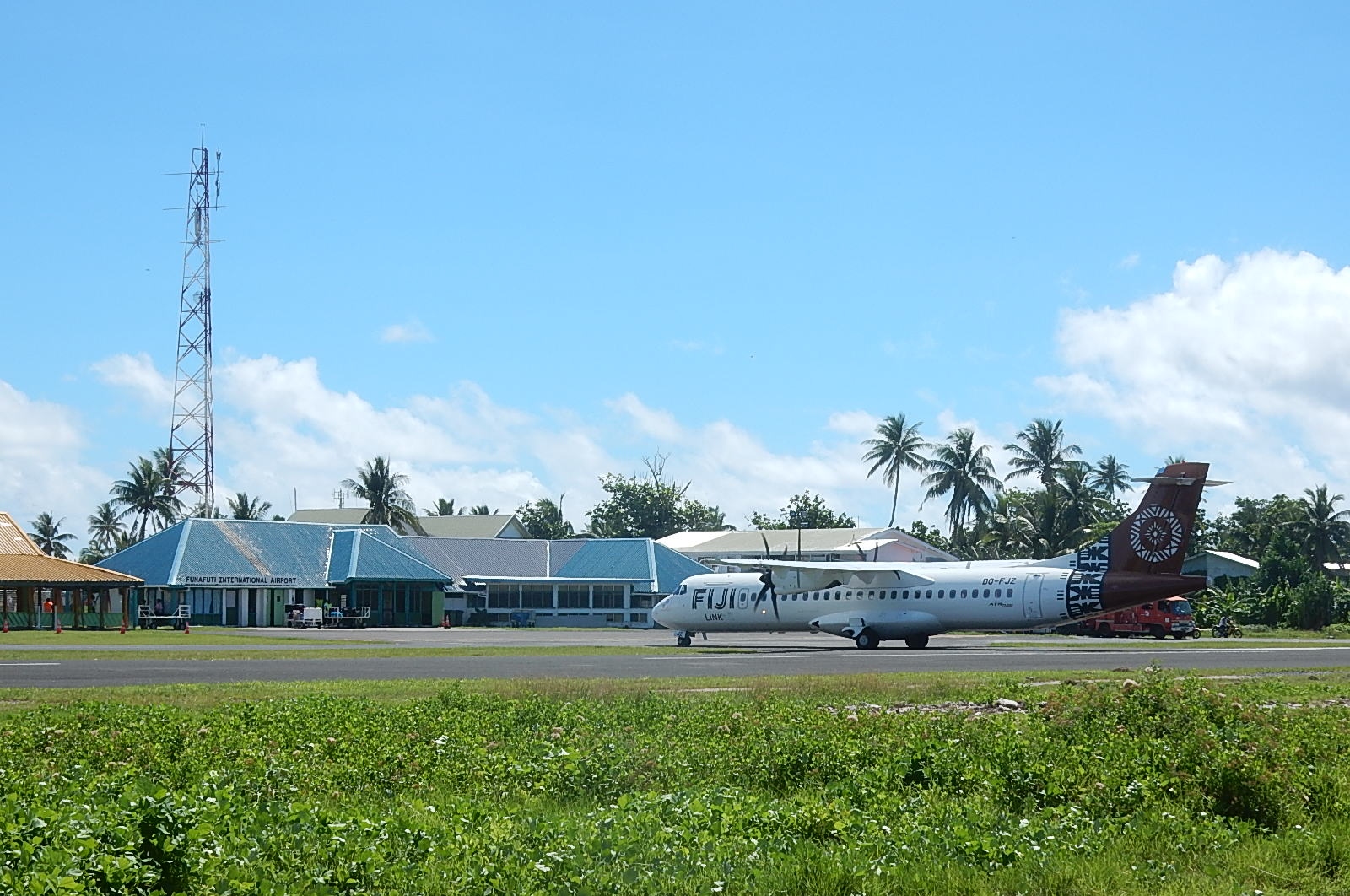
#Airport: The international gateway is Majuro (MAJ), and a taxi covers the ten minutes into town along the single road. There is no airport bus, but taxis are always waiting.
Domestic airline: Air Marshall Islands is based in the capital and runs scheduled services to Ebeye and the outer atolls on small aircraft. Confirm your flight a day or two before, since schedules move.
Consular help: There are very few foreign missions in the country, and most nationalities are covered by an embassy in another Pacific capital or in Asia. Look up who represents you before you travel and save the contact details offline.
If something goes wrong: Majuro has a town police force and the central hospital. Save both numbers in advance, because there is no single nationwide line to call.
AMI offices: The airline keeps counters on Majuro and Ebeye where you can check flight status or book a seat when the website is down. In practice a visit in person is often faster than any online attempt.
Resources: For current information on Bikini diving expeditions, check the atoll's official site or go straight to the operators, such as the Dirty Dozen team. Places are limited and seasons are short, so enquire months ahead.
Frequently asked questions
#It is if you want somewhere genuinely remote rather than merely quiet. The wreck diving at Bikini is world class, the Alele Museum's stick charts are unlike anything else in the Pacific, and the outer atolls still run on traditional clan life. Casual beach tourists will find the infrastructure thin.
The usual route is United Airlines' Island Hopper via Honolulu or Guam. Both transit points are US territory, so you will need whatever US entry permission your passport requires, ESTA or a visa. Check your own passport's rules for the Marshall Islands themselves well before booking.
Short visits and diving in the lagoon are considered safe by international experts, and the water itself poses no problem. What remains prohibited is living there permanently and eating or drinking anything produced locally. Expeditions are run by licensed operators who handle the permissions.
Bring US dollars in cash, ideally with plenty of small notes for taxis and shops. Cards are accepted in only a handful of places, and finding an ATM that actually has money in it is a matter of luck. Withdraw everything you need in Majuro before heading to any outer atoll.
December to April is the driest and most reliable window. Outside those months tropical downpours and strong ocean winds are far more frequent, and flight cancellations follow.
Book the Marshall Islands Resort or Hotel Robert Reimers directly by email rather than through an aggregator. Only a couple of properties appear on the big booking sites, and their availability data is often wrong. Guesthouses exist but are found through social media and word of mouth.
Between nearby atolls such as Majuro and Arno, motorboats can be hired and locals make the crossing regularly. For anything further you will need to buy a seat on an Air Marshall Islands flight. There is no scheduled passenger ferry network.
NTA provides coverage in the capital and on Kwajalein, though speeds are slow and data is pricey. On most outer atolls there is no signal at all. Download offline maps and anything you need to read before you leave Majuro.
Updated
The data on this page goes out of date. Visa rules and permitted stays, border requirements, prices and budgets, transport and local conditions all change fast, and we do not re-check every page every day. We show the date of our last check where we have one, but before you travel, verify with official sources: the country’s consulate, its immigration service, its e-visa portal and your carrier.