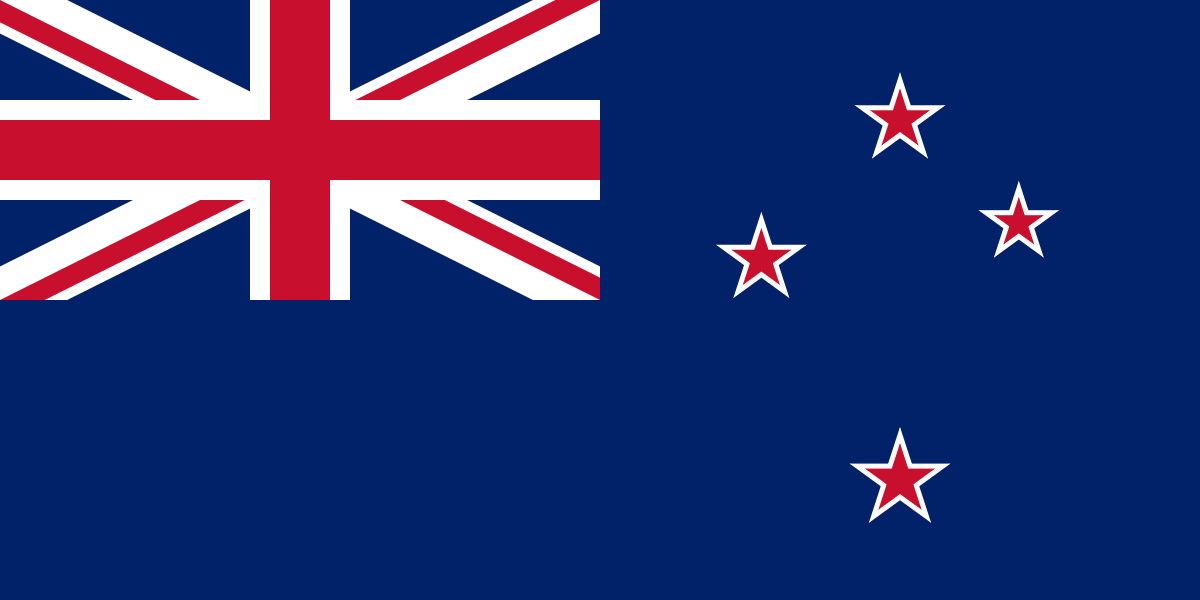
New Zealand
NZA country at the end of the world where every view is a frame from The Lord of the Rings: snow-capped volcanoes, emerald fjords, glaciers, geysers and turquoise lakes. New Zealand is a paradise for trekking, adrenaline sports and anyone who loves wild country. Kiwis live here — both the bird and the people — the language is English, and Maori culture gives every trip an extra dimension. It is not cheap, but a campervan and hostels keep the adventure within reach.
Where to go #

Auckland
New Zealand's largest city — the Rangitoto volcano, the Harbour Bridge and the view from the Sky Tower.

Wellington
The world's southernmost capital — the Te Papa museum, the Te Aro quarter and Lord of the Rings country.

Queenstown
The adventure capital of the world — bungee jumping, skiing, mountain biking and the fiords close by.
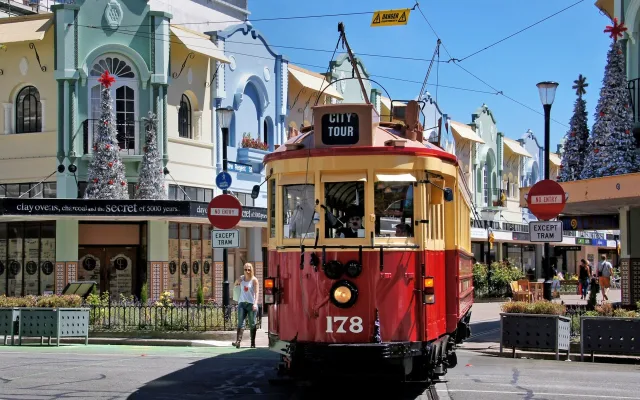
Christchurch
The rebuilt city of the South Island — the heritage tram, the Botanic Gardens and the gateway to Antarctica.
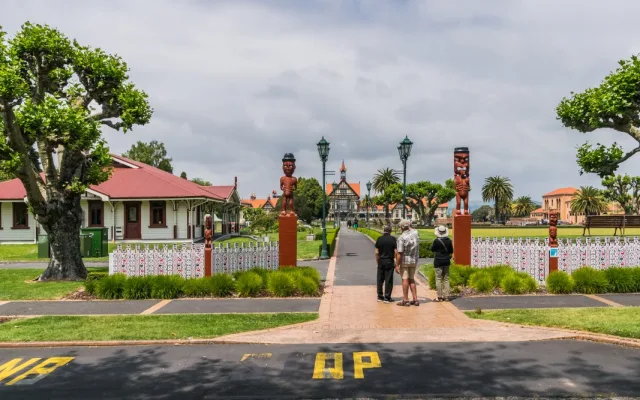
Rotorua
Geyser country and Maori culture — Wai-O-Tapu, Te Puia and natural hot pools.
What to see #
Milford Sound: This fiord is regularly called the eighth wonder of the world, and it is worth a trip for the cruise beneath sheer rock walls. From the deck you see enormous waterfalls and dolphins, and the easiest approach is the coach from Queenstown. The drive through the Homer Tunnel is an adventure in itself.
Tongariro Alpine Crossing: The country's most famous day walk, running through Martian scenery of coloured craters and turquoise lakes. The 20-kilometre route demands preparation, but the volcanic landscapes repay it. Remember that weather on the saddle turns in minutes even on the sunniest summer day.
Hobbiton: If you are wondering what to see as a Tolkien fan, the hobbit village near Matamata is compulsory. You can step into real burrows, drink an ale at the Green Dragon and walk the garden where the story of Baggins opens. It is extremely popular, so book tickets at least a couple of months ahead.
The South Island glaciers: Franz Josef and Fox are remarkable for descending almost to the level of the rainforest. The most spectacular way to see them is a heli-hike, dropped by helicopter straight onto the blue ice. On a budget there are viewpoints you can reach on foot along the valley floor.
Waitomo: Go to these caves to see thousands of glowworms creating the effect of a starry sky underground. Floating the cave river on an inner tube adds an edge to a genuinely magical spectacle. The silence inside and the cold water make it mystical and hard to forget.
Abel Tasman: A national park at the top of the South Island with golden beaches and clear water. It is worth a day for kayaking or an unhurried walk along one of the loveliest coastal tracks anywhere. It is one of the few places in the country where the climate stays mild and sunny almost year round.
Prices #
Currency: The New Zealand dollar is in use, known locally as the kiwi. In 2026 the rate hovers around 0.55 to 0.60 US dollars per NZD. Cash is barely used, since cards are accepted even at remote farm shops and parking machines.
Cards: Contactless payWave is the universal standard and Visa and Mastercard work everywhere, though some small operators add a surcharge for credit cards and Amex is patchier. Bring a card that handles foreign transactions cheaply, such as Wise or Revolut, because without working plastic you cannot even book an intercity coach seat.
ATMs: You can withdraw at any bank branch, though the transaction fee is usually about five dollars. Carrying a little cash is only really useful for weekend markets or for the occasional terminal outage out in the sticks.
Tipping: New Zealand does not tip in cafes, restaurants or taxis. Service is already in the bill and staff do not expect anything extra, although rounding up is a pleasant gesture. Tax is always included in the shelf price.
| Item | Price (USD) |
|---|---|
| Cappuccino in a cafe | 4.00 |
| Meat pie | 4.50 |
| Fast food combo | 10.00 |
| Bus ticket | 3.00 |
| Litre of petrol | 1.80 |
| Bottle of Marlborough wine | 12.00 |
| Lunch in a simple cafe | 15.00 |
| Dinner for two with wine | 65.00 |
| SIM card with data | 18.00 |
| Kilo of mussels | 5.00 |
| Farm burger | 14.00 |
| Hobbiton entry | 55.00 |
| Dorm bed | 25.00 |
| Car hire, per day | 45.00 |
| Ferry ticket | 35.00 |
| Fiord cruise | 70.00 |
Getting around #
Getting here: Auckland is the main long-haul gateway, with direct services from Los Angeles, San Francisco, Vancouver, Singapore, Dubai and Doha, and a constant shuttle across the Tasman from Australian cities. From Europe you fly via a Gulf, Asian or North American hub and should count on a full day in the air each way.
Coaches: InterCity runs the largest route network, linking almost every town on both islands. The FlexiPass is good value, letting you book by the hour and change plans up to two hours before departure without losing money.
Domestic flights: Air New Zealand and the low-cost carrier Jetstar handle internal routes. Booked a couple of months out, an Auckland to Queenstown flight can undercut the equivalent overland journey. Regular shuttles connect the airports to town centres.
Ferries: Interislander and Bluebridge cross Cook Strait between the islands. It is one of the most beautiful sea crossings in the world and takes about three and a half hours. There are cafes and lounges aboard, and the open decks are ideal for spotting dolphins and whales.
City transport: Auckland and Wellington use the AT HOP and Snapper cards, which discount every fare. Drivers usually will not take cash, so buy and load a card the moment you land or at any newsagent.
Trains and taxis: The rail network is thin and trains function more as scenic experiences than transport, with the TranzAlpine over the Southern Alps counted among the world's great rail journeys and booked far in advance. Uber and local firms operate in the big cities at high prices, so treat them as the late-night option rather than your daily plan. Driving is on the left.
Where to stay #
Motels: The most popular format for anyone who values independence. These are usually roomy units with their own kitchen and parking, which lets you save serious money by cooking breakfast and dinner from supermarket ingredients.
Guesthouses and B&Bs: Small family-run places offer domestic comfort with breakfast included. They are also the easiest way to talk to locals, who tend to hand out excellent advice on hidden tracks and free attractions nearby.
Budget beds: Solo travellers do well at chains like Haka Lodge, where you can book a private room or a dorm bed. These places always have big shared kitchens, lounges and laundries, which matters a lot on a long trip.
City hotels: Every global chain is represented in the main centres and prices are consistently high. Look slightly away from the main tourist nodes, where comfort is identical and the rate is noticeably lower.
DOC huts: If you are planning multi-day walks in the national parks, book Department of Conservation huts six months ahead. These are basic bunk-and-shared-kitchen shelters in the wildest and most beautiful places in the country, with no mobile signal.
Booking: In the December to February peak, finding a decent guesthouse room on arrival is essentially impossible. Lock in everything on popular routes in advance and read the cancellation terms and kitchen details carefully.
What to eat #
Fish and chips: The classic remains the most affordable and honest meal on the coast. Fresh fish is battered and served with a mountain of chips, one portion usually feeds two, and it is best eaten sitting on the beach.
Meat pies: Small enclosed pies filled with beef, cheese or mushroom are sold at every petrol station and bakery. This is the national fast food, eaten by locals for breakfast or as a quick lunch on a road trip.
Hāngī: The traditional Māori method of cooking meat and vegetables slowly in an earth oven over hot stones. You can try a real hāngī at the cultural evenings in Rotorua, where the cooking is accompanied by traditional song and dance.
Seafood: The country is famous for its huge green-lipped mussels and its oysters. Mussels are cheap in the supermarket and very easy to cook yourself in a guesthouse kitchen with garlic, onion and a splash of local white wine.
Lamb: New Zealand meat is the global benchmark, so a lamb dish in a good restaurant belongs on the list. The animals graze on grass year round, which makes the flavour rich and the texture tender.
Coffee and dessert: The cult of the flat white has been perfected here and finding a bad coffee in a city is close to impossible. For dessert order a pavlova, the light meringue with fruit that locals consider a national treasure.
Safety #
The sun: The ozone layer over the country is thinner than over Europe, so you can burn in fifteen minutes under cloud. SPF 50+ is a daily necessity unless you want a serious burn on day one.
Mountain weather: The climate is wildly changeable and "four seasons in one day" is a plain statement of fact. Check the forecast on the official MetService site before any walk and carry a windproof layer even when the sun is out.
Sandflies: On the South Island, particularly around the fiords, sandflies are relentless biters. The bites itch for weeks, so a proper repellent belongs in the pack of anyone walking near lakes, rivers or dense bush.
Earthquakes: New Zealand sits in a very active seismic zone and minor shakes are routine. Read the evacuation plan and the simple earthquake instructions posted on the back of every hotel room door.
Wildlife: There are no venomous snakes or large predators, but kea parrots are a genuine nuisance. These clever birds love dismantling gear and stealing food, so do not leave belongings unattended at open car parks.
Crime: Crime rates are very low, but do not leave valuables visible in a parked car at popular trailheads. Break-ins do happen, so take the obvious precautions and check your own government's travel advisory before you set off.
Etiquette and culture #
Māori: The heritage of the indigenous people runs through everything, from place names to greetings. Be respectful at a marae, the sacred meeting grounds, where you keep quiet, remove your shoes and ask before entering.
Bare feet: Do not be startled to meet people with no shoes on in a supermarket or a city park. Walking barefoot is entirely normal for many New Zealanders and reads as freedom rather than poverty or bad manners.
Etiquette: Kiwis are extremely friendly but value personal space and simple politeness. It is customary to thank the driver as you get off a bus and to greet the person at the till, and skipping that marks you out as a rude visitor.
Conservation: Protecting nature is close to a religion here, and littering on a track can bring a serious fine. Stay on the marked routes and scrub your boots before entering forest areas so you do not spread tree disease.
BYO: Many casual restaurants let you bring your own wine, flagged with a "Bring Your Own" sign. They charge a small corkage fee for the glassware, and it still works out cheaper than buying from the list.
Pace: New Zealand is unhurried and nobody rushes, least of all in the provinces. Shops in small towns close early and Sunday belongs to family and the barbecue, so do your shopping and errands ahead of time.
Connectivity #
Networks: Spark and One NZ lead the market and both sell tourist bundles with generous data. The easiest place to buy a SIM is on arrival at Auckland airport, where the operator desks run around the clock.
Coverage: Solid 4G reaches every town and follows the main highways. In the national parks, deep valleys and remote stretches of coast the signal disappears entirely, so download offline maps before you go.
Hotel internet: Wi-Fi is available in almost every guesthouse and hostel, though the speed can be modest. Budget motels sometimes cap the free allowance, after which each extra megabyte is charged.
Public access: Free internet is available in city libraries and at i-SITE visitor centres. Queenstown and Wellington have free city Wi-Fi zones in the centre, but for anything demanding rely on mobile data.
Apps: Install CamperMate, which shows campsites plus the nearest toilets, fuel stations and free Wi-Fi points. MetService is indispensable for tracking hour-by-hour weather in a specific mountain area.
eSIM: For your first days an eSIM from a provider like Airalo is the simplest option, since it activates before you land. Switching to a local plan afterwards is usually cheaper, as domestic calls are typically bundled in.
Phrasebook #
| English | Te Reo Māori and Kiwi slang | Pronunciation |
|---|---|---|
| Hello | Kia ora | KEE-a OR-a |
| Welcome | Haere mai | HIGH-reh my |
| Goodbye | Haere rā | HIGH-reh raa |
| Thank you | Ngā mihi | Ngaa MEE-hee |
| Food | Kai | Kai |
| Family | Whānau | FAH-no |
| Sea | Moana | MO-ah-na |
| Land | Whenua | FEN-oo-a |
| How's it going? | How's it going? | Howz it GO-ing |
| Thanks (slang) | Cheers | Cheers |
| You're welcome (slang) | No worries | No WUR-eez |
| Excellent (slang) | Sweet as | Sweet az |
| Flip-flops (slang) | Jandals | JAN-dulz |
| Mate, friend (slang) | Mate | Mayt |
| Breakfast (slang) | Brekkie | BREK-ee |
| Afternoon (slang) | Arvo | AR-vo |
| Corner shop (slang) | Dairy | DAIR-ee |
| Cool box (slang) | Chilly bin | CHILL-ee bin |
| It'll be fine (slang) | She'll be right | Sheel be rite |
| Backcountry (slang) | The bush | The boosh |
| Small town (slang) | Township | TOWN-ship |
| Campervan (slang) | Van | Van |
Good to know #
Entry rules: The official Immigration New Zealand site is the place to check what your passport needs, since many Western nationalities travel on the NZeTA electronic authorisation while others require a full visitor visa. Requirements and processing times change, so look them up well before you book flights.
National parks: The Department of Conservation portal is essential for planning walks and booking huts. It publishes track conditions, closures and the rules for behaving in the backcountry.
Weather: MetService gives the most accurate forecasts, tuned to the country's complicated terrain. Check it every morning before you leave, especially if you are planning a mountain walk or a ferry crossing.
Trip planning: AdventureSmart helps you prepare for outdoor activity and lets you log your intentions before a serious tramp. That matters for your own safety, because it tells rescuers where to look if something goes wrong.
Transport sites: InterCity and KiwiRail sell coach and train tickets in advance at a discount. For crossing between the islands, use Interislander or Bluebridge to book a foot-passenger berth.
Power and navigation: Sockets are type I with angled flat pins at 230 volts, so bring an adapter unless you are coming from Australia. CamperMate is the one app to install, combining maps, service listings and traveller reviews, and it works offline in remote areas.