Norway
NOThe country of fjords, northern lights and the midnight sun — one of the most beautiful places on the planet and one of the most expensive. Norway overwhelms by scale: waterfalls crash into turquoise fjords, glaciers reach down to the sea, and above the Arctic Circle the sun does not set for two months. Everything works, everyone speaks English and cards are accepted even in mountain huts. It costs a fortune, but the fjords, the Lofotens and the aurora are worth every krone.
Where to go #
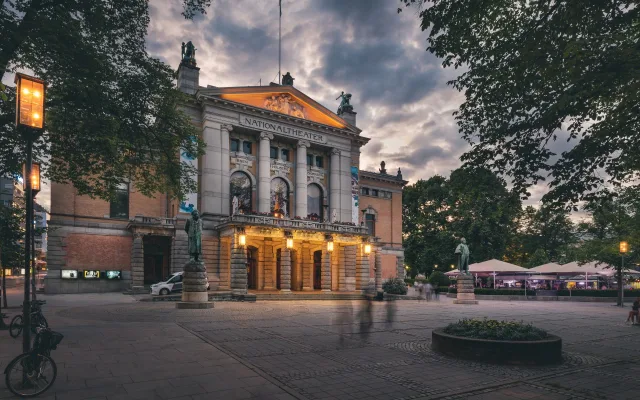
Oslo
Norway's capital — the National Museum with Munch's *The Scream*, the Opera House, Aker Brygge waterfront, and Holmenkollen.
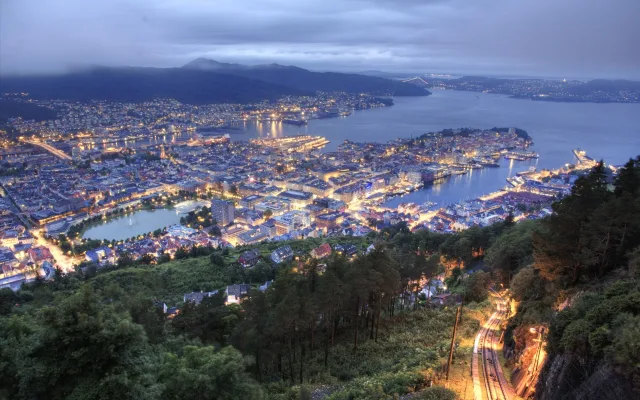
Bergen
Gateway to the Norwegian fjords — Bryggen on the UNESCO list, the Fløibanen funicular, and cruises on the Sognefjord.
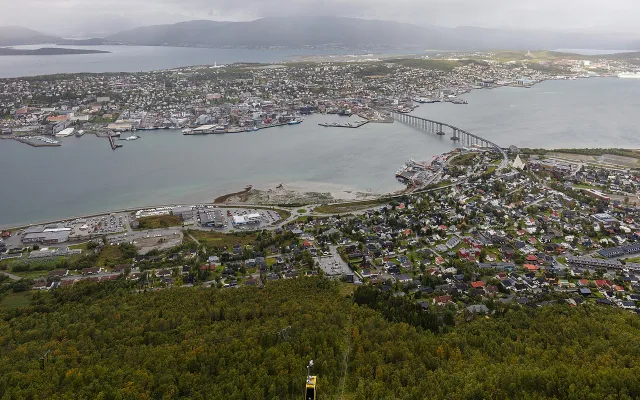
Tromso
The capital of Arctic Norway — one of the world's best places for the northern lights, home to the Arctic Cathedral and the midnight sun.
What to see #
Oslo: Start at the Opera House, whose roof doubles as a viewing platform, then walk to Vigeland Park to see hundreds of raw, emotional sculptures in the open air.
The fjords: Nærøyfjord and Geirangerfjord are compulsory, living stage sets of sheer rock and waterfalls, and both are UNESCO-listed for good reason.
Lofoten: The whole archipelago is one enormous attraction, but the Hamnøy bridge and Ramberg beach, with its turquoise water and white sand, are what stop people in their tracks.
Bergen in a day: Take the funicular up Mount Fløyen and eat fresh crab or salmon at the famous Fish Market in the centre of town.
Norway in a Nutshell: This packaged route lets you see mountains, waterfalls and deep fjords in a single daylight run using train and ferry, which makes it ideal for a first visit.
Trolltunga and Preikestolen: For active travellers, hiking out to these rock ledges is a genuine test of stamina, rewarded with astonishing views over Lysefjord and the mountain lakes.
Northern lights: In Tromsø or on Lofoten the winter sky fills with green fire, and in the same places in summer you get the endless midnight sun instead.
Prices #
Currency: Everything is priced in Norwegian kroner. Euros are very rarely accepted and at a poor rate, so it pays to have local money or a card that converts cleanly.
Cards: Visa and Mastercard are accepted absolutely everywhere, including buses, market stalls and mountain huts, and contactless is the default. Amex is patchier, and a Wise or Revolut card is the cheapest way to avoid your bank's currency spread in one of Europe's most expensive countries.
Cash: The country has moved almost entirely to card payments, and paper money is useful only for tickets bought from a bus driver or at very small campsites.
Withdrawals: You can take out kroner at DNB and Nokas ATMs, but expect a fixed fee of around forty kroner per transaction, which argues for fewer, larger withdrawals.
Tipping: Service is normally already in the bill in cafes, but if you were looked after well it is customary to round up or leave about five percent.
| Item | Price (USD) |
|---|---|
| Lunch in a simple cafe | 18 |
| Dinner for two in a restaurant | 85 |
| Fast food combo | 13 |
| Street hot dog | 6 |
| Cappuccino | 5 |
| 0.5l beer in a bar | 11 |
| Bottle of wine in a shop | 20 |
| Hostel dorm bed | 50 |
| Three or four star hotel | 120 |
| Luxury hotel | 250 |
| Bus ticket in Oslo | 4.2 |
| 24-hour Oslo travel pass | 14 |
| Taxi, per kilometre | 1.8 |
| Flight Oslo to Tromsø | 80 |
| Train Oslo to Bergen | 45 |
Getting around #
Getting here: Oslo Gardermoen is the main gateway, with direct flights from most European capitals, New York and Newark, plus low-cost links on Norwegian and Wizz Air. Bergen, Stavanger and Tromsø also take international flights, so you can often start further north and skip the backtrack.
Domestic flights: Flying is the fastest way between the big cities, and SAS or Norwegian tickets are far cheaper booked well in advance.
Trains: Oslo to Bergen takes about seven hours over spectacular mountain passes, and you book at vy.no where discounted fares appear regularly.
City transport: Oslo runs an integrated metro, tram and bus system through the Ruter app, where single tickets cost noticeably less than buying on board.
From the airport: The Flytoget express is the quickest way from Gardermoen into central Oslo, but ordinary Vy trains cost roughly half as much for a few minutes more.
Sea and road: Ferries and fast boats connect the islands to the mainland, and Hurtigruten ships run a full coastal voyage. NOR-WAY and Vy Bus coaches cover the places the railways do not, with panoramic windows over the fjords, while city bike schemes and the marked Lofoten cycle routes let you avoid the tunnels on the old scenic roads.
Where to stay #
Where to stay: In Oslo, Grünerløkka has the best atmosphere and the centre the best convenience, while in Bergen you want to be near the old Bryggen quarter.
Budget beds: Even a dorm bed is expensive here, so book anything in a popular location three or four months ahead.
Mountain huts: The DNT network of cabins is spread across the whole country and is a superb way to sleep in the wild with minimal comfort but in genuinely remarkable places.
Rorbu: On Lofoten you should spend at least a night in one of the traditional red fishermen's cabins, now converted into comfortable guesthouses right on the water.
Wild camping: The law here lets you pitch a tent almost anywhere for free, provided you are more than 150 metres from the nearest dwelling.
Farm guesthouses: Small family-run places offer domestic comfort and breakfasts made from local produce, and often work out better value than the chain hotels.
Booking: At the June to August peak, finding a room in the fjord towns without a reservation is close to impossible, so plan around that.
What to eat #
Local specialities: Try brunost, the caramel-flavoured brown cheese, on warm waffles, and order fresh salmon in any form you can get it.
Traditional dishes: Kjøttkaker, meat patties with thick gravy and lingonberry, make a filling and relatively affordable hot lunch in most city cafes.
Seafood: Up north in Tromsø, king crab and rich Arctic fish soup are worth ordering, though the prices attached to them can be a shock.
Saving money: The reliable way not to bankrupt yourself is shopping at Kiwi or Rema 1000 and cooking in a guesthouse kitchen.
Matpakke: Norwegians routinely carry simple homemade sandwiches into the mountains or to work, and it is entirely normal for visitors to do the same.
Alcohol: Spirits and wine are sold only in the state Vinmonopolet shops, which keep restricted hours, and ordinary supermarkets stock only beer.
Water: Tap water here is exceptional and drinkable everywhere, so carry a bottle and refill it for nothing.
Safety #
The general picture: This is one of the calmest countries in the world, crime is minimal and walking around the cities at night is entirely fine.
Nature: The real danger is unpredictable mountain weather, where fog can drop in minutes, so always carry offline maps and a spare warm layer.
Rescue: Install the official Hjelp 113 app, which lets rescuers pinpoint your coordinates if something goes wrong somewhere with no landmarks.
Winter driving: Roads ice over even with studded tyres, and if you have no experience of switchbacks in freezing conditions the excellent public transport is the better choice.
Hiking: Stay on the marked trails, because injuries happen every year on the popular routes when people cut corners or take a risky photograph.
Wildlife: In the north, elk and reindeer regularly appear on the roads, so drive with real attention at dusk and after dark.
Signal: Mobile coverage drops out in deep fjords and on the passes, so never rely on online services alone when planning a long walk, and check your own government's travel advisory before setting off.
Etiquette and culture #
Friluftsliv: This word describes the local compulsion to spend every free hour outdoors, regardless of season or weather.
Punctuality: Being late is not done here, and turning up a few minutes early for a meeting or a bus is simply a mark of basic respect.
Personal space: Norwegians value quiet and rarely start conversations with strangers on a bus, so respect their privacy and never make noise in public.
Shoes off: Entering a home or a private guesthouse, always take your shoes off. It is an absolute rule that everyone observes without exception.
Environment: Waste sorting and careful use of resources are deeply embedded, so follow the recycling instructions in hotels rather than guessing.
Equality: Society runs on egalitarian principles, and displaying wealth or expecting special treatment because of your status reads badly.
Sunday: Most shops are shut and the cities go still, because the day belongs to family and long walks in the forest. Do your shopping in advance.
Connectivity #
Language: Almost everyone speaks excellent English, so you will have no difficulty at all in hotels, shops or on transport, and menus and signs are widely bilingual.
Mobile: The main operators are Telenor and Telia, and a tourist SIM can be bought at the airport or at Narvesen kiosks, though tariffs are on the expensive side.
eSIM: For a short visit an eSIM data plan from a provider like Airalo is often cheaper than a local SIM and works the moment you land.
Internet: Free Wi-Fi is almost universal in cafes, trains and hotels, and speeds are high enough to work remotely without any trouble.
Apps: Download Yr.no for the most accurate forecast anywhere in the country and UT.no for detailed trekking maps, both of which make life considerably easier.
Going digital: The country is close to abandoning paper altogether, and virtually every ticket and booking is accepted electronically from your phone.
Offline: Between the terrain and the sheer number of tunnels, GPS and 4G drop out constantly, so save maps and instructions to your phone in advance. A couple of Norwegian words, "hei" and "takk", always go down well.
Phrasebook #
| English | Norwegian | Pronunciation |
|---|---|---|
| Hello | Hei | Hey |
| Hi there (slang) | Hallais | ha-LICE |
| Goodbye | Ha det bra | Ha deh BRAH |
| Thank you | Takk | Tahk |
| Thanks a lot | Tusen takk | TOO-sen tahk |
| Please | Vær så snill | Vaer sho SNILL |
| Yes / No | Ja / Nei | Yah / Nye |
| How much is it? | Hva koster det? | Vah KOS-ter deh? |
| That's expensive | Det er dyrt | Deh er dewrt |
| Cool! (slang) | Fett! | Fett! |
| Where is...? | Hvor er...? | Voor er...? |
| I don't understand | Jeg forstår ikke | Yai for-SHTOR IK-keh |
| Do you speak English? | Snakker du engelsk? | SNAH-ker doo ENG-elsk? |
| Water | Vann | Vahn |
| Beer | Øl | Erl |
| Coffee | Kaffe | KAH-feh |
| Food | Mat | Maht |
| Help! | Hjelp! | Yelp! |
| Toilet | Toalett | too-ah-LETT |
| Thanks for the meal | Takk for maten | Tahk for MAH-ten |
| Excuse me | Unnskyld | OON-shill |
| The outdoor life (slang) | Friluftsliv | FREE-luffts-leev |
Good to know #
Emergency numbers: Save the mountain rescue and emergency line details before you travel, and note down where your own country's embassy sits in Oslo in case you lose documents.
Weather: Remember the local saying that there is no bad weather, only bad clothing, and always pack a membrane shell and a decent fleece.
Power: Sockets are the standard European type C and F at 230 volts, so continental travellers need nothing extra while UK and North American visitors need an adapter.
Planning: The official visitnorway.com portal carries a great deal of current information on events, festivals and ferry timetables across the northern regions.
City cards: In Oslo and Bergen the city passes are good value, covering free public transport and museum entry for one or three days.
Clothing: Even in summer, temperatures in the mountains and on the fjords can drop to five degrees, so layering is what keeps you comfortable and healthy.
Alcohol rules: Vinmonopolet shops close early and are shut on Sundays, so buy wine or spirits before the weekend if you want them.