
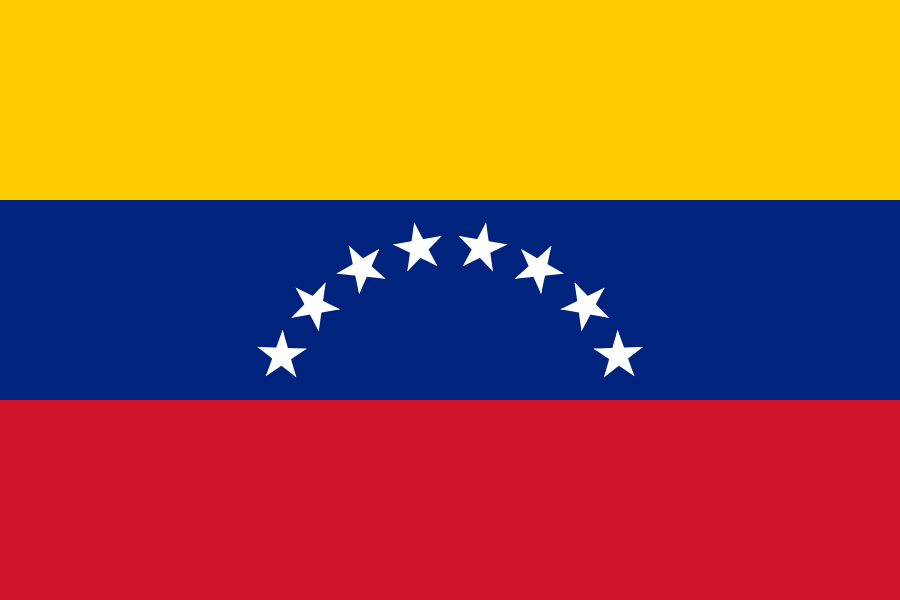
Safety in Venezuela
A rating built from four independent indices, plus scams, laws and what to do when something happens
Rating lowered for what the indices miss: infrastructure does not function, arbitrary detention of foreigners, no healthcare and evacuation takes days
Indices checked on 10.08.2026
Position in global indices
Save these before you fly
The general picture
Street crime: Venezuela remains a high-crime country and you should plan around that. Never walk alone after dark, even inside what looks like a resort area.
Valuables: Do not display expensive watches, jewellery or electronics. Take your phone out only indoors, and navigate outside using screenshots you saved earlier.
Barrios: Entering the barrio districts on your own is out of the question. The one exception is San Agustín, and only in the company of a local guide.
Drinking water: Tap water will make you seriously ill. Buy bottled water only and check the seal on the cap every time.
Travelling: Plan your route so that every intercity transfer finishes before sunset. Roads after dark carry a real risk of armed robbery on top of appalling lighting.
Medicines: Because of chronic shortages, bring everything you might need with you. Pay particular attention to stomach remedies and a good repellent, and read your own government's travel advisory before booking.
How tourists get scammed
Venezuela is in a years-long economic and political crisis, and most governments advise against travel there.
What defines the situation. Extremely high violent crime, including armed robbery and kidnapping. Caracas has featured for years on lists of the world's most dangerous cities. Infrastructure has degraded: interruptions to electricity, water, fuel and communications.
Money. Hyperinflation has led to effective dollarisation: prices in dollars, with cash dollars in small denominations the only workable option. International cards do not work and ATMs are useless.
Kidnapping. Express kidnappings with a tour of the cash machines, and ransom kidnappings, are systemic practice in Caracas.
Maiquetía airport. The road from the airport into Caracas has historically been considered dangerous, especially after dark. An organised transfer is essential.
What is actually offered to tourists. A few operators run trips to Roraima, Canaima and Los Roques. These routes are isolated from the cities and relatively calm, but the logistics pass through a country in crisis.
What gets you fined or jailed
The political situation. Demonstrations and their suppression occur periodically. A foreigner should stay clear: photographing protests, security forces and any political event is extremely risky.
Detention of foreigners. There have been cases of prolonged detention of foreign nationals on espionage and terrorism-related accusations. The risk is higher for journalists and dual nationals.
Photography. Military installations, police, airports, oil infrastructure, the presidential palace, and any queues or manifestations of the crisis are off limits.
Drugs. The law is strict; the country lies on a transit route.
Drones. Prohibited.
Border areas. The Colombian and Guyanese frontiers see an armed group presence. People do not go there.
Fuel. Petrol shortages periodically paralyse movement, with queues measured in hours.
Insurance. Most policies exclude Venezuela. Check the wording.
Health: vaccines, medicines, care
The healthcare system is in deep crisis. Hospitals operate short of everything: medicines, equipment, staff, and sometimes electricity and water. This is the key risk factor of a trip.
Returning infections. Amid the crisis, malaria, diphtheria and measles have returned after previously being controlled. Malaria has spread widely, especially in Bolívar state and the south.
Vaccinations. Yellow fever, hepatitis A and B, typhoid, diphtheria, measles and rabies. The full set, arranged in advance.
Water. Unsafe everywhere, with intermittent supply.
Medicines. Shortages are acute. Bring everything with a large surplus.
Evacuation. Extremely difficult: air links are limited and insurers are reluctant.
Nature. Canaima, Roraima and Los Roques are magnificent, but there is no healthcare there and evacuation takes many hours.
Emergency number is 911, but response is unreliable.
Police: how to handle them
Venezuela sits at the very bottom of the Corruption Perceptions Index, and the police are themselves often a source of problems.
Extortion. Road checkpoints are numerous and demands for money ordinary. Keep small notes separate.
Kidnapping. The main risk to a foreigner in the cities. Do not resist a robbery under any circumstances — attackers are armed and use their weapons.
Reporting theft. Reports are formally taken; in practice there will be no investigation.
Consular assistance. Several countries have ended or restricted their diplomatic presence. Capacity to help a citizen is small.
Caracas. Urban danger is high across the whole capital rather than in particular districts. Nobody walks and nobody goes out at night.
What actually matters. Venezuela is a country of outstanding nature and a very difficult situation. A trip is possible only through an operator taking on all logistics and security, and with full understanding that healthcare and consular help will be unavailable.
What else to check
The rating is built from open international indices and foreign-ministry advisories; links to the primary sources are in the cards above. Conditions change faster than annual reports come out — check current travel advice before you go.