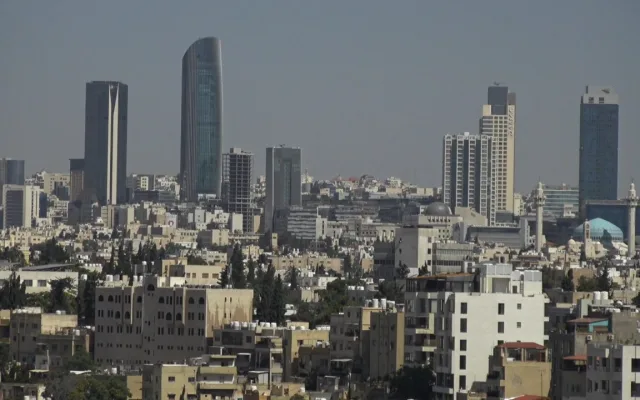
Description
Jordan's only seaport — Red Sea diving, a Mamluk fort, and the launch point for Wadi Rum and Petra.
Wiki
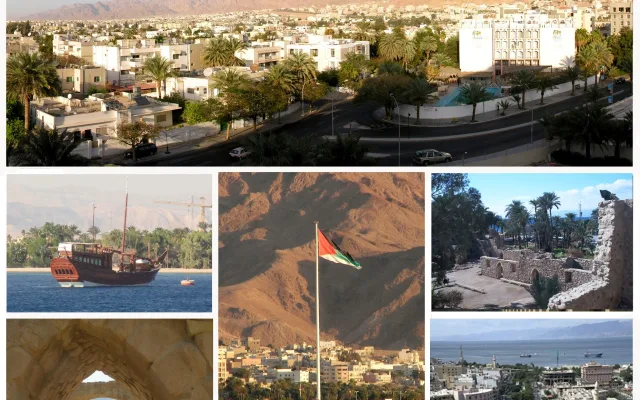
Aqaba is the southernmost city in Jordan and its only sea gate, spread along the northern tip of the Gulf of Aqaba on the Red Sea. Four countries meet here: from a hotel balcony you can see Israeli Eilat, the Egyptian Sinai and the shores of Saudi Arabia. For the kingdom, the city is both a window onto a warm sea and a convenient starting point for the country's greatest natural and historical sights.
History and the shape of the place
There has been a settlement here for thousands of years: in antiquity it was the biblical Ezion-Geber, later a Nabataean and then Roman trading post. In the early Islamic period the town was called Ayla and served as an important stop on the caravan and pilgrimage routes linking Arabia, Egypt and the Levant. Excavations of medieval Ayla by the shore have uncovered the outline of a walled town with gates and residential quarters.
Modern Aqaba has around 200,000 inhabitants and the status of a special economic zone: many goods are sold free of VAT, which enlivens the shops and keeps prices noticeably below the rest of the country. The built-up area runs along the sea, from the industrial port in the south to the resort promenade and beach complexes in the north.
Sights
- The Mamluk fort (Aqaba Castle) — a squat sixteenth-century fortress by the promenade, rebuilt under the Mamluk sultans and later the Ottomans. It is bound up with the Arab Revolt and with the name of Lawrence of Arabia; the giant flagpole beside it, flying the flag of the revolt, is visible from almost anywhere in town.
- The archaeological museum holds finds from the port of Ayla — pottery, coins and inscriptions that tell the story of the medieval town's commercial peak.
- The ruins of ancient Ayla — an open excavation between the hotels, where you can look over the remains of the Islamic town right at the water's edge.
- The underwater military museum off Berenice Beach — an unusual display of deliberately sunk tanks, armoured carriers, an anti-aircraft gun and a helicopter, now an artificial reef and a favourite dive target.
Diving and the Red Sea
The Aqaba coast is one of the best places in the Middle East to dive. The inshore coral reefs are in good condition, the water is clear (visibility often reaches 25–30 m) and the marine life is rich in butterflyfish, rays, moray eels and turtles. Among the classic dive sites are the wreck of the cargo ship Cedar Pride, lying on her side since the 1980s, the scenic Japanese Garden and Power Station, and a sunken Lockheed TriStar airliner turned into an underwater attraction. For non-divers there is snorkelling straight from the shore and glass-bottom boat trips.
Nearby: Wadi Rum and Petra
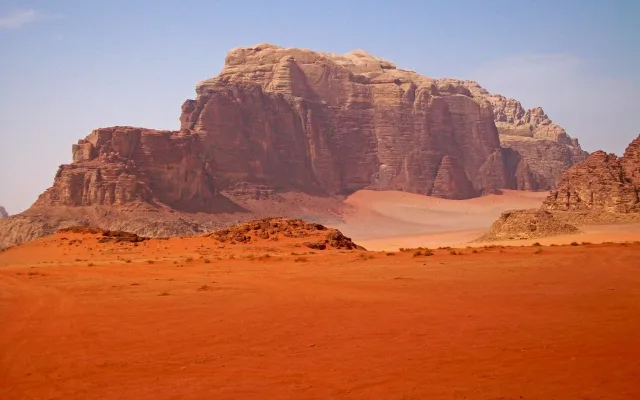
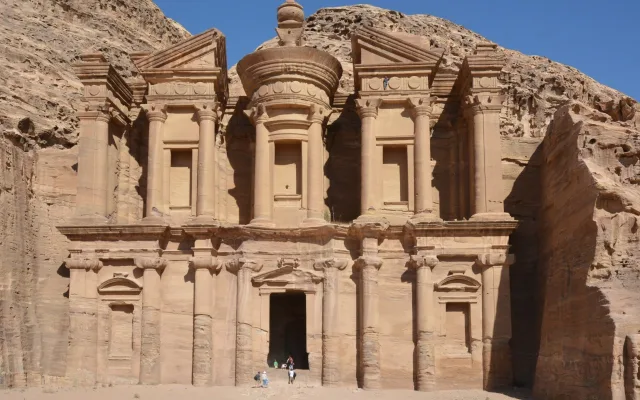
Aqaba works well as a base for two of Jordan's landmarks. Wadi Rum — the "Valley of the Moon", with red sand dunes, granite and sandstone massifs, rock inscriptions and overnight stays in Bedouin camps — is about an hour away. Legendary Petra, the Nabataean city cut into the cliffs and a UNESCO World Heritage Site, is two hours north. Both can be done as day trips, but each deserves a day of its own.
Food
Local cooking mixes Bedouin tradition with the catch of the sea. Try mansaf, the national dish of lamb with rice and a sauce of fermented jameed yoghurt, along with fresh fish and seafood, sayadieh (fish with rice) and baked fish with vegetables and spices. Falafel, hummus, shawarma and mezze are everywhere, and pudding means stretchy knafeh with cheese and syrup. Cardamom coffee and sweet mint tea come with almost every meal.
Practicalities
King Hussein International Airport (AQJ) handles Royal Jordanian flights as well as European low-cost carriers; the terminal is a short taxi ride from the centre. From Amman the easiest option is a JETT coach (about five hours) or a taxi. Ferries cross the gulf between Aqaba and Nuweiba in Egypt.
For a three-day plan, give one day to the city itself — fort, museums and sea — the second to Wadi Rum with an overnight or at least a desert sunset, and the third to Petra.
When to come
Spring (March–May) and autumn (September–November) are the best: the air warms to 22–28°C and the water is comfortable for swimming. Summer is hot, up to 35–40°C, though the sea stays warm all year. Winter is mild at 16–20°C, and diving continues in a wetsuit — the diving season in Aqaba never really closes.