Christchurch
New ZealandDescription
The rebuilt city of the South Island — the heritage tram, the Botanic Gardens and the gateway to Antarctica.
Wiki
Christchurch is the largest city on New Zealand's South Island and the administrative centre of the Canterbury region. Spread across the plain by the east coast, between the Pacific and the ridge of the Port Hills, it is known as the Garden City of New Zealand and as the most English of New Zealand's cities — and, since the destructive earthquakes of the early 2010s, as a showcase of contemporary urban renewal.
History and character
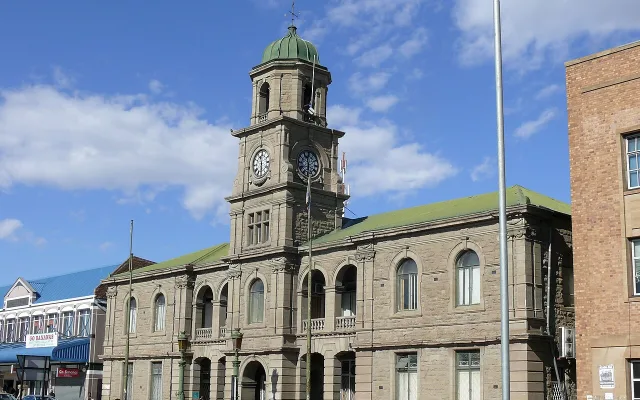
The settlement was founded in 1856 by settlers of the Canterbury Association as a model Anglican colony, named after Christ Church college at Oxford. Hence the strict plan around Cathedral Square, the neo-Gothic buildings of grey stone and the abundance of churches. For a long time the city was considered a bastion of British tradition in the southern hemisphere.
Two tremors changed everything: September 2010 and, above all, the February 2011 earthquake of magnitude 6.3, which took 185 lives and brought down the historic centre. Recovery stretched over years and produced a distinctive urban environment, where austere Victorian facades stand beside bold modern architecture, street art, and transitional projects such as retail pavilions built from shipping containers.
What to see
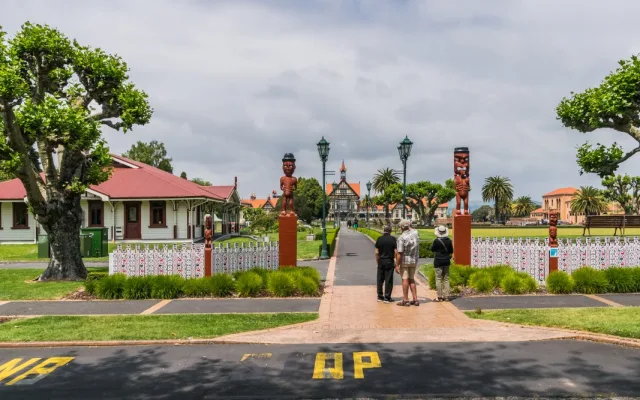
- The Botanic Gardens — laid out in 1863 and covering some 21 hectares in a bend of the Avon; a rose garden, glasshouses of tropical plants, century-old oaks and conifers, all adjoining the expanse of Hagley Park.
- Canterbury Museum — a major collection of natural history, Maori and Antarctic material, following the rebuilding of its premises.
- Christchurch Art Gallery Te Puna o Waiwhetū — the central gallery, with New Zealand and international art; entry is free.
- The Cardboard Cathedral — the temporary cathedral designed by Shigeru Ban from laminated paper tubes, built to replace the damaged Christ Church Cathedral.
- Quake City — a compact but powerful exhibition about the 2010-2011 disaster; the 185 Empty Chairs memorial stands nearby.
- Riverside Market and New Regent Street — the food and shopping draws of the renewed centre.
Walks and views
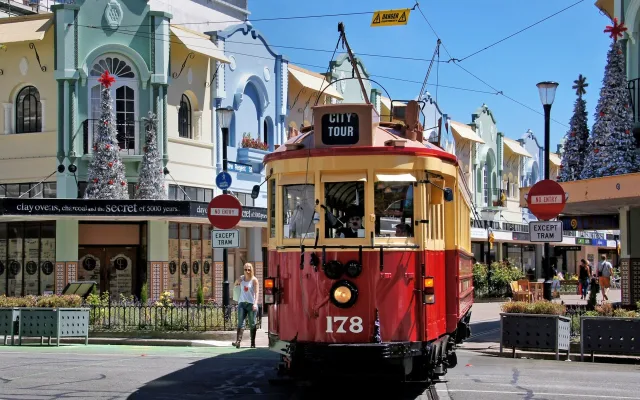
The historic tram runs a loop through the centre, stopping at the main sights in hop-on, hop-off format. On the unhurried Avon you can be punted: the boatmen in Edwardian dress push off with a pole, as at Cambridge. The gondola to the top of the Port Hills opens up a panorama of the city, Lyttelton harbour and the Canterbury plain, with viewing decks and a café at the top.
Gateway to Antarctica
Christchurch has long served as a logistics base for Antarctic programmes: New Zealand's Scott Base is supplied from here, and American and Italian expeditions operate through the city. By the airport stands the International Antarctic Centre, with an ice room, a storm simulator, penguin enclosures and rides in Hägglund all-terrain vehicles — a vivid introduction to life at the poles.
Around Christchurch
- Banks Peninsula and the town of Akaroa (about 80 km) — a former French settlement of colonial cottages, with a harbour in a volcanic crater and boat trips out to the rare Hector's dolphins.
- Aoraki / Mount Cook National Park — around three hours away; here is the country's highest peak (3,724 m) and the turquoise glacial lakes of Pukaki and Tekapo.
- The TranzAlpine — one of the most scenic rail journeys in the world: from Christchurch through the Southern Alps to Greymouth on the west coast, past gorges, beech forest and Arthur's Pass.
- The Marlborough region to the north is known for its sauvignon blanc, and the city is a convenient start for the Franz Josef and Fox glaciers.
Practical information
Christchurch International Airport is New Zealand's second busiest and the main hub of the South Island. The centre is compact and good for walking and cycling, and the suburbs are linked by buses. The climate is temperate, with warm dry summers (December to February) and cool winters; the nor'wester, a dry wind off the mountains, is characteristic. Around three days is comfortable for the city and its immediate surroundings, using Christchurch as a starting point for the rest of the island.