Description
Tanzania's largest city on the Indian Ocean — the National Museum, the Msasani waterfront and boat trips to the islands.
Wiki
For most travellers Dar es Salaam is the place you change for the Zanzibar ferry, and that is a mistake: Tanzania's largest city has a rhythm of its own, the ocean at hand and a couple of strong sights worth a day or two before flying on. This is not a resort but a living African port metropolis — you come for real East Africa, not for postcards.
Is it worth stopping, and for how long
Honestly: Dar is not Paris, and there is no week-long list of essentials. One or two days is the optimum. In that time you can manage the museum, the carvers' market, a boat trip to the islands and an evening on the Msasani waterfront. Everything else is a bonus if your flight to Zanzibar or the parks is a day away.
What is actually worth seeing
- The National Museum — the main reason to stop. The skull of Australopithecus boisei (East Africa as the cradle of humanity) and halls on the German and British colonial periods. An hour and a half covers it, but the context it gives is powerful.
- Kivukoni fish market — come early in the morning, when the boats come in. A lively, noisy, slightly chaotic scene; haggling is appropriate, but watch your belongings in the crowd.
- Mwenge Carvers' Market — the largest market for Makonde ebony carving. This is where you buy something more serious than a fridge magnet: halve the first price quoted without hesitation.
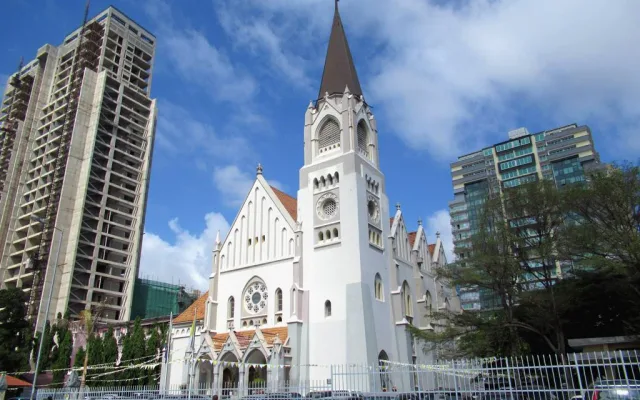
- Azania Front Lutheran Church — the white German church of 1898 on the waterfront, the landmark of the historic centre.
- Mbudya — an uninhabited island half an hour away by boat, sand and snorkelling; the classic day-trip picnic.
With a spare day there is Bagamoyo (about 75 km, a UNESCO site and the former capital of German East Africa) and the ruins of the Swahili town of Kaole from the 13th to 16th centuries nearby. The drive is a couple of hours each way, so treat it as a separate excursion.
Boat trips and beaches
The Msasani Peninsula is the pleasantest part of the city: quieter, greener, and the departure point for dhows. A sailing dhow with lunch costs $60-90 per person and usually includes a landing on Mbudya and snorkelling; operators quote in US dollars. This is Dar's main attraction — say yes. The beaches within the built-up area are indifferent; for proper swimming, head to the islands or north towards Kunduchi.
Where to stay
- Msasani and Oyster Bay — the best choice: safer, with cafés, restaurants and the start of the boat trips. Dearer, but more comfortable.
- The centre (Kivukoni, Kisutu) — near the museum, the church and the Zanzibar ferry pier. Convenient for a short stopover, but the district empties in the evening.
- Near the airport — only if your flight is early.
Transport
Julius Nyerere Airport (DAR) takes Ethiopian, Qatar, Turkish, Emirates and KLM. Into the city a taxi is 40,000-53,000 TZS ($15-20), while Bolt and Uber are cheaper at 8,000-21,000 TZS ($3-8) across town; the apps work reliably and remove the haggling. Boda-bodas (motorcycle taxis) cost 2,600-8,000 TZS ($1-3) and are fast in traffic but risky: helmets are often absent and the traffic is dense. There are also DART bus rapid transit lines on dedicated lanes — cheap and thoroughly local, good for short hops along the main roads. Prices are as of 2026.
The Zanzibar ferry leaves from the pier in the centre; buy tickets in advance at the office or online, as touts with inflated prices work the entrance.
Food and money
The cooking is Swahili and filling: pilau (rice with cloves), ugali with stewed meat, mishkaki skewers, grilled fish and mandazi with tea. Lunch at a local hoteli is 13,000-21,000 TZS ($5-8), dinner at a restaurant on Msasani 40,000-80,000 TZS ($15-30). Street food is cheap and good, but pick stalls with turnover and hot cooking.
A litre of petrol is around 3,400 TZS ($1.30). Cash in Tanzanian shillings is needed for markets and boda-bodas; only the better hotels and restaurants take cards. Change money at banks or official bureaux, not in the street.
Safety and common mistakes
- The centre is fine by day, but pickpockets work the crowds at the markets and the pier — keep your phone and money on you.
- After dark do not walk unlit streets; take a Bolt.
- Do not display electronics or large notes.
- Malaria is present — prophylaxis and repellent are essential.
- The main mistake is allowing a week for Dar. The city is good in measured doses: a couple of full days, then Zanzibar, Bagamoyo or a safari.