Description
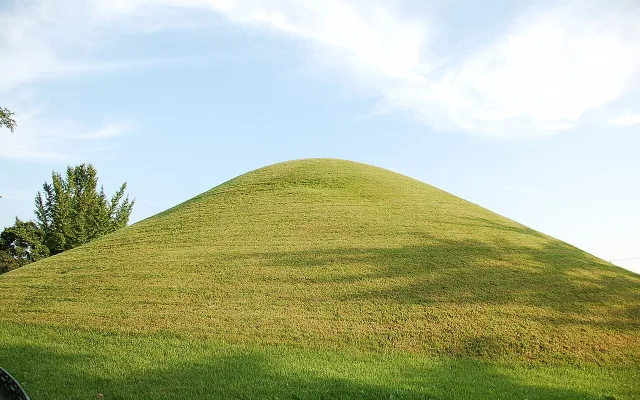
An open-air museum — the capital of the Silla kingdom, the burial mound tombs and the Seokguram grotto temple.
Wiki
Gyeongju is not a museum behind glass but a whole city, where ancient burial mounds stand right between residential blocks and coffee shops. The capital of the Silla kingdom (almost a thousand years of history) is easy to see independently: the distances are short and the main sights are grouped compactly.
Why come, and what is genuinely worth seeing
- Tumuli Park (Daereungwon) — green burial mounds right in the centre. One of them, the Cheonmachong tomb of the 5th or 6th century, has been excavated and opened up inside, so you can go in and see how the burial was arranged. The objects laid out in place are replicas, the famous Silla gold crown among them; the originals are in the Gyeongju National Museum.
- Cheomseongdae observatory — a 7th-century stone tower, one of the oldest surviving in East Asia. It takes five minutes to see, but it is the symbol of the city.
- Anapji pond (Wolji) — reconstructed pavilions by the water. It is worth coming here at sunset and after dark: the lighting and the reflections in the pond make the most photogenic view in Gyeongju.
- Bulguksa — a large Buddhist temple complex with stone bridges and pagodas, a UNESCO site. It lies outside the city, at the foot of Mount Toham.
- Seokguram — a man-made grotto with a granite Buddha statue, higher in the mountains above Bulguksa. The Buddha itself is impressive, but note that you have to view it through glass and cannot approach closely. The mountain views are a bonus.
If time is short, the combination of the centre (the mounds, the observatory and Anapji) plus the Bulguksa/Seokguram pairing covers the main things.
How many days
Two days are enough. The classic plan:
- Day 1 — the historic centre on foot or by bicycle: the burial mounds, the observatory, the old Gyochon quarter of hanok (traditional Korean houses), and Anapji in the evening.
- Day 2 — a trip out to Bulguksa and Seokguram; on the way you can take in Namsan hill with its Buddhist reliefs and statues scattered across it (good for anyone who likes hiking).
Staying a third day makes sense for the walking trails of Namsan or for the museum.
Getting there
Gyeongju has no major airport of its own — you arrive via neighbouring cities:
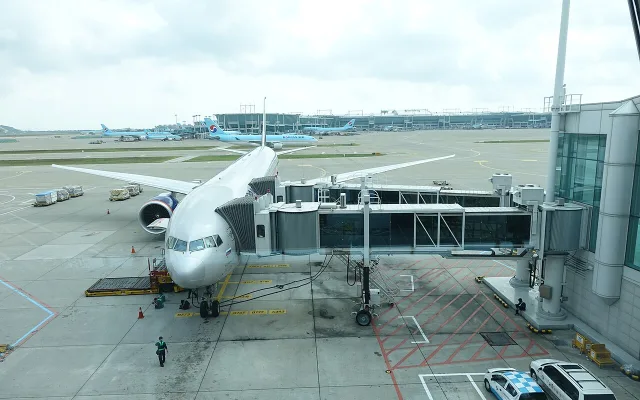
- The KTX (high-speed train) arrives at Singyeongju station, which is outside the city. From there a local bus or taxi takes you to the centre.
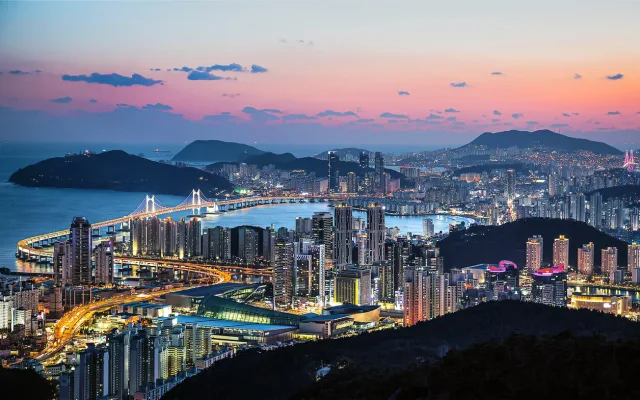
- Via Busan is convenient: about an hour to Gyeongju by high-speed train or bus, and a day trip is feasible (though it is not enough).
- From Seoul the KTX is quickest; an intercity bus is possible but takes longer.
Transport within the city
- The centre is compact — the mounds, the observatory and the old quarter can genuinely be walked.
- A bicycle is the ideal way to see the central part: there are hire places, the terrain is flat, and it is not far to pedal between the sights.
- Buses are needed for Bulguksa and Seokguram, which are out of town. A separate bus runs from Bulguksa up the mountain to Seokguram (the intervals are infrequent, so check the timetable locally so as not to get stranded).
- Taxis are inexpensive by Korean standards and help when time is short.
Where to stay
- The old centre near Tumuli Park and Anapji — the optimum: everything on foot, and an easy evening walk to the illuminated pond.
- The hanok quarter (Hwangnidan-gil) — a fashionable area with cafés and guesthouses in traditional houses; atmospheric, but noisy in the evenings and more expensive.
- Spending a night in a hanok (a traditional house, sleeping on the floor on ondol underfloor heating) is the experience people come here for; book ahead in season.
When to go
- Spring (April) — cherry blossom, with the mounds and avenues in flower; this is the peak of beauty and the peak of the crowds at once.
- Autumn (October–November) — golden foliage, comfortable weather, less heat. The best balance.
- Summer — hot and humid, plus rain.
- Winter — cold and deserted, but without the queues.
Food and money
- Gyeongju is known for Gyeongju-ppang bread rolls filled with red bean paste — people buy them by the box as a gift, and they are sold everywhere in the centre.
- Look for ssambap — rice with an assortment of leaves for wrapping and dozens of banchan side dishes; a filling local lunch.
- Street food and Korean chain cafés keep the budget low: a canteen lunch is 9,000-14,000 won (about $6-10), a coffee 4,500-6,000 won ($3-4), and a bicycle for the day 10,000-15,000 won ($7-11). Tumuli Park costs 3,000 won ($2), while Bulguksa and Seokguram have been free since 2023. Prices are as of 2026.
- Where to save: get around by bicycle or on foot, eat in local canteens (not the tourist hanok cafés), and combine tickets if a joint entry is offered.
Common mistakes
- Coming for one day from Busan — you will manage either the centre or the temples, but not both; better to stay the night.
- Leaving Seokguram until the last bus — the timetable is sparse and it is easy to be stranded on the mountain.
- Going to Anapji in the daytime — the whole point of the place is the evening illumination.
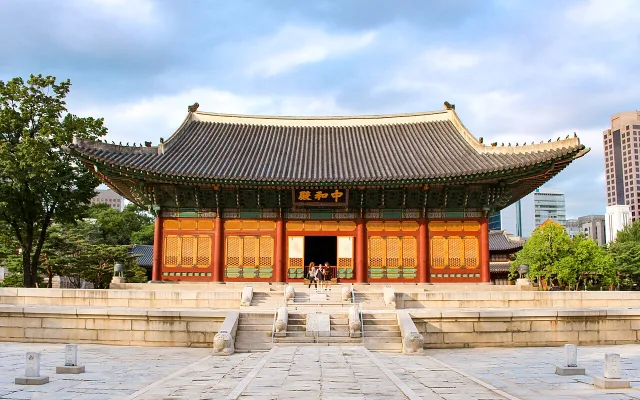
- Expecting "untouched antiquity" — much has been reconstructed; treat Gyeongju as a living city with history inside it, rather than a reserve of ruins.