Description
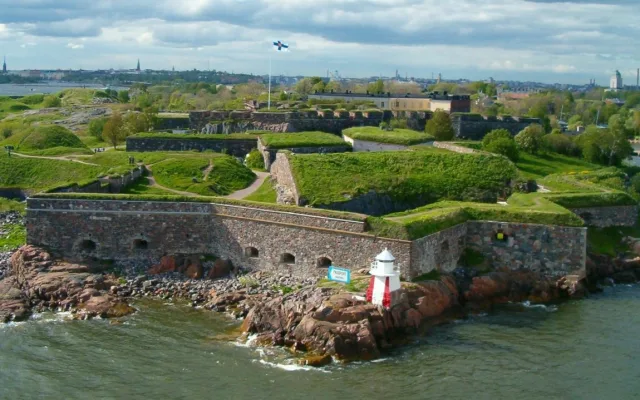
Finland's capital: the neoclassical Senate Square, the UNESCO-listed Suomenlinna sea fortress, the Punavuori design district and public saunas on the waterfront.
Wiki
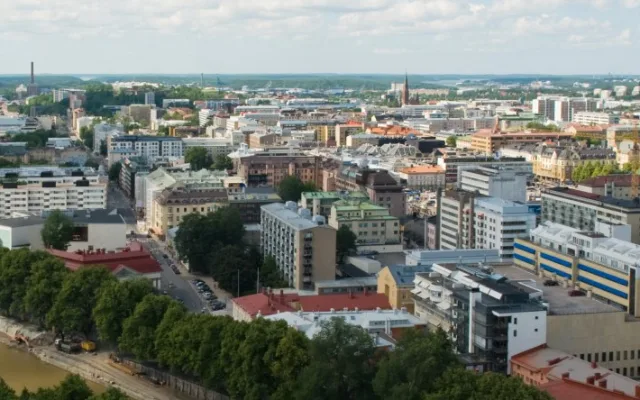
Helsinki is the youngest of the northern capitals and arguably the most functional: around 660,000 people in the city proper and a million and a half in the wider region, granite shorelines, trams, ferries and the sauna as an everyday habit. The city became the capital of the Grand Duchy of Finland in 1812, and its ceremonial centre was built on a deliberately grand scale — hence the neoclassical Senate Square, whose resemblance to St Petersburg has more than once made it a stand-in for Russia in Western films.
A little history
Founded by the Swedish king Gustav Vasa in 1550, Helsinki spent three centuries as a small trading town in the shadow of Turku. Everything changed in 1809, when Finland passed to the Russian Empire: the capital was moved here, and over two decades the German architect Carl Ludvig Engel laid out a neoclassical ensemble around a single square — cathedral, senate building, university and library. The country became independent in 1917, and the 20th century added a second layer: the functionalism of Alvar Aalto, and then a reputation as one of the world's design capitals.
What to see
- Senate Square — Engel's ensemble of the 1820s and 1830s, the finest neoclassical set piece in northern Europe. Above it stands the white Cathedral (Tuomiokirkko, 1830-1852) with its green domes.
- Uspenski Cathedral — a red-brick neo-Byzantine church of 1868 on a rock above the harbour, the largest Orthodox cathedral in Western Europe.
- Temppeliaukio — the "church in the rock" of 1969: the hall is cut into a granite outcrop and roofed with a copper disc. The acoustics are good enough that concerts run here constantly.
- Suomenlinna — the sea fortress begun by the Swedes in 1748 on the islands at the mouth of the harbour, a UNESCO World Heritage Site. The ferry from Market Square takes 15 minutes and runs on an ordinary city ticket; allow half a day for the ramparts, tunnels and museums.
- Market Square (Kauppatori) on the water and the covered Old Market Hall (Vanha kauppahalli) of 1889 — the best place for breakfast: fried vendace, soups, berries.
- Ateneum and Kiasma — the national gallery and the museum of contemporary art, facing each other near the station.
- Kamppi Chapel of Silence — a wooden teardrop in the middle of a shopping district, where people go simply to be quiet. Entry is free.
- The Design District in the Punavuori and Kaartinkaupunki neighbourhoods — some two hundred shops, workshops and galleries, including the Marimekko and Iittala flagships.
- The Sibelius Monument in a waterside park — 600 steel pipes, the most photographed sculpture in the city.
- The Olympic Stadium of 1934-1938, which hosted the 1952 Games: the viewing tower is open again after renovation.
Sauna
The sauna in Finland is not an attraction but part of daily life: there are more than three million of them for five and a half million people. In Helsinki the easiest public ones to visit are Löyly on the shore, with steps straight into the sea; the old Kotiharjun Sauna of 1928 in the working-class Kallio district; and Allas by Market Square, with its pools. The rules are simple: wash before you go in, take turns throwing water on the stones, keep your voice down, and wear a swimsuit in the mixed areas.
Food and prices
The cooking is northern and unpretentious: lohikeitto, a creamy salmon soup; karjalanpiirakka, Karelian pasties of rye crust with a rice filling; poronkäristys, sautéed reindeer with mash and lingonberry; and korvapuusti, the cinnamon and cardamom bun. One local taste stands apart: salmiakki, salted liquorice, worth trying though not everyone comes to love it. Finns drink more coffee than anyone else in the world.
Lunch in a cafe costs €22-30 (about $25-35), dinner in a restaurant €50-100 ($58-115), a coffee €4-5 ($5-6). A single HSL ticket is valid for 80 minutes and costs around €3.10 ($3.60), a day ticket about €9 ($10). Prices are as of 2026. You save by eating the weekday set lunch, by shopping at the market halls, and by remembering that the tap water here is among the cleanest in the world.
Getting there and getting around
Helsinki-Vantaa airport (HEL), 18 km from the centre, is Finnair's hub and one of the main gateways to northern Europe. The I and P commuter trains reach the central station in about half an hour for roughly €4. In the city there are trams, buses, a metro (one line with two branches, the northernmost in the world) and city ferries, all on a single HSL ticket. The ferry to Tallinn takes about two hours; Stockholm is an overnight crossing.
When to go
June to August: 14-22°C, light almost round the clock, terraces open and island ferries running. From mid-May to late July there are no genuinely dark nights, though there is no midnight sun at this latitude — the sun does set. December is good for the Christmas market and the ice rink on Senate Square. From December to March it is cold, −5 to −15°C, but the bay freezes and people walk out onto the ice. The key dates are Vappu on 1 May, the student festival that spills onto the streets, and Helsinki Day on 12 June.