 Города и дороги
Description
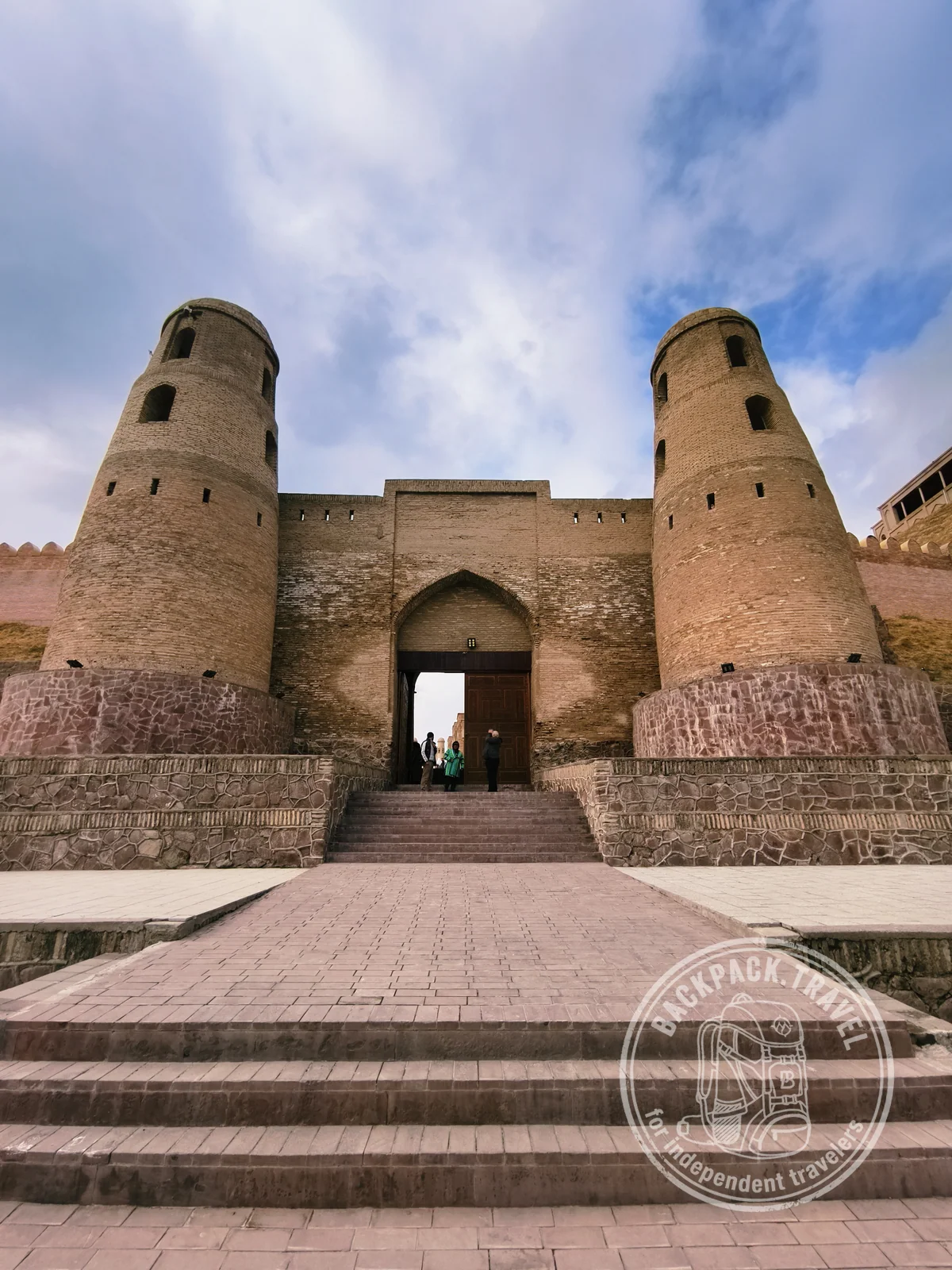
A small town outside Dushanbe known for its fortress with the twin-towered gate and the 16th–18th-century madrasas at the foot of the hill. Less than an hour from the capital.
Wiki
Hisor (Hissar in the Russian spelling) is a district town half an hour's drive west of Dushanbe, and people come here for one thing: the Hisor Fortress. It is the most heavily promoted historical sight in the surroundings of the capital, and it even appears on the 20 somoni banknote. But it is worth coming with sober expectations: little of the old fortress has survived, and most of what you will see has been built anew.
What was here
The valley at the foot of the Hissar range lay on the trade routes, and a fortification stood on this hill long before the present buildings. Local guidebooks quote a figure of 2500 years — that refers to the site, not to what stands there now.
In the 15th–17th centuries this was Hisori Shodmon, "Shodmon's fortress"; later the name was shortened to Hisor. By the 19th century the fortress served as the residence of the beg — the Bukharan emir's governor in Eastern Bukhara. Inside stood the ruler's house, barracks and outbuildings; the walls are described as extremely massive, several meters high and up to ten meters thick.
The end came in 1924: basmachi units held out here, Red Army troops took the fortress, and the buildings were destroyed. The earthquakes of 1907 and 1927 added to that. Then came almost sixty years of ruins; the site was formally made a historical and cultural reserve in the 1980s, while the large-scale work only happened in the 2000s and 2010s.
What to see, and what here is genuine
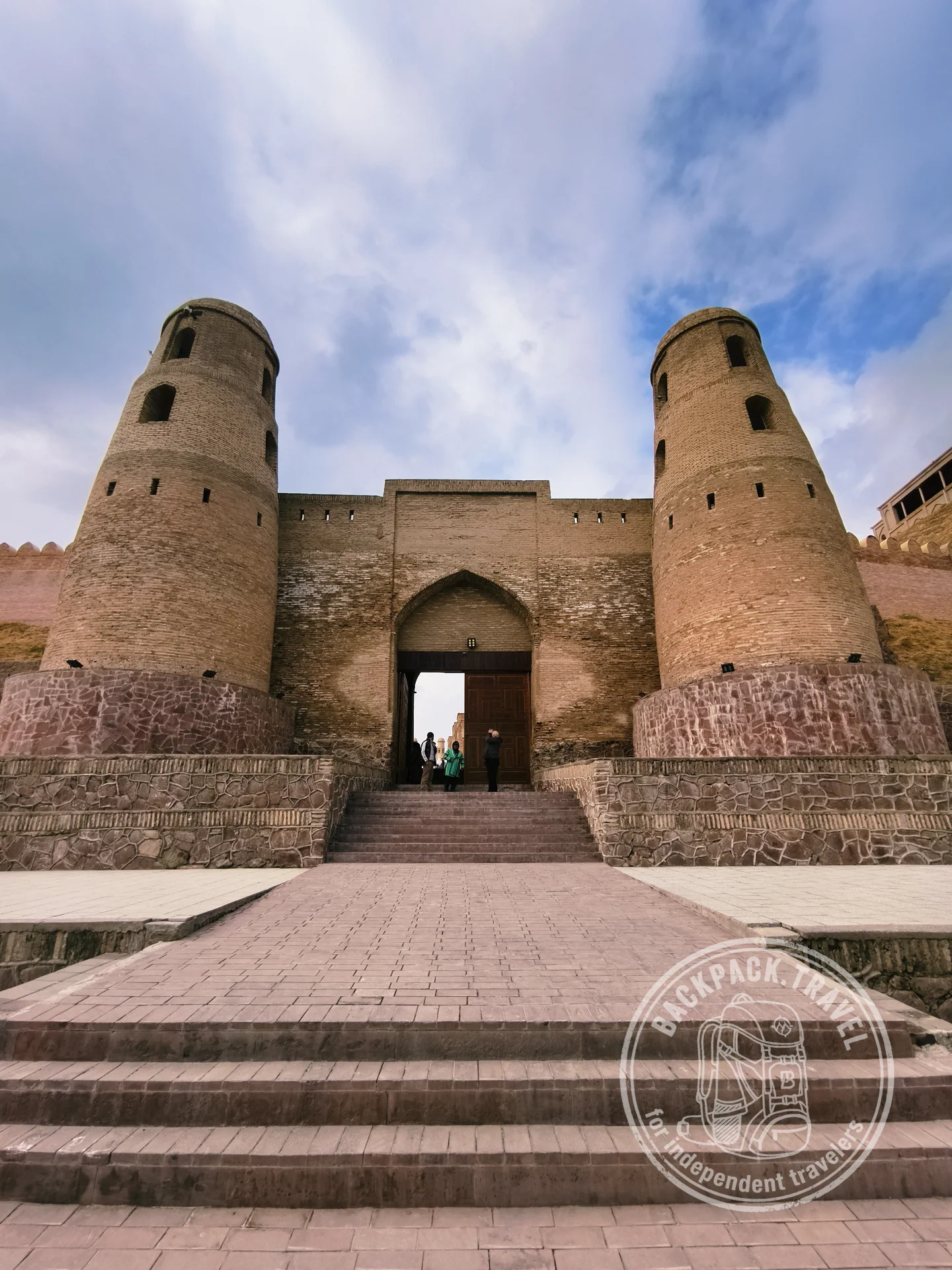
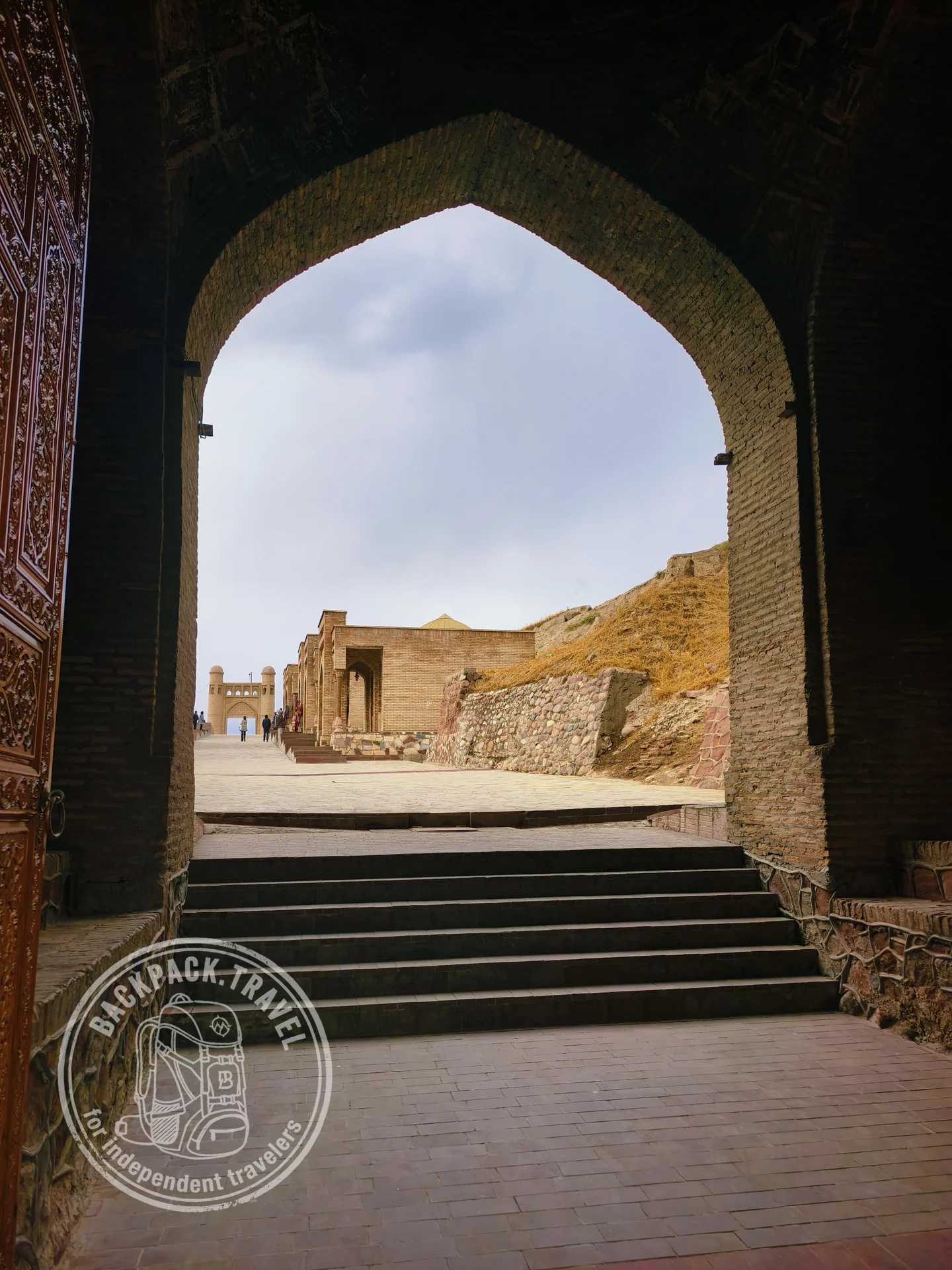
- The gate — an arch between two round towers, the signature shot of Hisor. The oldest of the visible structures, dated to the 16th century, but it has been repaired many times and in recent years was restored from the ground up.
- The walls, towers, the beg's residence, the amphitheater — new builds of the past few decades. This is a reconstruction based on ideas of how the fortress looked in the 18th–19th centuries, not a surviving monument. Know that in advance so you are not disappointed on the spot.
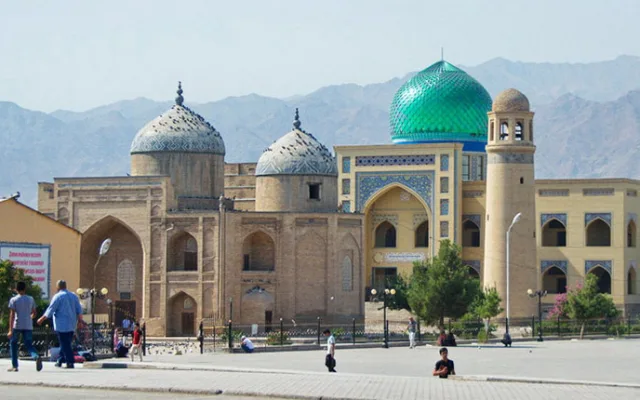
- Kuhna Madrasa (the Old one, 16th–17th c.) — opposite the gate, across the registan square. A brick building with a portal and a dome, and a courtyard with hujra cells inside. Teaching here stopped about a century ago; today it houses a museum of local history — the most substantial thing in the whole complex.
- Nav Madrasa (the New one, 17th–18th c.) — what is left of it is mostly the two-story facade.
- Khishtin caravanserai — a coaching inn from 1808, of which the foundations and fragments of the walls survive.
- Makhdumi Azam mausoleum (16th–17th c.) — south of the old madrasa. Paradoxically, this is the most intact and least reworked building in the reserve: there is more atmosphere in it than in the recreated walls.
Getting there and timing
About 25–30 km from Dushanbe, 30–40 minutes on the road.
- Taxi — the simplest way. Agree on a round trip with waiting time straight away: catching a car at the fortress is harder than in town.
- Public transport — minibuses to the town of Hisor run from the Zarnisor bus station; from the town center it is still several kilometers to the fortress, which people cover by local taxi. Cheaper, but with changes and lost time.
How much time to allow:
- 1–1.5 hours — the grounds, the gate, the madrasas from outside.
- 2–2.5 hours — with the museum in the old madrasa and the mausoleum.
- Half a day from Dushanbe — including the drive both ways. There is no reason to stay overnight in Hisor; you will be back by lunchtime.
There is little shade on the site and the valley is hot in summer: come in the morning or towards evening, and bring water. Check the opening hours of the reserve and the museum locally, they change with the season.
Who won't enjoy it: if you have seen Bukhara, Khiva or Samarkand, Hisor will look pale — there is no old town here and no dense historical fabric, just a few structures on an open site in the middle of an ordinary provincial town. Anyone who values authenticity will find the reconstruction jarring, and the "fortress" in your photos will turn out to be younger than it looks. The point of the trip is different: it is the easiest way to get out of Dushanbe for half a day, to see how the Bukharan emir's power was organized on a distant frontier, and to look into a decent local history museum, of which there are few in Tajikistan.