Description
Kerala is a state in India known for its backwaters, spices and elephants. You can cruise the canals at Alappuzha and visit the tea plantations of Munnar.
Wiki
Kerala is a south-western state of India, drawn out as a narrow strip between the Western Ghats and the Arabian Sea. This tropical region of some 35 million people is nicknamed God's Own Country: labyrinths of lagoons, tiers of tea plantations, coconut groves and centuries of Ayurvedic tradition are woven together here.
The basics and the geography
The state runs almost 600 kilometres along the coast but rarely exceeds a hundred in depth. That shape creates three natural belts: the hot coastal lowland of beaches and canals, the hilly middle zone of plantations, and the cool Western Ghats rising to 2,500 metres. The capital is Thiruvananthapuram (Trivandrum), and the largest economic and port centre is Kochi (Cochin). Kerala stands out for its social indicators: literacy approaches 96%, and life expectancy and access to healthcare are markedly above the national average, often compared to European standards.
The climate is tropical monsoon. The dry, comfortable season runs from November to March, while summer brings heavy rain — the south-west monsoon, which is why Kerala is called India's gateway to the monsoon.
The backwaters and Alappuzha
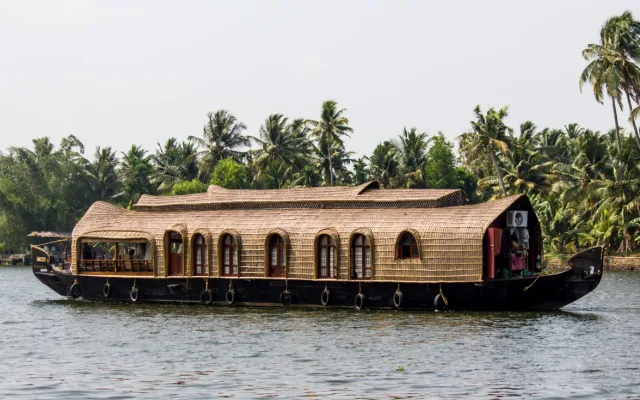
The region's calling card is the backwaters, a network of connected lakes, canals, estuaries and paddy fields below sea level. The heart of the system is Alappuzha (Alleppey), sometimes called the Venice of the East. The classic experience is a night on a kettuvallam houseboat: converted rice barges with woven roofs glide slowly past villages, coconut palms and farmers at work in the fields. Routes run from here to Vembanad, India's largest lake, and to the quiet village of Kumarakom with its bird sanctuary.
Kochi and the colonial legacy
Fort Kochi keeps the traces of the Portuguese, the Dutch and the British. Over the water stand the famous Chinese fishing nets, counterweighted structures brought in during the spice trade. In the Jewish quarter of Mattancherry the Paradesi Synagogue (1568) is still in use, with the Dutch Palace and its murals nearby. St Francis Church once held the remains of Vasco da Gama. For centuries Kochi was the gateway for trade in pepper, cardamom and ginger, linking India with the Arab world and Europe.
Mountains, tea and reserves
Munnar lies at 1,600-2,000 metres among endless carpets of tea, wrapped in mist and cool air. Eravikulam National Park is here too, home to the rare Nilgiri tahr. The Periyar reserve at Thekkady offers elephants, gaur and deer, watched from bamboo rafts on a mountain lake. Wayanad in the north is known for waterfalls, the Edakkal caves and coffee and spice estates.
Beaches, culture and Ayurveda
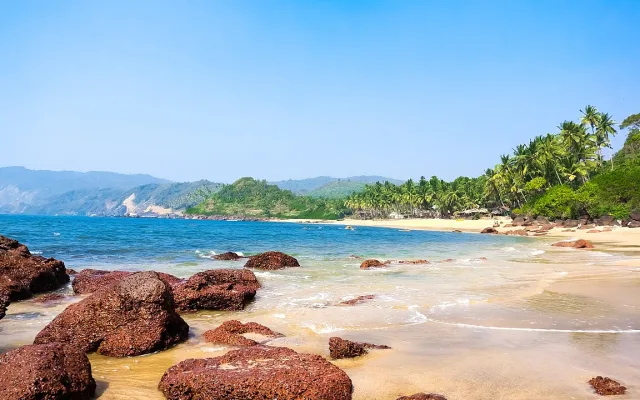
Varkala draws people to its beaches beneath red cliffs and to springs credited with healing properties. Kovalam was one of the state's first resorts. In the north, around Kannur, the ancient ritual theatre of theyyam survives with its vivid costumes and make-up, and the classical drama of kathakali is popular throughout the state. Kerala is considered the home of authentic Ayurveda: treatment and wellness programmes run from one to three weeks, taking in massage, herbal therapies and panchakarma.
Food
The cooking is built on coconut, rice, seafood and spice. Worth trying:
- appam with stew — rice pancakes with a vegetable or meat stew;
- puttu — steamed cylinders of rice flour with coconut;
- meen moilee — fish in coconut milk;
- sadya — the festive vegetarian spread of dozens of dishes served on a banana leaf.
Lunch at a local canteen is usually inexpensive, and seasonal fruit and fresh fish are available everywhere.
Practicalities
A week is enough for the essentials: a couple of days in Kochi, a backwaters cruise from Alappuzha with a night on a houseboat, a climb up to Munnar and Periyar, and a finish on the coast at Varkala or Kovalam. The main airports are Kochi, Trivandrum and Kozhikode. Within the state, coastal trains, buses and taxis are convenient; the mountain roads are winding, so allow extra time.