Kermanshah
Description
The main city of western Iran and the centre of Iranian Kurdistan, on the old road down to Mesopotamia: Sasanian reliefs at Taq-e Bostan, the Behistun inscription of Darius I and the tiled Tekyeh Moaven al-Molk.
Wiki
Kermanshah is the main city of western Iran and the main city of the country’s Kurdish west, on the old road from the highlands down to Mesopotamia, at an altitude of about 1,400 metres. Caravans and pilgrims passed through it for centuries; today the road leads to the Iraqi border and the shrines of Karbala. The monuments around the city let you read the history of the ancient Near East almost literally.
Main sights
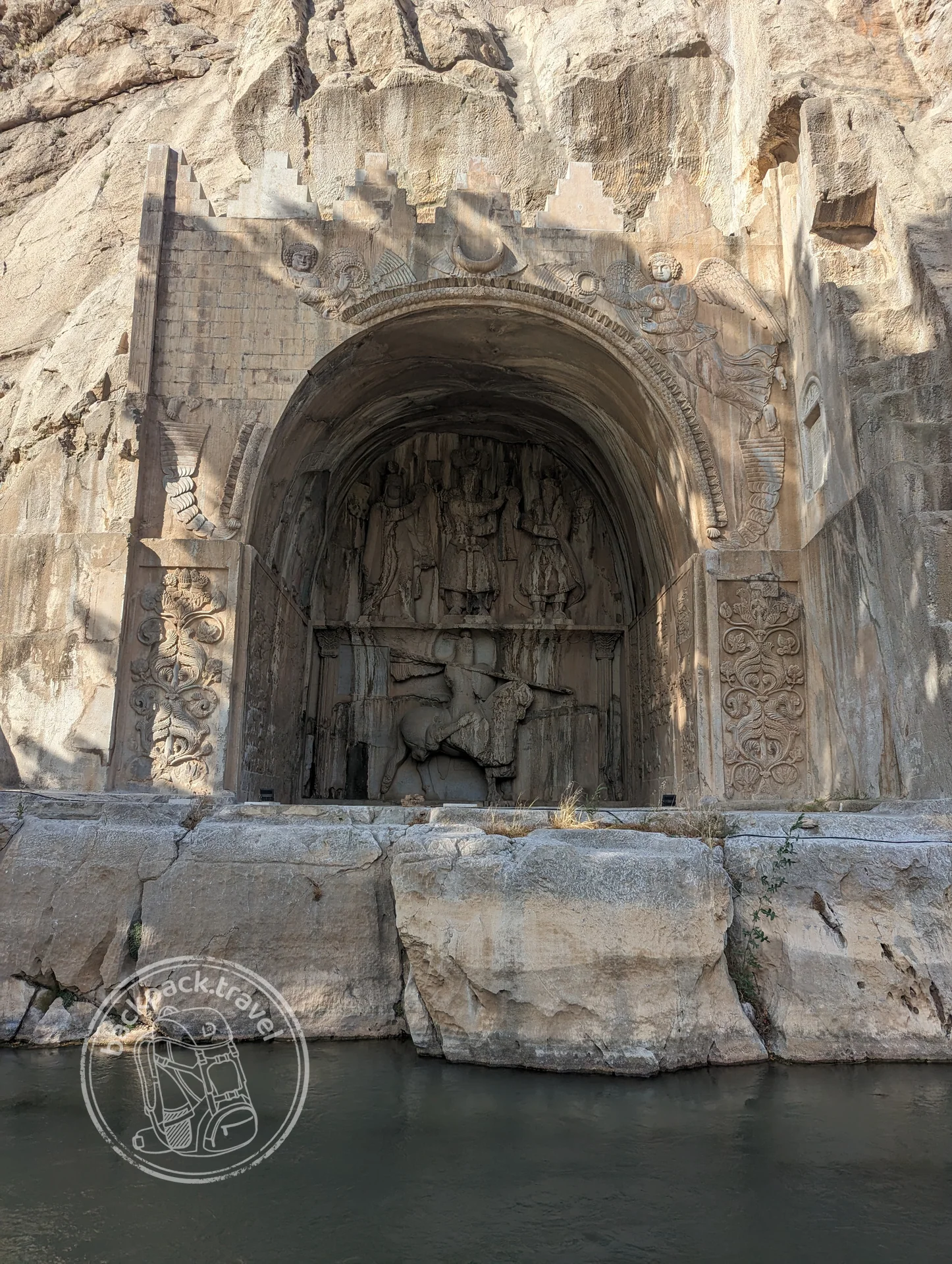
- Taq-e Bostan — Sasanian reliefs in rock grottoes above a spring-fed pool: coronation scenes and royal hunts cut into the stone.
- Behistun inscription — the relief and cuneiform text of Darius I on a cliff 30 km away, a UNESCO site. It was this trilingual inscription that allowed cuneiform to be deciphered in the nineteenth century.
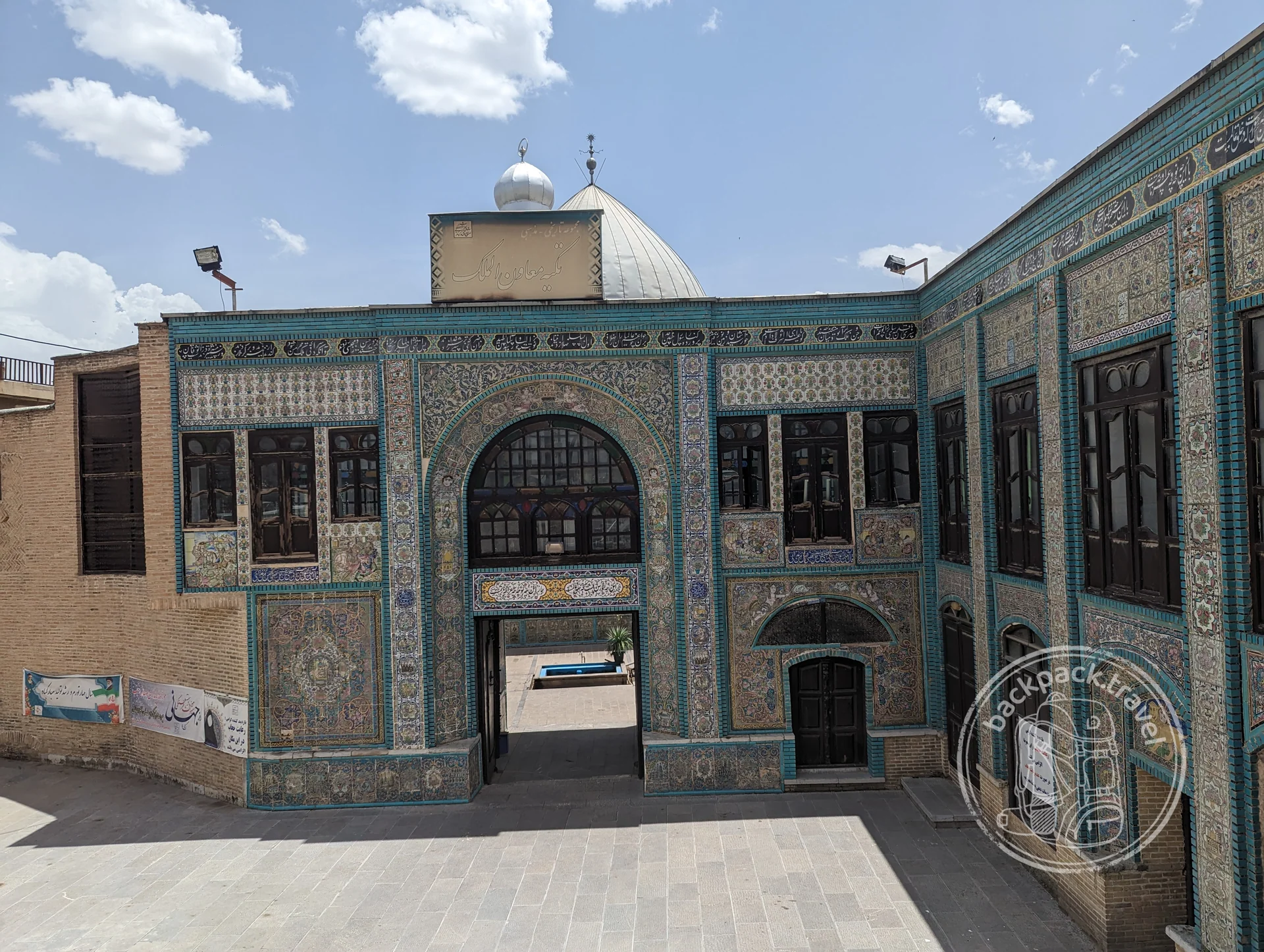
- Tekyeh Moaven al-Molk — a Qajar mourning hall faced throughout with painted tiles showing historical and religious scenes.
- Emad od-Dowleh Mosque — an ornate Qajar mosque in the centre.
- Temple of Anahita at Kangavar — the ruins of a monumental sanctuary on the road towards Hamadan.
Food and money
Kermanshah cooking is famous across Iran: dandeh kabab, khoresh-e khalal, nan-e berenji rice biscuits and clarified butter. Cash is essential, and foreign cards do not work.
Getting there
The city has an airport (KSH) with domestic flights. Kermanshah sits on the highway to the Iraqi border at the Khosravi crossing, which carries pilgrims in season. The easiest way to see the surroundings is a taxi with a driver for the day.
When to come
The climate is mountainous: cold, snowy winters and dry, hot summers. The best months are April to June and September to October.
Updated