 Города и дороги
Description
A small town south of Yazd on the old Kerman road: the circular Zein-o-din caravanserai standing alone in the desert, the fortified storehouse of Saryazd, qanats and orchards below the Shir Kuh range.
Wiki
Mehriz is a small town in Yazd Province, some thirty-five kilometres south of the provincial capital, on the old caravan road to Kerman. About forty thousand people live here, and by Iranian standards it reads as a large oasis rather than a city: a few shopping streets, a modest bazaar, pomegranate and pistachio orchards at the foot of the Shir Kuh range, and open stony desert all around. The elevation is roughly fifteen hundred metres, which makes summer noticeably easier here than in Yazd itself, while snow lies on the mountains in winter.
Why come and what to actually see
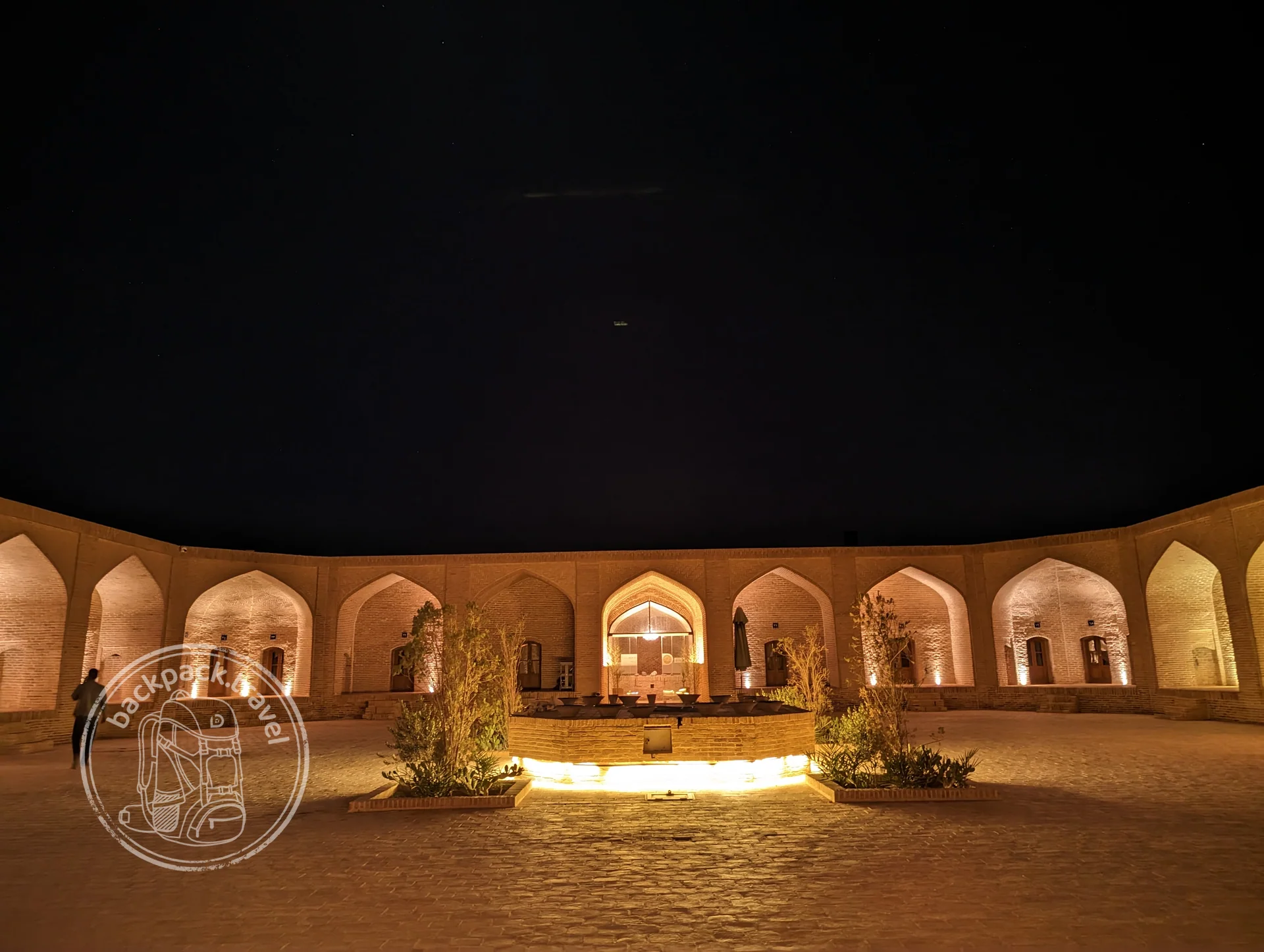
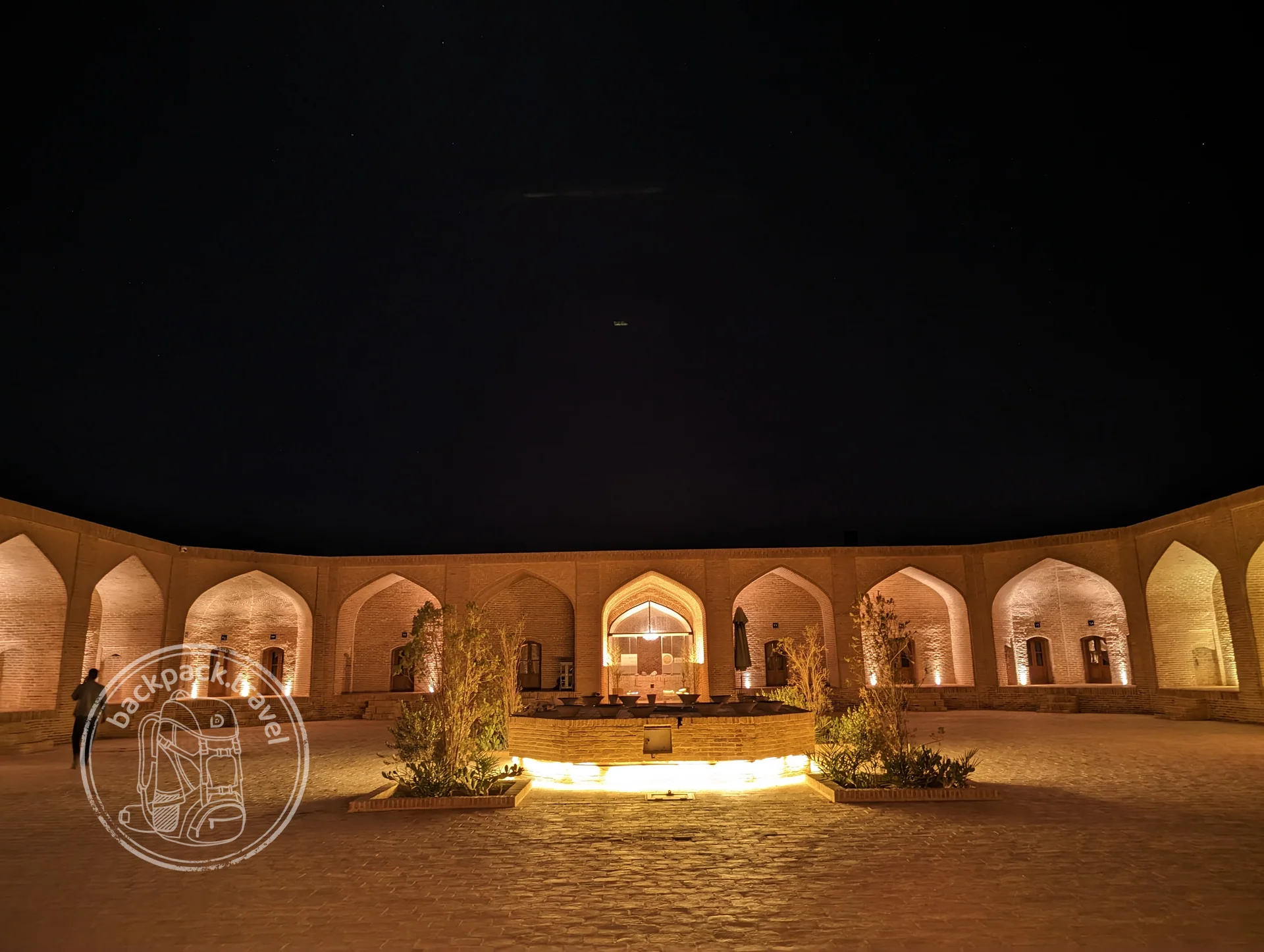
The main reason to turn off the highway is the Zein-o-din caravanserai, standing in open desert beside the Kerman road. It was founded in the late sixteenth century under Shah Abbas the First, and out of nearly a thousand roadside inns built in that programme only two were circular in plan. This is the one that survives: five towers around the circumference, twelve alcoves opening onto the courtyard, and a continuous gallery running the full perimeter. By the early 2000s the building was a ruin; a private restoration returned its vaults and mud plaster, and in 2006 the work received a UNESCO award. People sleep in the courtyard again today, on carpeted platforms in the same alcoves the caravan drivers used.
The second draw is Saryazd fortress in the village of the same name, a couple of dozen kilometres to the north. It is not a defensive stronghold in the usual sense but a fortified storehouse: villagers from the surrounding countryside brought their grain and valuables here and kept them behind a double ring of mudbrick walls with towers and a moat. Inside are hundreds of storage cells stacked several levels high, reached by narrow stairs. The structure is dated to Sasanian times with later rebuilding, and only a handful of comparable buildings survive in Iran.
In the town itself, the Pahlavanpour Garden is worth an hour. It is inscribed on the World Heritage list along with eight other Persian gardens, and although small, it follows the classical scheme: water from a qanat runs down an open channel along the main axis, feeds plane trees and pomegranates, and continues out to the fields. Around the town you will also find yakhchals, the conical mud domes where ice frozen in shallow winter basins was stored before refrigeration.
Getting there and getting around
The nearest airport and railway station are in Yazd. Minibuses and intercity coaches run from the Yazd bus terminal to Mehriz, and the trip takes between forty minutes and an hour. A taxi between the two towns is inexpensive and can be arranged with any driver at the rank. The Zein-o-din caravanserai lies another thirty kilometres south along the highway, and there is no public transport to it: either hire a taxi for the day or drive yourself. If you book a night at the caravanserai, the owners will usually organise a transfer from Yazd.
Mehriz itself is easy to cover on foot, with taxis for Saryazd and the gardens. Roads across the province are good and traffic is light, so renting a car in Yazd pays off if you plan several stops in one day.
Where to stay
The night worth planning for is at Zein-o-din, which is why most travellers come out this way at all. There are no rooms in the conventional sense: guests sleep on raised platforms in alcoves open to the courtyard, bathrooms are shared and there is no air conditioning, but the desert at night is genuinely silent and the Milky Way is visible overhead. Capacity is limited, and in summer and high season the beds go early.
Mehriz has a handful of guesthouses in converted traditional courtyard homes, plus simple hotels along the highway. Most visitors still base themselves in Yazd, where the choice is wider and prices lower, and come here for the day.
Day trips
Yazd, with its Friday Mosque, mudbrick quarters and windcatcher towers, is the obvious base and sits less than an hour away. Southwards the highway leads to Kerman, about five hours, passing desert caravanserais and salt flats on the way. Closer to Mehriz are the villages of Bafq and Taranjan at the foot of Shir Kuh, visited for their cooler air and orchards.
The desert east of the highway deserves a trip of its own: camels graze along the verges and the sunset runs to the horizon without a single building in the way. Ten kilometres out of town is far enough.
When to come
The best window runs from mid-October to late April. Daytime temperatures then sit between fifteen and twenty-five degrees, nights get cold, and in December and January the desert drops close to freezing, so a warm jacket is needed even under bright sun. Spring adds the orchards in bloom, with pomegranate and almond flowering in April.
In summer daytime temperatures hold above forty and sightseeing is only realistic early in the morning and after sunset. That said, the elevation makes Mehriz easier to bear than Yazd, and the desert night brings real relief. Nowruz, the Persian New Year in late March, is the busiest stretch of the year: Iranians travel across their own country in large numbers, and beds at the caravanserai are taken months ahead.
Food and money
There are no restaurants in the European sense, only simple places serving kebab, dizi and rice. The caravanserai feeds guests from a set menu, with dinner and breakfast normally included in the price of the night. The local specialities are pistachios and pomegranates from the surrounding orchards, sold from stalls along the road.
Foreign cards do not work anywhere in Iran, so bring cash and change it in Yazd, as Mehriz has almost no exchange offices. For day-to-day spending it is convenient to get a tourist card in Yazd and load it with the sum you expect to need.
What to know
Mobile internet disappears in the desert outside town and the signal at the caravanserai is weak, so do not count on live navigation along the road and download maps in advance. Water at Zein-o-din is trucked in and limited, which means showers are short and run to a schedule.
The dress code in the provinces is stricter than in Tehran: women need a headscarf and covering clothes, men long trousers. Locals are welcoming and will often invite you in, and declining causes no offence. Photograph people only with permission, and do not photograph the military or industrial sites along the highway.
Updated