Qom
Description
Iran's second Shia centre after Mashhad and the country's seminary town, 130 km south of Tehran on the desert edge: the gold-domed shrine of Fatima Masumeh, the Jamkaran mosque and a salt lake nearby.
Wiki
Qom is Iran's second Shia centre after Mashhad and the country's main town of theology, about 150 km south of Tehran on the edge of the desert. The people who come are pilgrims and seminary students above all; for a traveller Qom is most often a stop on the way from Tehran to Kashan and Isfahan. The town is very conservative — dress strictly, a headscarf is compulsory for women, and a chador is expected at the entrance to the shrines.
Main sights
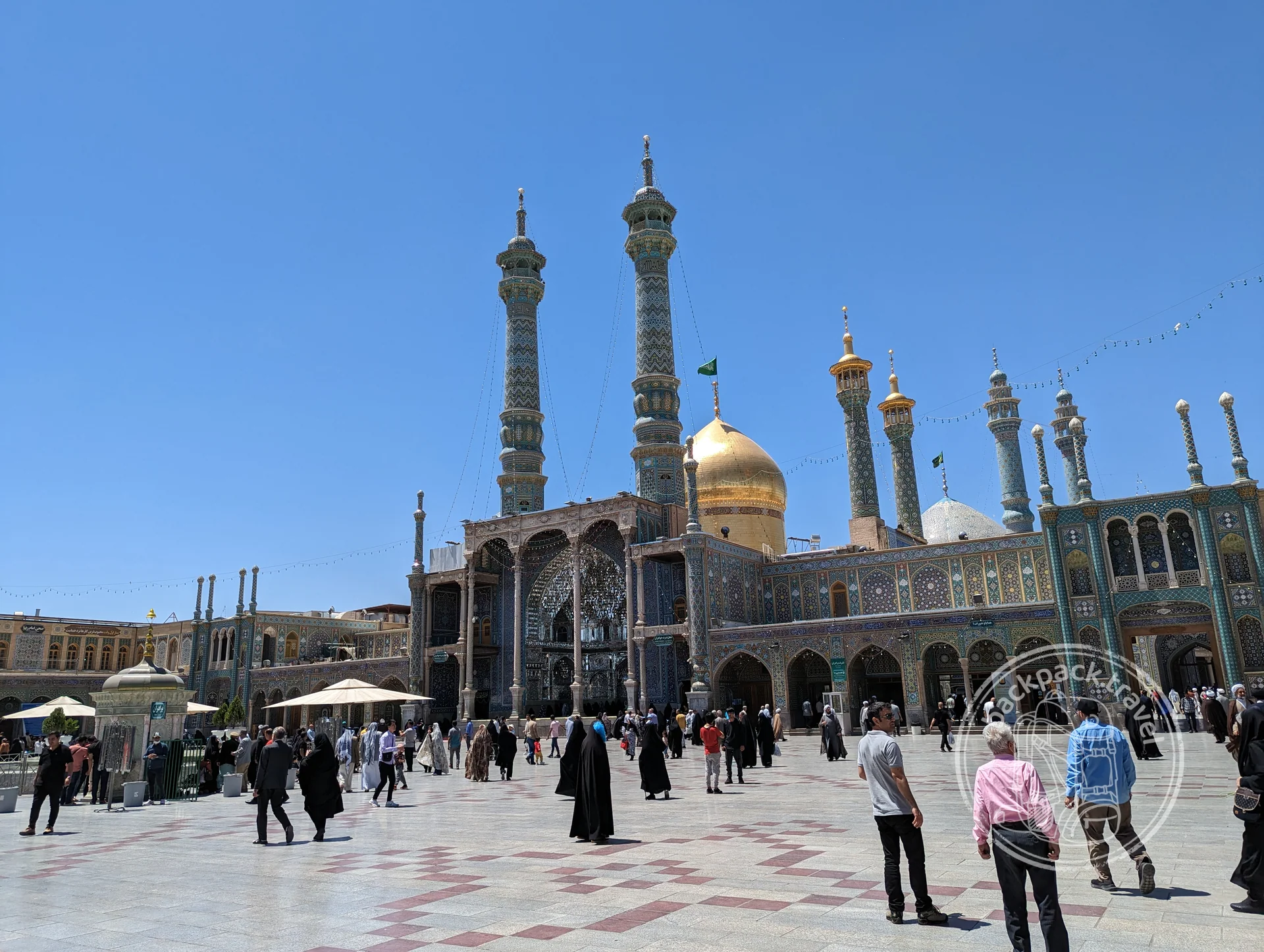
- Shrine of Fatima Masumeh — a gold dome and mirrored halls around the tomb of Imam Reza's sister, the spiritual heart of the town. Access to the inner courtyards for non-Muslims is limited and depends on the attendants, but the complex and its square are impressive in themselves.
- Jamkaran Mosque — a large shrine 6 km to the south-east where thousands of pilgrims gather on Tuesday evenings; one of the most revered places in Shia Iran.
- Qom Bazaar — old covered rows trading in religious goods, prayer beads and the local sohan the town is known for.
- Salt lake (Daryacheh-ye Namak) — an endless salt crust east of the town, where people drive out for the sunset.
Food and money
Qom is known for sohan, a brittle disc of flour, sugar, saffron and pistachio, carried off by the boxful across the country. The rest of the cooking is plain Iranian: chelo kebab, ash soups. Cash is obligatory — foreign bank cards do not work in Iran, so change money in advance.
Getting there
Qom stands on the main road and the Tehran-Isfahan railway, and the drive from Tehran takes an hour and a half to two hours outside Tehran traffic. That makes it a convenient practical stop on a long route through central Iran.
When to come
A desert climate: summers very hot, winters mild and short. March and April, October and November are the most comfortable. On major religious dates the town fills with pilgrims, so book a room ahead.
Updated