 Города и дороги
Description
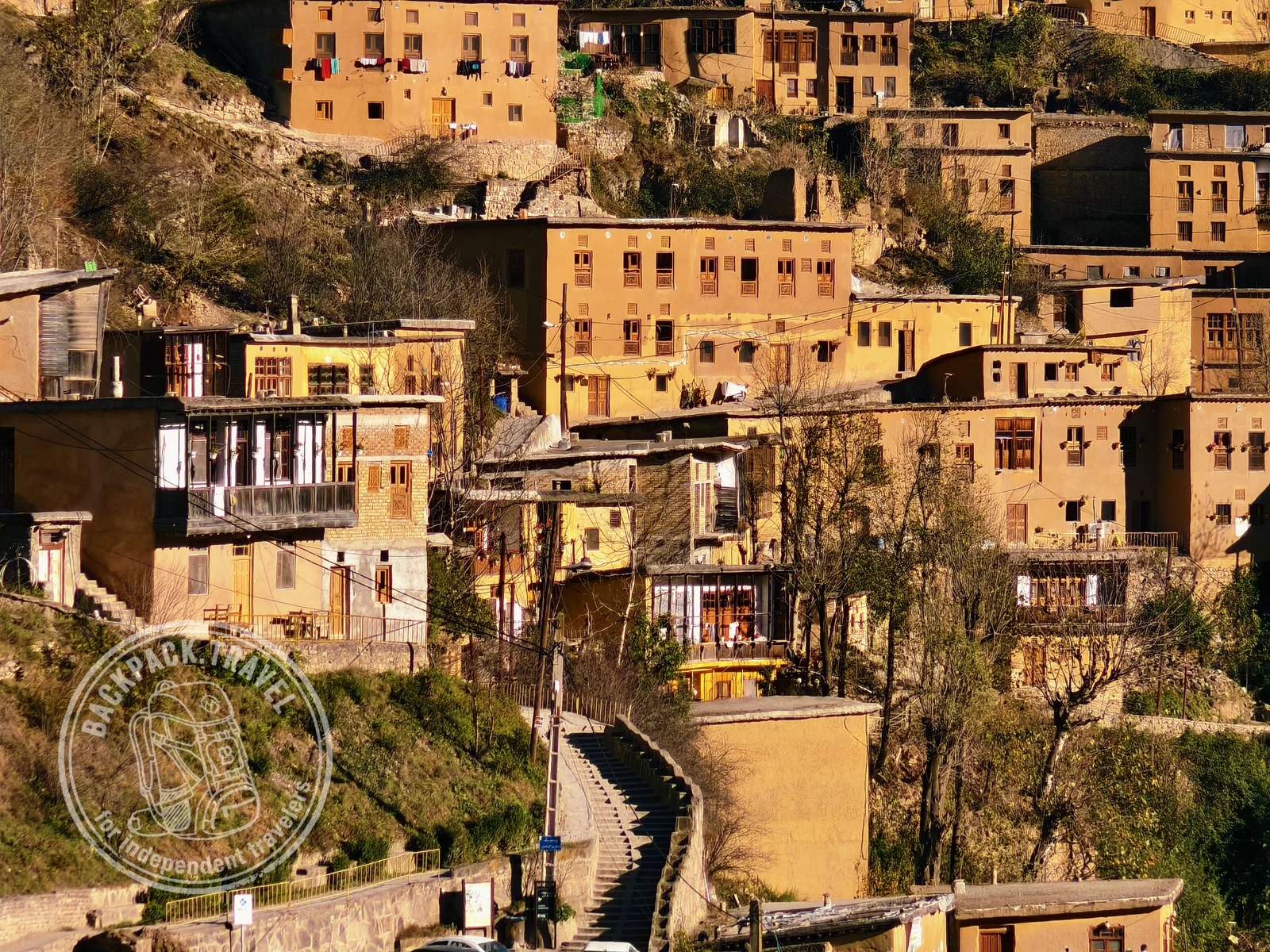
A mountain village in Gilan where the houses are stacked in tiers: the roof of the lower row serves as the street for the row above. No cars are allowed inside, and the whole village can be walked in a couple of hours.
Wiki
Masuleh is a mountain village in Gilan, the Iranian postcard with houses stacked like a staircase. The roof of the lower house works as the yard and the street for the one above it, there are no cars inside at all, and fog rolls in regularly off the Caspian. The place is tiny, though, and has been a well-promoted name for a long time, which is worth knowing in advance.
How the village is built
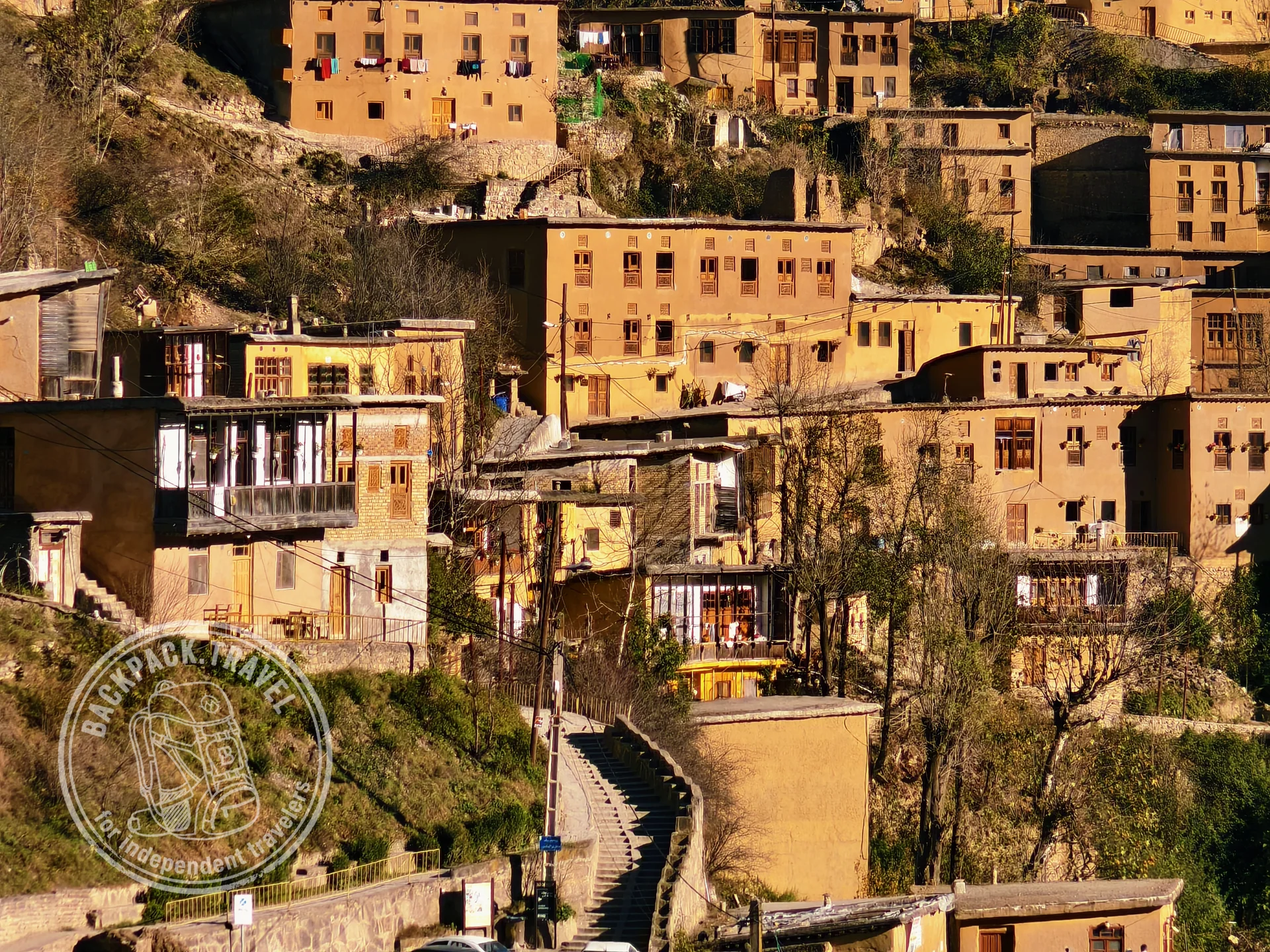
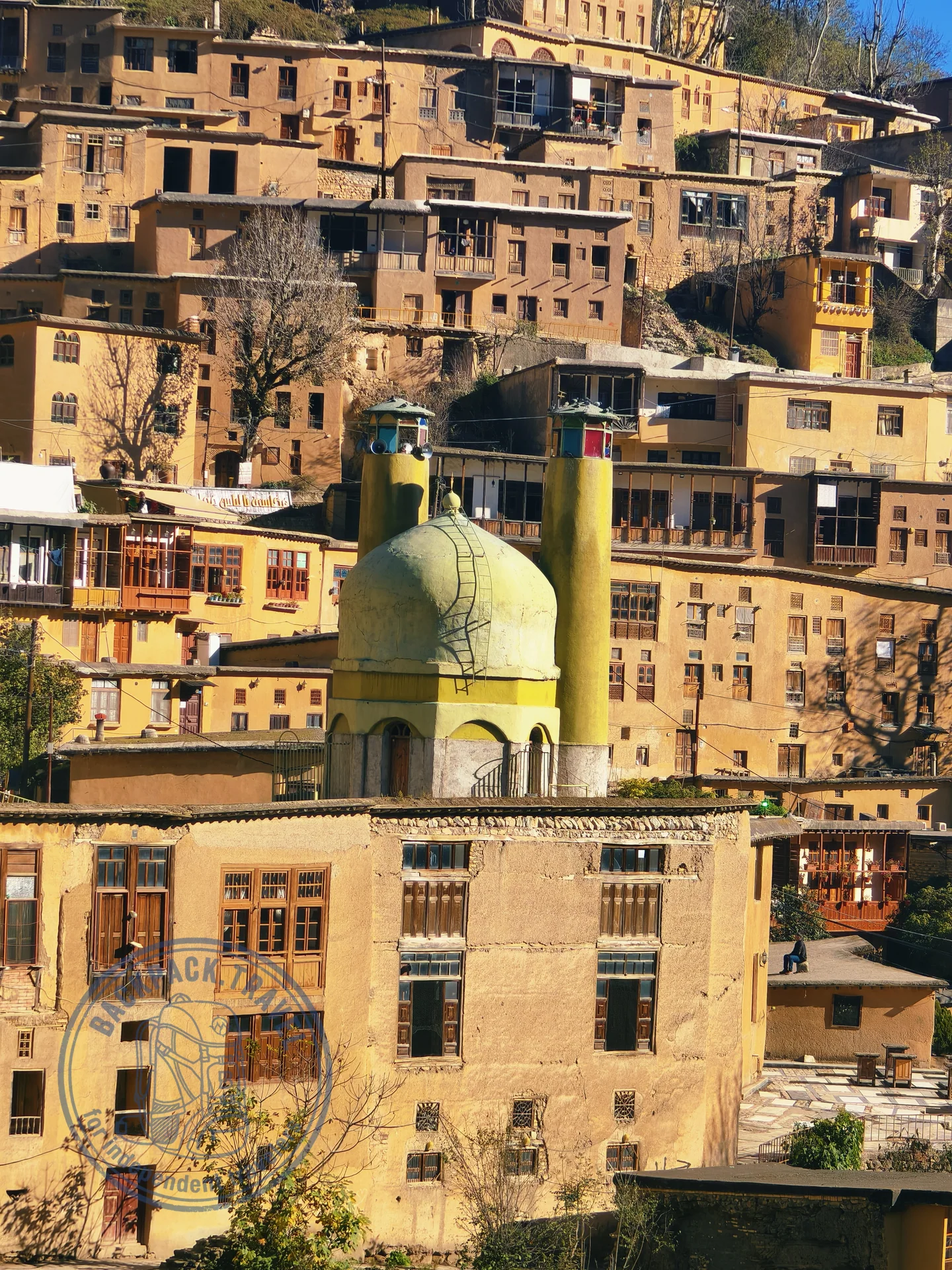
Masuleh stands on a steep slope of the Talysh Mountains at an altitude of about 1,050 m, and the drop between the lowest and the highest houses is around a hundred meters. Because of the gradient the settlement grew in terraces: the flat roof of one tier serves as a walkway, a yard and an open deck for the people living higher up. There are almost no streets in the usual sense, only stairways and the roofs themselves.
The facades are ochre-yellow, clay plaster mixed with straw. The color is thought to be no accident: in thick fog yellow walls can be seen from further away. Most of the houses have two stories, though some run to three or four tiers.
The first settlement is generally held to have appeared around 1006, some 6 km to the northwest, and it is known as Kohneh Masuleh, or Old Masuleh. The present village is younger than that one. The people here are Talysh and speak Talysh among themselves. There are few permanent residents: the 2016 census counted a few hundred, and in summer and during holidays the visitors outnumber them several times over.
Cars stay in the parking lot below and are not allowed inside, and in this respect Masuleh stands apart among Iranian villages. Everything above the parking lot is covered on foot, up the steps.
What to do
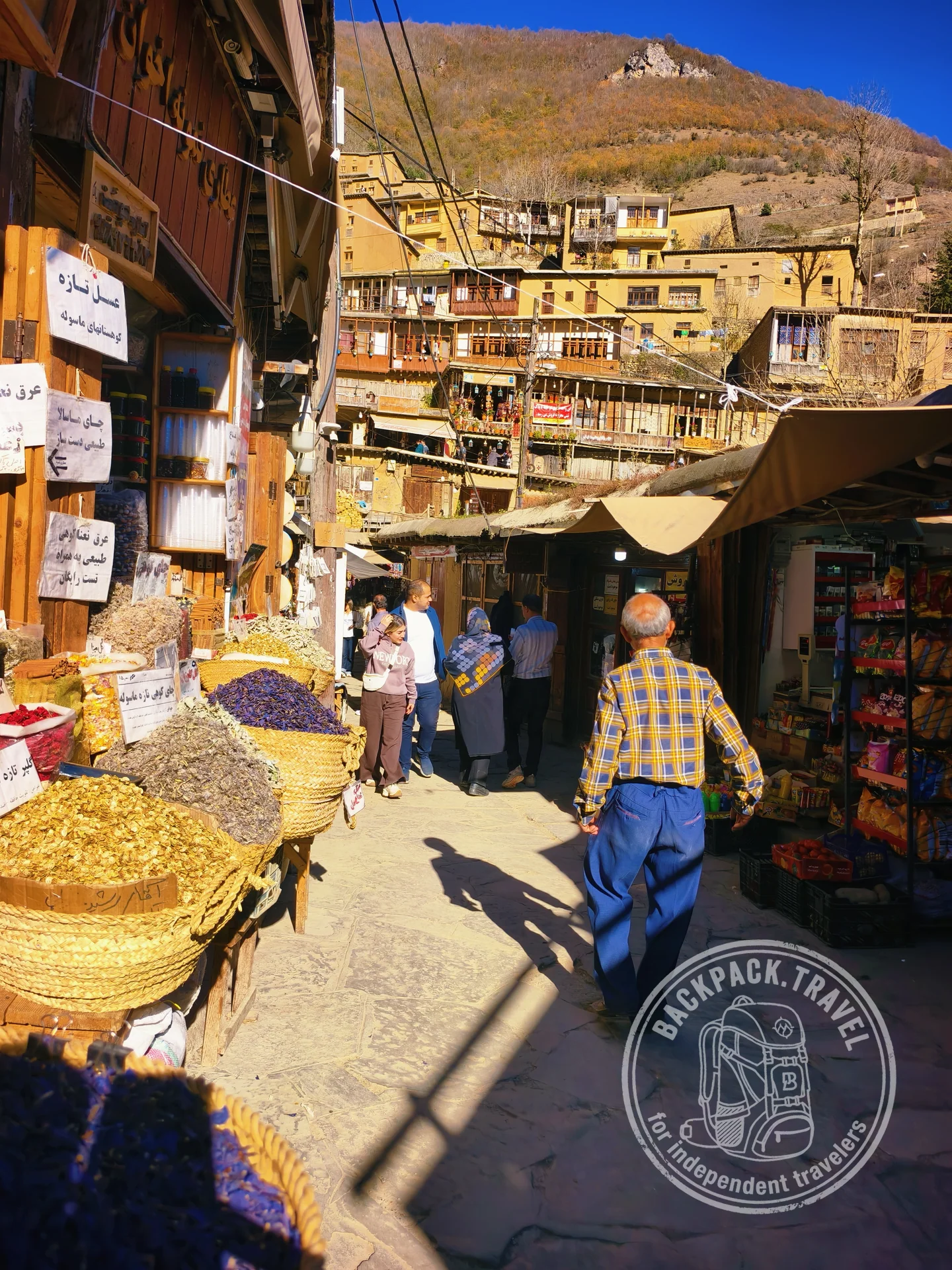
- The bazaar along the terraces — it runs through the middle of the village, with shops set into the niches of the ground floors, local sweets, nuts, shawls, dolls and the famous Fuman knives. It is a souvenir bazaar in essence, but a lively and tightly packed one.
- The mosque in the middle of the bazaar — the oldest building in the village; the datings differ, and the boldest of them take it back to the 10th century.
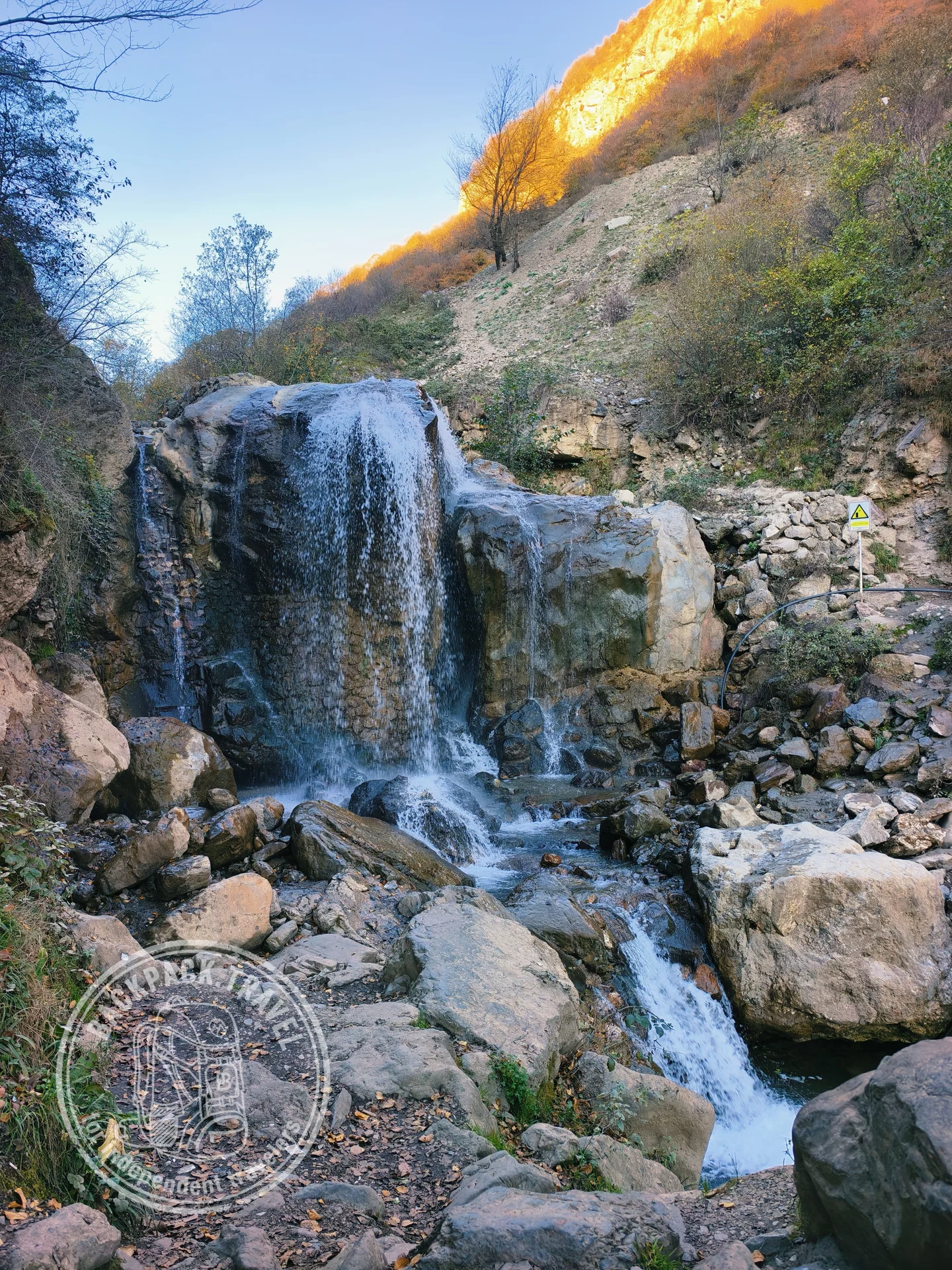
- The waterfall — the nearest one is a couple of hundred meters from the lower part of the village, by the river. There are others in the area, bigger ones, but you need transport to reach them.
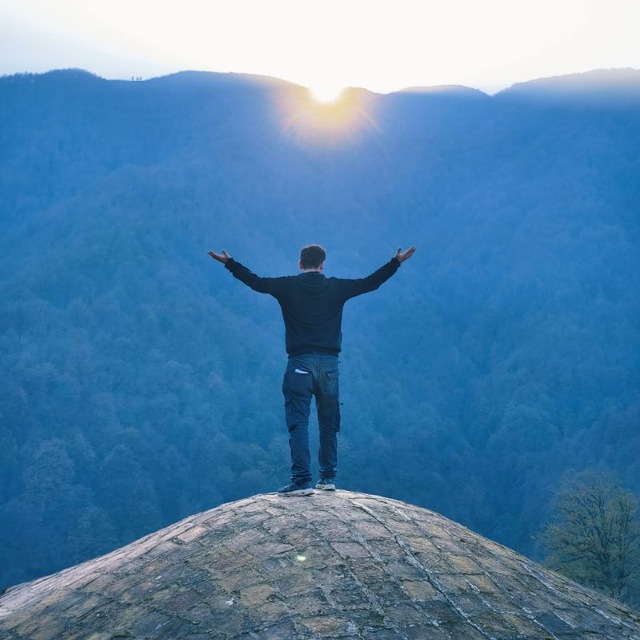
- Walking the roofs — this is the main occupation here. You can cover the whole village in an hour or an hour and a half, but it is better to climb above the houses and look at it from the side, all in one piece.
Weather and when to go
Gilan is a humid region, and Masuleh sits exactly where the clouds off the Caspian run into the slope. Fog here is not an attraction but the norm: it can close the village in for half a day and then clear in ten minutes. Rain is possible in any season, so always bring waterproofs.
- May to June and September to October — the best window: greenery, moderate temperatures, and fog that produces the very view you came for.
- July and August — this is where people escape the Caspian humidity, and the village is overcrowded.
- Winter — snow, some of the shops closed, slippery steps, but almost no one around.
The road runs through Fuman, and from there it is about an hour to Masuleh, roughly an hour and a half in total from Rasht. On peak days there is a jam on the approach and a queue for the parking lot.
What is nearby
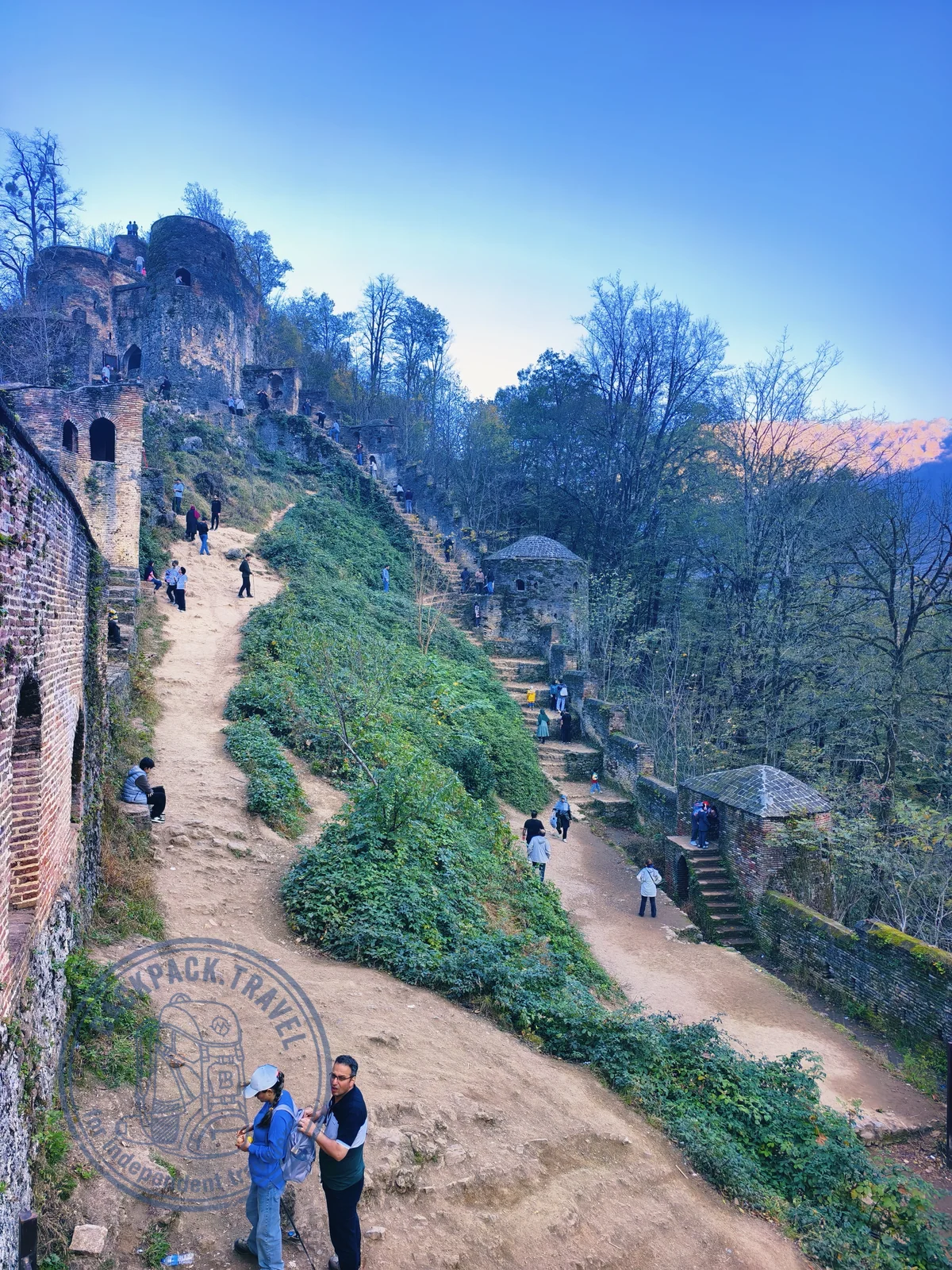
- Rudkhan Castle — 25 km southwest of Fuman. The climb is about 2.5 km through forest and some thousand stone steps, an hour to an hour and a half one way. At the top are walls with dozens of towers along the ridge. It is the best reason in the area to spend your energy, but you need proper shoes for it.
- Fuman — a small town known for its kolucheh cookies, and a logical stop along the way.
- The Hyrcanian forests — the relict forests of the southern Caspian coast, on the UNESCO list since 2019 (in 2023 the site was extended with areas in Azerbaijan). You drive through them on the road to Masuleh and walk through them on the way up to Rudkhan.
How much time to allow
You can cover the village and the bazaar in two or three hours, and for most people that is enough with room to spare. An overnight stay is needed if you want to see Masuleh empty: the tour buses leave in the evening, and the morning fog before the shops open is the best thing this place has. A full day makes sense when you add Rudkhan, but then it is more logical to base yourself in Rasht or Fuman rather than in the village itself.
Who won't enjoy it: Masuleh is a single postcard, and it is worked through quickly. There are no museums here, no walking routes and no evening life, and at weekends and over Nowruz you move along the roofs literally in a queue. Everything rests on steps, so with a suitcase, a stroller or bad knees it will be hard going. And it has long since stopped being an untouched village: half the ground floors have been given over to souvenir shops, and the guesthouses work on volume. If you are coming for quiet and authenticity, plan an overnight stay or an off-season visit, because otherwise you will get a picturesque crush.