 Города и дороги
Description
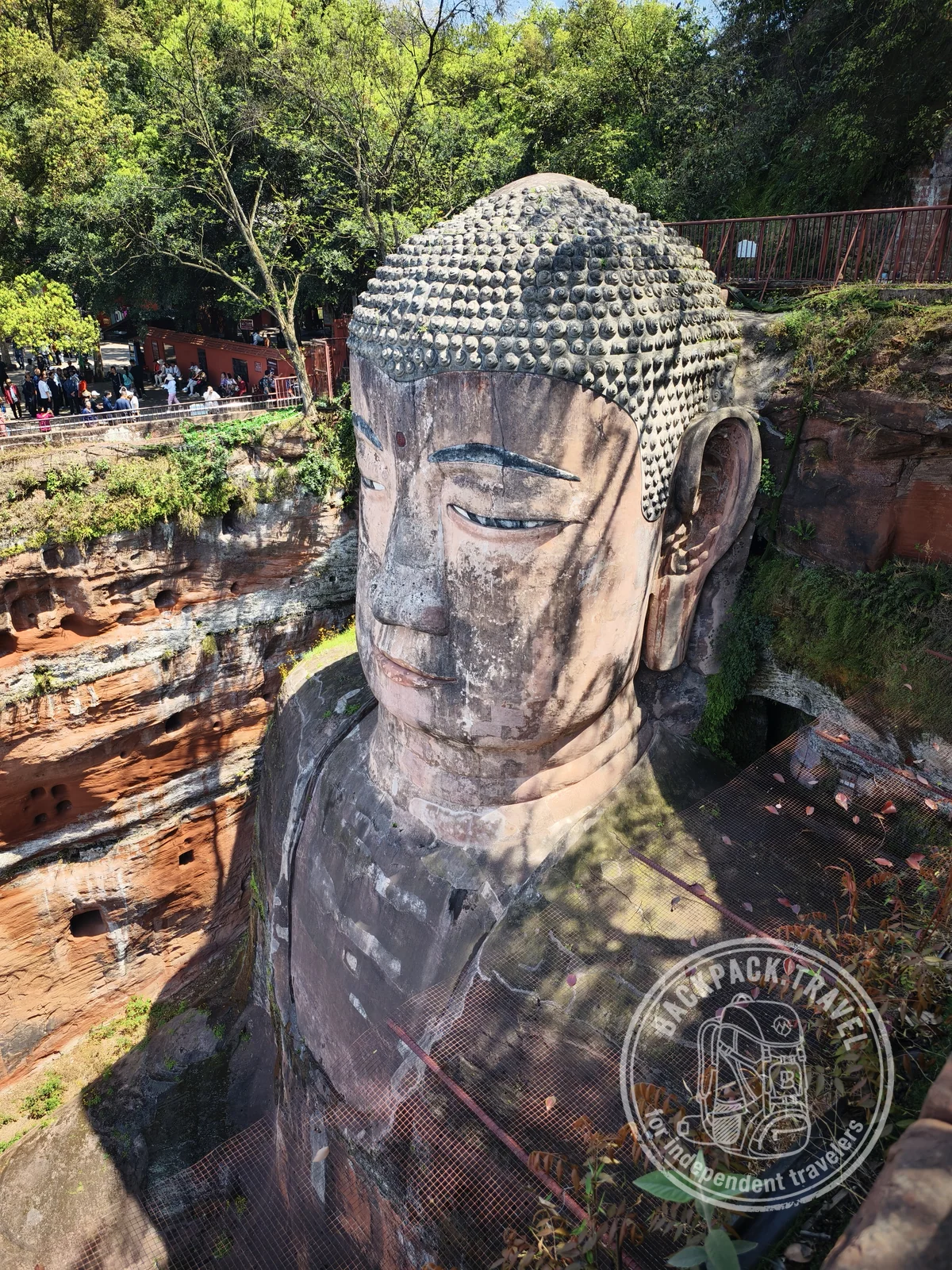
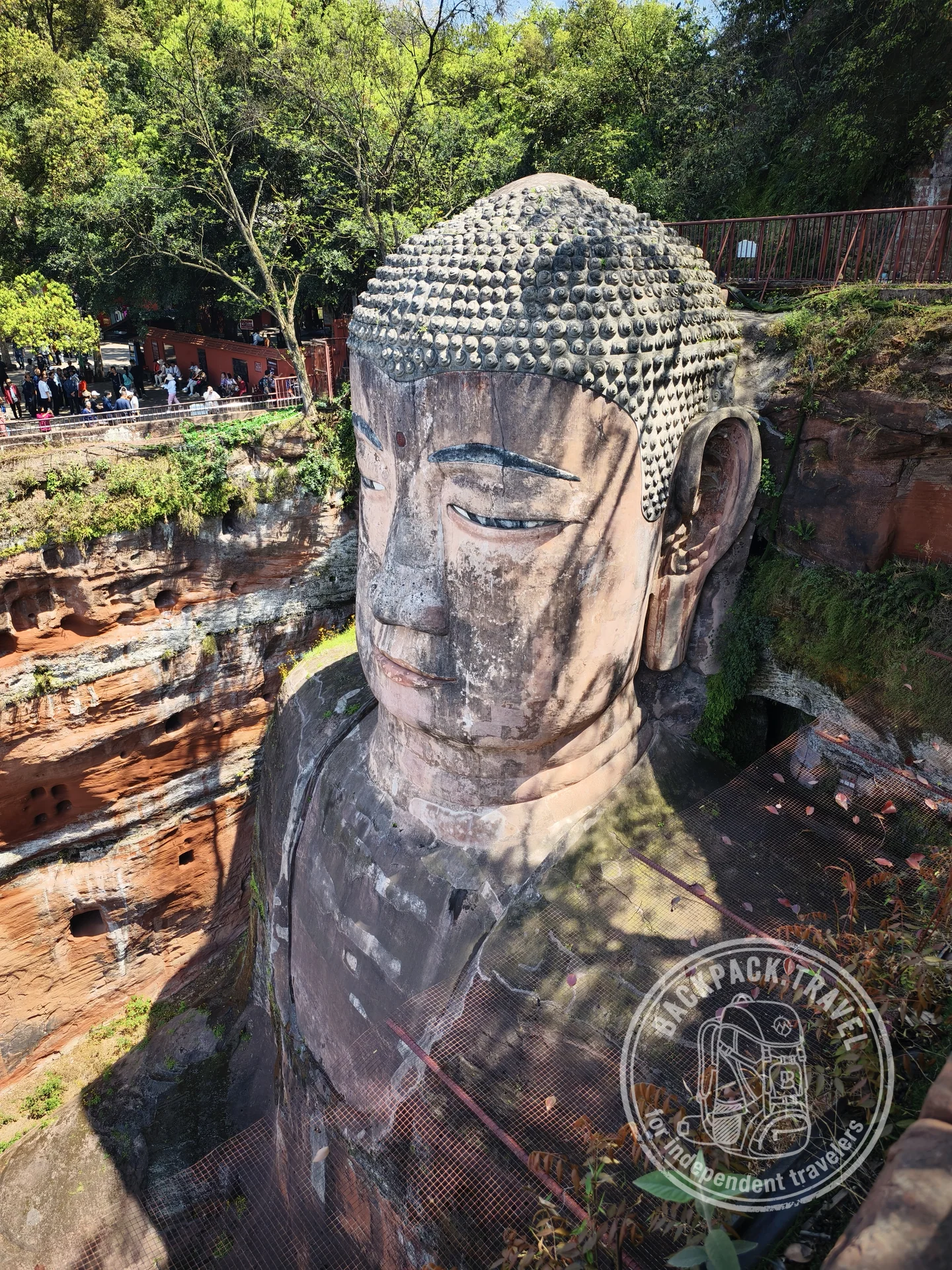
A city in Sichuan at the confluence of three rivers, where the Leshan Giant Buddha is carved into the cliff, the largest stone Buddha in the world at seventy-one metres. A UNESCO site, worked on for almost the whole of the 8th century.
Wiki
Leshan stands in Sichuan where three rivers come together — the Min, the Dadu and the Qingyi. The city is ordinary and provincial, but carved into the cliff above the confluence is the Leshan Giant Buddha, a seated figure of Maitreya 71 metres high that remained the largest sculpture in the world for more than a thousand years. It is what people come here for, usually on a single day out from Chengdu.
What it is
Work began in 713 on the initiative of the monk Haitong. Tradition has it that the intention was utilitarian: the current at the confluence was dangerous for boats, and the statue was meant to subdue the water. Construction stretched over almost ninety years, and the Buddha was completed around 803 by Haitong's disciples. Hidden inside the rock behind the figure is a drainage system of channels that carries water away from the stone; it is partly thanks to this that the carving has survived to our own day. In 1996 the site went onto the UNESCO list together with Mount Emei.
How to see it
There are two ways, and they give you different pictures.
- From the water. Pleasure boats come up to the statue and stand opposite it for a few minutes. This is the only angle from which the Buddha is visible whole and all at once — there is no such view from land. It takes less than an hour and there are almost never any queues.
- By land, through Lingyunshan Park. You enter from the upper platform, level with the head, and from there the Nine-Tier Staircase leads down: a narrow descent cut into the rock along the right side of the figure to its feet. From the bottom, looking up, you get the most powerful angle of all.
The staircase is a bottleneck in the literal sense: the passage is one-way and built for a modest flow of people. In season and in the middle of the day the queue for the descent stretches to an hour or more, in the open sun. Arrive for opening time or after three in the afternoon.
What else there is in the park
- Wuyou Temple on the neighbouring Wuyou hill is a working monastery with a decent collection of sculpture; only a minority of visitors get that far, and it is quieter there.
- The Mahao Han cliff tombs are burial chambers of the first centuries AD cut into sandstone, with relief carvings. There is a small but substantial museum at the entrance to the park.
- The surrounding hills are held to form together the silhouette of a reclining Buddha, with the statue falling at his heart. You can make this out only from the river, and with a fair amount of imagination.
Entry to the park is charged, the boat and some of the sites are paid for separately, and combined tickets exist. Sales moved to Chinese mini-apps long ago, but foreigners can usually buy a ticket at the box office on presentation of a passport. In high season entry is capped. Opening hours differ between summer and winter, so check locally.
How much time to allow
Half a day is enough for the boat and the upper platform, without the descent down the staircase. The standard scenario is a full day from Chengdu: the journey both ways, the park with the Nine-Tier Staircase, and Wuyou Temple. Staying the night in Leshan makes sense in one case only — if you are travelling on to Mount Emei the next morning.
From Chengdu the high-speed trains take about 45 to 60 minutes to Leshan station and run frequently. From the station to the park there is another 40 minutes or so by city bus, or less by taxi: the station is out on the edge of things, and that is worth factoring into your timings.
What to combine it with
Leshan is the classic side trip from Chengdu. The logical pairing is with Mount Emei: the sacred Buddhist mountain belonging to the same UNESCO site, half an hour's ride away, and people usually take a day for the Buddha and a day or two for the mountain. Chengdu itself serves as a base for the pandas, Sichuan cooking and the teahouses.
When to go
October, and April to May, are the months to come. The Sichuan summer is hot and humid, and the staircase is in full sun the whole way. Winter is cool and a haze often hangs over everything. Rain is possible in any season, and the steps turn slippery.
Who won't enjoy it
Leshan is exactly one sight, and that is where it ends. The city around it is unremarkable and there is no reason to walk about in it. If you are not prepared to stand in a queue and go down a narrow staircase in a crowd, the impression will come down to ten minutes from a boat — for many people that is enough, but then it is more honest to admit that the day went on a single photograph. For anyone afraid of heights or of tight spaces the descent is out of the question: the staircase is steep, with a drop to one side and no room to turn around. And do not expect a temple atmosphere — this is a mass-market park with turnstiles, not a place of pilgrimage.