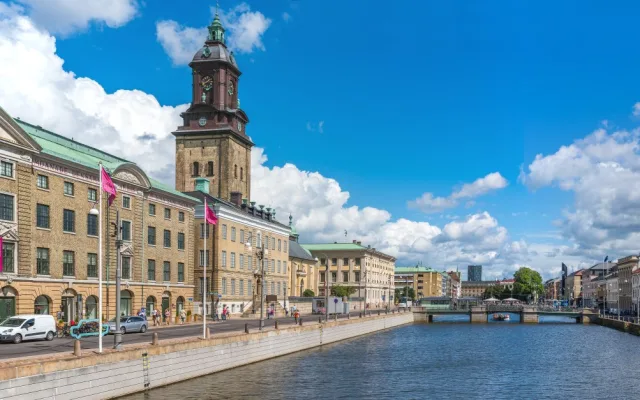
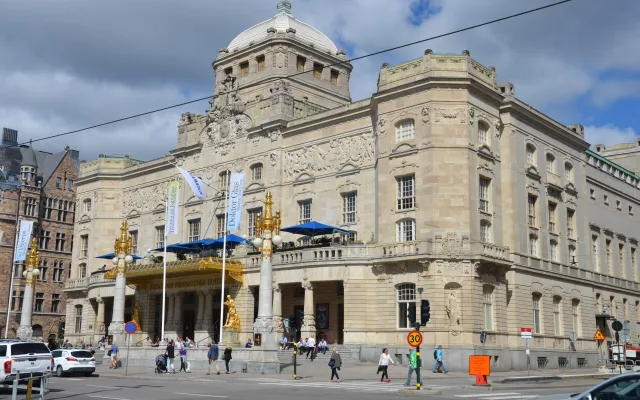
Description
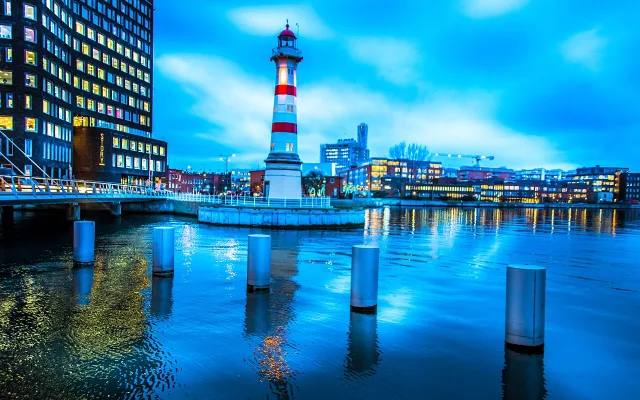
Sweden's multicultural port city across the Øresund Bridge from Copenhagen — Turning Torso, the Möllevången district and the waterfront.
Wiki
Malmö is easy to mistake for a "Copenhagen add-on" — but it is a city in its own right: a port, multicultural, with a new waterfront where the old shipyards used to be. You can cover it in a day if you stay focused and hold to the city centre–sea–Turning Torso axis.
Getting There and Getting Around
Most visitors arrive from Copenhagen: trains across the Øresund Bridge run roughly every 20 minutes, with a journey of about half an hour. Trains depart directly from below Copenhagen Airport (CPH), so Malmö can be visited even on the day you fly in or out. A train ticket is noticeably cheaper and simpler than driving, with the bridge toll and parking on top.
You don't need a car in the city. The centre is compact: from the main station (Malmö C) to all the main squares is 10–15 minutes on foot. Turning Torso and the Västra Hamnen waterfront are a pleasant walk along the water or a couple of bus stops away. Malmö is one of Europe's most cycle-friendly cities: bike rental and wide cycle lanes make cycling the best way to cover more ground in a day. City buses are handy for more distant spots like Ribersborg.
What to See in a Day
The logical route runs from the station into the old town, then to the sea:
- Stortorget and Lilla Torg — start here. The large square gives you scale; the smaller one next to it gives atmosphere: cobblestones, half-timbered buildings, cafés with terraces. In the evening Lilla Torg becomes the centre of city life.
- Malmöhus — if you take one museum, make it this one. The castle combines a historic fortress, art and local history museums, plus an aquarium — great in the rain and with children.
- Turning Torso — you can't go inside (it's residential), but the building is striking from a distance and from the waterfront. Around it is the Västra Hamnen (Western Harbour) district: a former shipyard redeveloped as an eco-neighbourhood with wooden boardwalks by the water, where locals swim in the canal in summer.
- Ribersborg (Ribban) — if the weather allows, walk out to the beach. Even without swimming, a stroll along the long promenade is pleasant; in winter people come for the Kallbadhus baths with their sauna and an icy plunge into the Øresund.
- Möllevången — the district for those more interested in the living city than in postcards: a market, affordable cafés with varied cuisines, street art. Also home to the best budget food in the city.
If the day is short, the parks (Pildammsparken, Folkets Park, Slottsträdgården) are optional extras or useful links between the main points.
Food and Prices
Sweden is expensive, and Malmö is no exception, but there are ways to keep costs down. The local tradition is Scanian cuisine: kåldolmar (stuffed cabbage rolls), meatballs, herring, and for everyday treats the famous Swedish fika (coffee with a bun, usually cinnamon). Weekday lunches are noticeably cheaper: almost everywhere offers a dagens lunch — a set meal at a fixed price, often including soup, salad and coffee. This is the main budget hack.
Malmö's multiculturalism pays off when eating out: falafel is regarded as a local street food classic here, and a portion near Möllevången will fill you up for very little by Swedish standards. Supermarkets (look for budget chains) beat cafés by a wide margin if you're passing through.
Alcohol is expensive and in shops is sold only through the state-run Systembolaget chain with limited hours — plan ahead if you want wine in the evening.
Practical Tips and Common Mistakes
- Cash is rarely needed. Malmö, like all of Sweden, runs on card and phone; many places don't accept cash at all.
- Don't overestimate the number of "sights". The city wins not through a checklist of must-sees but through walking, water and atmosphere. Trying to pack the day with museums is a mistake; it's better to walk the centre and the waterfront slowly.
- When to go. The best time is May to September, when outdoor terraces, the baths and the gardens are open. In winter it gets dark early and the waterfront is quiet, but Kallbadhus and cosy cafés are always there.
- Weather is changeable and the sea breeze is real — bring a windproof layer even in summer.
- Safety. The tourist centre, the waterfront and the main districts are calm; behave as you would in any large city — keep an eye on your belongings in crowds and at the market. Reputations attached to outlying suburbs have no bearing on a day visitor's itinerary.
- Base: Copenhagen or Malmö? For a single day it's easier to come from Copenhagen without luggage. But if you want quieter surroundings and lower prices than the Danish capital, an overnight in Malmö with daily trips across the bridge is a perfectly workable strategy.