 Города и дороги
Description
The ancient capital of six dynasties on the Yangtze: Ming-era city walls, the Sun Yat-sen Mausoleum on Zijinshan and gardens hidden away among the blocks of the modern city.
Wiki
Nanjing is the "Southern Capital", and it has been the capital of China several times over: under the six dynasties of the first millennium, under the early Ming and under the Republic of China. Something has survived from each layer, and unlike neighbouring Shanghai, Nanjing reads as a historic city rather than a shop window. It is also green and noticeably calmer than most Chinese cities of a million and more.
The Ming walls
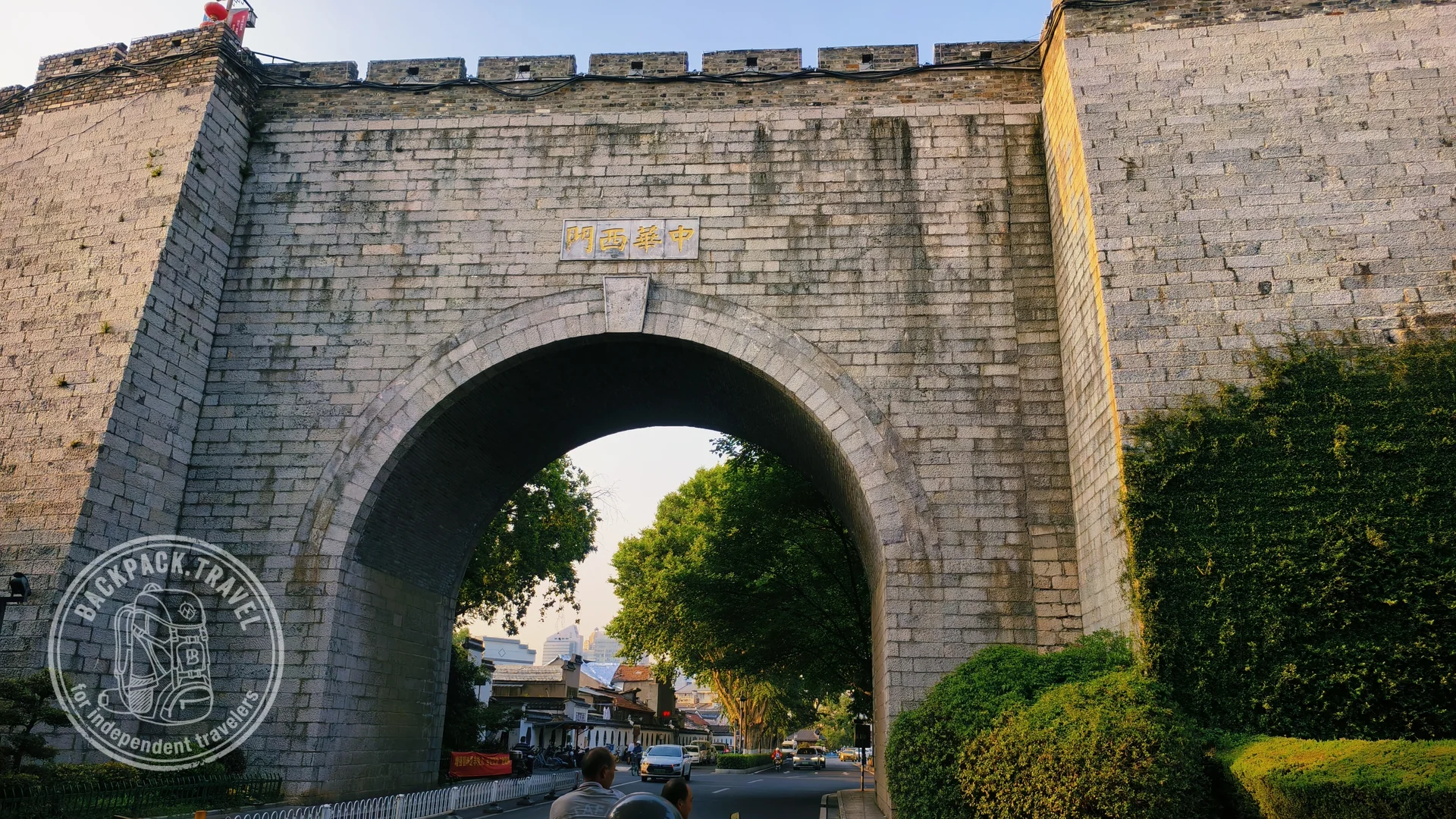
Nanjing's chief distinction is its city wall of the late 14th century, built under the first Ming emperor. About 25 km of the original perimeter survives, making it the longest surviving city wall in the world. It follows the terrain, curving around the hills and the lake.
- Zhonghua Gate is the largest surviving gate complex: not simply a gate but a set of trap courtyards with chambers inside the thickness of the walls, where the garrison was quartered. It is the best place to grasp how the defences worked.
- The Taicheng section by Xuanwu Lake is the best stretch for walking along the top: you see both the city and the water.
- Many of the bricks still carry stamps with the names of the craftsmen and of the counties that supplied them, which was how the Ming administration ran its quality control.
What else to see
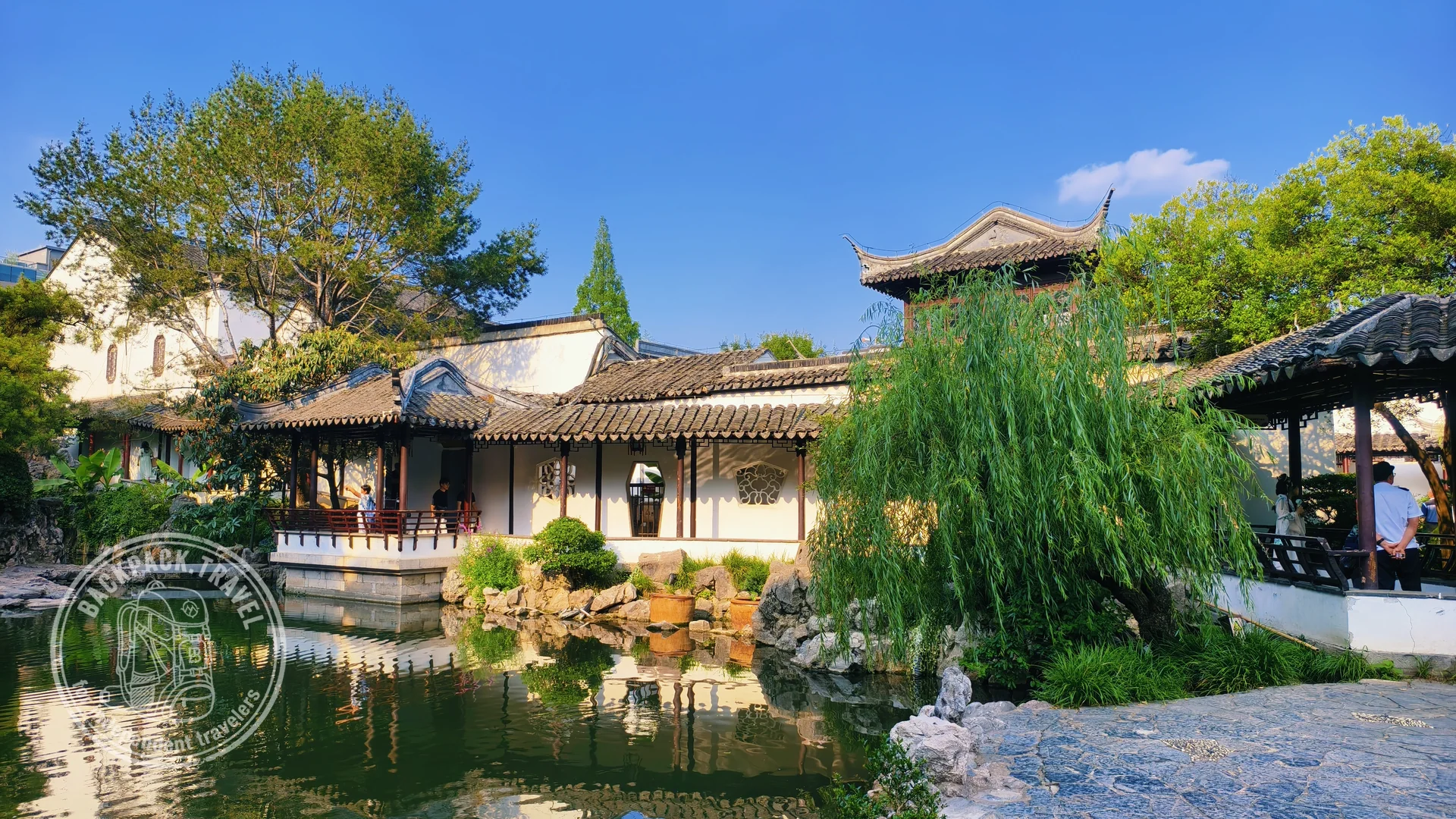
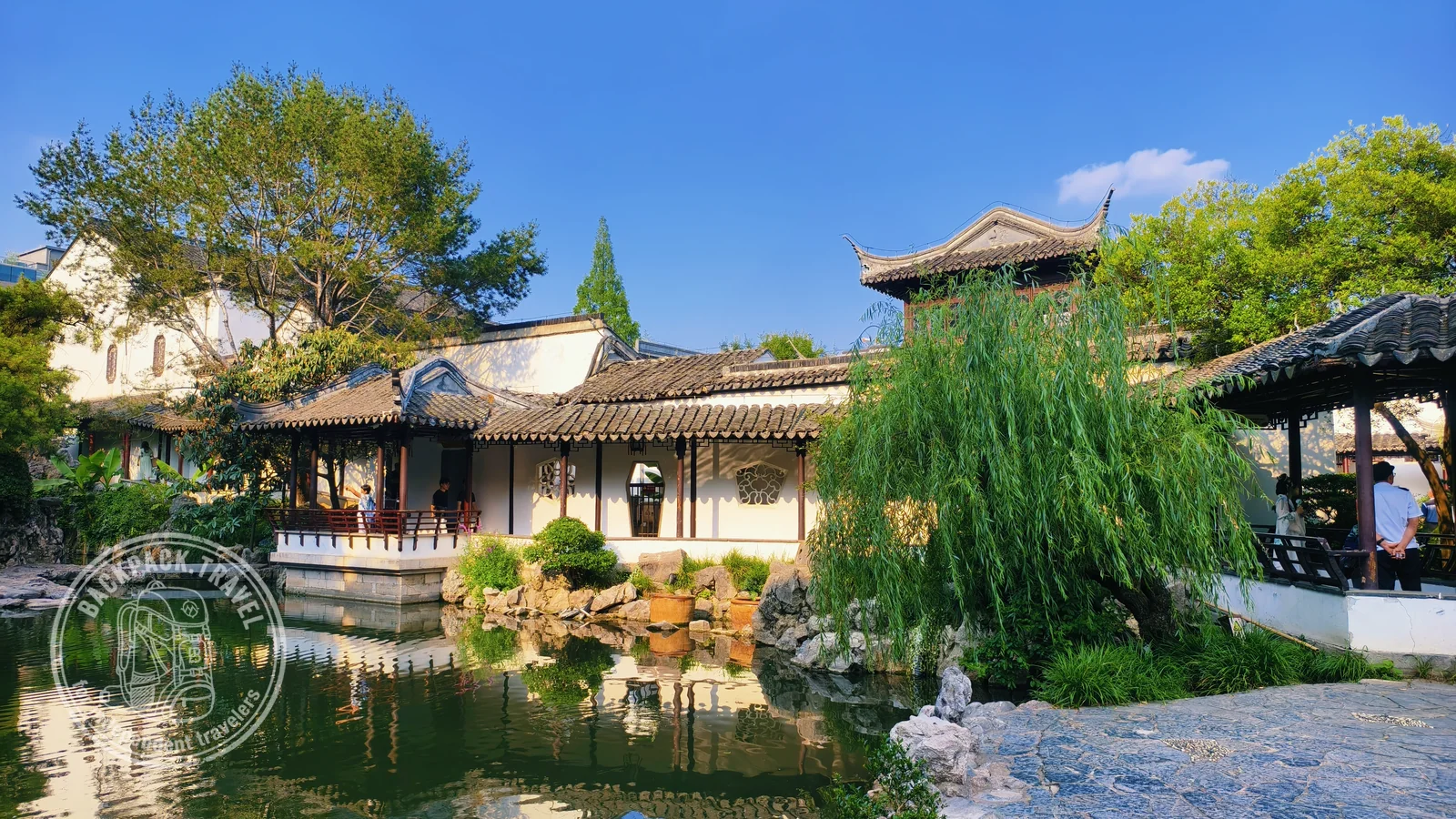
- Zhanyuan Garden is the city's oldest classical garden, going back to Ming times; the plot is believed to have belonged to the general Xu Da. It is a compact southern Chinese garden of rocks, water and pavilions, with a museum of the Taiping in its eastern part.
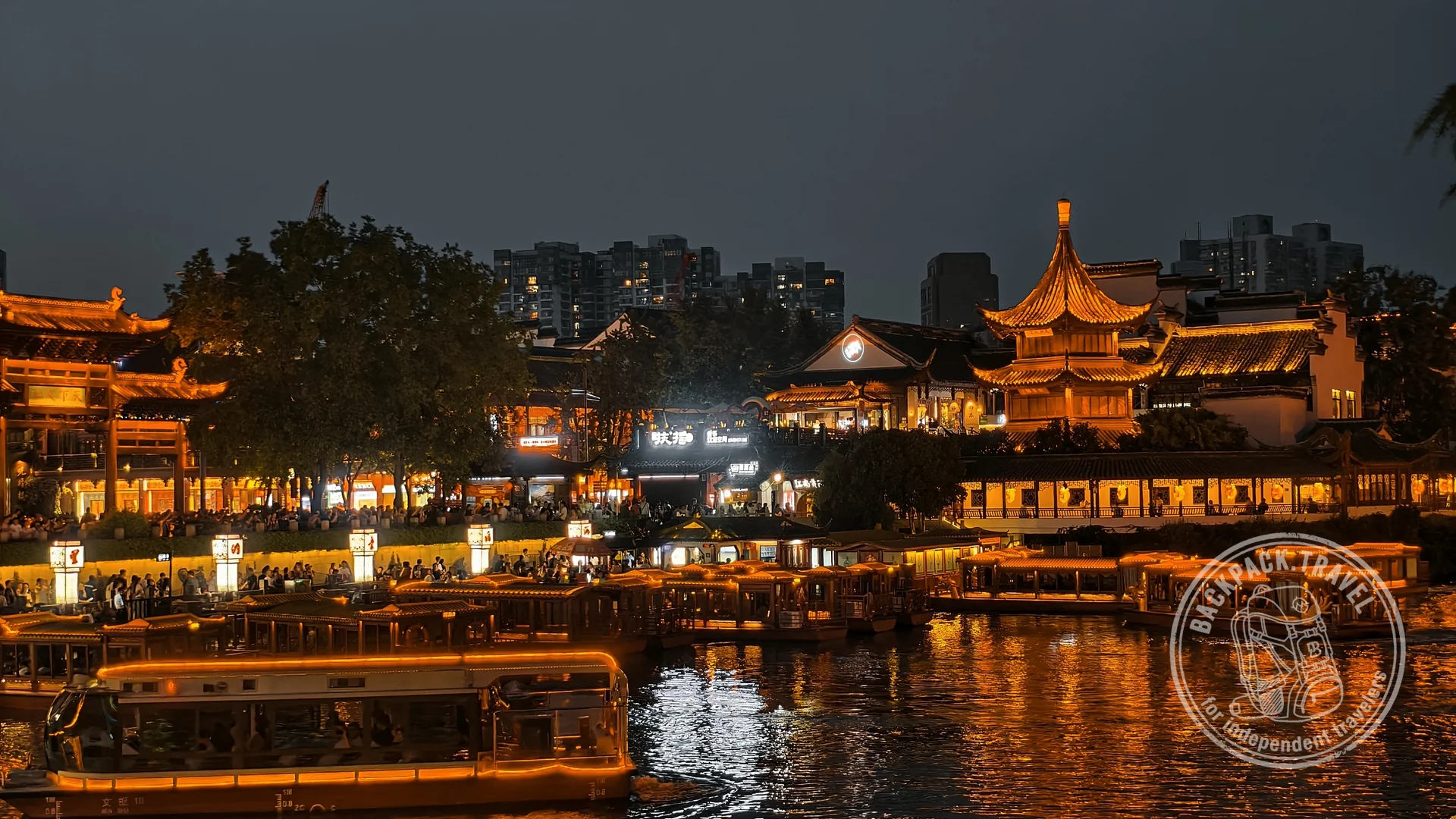
- The Confucius Temple (Fuzimiao) on the Qinhuai River is the temple and the quarter around it, lit up in the evening with boats on the water. The place is touristy through and through, but next to it stands the surviving Jiangnan Examination Hall, the empire's largest centre for the state examinations: rows of tiny cells where candidates spent several days at a time. That is the part worth your attention.
- The Sun Yat-sen Mausoleum on Purple Mountain (Zijinshan) dates from 1926–1929. A staircase of 392 steps leads up to the tomb, a reference to the country's population at the time.
- The Ming Xiaoling Mausoleum is the tomb of the founder of the Ming dynasty and a UNESCO site. The main thing here is the Spirit Way with its stone figures of animals and officials.
- The Presidential Palace (Zongtongfu) was the seat of the government of the Republic of China: a mixture of Chinese and European architecture, with a clear exhibition on the first half of the 20th century.
- The Nanjing Museum is one of the largest in the country, with strong archaeology. It needs half a day.
The 1937 memorial
In December 1937 the Japanese army took Nanjing; the mass killings and violence against the civilian population that followed are known as the Nanjing Massacre. Estimates of the number of dead differ and remain a subject of dispute among historians. The event is commemorated by the Memorial Hall for the Victims of the Nanjing Massacre in the western part of the city; entry is free but registration is required.
How much time to allow
One day covers the centre and no more: Zhonghua Gate, the Fuzimiao quarter and Zhanyuan Garden. A second day goes entirely on Purple Mountain with the Sun Yat-sen Mausoleum, the Xiaoling tomb and the Linggu Temple, where there is a great deal of walking and it is not worth combining the mountain with anything else. Three days is the ideal, adding the Nanjing Museum, the Presidential Palace and the memorial.
The metro is well developed, but Purple Mountain is large: inside it you either ride electric buggies or walk several kilometres at a stretch.
What to combine it with
Nanjing fits neatly into a route along the lower Yangtze. Shanghai is a little over an hour away by high-speed train, Suzhou and Wuxi less than an hour, Hangzhou about an hour and a half. The logical combination is Shanghai, Suzhou, Nanjing: Nanjing supplies the ancient capital, Suzhou the gardens.
When to go
October and November: dry, cool, with Purple Mountain in autumn colour. April is good for the blossom but crowded. Nanjing is one of the "furnaces on the Yangtze", so from June to August it is hot and very humid, while the winter is damp and raw.
Who will not take to it
Nanjing requires an interest in history. Without one the city falls apart into a set of scattered sites in the middle of an ordinary megacity: there is no single old centre, 20th-century building fills almost everything, and the distances are long. Fuzimiao, which many people take for "old Nanjing", is almost entirely a modern reconstruction with shopping arcades. The 1937 memorial is heavy going and should not be squeezed in between a garden and dinner. For landscapes and modernity Shanghai is the better choice, since Nanjing is about the layers of the past.