Description
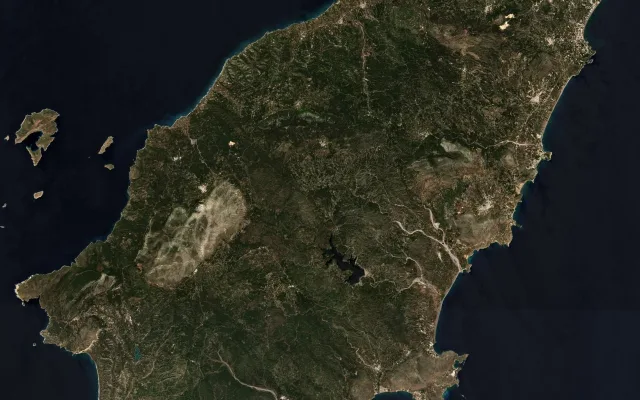
Rhodes is an island with a remarkably preserved medieval city built by the Knights Hospitaller. Visit the ruins of the Lindos acropolis and enjoy sunny beaches.
Wiki
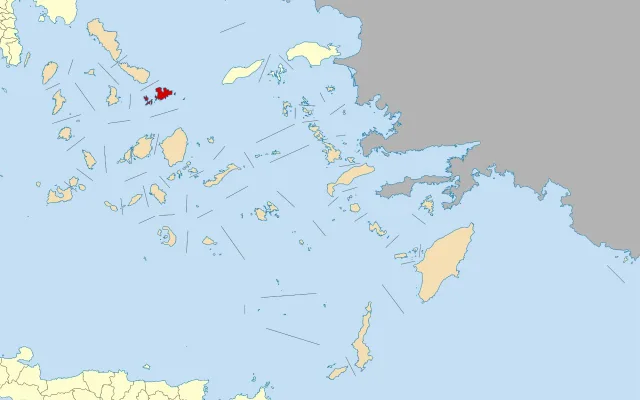
One of the largest and most historically rich Greek islands in the Aegean Sea — around 50,000 people in the main town of Rhodes and some 125,000 across the island. Part of the Dodecanese archipelago, 18 km from the Turkish coast. The Old Town of Rhodes is a UNESCO World Heritage Site and the largest inhabited medieval town in Europe. It was the seat of the Order of the Hospitallers (1309–1522) and the birthplace of one of the Seven Wonders of the Ancient World — the Colossus of Rhodes (completed around 280 BC, toppled by the earthquake of 226 BC).
Main sights
- Old Town of Rhodes (Rhodes City) — UNESCO World Heritage Site; highlights include the Amboise Gate, 4 km of city walls, and the Palace of the Grand Master.
- Palace of the Grand Master — the centrepiece of the Old Town, rebuilt by the Italians in the 1930s and now a museum.
- Street of the Knights (Odos Ippoton) — the best-preserved medieval street in Europe, lined with the coats of arms of the Order's seven national "tongues."
- Archaeological Museum — housed in the former knights' hospital, with Hellenistic sculpture.
- Lindos — the island's most beautiful village, 50 km away: whitewashed houses on a clifftop, an acropolis with the Temple of Athena Lindia.
- Valley of the Butterflies (Petaloudes) — a forested gorge where thousands of Jersey tiger moths gather from June to September, 25 km from town.
- Monolithos Castle — a knights' fortress perched on a 250-metre rock on the western side of the island.
- Kamiros — an ancient Greek city-state and archaeological site, 30 km away.
- Kolymbia Beach and Tsambika Beach — the island's finest beaches.
- Mandraki Harbour — the old port; a bronze stag and doe stand on columns at its entrance, traditionally said to mark where the Colossus stood.
- Symi — a neighbouring island one ferry-hour away: a small, colourful town and an essential day trip.
- Kallithea Springs — an Art Deco spa complex built by the Italians in 1929.
Food and prices
The cuisine is Dodecanese in character: pitarudia (potato croquettes with tomato), melekouni (honey-and-sesame sweets, a Rhodes speciality), souvla, moussaka, gemista, and chicken souvlaki. Lunch at a taverna runs 14–22 € (about $16–25), dinner at a restaurant 25–50 € ($29–58). A glass of Rhodian wine — Athiri or Mandilaria — costs 4–6 € ($5–7). A litre of petrol is around 1.80 € ($2), a taxi within the city 8–15 € ($9–17), and the KTEL bus to Lindos 5–7 € ($6–8). Prices are as of 2026.
Getting there and around
Rhodes International Airport (RHO) is served by Aegean, Olympic, Lufthansa, easyJet, Ryanair, and numerous charter airlines. Bus 1 runs to the centre for 2.50 € ($3); a taxi costs 25–30 € ($29–37). The ferry from Athens (Piraeus) takes 13–18 hours and costs 50–90 € ($58–104). Flying is the better option in summer. Around the island, use KTEL buses, rent a scooter for 20–30 € ($23–35) per day, or take a taxi.
When to go
May–October: temperatures of 18–30 °C with warm sea from June. July–August is peak season and peak heat (35 °C+). May–June and September–October are the sweet spot. Winter (November–April) brings 10–18 °C and rain. The Medieval Rose Festival takes place in May–June.