San Francisco
United StatesDescription
The Golden Gate Bridge, Alcatraz, Chinatown and the fog over the bay.
Wiki
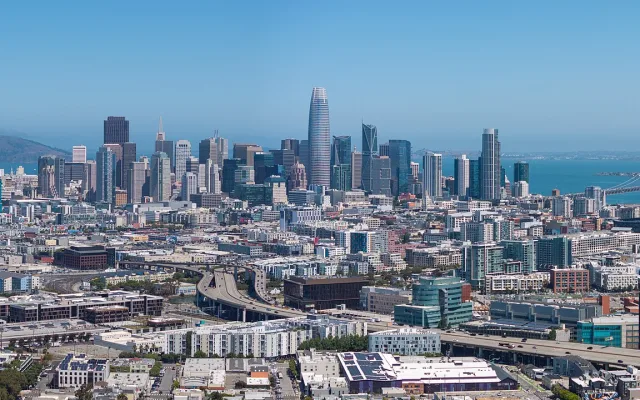
San Francisco spreads across a scenic peninsula between the Pacific and the bay of the same name, occupying the hilly tip of northern California. This compact but densely built city, with its wooden Victorian houses, steep streets and perpetual banks of fog, long ago became a symbol of technological progress, free thinking and a particular western aesthetic.
History and character of the city
The settlement began in 1776 as a Spanish mission and the Presidio fort. Real explosive growth came with the Gold Rush of 1849: within months the village turned into a bustling port where prospectors gathered from all over the world (the "forty-niners"). The devastating earthquake and fire of 1906 all but erased the centre, but the city rebuilt itself. In the 20th century San Francisco became the cradle of counterculture — from the beats of North Beach to the hippie movement — and by the turn of the millennium the heart of Silicon Valley and the global IT industry.
Main sights
- The Golden Gate Bridge — the orange-red suspension bridge some 2.7 km long, opened in 1937. Passage is free for pedestrians and cyclists. Striking angles open from the Battery Spencer and Marin Headlands viewpoints on the northern shore.
- Alcatraz — the former maximum-security federal prison on a rocky island in the middle of the bay. The audio tour, with the voices of real guards and inmates, is considered one of the best in the world; tickets including the ferry crossing should be booked in advance.
- Fisherman's Wharf — the historic port quarter. A colony of sea lions has settled on Pier 39, and the famous clam chowder and Dungeness crab are served here.
- Chinatown — the oldest and largest Chinese quarter in North America, dating from the middle of the 19th century. The Dragon Gate on Grant Avenue, tea shops, temples and a fortune cookie factory.
- The cable cars — the only working city transport system in the world running on a moving cable, in operation since 1873 and recognised as a national landmark.
- Golden Gate Park — an extensive green space wider than Central Park in New York, holding a Japanese tea garden, the de Young Museum, a flower conservatory and a herd of bison.
- Haight-Ashbury — the crossroads that became the centre of the Summer of Love in 1967; today it holds vintage shops, bookshops and music bars.
Districts
Every quarter lives by its own atmosphere. North Beach is the Italian corner, with coffee houses and the City Lights bookshop. The Mission combines Latin American colour, murals and fashionable places. The Castro is the historic centre of the LGBT community. The businesslike Financial District contrasts with bohemian Hayes Valley, and from the hills of Nob Hill and Russian Hill (with the famously winding Lombard Street) panoramas of the bay open up.
Food
The city's gastronomy reflects its many nationalities. Its calling card is sourdough bread, whose recipe is linked to the local climate. Fresh seafood is essential, along with the Mission burrito invented in the district of the same name, dim sum and noodles in Chinatown, and any number of taquerias and third-wave coffee houses.
Transport
The Muni city network combines buses, trams and the metro; the easiest way to pay is with a Clipper card. The BART rapid transit system links the centre with the airport, Oakland and the suburbs across the bay. Taxis and ride-sharing services operate, but at rush hour they are expensive and stuck in traffic on the narrow hilly streets.
When to go, and practical advice
The climate here is unexpectedly cool for California. In summer thick fog rolls in off the ocean (locals affectionately call it "Karl"), and the warmest, clearest days fall in September and October. Even at the height of the season a warm jacket comes in handy — the difference in temperature between the sunny and the foggy sides of the city is noticeable. Comfortable shoes are essential: the climbs can be steep.
How long to allow
About four days is the optimum. Devote the first to the centre, the cable cars and Chinatown, the second to the Golden Gate Bridge and the Presidio, the third to Alcatraz island and Fisherman's Wharf, the fourth to the parks, the museums and characterful quarters such as the Mission and Haight-Ashbury. With a spare day it is worth heading out to the redwoods of Muir Woods or to the Napa wine valley.
Photos