Description
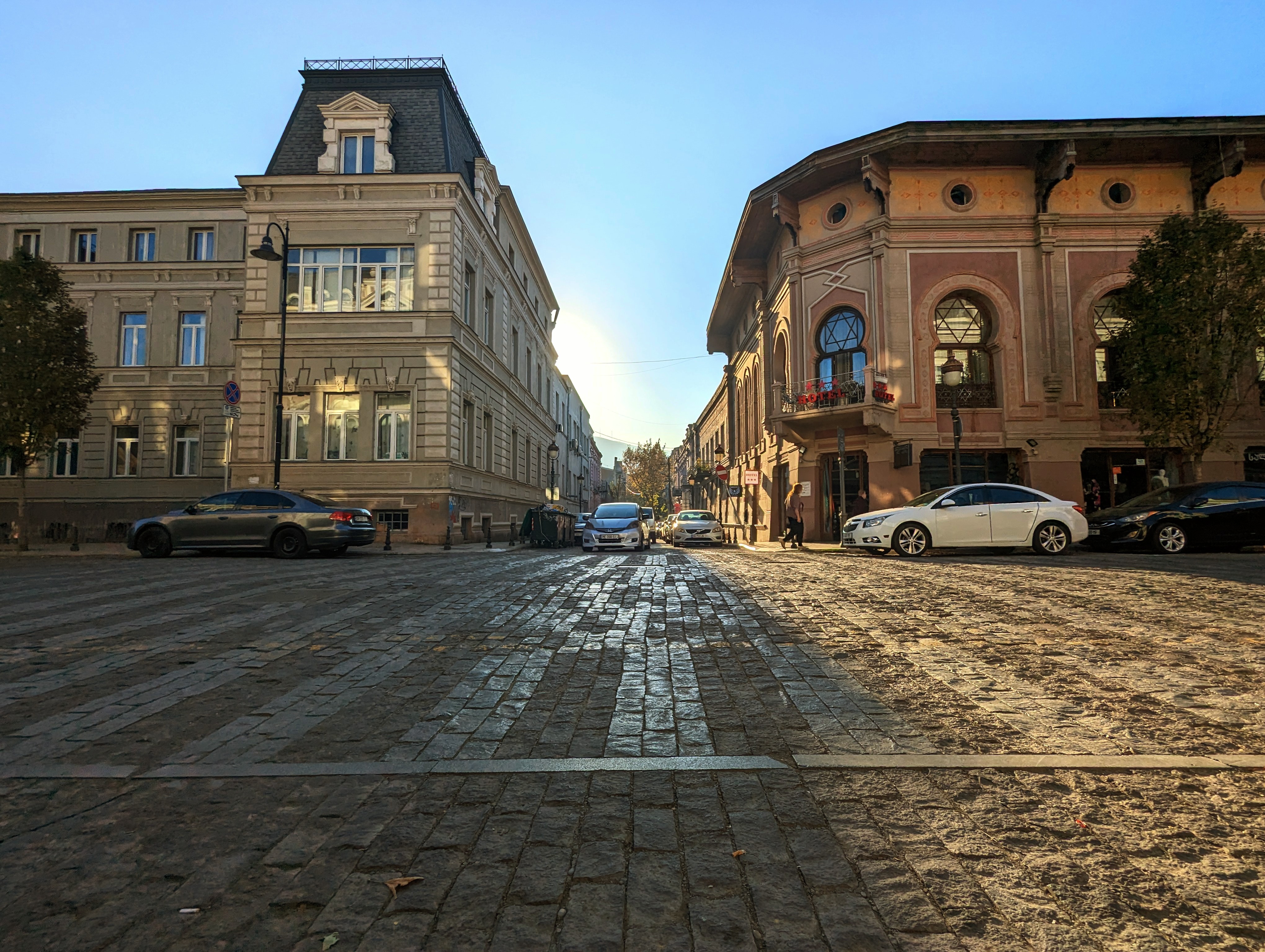
Tbilisi is the capital of Georgia, known for its historic landmarks, including Narikala Fortress, sulfur bathhouses and houses decorated with carved wooden balconies.
Wiki
Tbilisi is the capital of Georgia and its main cultural and economic center, spread along the narrow valley of the Kura River (Mtkvari) at the foot of the Trialeti Range. With around 1.2 million residents, a warm climate, distinctive southern charm and a remarkable density of history, it is one of the most compelling cities in the Caucasus for unhurried exploration.
History and character
According to legend, the city was founded in the 5th century by King Vakhtang Gorgasali, whose hunting falcon fell into a hot spring — giving the place its name, "Tbili" ("warm"). Over a millennium and a half, Tbilisi endured Persian, Arab, Mongol and Ottoman invasions, served as capital of the Kingdom of Georgia, and later became a provincial center of the Russian Empire and of Soviet Georgia. This history explains the city's unusual architectural mix: Byzantine churches, oriental bathhouses, houses with lacy wooden balconies, grand Art Nouveau mansions along Rustaveli Avenue, and monumental Soviet-era buildings all stand within a single block of one another.
Main sights
- Old Tbilisi (Dzveli Tbilisi) — the heart of the capital: a maze of crooked streets, colorful facades, famous carved balconies and courtyards. Wandering here without a plan is often the most rewarding way to see it.
- Narikala Fortress — the city's oldest citadel, first built in the 4th century. Its walls offer the best panorama of the tiled rooftops and the river; you can reach it on foot or by cable car from Rike Park.
- Abanotubani — the sulfur bathhouse district, marked by squat brick domes. The thermal waters have been used here since antiquity; the most striking building is the Orbeliani Baths, with a tiled facade in Persian style.
- Mother of Kartli (Kartlis Deda) — a twenty-meter aluminum female figure from 1958 standing on Sololaki Hill, holding a bowl of wine for friends in one hand and a sword for enemies in the other.
- Metekhi — a 13th-century church on a cliff above the Kura, next to the equestrian statue of Vakhtang Gorgasali.
- Sioni and Anchiskhati — the oldest working churches, witnesses to medieval Tbilisi.
- Tsminda Sameba (Holy Trinity Cathedral) — a grand cathedral completed in 2004, one of the largest Orthodox churches in the region, dominating the right bank.
- Mtatsminda — the "Holy Mountain," home to an amusement park, a Ferris wheel and a historic funicular; at the top is a pantheon where notable figures of Georgian culture are buried.
- Bridge of Peace, a glass-and-steel crossing designed by architect Michele De Lucchi, links the Old Town with the modern Rike Park.
Neighborhoods and atmosphere
The pedestrian streets Shardeni and Erekle II, lined with cafes and galleries, form the center of evening life. Bohemian Sololaki and Mtatsminda retain the spirit of the old aristocratic city, while the former industrial site Fabrika has turned into a trendy space with workshops and bars. Rustaveli Avenue, home to the opera house, the National Museum and the parliament, remains the city's grand central axis.
Cuisine
Georgian food is reason enough to visit on its own. Be sure to try juicy khinkali (dumplings filled with meat broth), cheese-filled khachapuri flatbread (the Adjarian version comes boat-shaped, topped with an egg), eggplant with walnut paste, lobio, mtsvadi skewers, and the tangy tkemali and satsebeli sauces. All of it is typically accompanied by homemade qvevri wine and grape chacha. A feast led by a toastmaster, or tamada, is a central part of local culture.
Practical tips
- When to go. The best times are late spring (April–June) and golden autumn (September–October), with comfortable warmth and no summer heat.
- Getting around. The center is easily walkable; there is also a metro, buses and minibuses, paid with a Metromoney card. Taxis and ride-hailing apps are inexpensive.
- Language and money. The currency is the Georgian lari; in tourist areas English is widely understood, and Georgian is the official language.
What to see in 4 days
Four days are enough to get a real feel for the city without rushing. Spend the first day in the Old Town, the bathhouses and Narikala Fortress; the second on Rustaveli Avenue, museums and Mtatsminda; the third on the cathedrals, the modern riverside and colorful markets. On the fourth day, take a trip to Mtskheta (20 km away) — the ancient, UNESCO-protected former capital, home to the 6th-century Jvari Monastery and Svetitskhoveli Cathedral, at the confluence of the Kura and Aragvi rivers.