 Города и дороги
Description
The spiritual capital of the Turkic world: Timur's unfinished mausoleum of Khoja Ahmed Yasawi, a UNESCO World Heritage Site in southern Kazakhstan.
Wiki
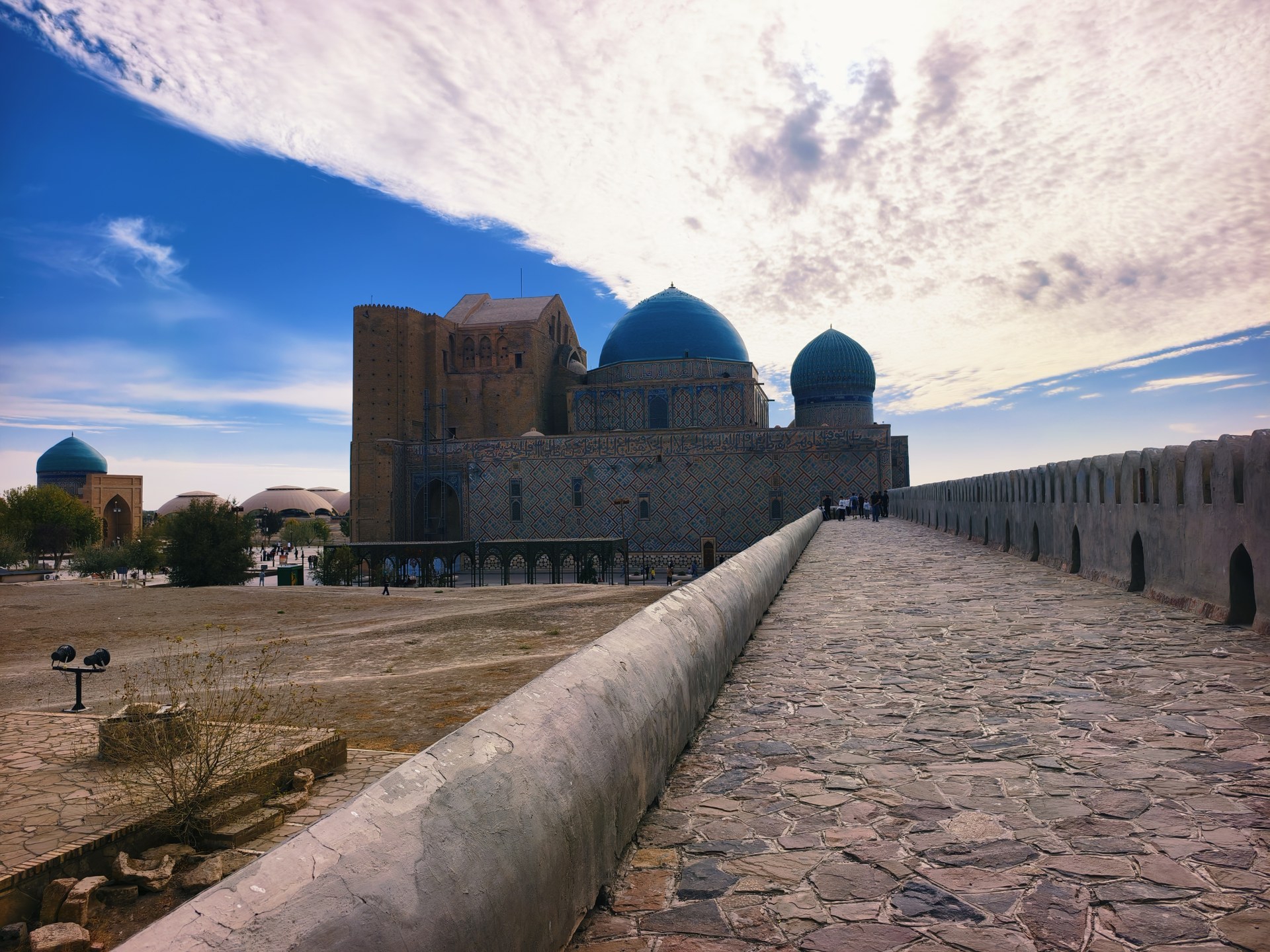
Turkestan is the southernmost of Kazakhstan's must-see cities for anyone interested in Central Asian heritage. People come for a single masterpiece — the mausoleum of Khoja Ahmed Yasawi, a Timurid building on a par with anything in Samarkand or Bukhara, but with a fraction of the visitors.
What is actually worth seeing
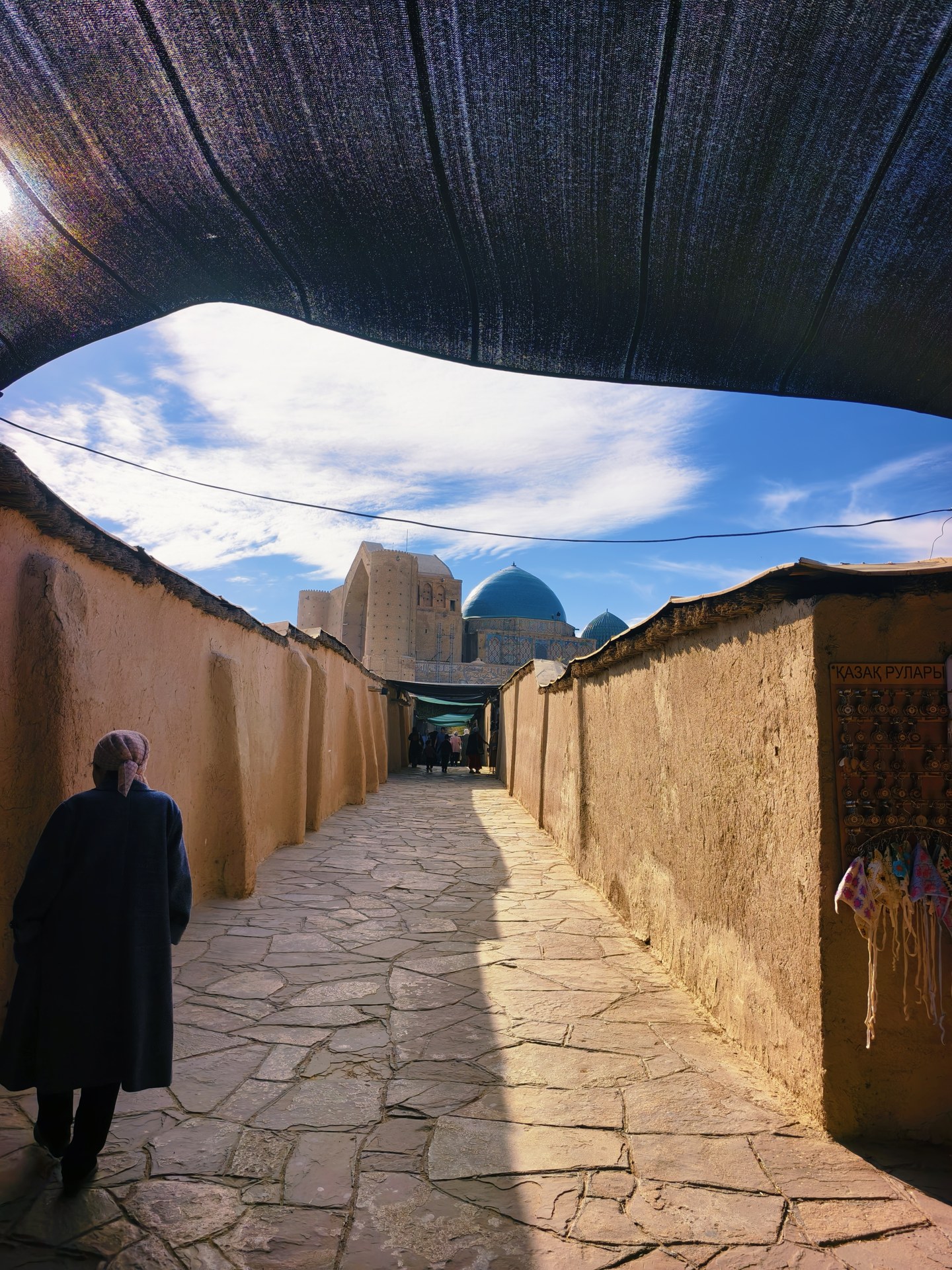
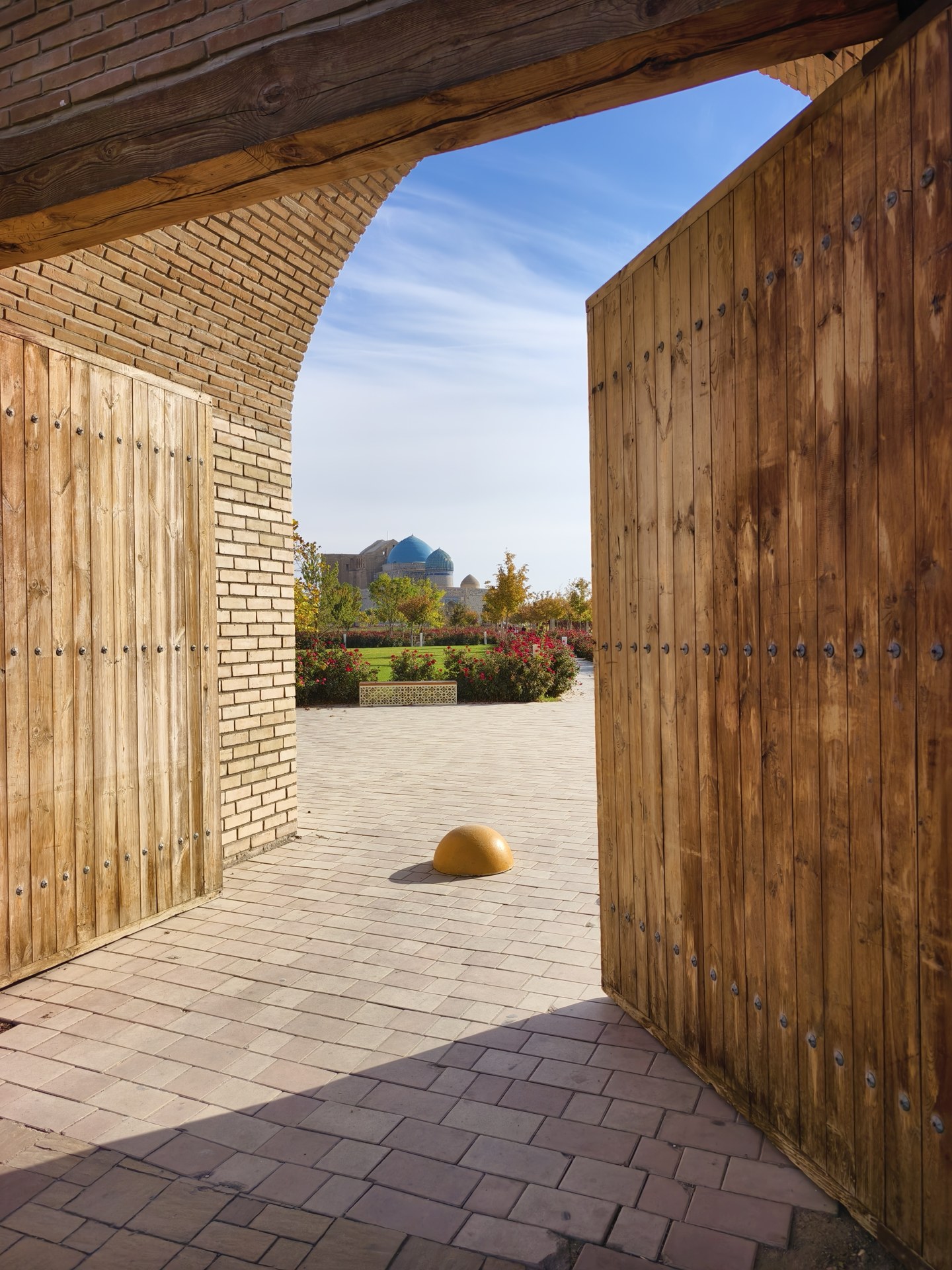
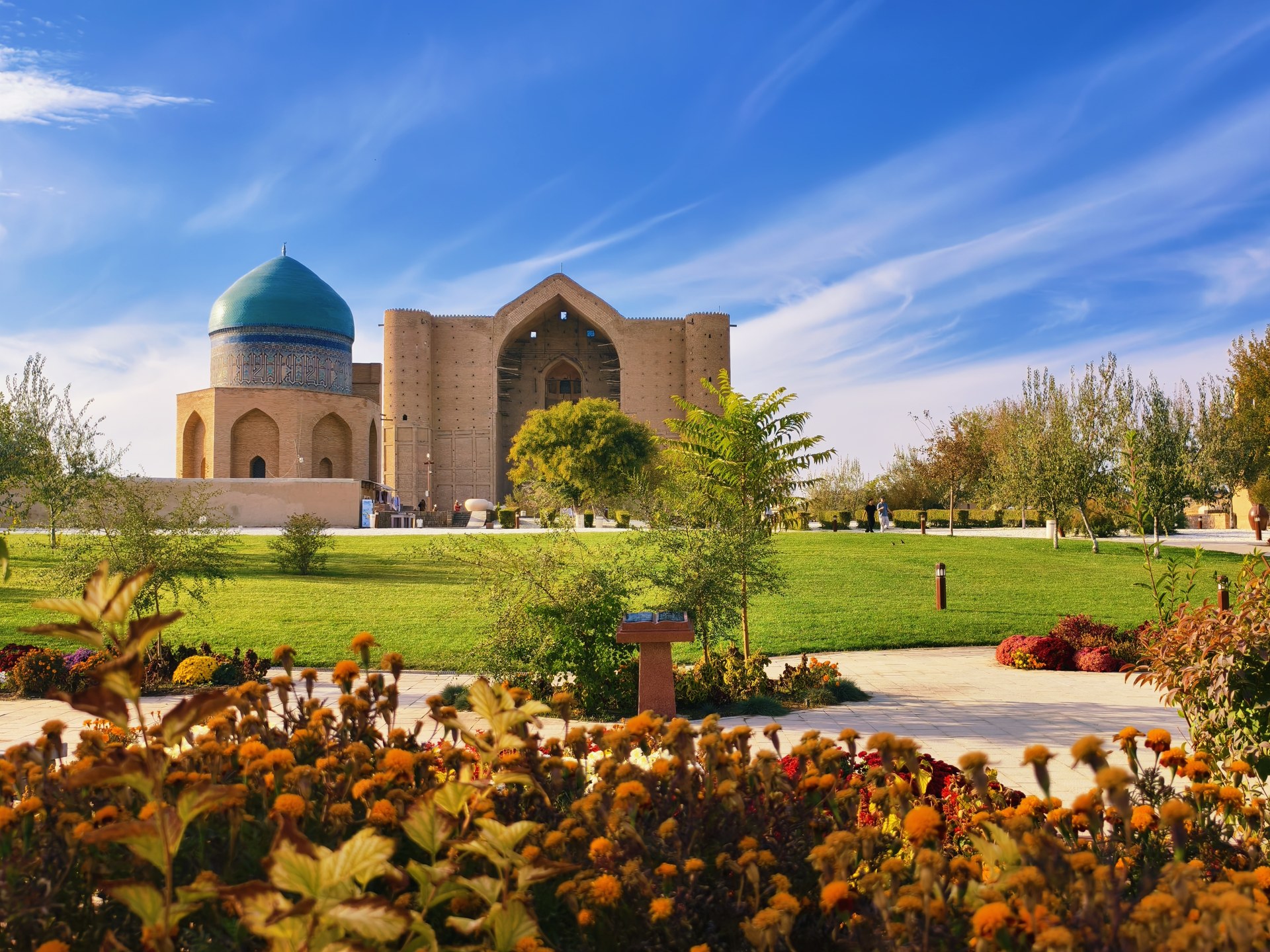
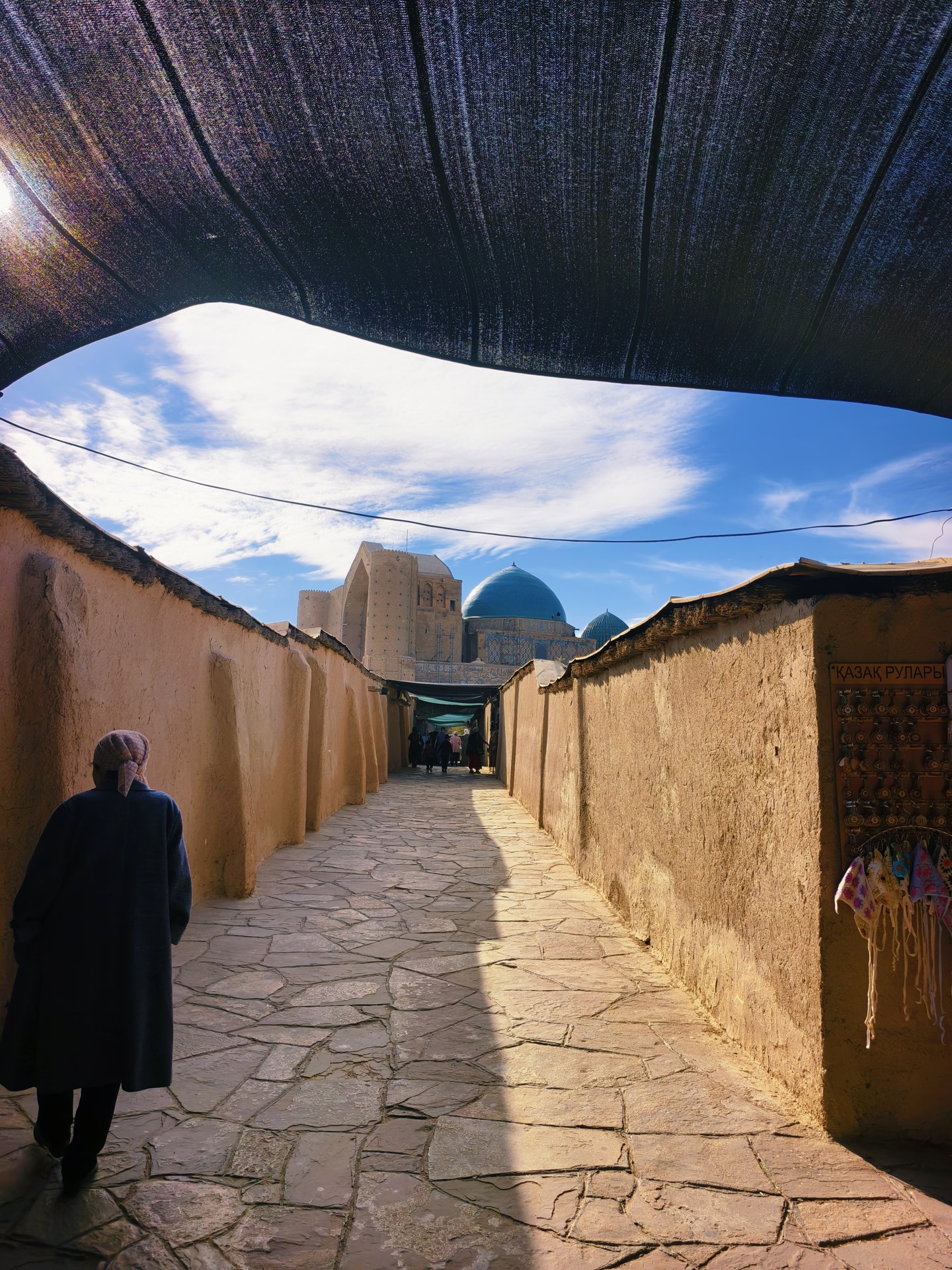
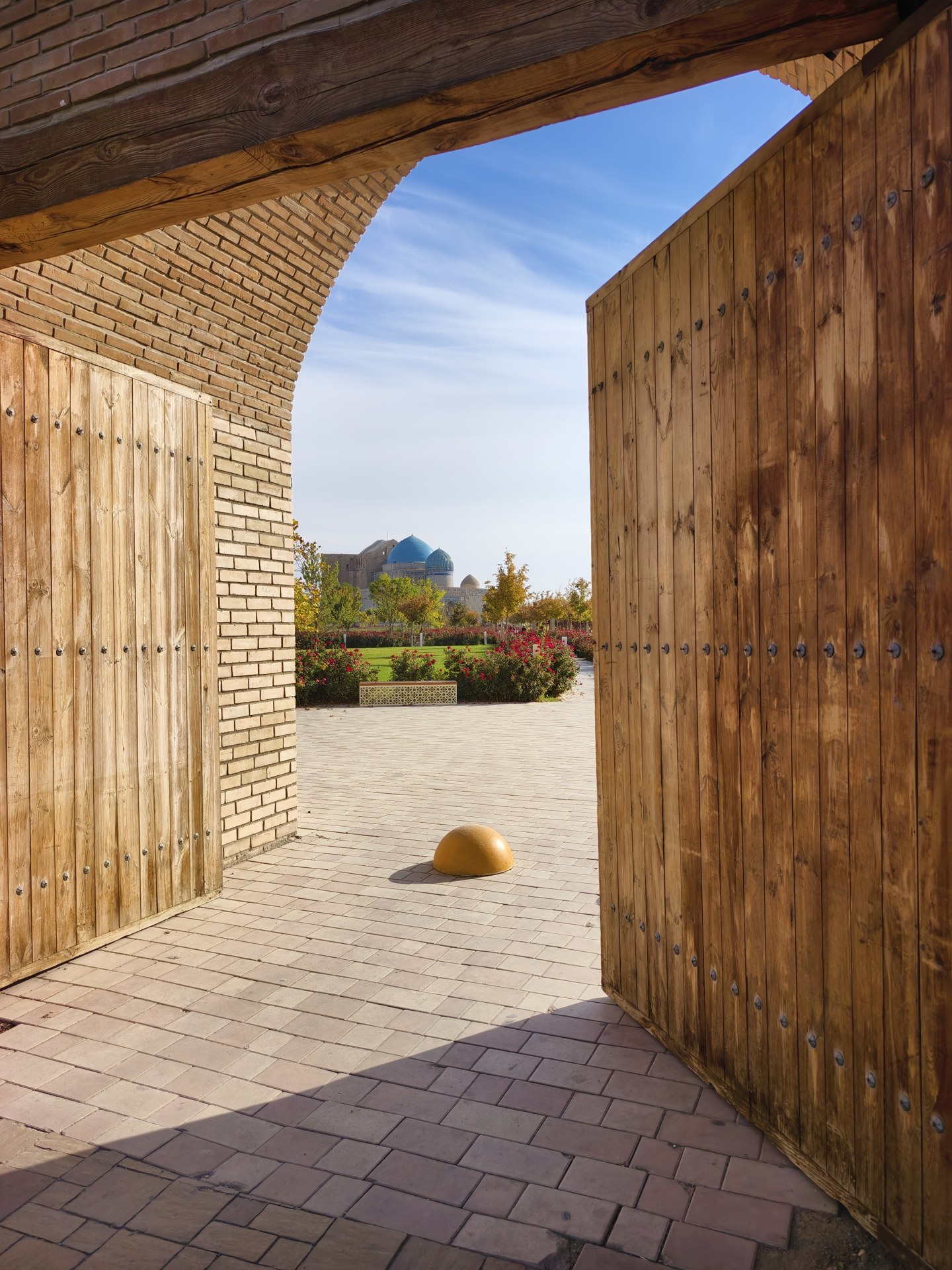
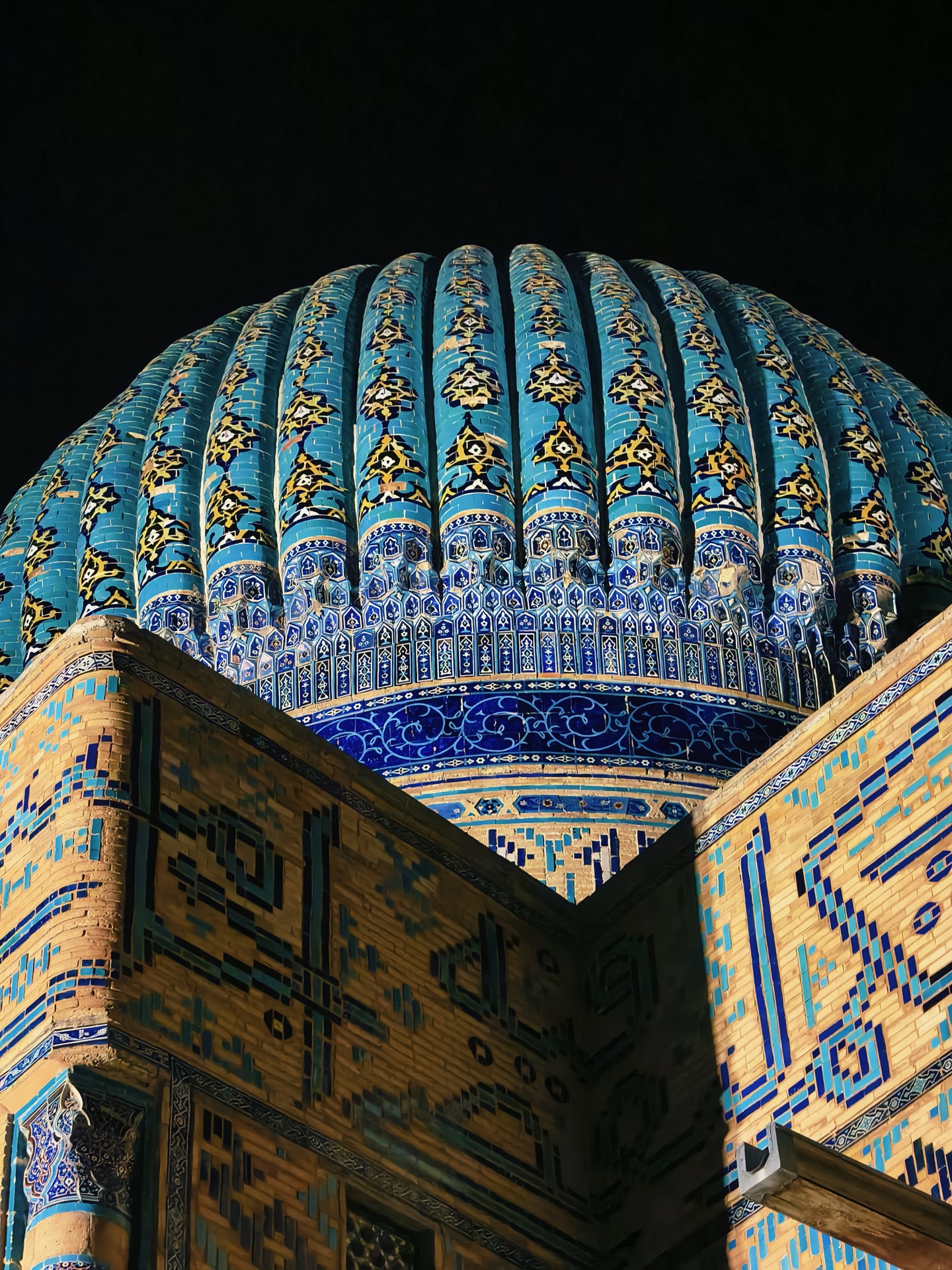
The reason to come is the mausoleum of Khoja Ahmed Yasawi. This is not just another mausoleum: it was commissioned by Timur himself, it was never finished — the wooden scaffolding beams at the entrance were deliberately left in place — and it carries the largest brick dome in the region, with turquoise tilework across the rear wall. Inside are the Tai Kazan, a two-tonne bronze cauldron for ritual water, the tombs of Kazakh khans, and dozens of gravestones belonging to nobles who spent centuries competing to be buried near the saint. An hour and a half covers the building itself, but leave time to walk right round the outside: the texture of the walls and the contrast between the tiled and the bare sections are the most interesting thing about it.
Next to the mausoleum, go down into the Hilvet underground mosque — a cramped cell built for religious retreat — and walk the excavations of the medieval town. It is all compact, within one pedestrian zone.
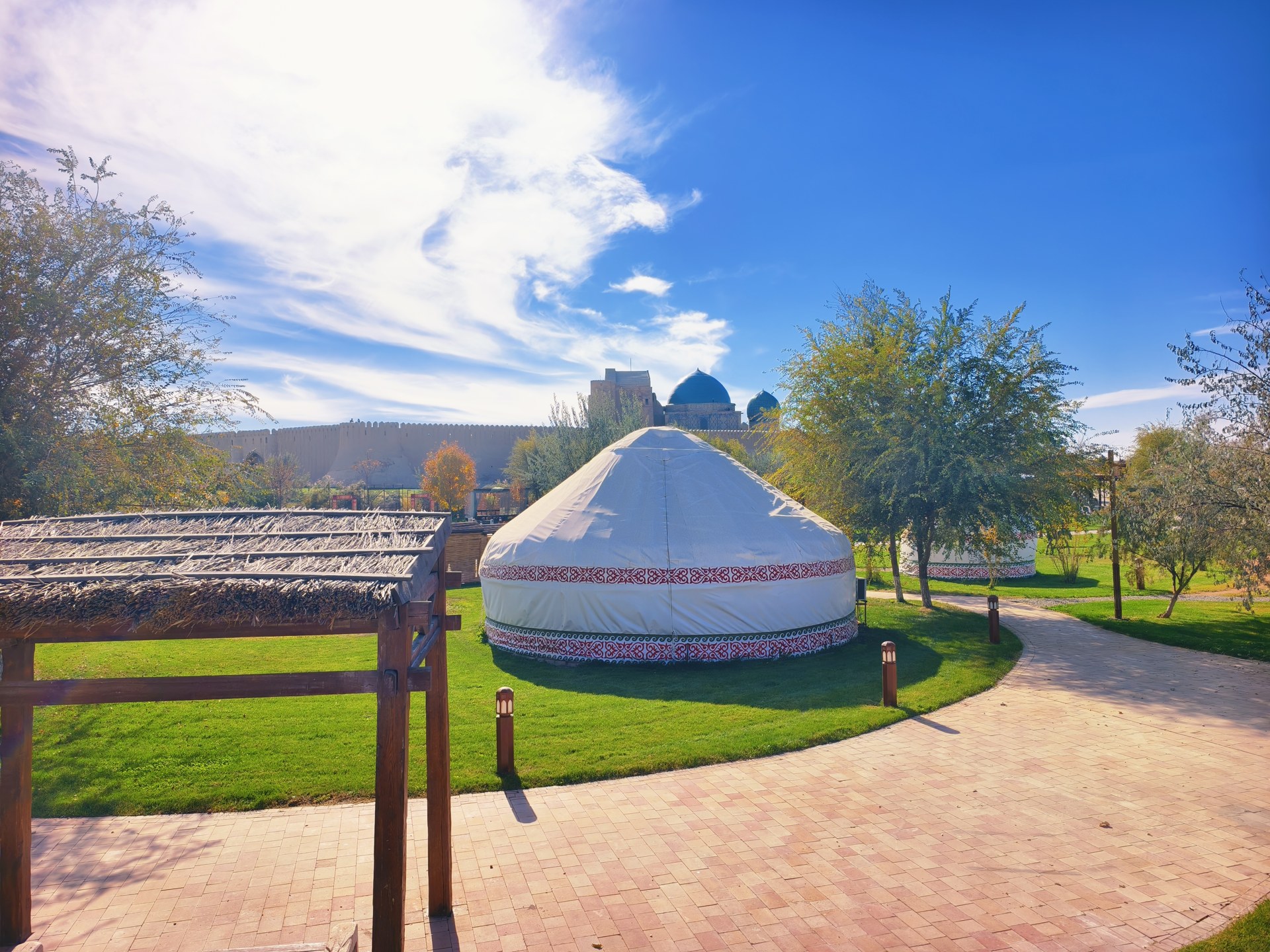
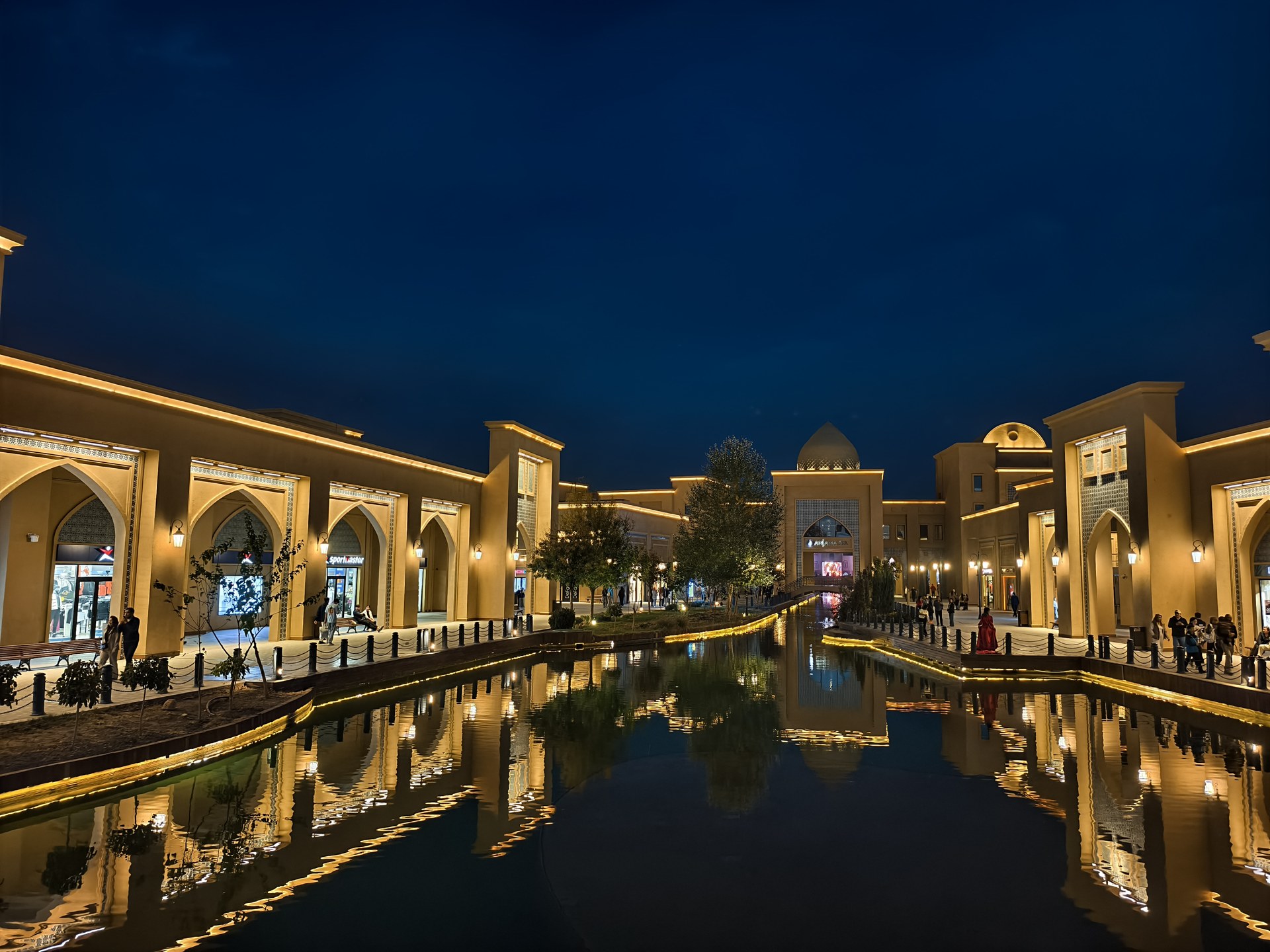
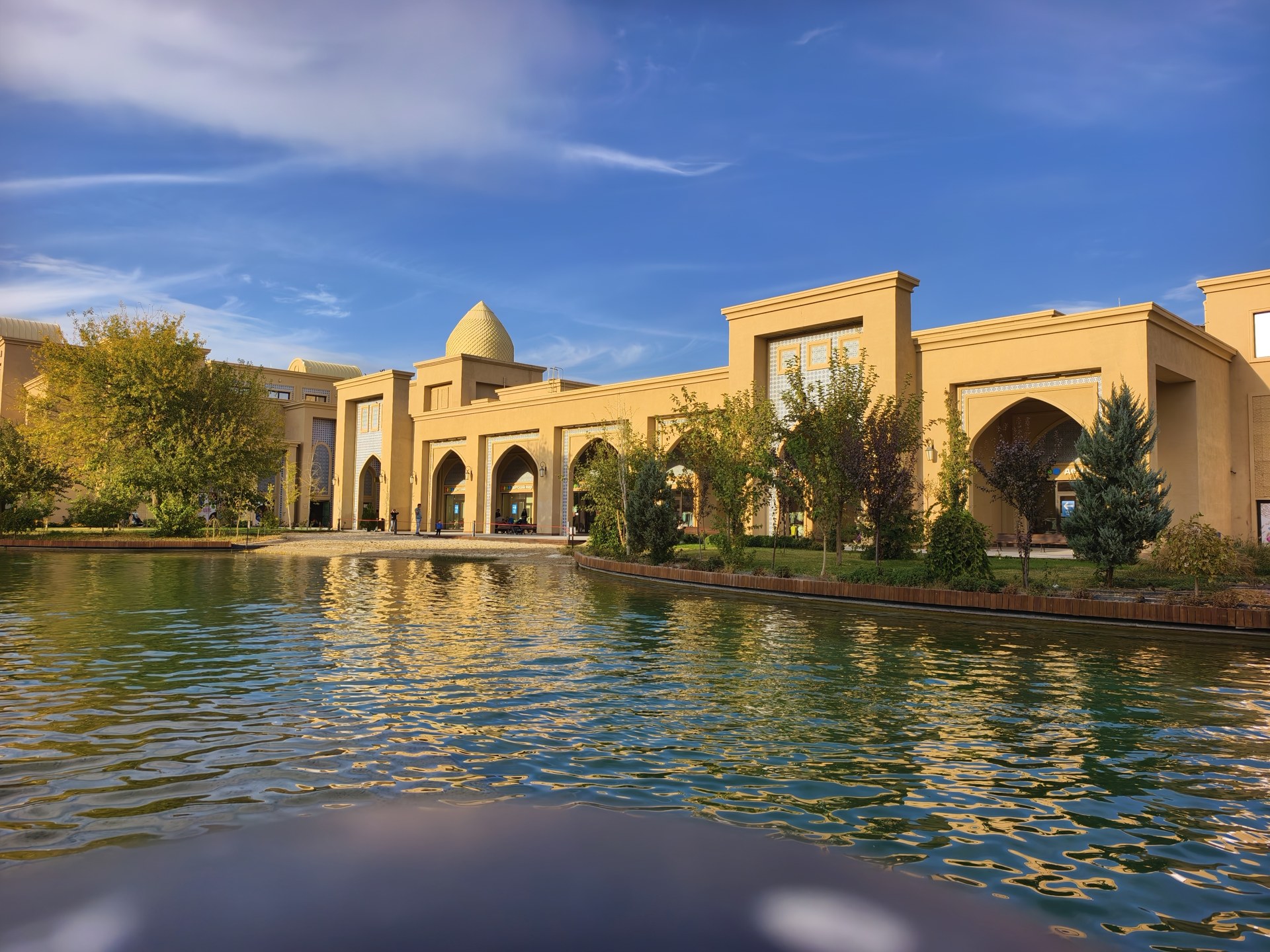
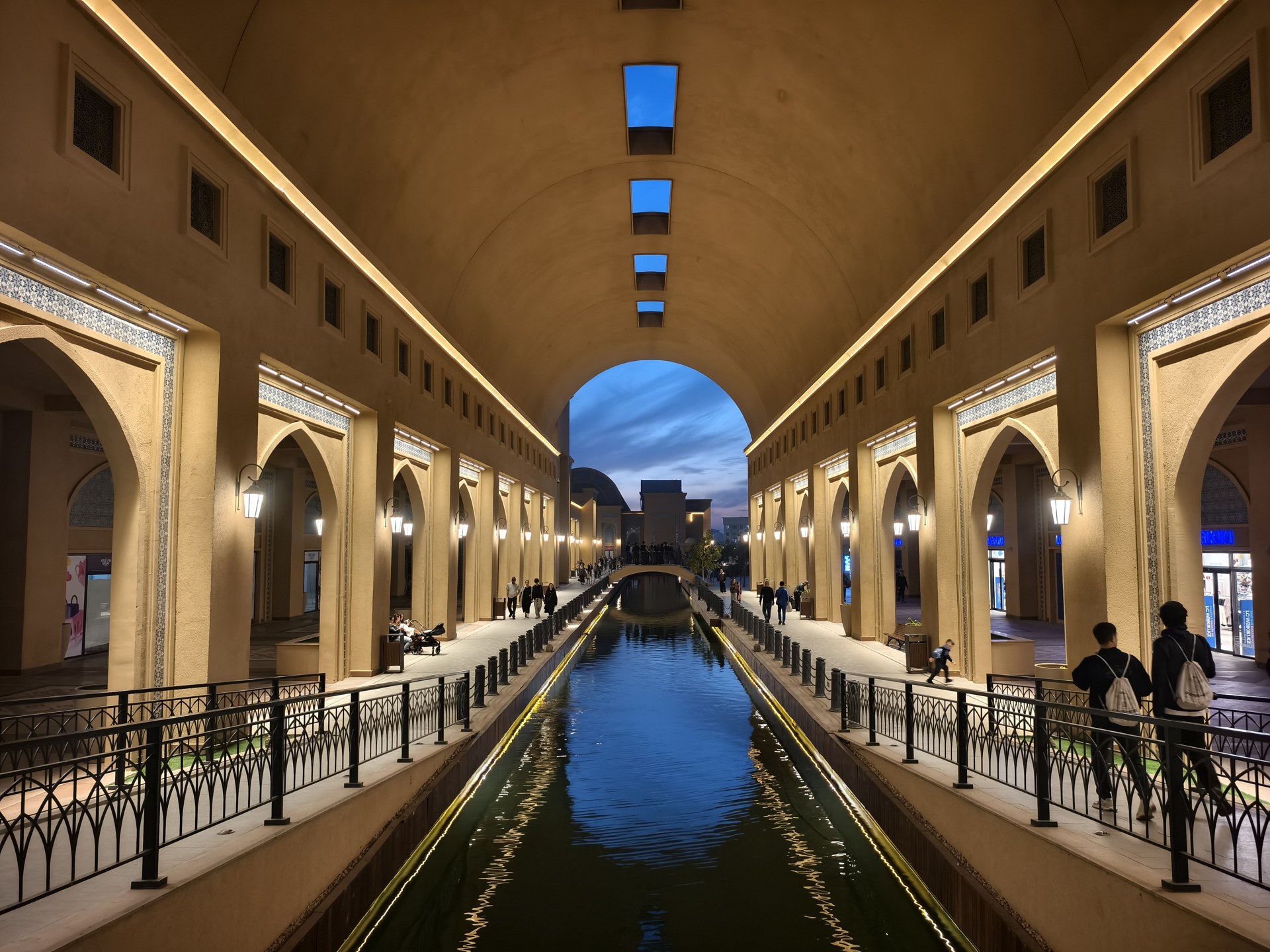
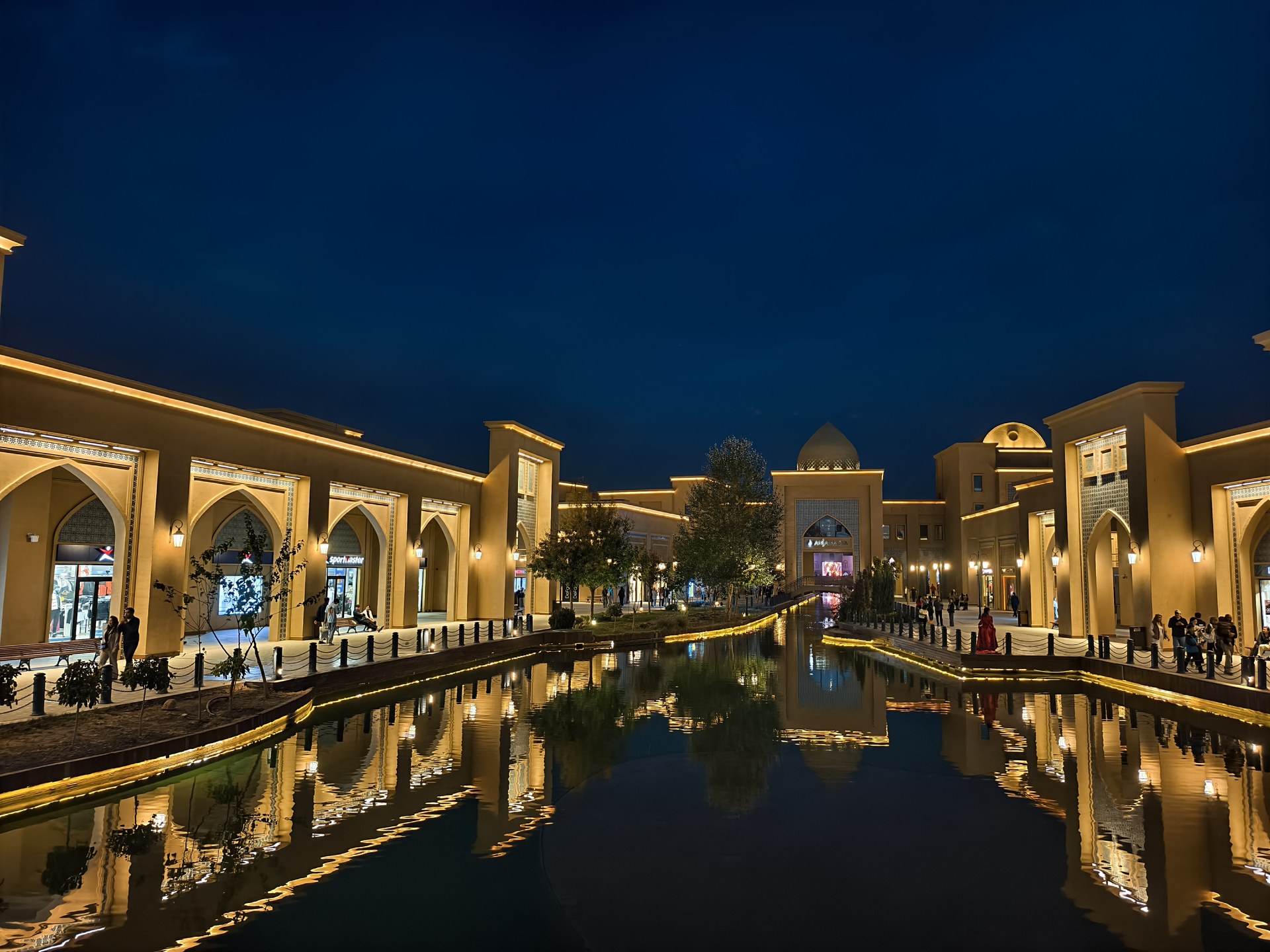
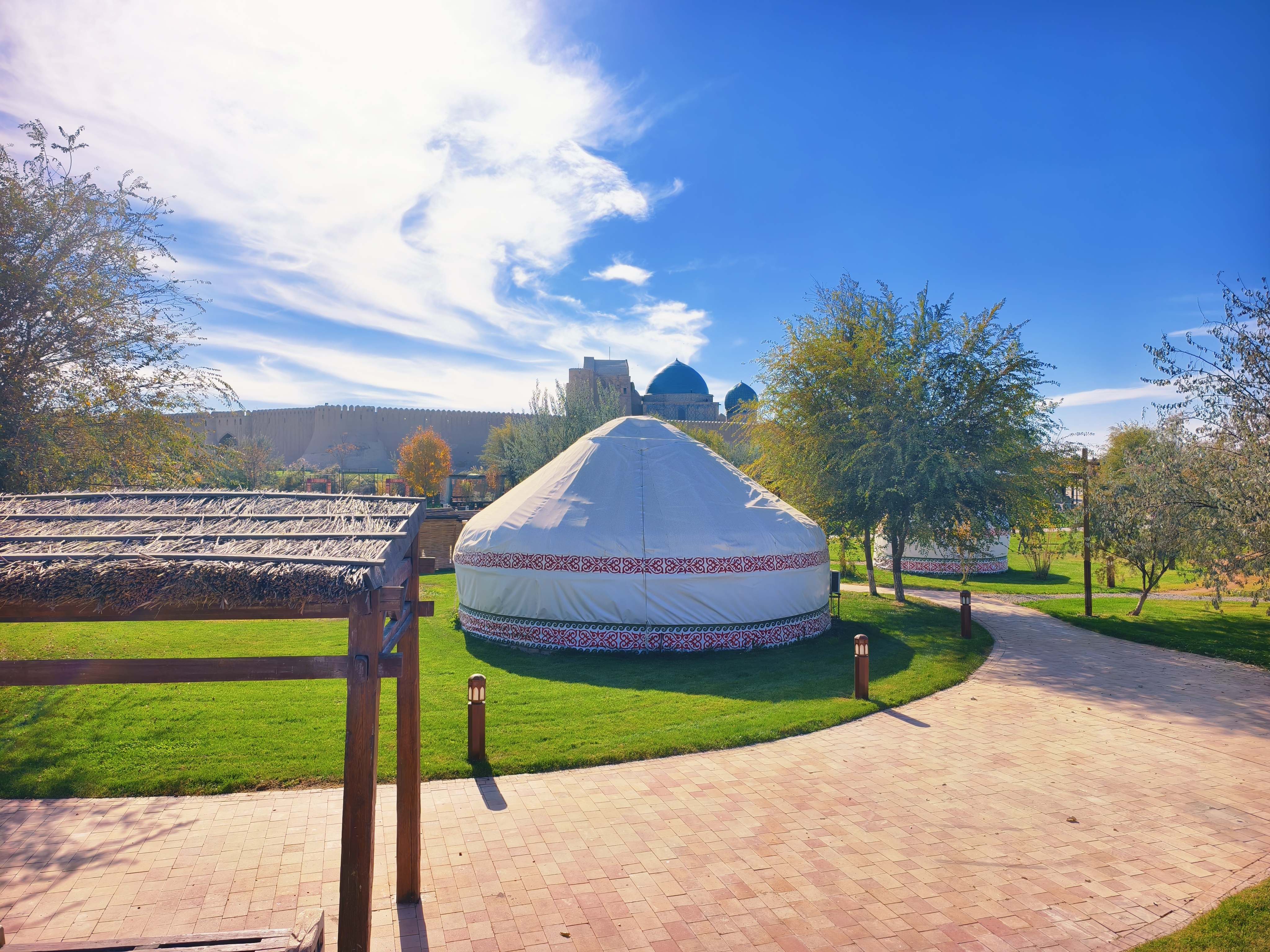
A separate matter is the Caravanserai tourist complex, built in the 2020s: hotels, fountains, restaurants and an evening show with a "flying" theatre and multimedia. It is pure state-funded pastiche. As an evening's entertainment it is fine, especially with children, but do not expect authenticity. Keep your expectations separate: the old mausoleum and the new complex are two different Turkestans.
How many days, and what is nearby
The city itself takes half a day. Two days make sense if you add side trips:
- Arystan-Bab (about 70 km) — the mausoleum of Yasawi's teacher. By tradition the pilgrimage starts here and only then goes to Turkestan; if you want to do it "properly", follow that order.
- Otrar (about 60 km) — the ruins of the city the Mongols wiped out after a siege in 1219–1220. It was the killing of Genghis Khan's caravan and envoys here that triggered the invasion. You need an archaeologist's eye: these are excavated foundations in the steppe, not picture-postcard walls. It is usually combined with Arystan-Bab in one trip.
- Sayram (about 170 km, effectively a suburb of Shymkent) — Yasawi's birthplace, an old settlement with several mausoleums.
Without a car the logistics are the obstacle: it is easier to hire a taxi with a driver for the day, or arrange a tour locally, than to piece together lifts.
Getting there and getting around
- Train is the most practical option: Turkestan sits on the main line, and trains from Almaty, Shymkent and Astana all stop here. An overnight train saves you a hotel night.
- Plane — there is an international airport just outside the city with flights from Kazakhstan's larger cities; it is a short taxi ride to the centre.
- From Shymkent (160 km) — regular buses and minibuses, roughly 2–2.5 hours on the highway. Shymkent makes a convenient base and interchange.
Inside the city everything important is clustered around the mausoleum and is walkable. For the market and the station, app-based taxis are cheap.
Where to stay and when to go
It makes sense to stay near the historic core or in the new complex — that puts the mausoleum and the underground mosque within reach and the evening show two steps away. There are budget guesthouses in town as well, and they are cheap by any standard.
Southern Kazakhstan is hot and dry. The best time is spring (April–May) and autumn (September–October): comfortable temperatures and soft light for photographs. In summer the afternoons pass +40 °C and walking open ruins becomes an endurance test — carry water and a hat, and plan your walking for morning and evening.
Money, food, practicalities
Prices are low even by Kazakh standards. Try the local food — plov, lagman, tandoor samsa, beshbarmak; a chaikhana near the market is almost always fairer and cheaper than a restaurant in the tourist zone.
Things to bear in mind:
- The mausoleum is a living shrine and place of pilgrimage. Dress modestly (shoulders and knees covered), keep quiet inside, be careful with photography and do not get in the way of people praying.
- Do not reduce the trip to the evening show at the Caravanserai — that alone is not worth hundreds of kilometres. The point is the real mausoleum.
- Carry cash for taxis, the market and small cafés, though cards are accepted more and more widely.
- English is barely spoken; Kazakh and Russian are the working languages, and a translation app makes life much easier.
Photos