Description
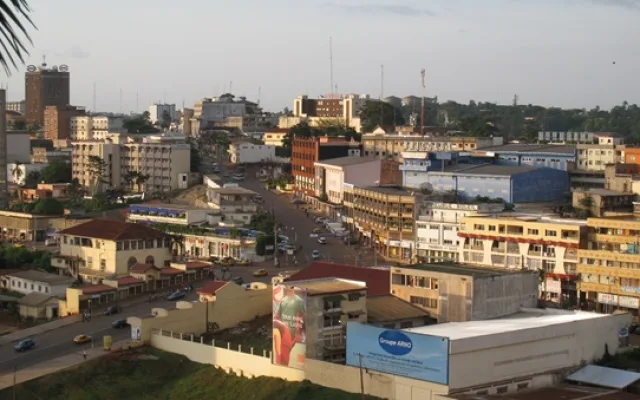
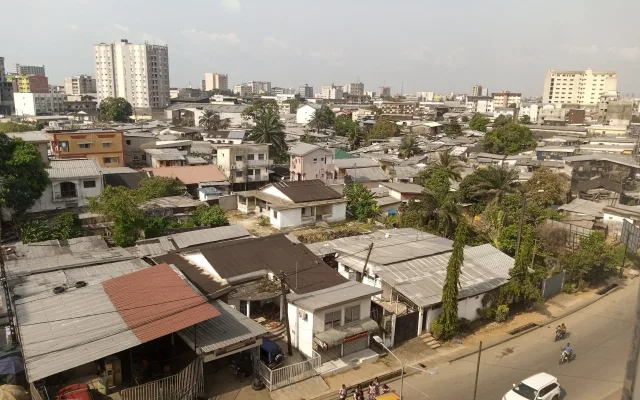
Yaounde is Cameroon's administrative capital, spread over hills at 750 m: the Reunification Monument, the National Museum and primate sanctuaries close by.
Wiki
Yaounde is the administrative capital of Cameroon, a city on hills deep inland that most people reach on business rather than for a holiday. The interest lies less in the city itself than in its role as a base: trips to the western highlands, to Mount Cameroon and to the coast all start here.
What to know about the city
Yaounde sits at around 750 metres among the hills of central Cameroon, which is where its nickname, the "city of seven hills", comes from. The altitude takes the edge off the equatorial heat: daytime temperatures are usually 25–29 °C and the nights are noticeably cooler than in humid, coastal Douala. The metropolitan area is home to some four million people.
The Germans founded a research station here in 1888, when Cameroon was a German protectorate (1884–1916). After the First World War the country was split between French and British administration; independence came in 1960, and in 1961 the English-speaking part joined the French-speaking one. Yaounde remained the political capital, with the government, the embassies and the main universities. Business life and the port are concentrated in Douala, which leaves Yaounde calmer and greener, but also thinner on things to do.
What to see
- Mont Febe (1,073 m) — the hill on the northern edge of town, with a Benedictine monastery and the best panorama of the city. The monastery runs a small museum of Cameroonian art.
- The Reunification Monument — a twisting concrete spiral commemorating the union of French- and English-speaking Cameroon. It is the capital's most recognisable landmark.
- The National Museum of Cameroon — housed in the former presidential palace: archaeology, masks, royal regalia from the country's peoples, and the colonial period.
- Notre-Dame des Victoires Cathedral — the city's principal Catholic church; the Central Mosque stands not far away. Southern Cameroon is largely Christian and the north largely Muslim, and that coexistence is very visible in the capital.
- Boulevard du 20 Mai — the ceremonial avenue where the military parade is held on the national holiday.
- Mfoundi Market — the largest market in Yaounde, noisy and entirely untouristed. For fabric and crafts, head for the neighbouring Mokolo market.
- Mvog-Betsi Zoo — above all a rehabilitation centre for primates: chimpanzees, gorillas and mandrills confiscated from poachers.
- Bois Sainte Anastasie — a small patch of urban forest inside the city where monkeys still hold on.
- Mefou National Park — about 45 km to the south, an open-air primate sanctuary. It is a genuine half-day trip and the best wildlife experience within reach of the capital.
Trips out of the city
- Dschang (around 300 km to the west) — a cool highland town and the centre of Bamileke culture. It is home to the Museum of Cameroonian Civilisations, and to working chefferies, the traditional chiefs' palaces with carved posts and thatched roofs.
- Douala (250 km, about four hours by road or four to five hours on the CamRail train) — the economic capital and main port. The city itself is not a tourist destination, but every road to the coast runs through it.
- Mount Cameroon (4,040 m) — the highest peak in West and Central Africa; the climb takes three to four days and starts from Buea, roughly 70 km from Douala. Nearby lies Limbe, with black volcanic beaches and a botanical garden. One important caveat: both are in the South-West Region, where the Anglophone crisis has continued since 2017, so any trip there should be planned only after checking the current situation.
Food and prices
Cameroonian cooking is filling and hot. The national dish is ndole: stewed bitter leaves with peanut paste and meat or prawns. Also worth trying are eru, a leaf stew served with fufu, poulet DG, chicken with fried plantains, pepper soup, achu, a taro paste with yellow sauce, and soya, the street-side beef skewers. People drink local beer, palm wine and very good Cameroonian coffee.
Lunch in a simple cafe costs $5–10 and dinner in a restaurant $18–35. Shared taxis charge $1–2 per zone, a private ride across town $3–10, and the trip in from the airport $15–20; a litre of petrol is about $1. The currency is the CFA franc, pegged to the euro; cash is needed almost everywhere and only the larger hotels and supermarkets take cards. Prices are as of 2026.
Practicalities
Nsimalen International Airport (NSI) lies 25 km from the centre and is served by Camair-Co, Air France, Brussels Airlines, Royal Air Maroc and Ethiopian Airlines. From Douala the easiest route is the CamRail train: four to five hours, with both day and night departures.
Visas are issued online only: since 2023 applications are accepted exclusively through the government portal evisacam.cm. You will need a hotel booking or an invitation from a host, a return ticket and a passport valid for at least six months. Yellow fever vaccination is compulsory, and malaria is present all year, so prophylaxis and repellent are essential.
When to go
The best time is the dry season from November to March, with temperatures of 20–28 °C and little rain. April to June and September to October bring tropical downpours that turn streets into torrents within minutes. The key date in the city calendar is 20 May, the national holiday, with its parade along the boulevard of the same name.
Check current security advice before travelling: the Far North region is off limits because of Boko Haram, and the North-West and South-West because of the Anglophone conflict. Yaounde itself is calm, but ordinary urban caution in the evening and in crowded markets does no harm.