
Guinea
A West African country of wild Fouta Djallon highlands, untouched waterfalls and the living cultures of the Fula, Malinké and Susu. Guinea is Africa without the crowds, where a traveller meets genuine hospitality and some of the loveliest mountain scenery on the continent. It demands preparation and patience, but repays them with an experience no better-known destination can offer.
Where to go
#Conakry
A loud, sprawling capital on the Kaloum peninsula, where the fourth-largest mosque in Africa and a walk along the Corniche waterfront are the obvious first stops. The city is the jumping-off point for the Iles de Los, and Madina market is where you feel the real rhythm of West African life.
Dalaba
Up in the Futa Djallon highlands, this town trades on cool air and pine forest, which is why people call it Guinea's Switzerland. Come for the Villa Sily and the trek out to Ditinn falls, the highest in the region.
Labe
The commercial hub of the northern highlands and the cultural centre of the Fula people, with a Grand Mosque worth going into. It works well as a base for day runs out to the canyons and remote mountain villages.
Pita
A small town you come to for the Kinkon waterfall and the Kambadaga cascades. It is a good place to see dramatic gorges in a single day and meet the local weavers while you are there.
Nzerekore
The southern gateway, down in the forest region, opening the way to Mount Nimba and the Bossou reserve. Wild chimpanzees live here, and the atmosphere is pure tropical jungle, a long way from the capital's noise.
Kouya
A town close to the capital, known for its markets and its proximity to Mount Gangan. Travellers often use it for the first night after landing, to skip the city chaos and get ready for the long haul north.
What to see
#The highland plateau: Futa Djallon is the main reason to come to Guinea at all if you like trekking. Fula villages with traditional round huts sit tucked among green hills and deep canyons.
Waterfalls: Kinkon drops into a narrow gorge and is at its most spectacular at the end of the rainy season. Where to go next is your call, but the Kambadaga cascades and their natural jacuzzis should not be skipped.
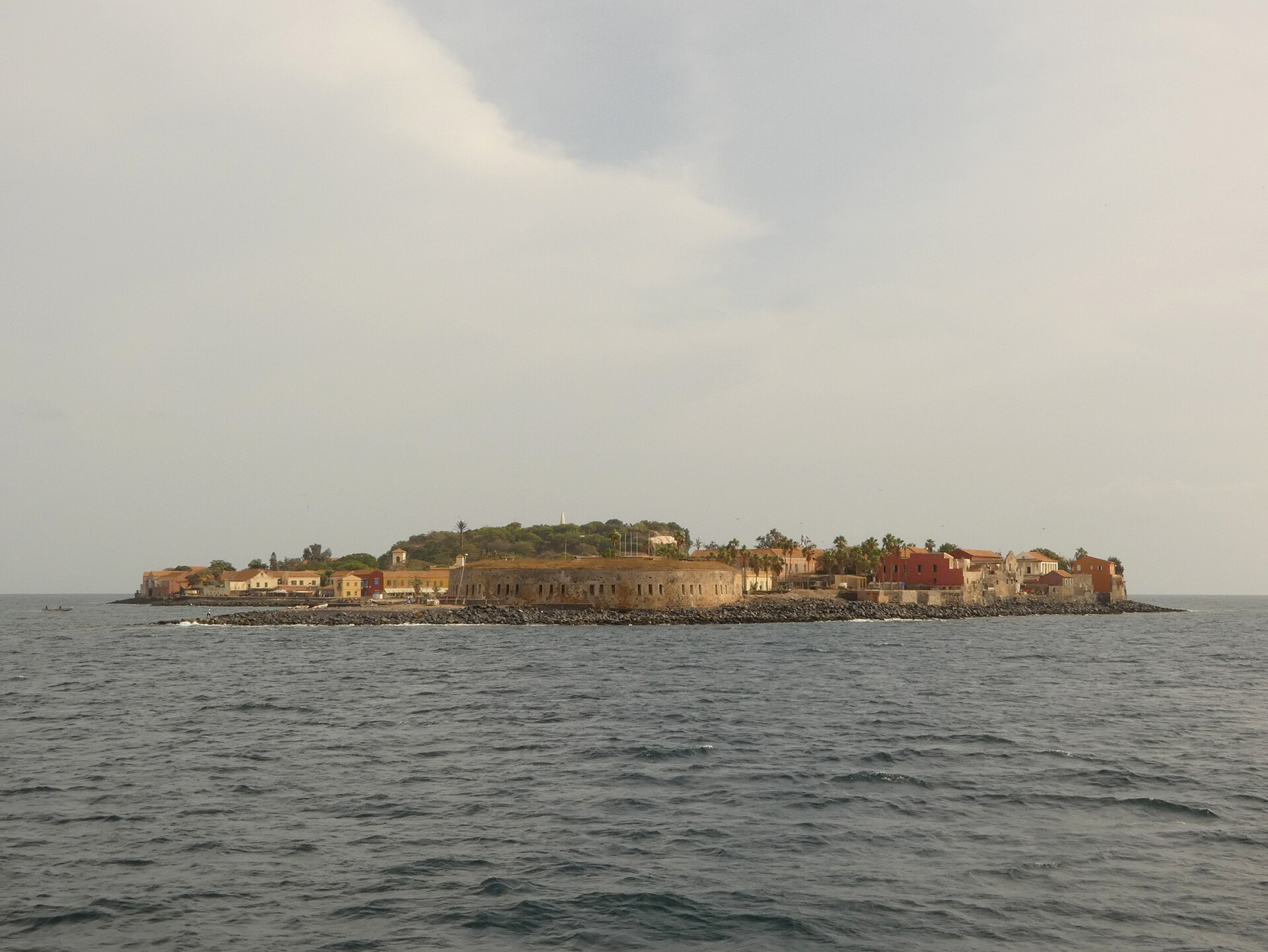
Iles de Los: To get away from dusty Conakry, take a boat out to Kassa or Room. Sandy beaches, fishermen's shacks and the ruins of old colonial buildings under the palms are what you get.
Mount Nimba: The highest point in the country, on the Liberian border, draws people who like their nature rough. The flora and fauna are unique, though entering the reserve needs a special permit.
Doucki trails: Around Doucki you can walk the famous bamboo ladders pinned to sheer cliff faces. It is an extreme but exhilarating route, and it puts the best views over the Fetore valley within a day's reach.
National Museum: Worth a trip in the capital if you want to make sense of the masks and instruments you will see everywhere. The collection is rare and covers Susu and Malinke life before the colonial era.
Prices
#Cash is king: The Guinean franc (GNF) is the only means of payment inside the country. Bring foreign currency, ideally crisp US dollars or euros with no marks on them, and change it at a bank or with a licensed dealer at the markets.
Cards: Banking infrastructure is thin, so plastic is only useful in the bigger hotels in the capital. Withdrawing cash realistically means Conakry or Labe, and the machines there take Visa only, so a Mastercard-only wallet will leave you stuck.
Costs: Guinea is a country of contrasts, where a smart dinner in the capital costs real money while street food costs almost nothing. Haggling is expected everywhere except supermarkets and pharmacies, and especially when hiring transport or buying souvenirs.
Tipping: Restaurants take around five to ten per cent, and a few thousand francs is plenty for a porter or anyone who helps you out. Nobody demands it, but it is good manners here.
| Item | Price (USD) |
|---|---|
| Lunch at a local cafe | 6.00 |
| Street snack | 2.00 |
| Bottle of water 1.5l | 0.80 |
| Cup of coffee | 1.50 |
| Beer in a bar | 2.50 |
| Taxi across town | 4.00 |
| Moto-taxi, short hop | 1.50 |
| Boat ticket to the islands | 2.00 |
| Kilo of mangoes | 1.00 |
| French baguette | 0.50 |
| Museum entry | 5.00 |
| Night in a guesthouse | 25.00 |
| SIM card with data | 3.00 |
| Litre of petrol | 1.20 |
| Bush taxi to Kindia | 10.00 |
Getting around
#City taxis: Conakry runs on yellow cars that follow fixed routes and pick up passengers along the way. If you want to travel alone and go direct, ask for a deplacement and agree the fare before you get in.
Motorbikes: Moto-taxis are the fastest way across Conakry at rush hour. Cheap and convenient, but it takes a certain nerve, since passenger helmets are rarely offered.
Apps: Yango and Heetch both work in Conakry and let you order a car from your phone. That removes the haggling and gives a foreigner a transparent price.
Between cities: Intercity travel means old Peugeot 505 saloons or minivans, known as taxi-brousse. They leave the stations only once every single seat is sold, so departures are a waiting game.
Boats: Motorised pirogues run to the Iles de Los from Boulbinet port, and state-run launches go from the Sandervalia jetty. On public holidays private boat traffic is sometimes restricted for safety.
Getting there and road conditions: Every route in involves a connection, most commonly through Casablanca, Istanbul or Addis Ababa, and from Europe those are the practical hubs; from North America you change once in Europe and once in Africa. Once inside the country everything depends on the roads, whose condition drops sharply in the rains, and dust, potholes and heavy traffic make journeys long.
Where to stay
#In the capital: Conakry has everything from international chains to modest city hotels. Booking online is easiest here, since most of the country's rooms are concentrated in the capital.
Mountain lodgings: In Dalaba and Labe standards are simpler and power and water cuts are common. You will be staying in small guesthouses that often do not appear on the global booking sites at all.
Village stays: Trekking through Futa Djallon usually means community guest huts. That is basic accommodation, a mattress on the floor and facilities outside, but the hospitality is genuine.
A quirk: Guinean hotels rarely have rooms with two separate beds. If you are travelling as a pair, be ready to share one large bed, because the twin format has not caught on here.
Power: Rolling blackouts are frequent, so pick places with their own generator. Even in good hotels the electricity can run on a schedule, so charge everything the moment you get the chance.
Season: From November to April, in the dry months, rooms are easier to find though prices creep up. In the rains some remote lodges close outright and others become effectively unreachable.
What to eat
#The staple: Guinean cooking is built on rice served with thick, fragrant sauces. The most popular is mafe, a filling meat stew in peanut sauce with vegetables and spices stirred through it.
Green sauces: Try riz sauce feuille, rice with a gravy of finely chopped cassava or sweet potato leaves. The flavour is distinctive and takes a moment to get used to, but it is rich and very good.
Hygiene: Drink bottled water only and avoid ice in drinks. Vegetables and fruit bought at the market should be washed thoroughly or peeled before you eat them.
Snacks: Fried plantain, beignet doughnuts and roasted peanuts are sold on every city street. It is the cheap and cheerful way to keep going when a proper meal is still hours off.
Drinks: Locals love bissap, a cold hibiscus infusion, and fiery ginger juice. Very strong, very sweet tea is also everywhere, brewed in tiny pots right there on the pavement.
Seafood: Along the coast and on the Iles de Los there is always freshly caught fish on the grill. It comes with rice or fried cassava and a generous hand with the local hot spices.
Safety
#On the street: Guinea is friendly on the whole, but Conakry calls for some care. Try not to walk alone after dark and stay out of unlit side streets, particularly around the markets.
Health: Malaria is present across the whole country, so taking prophylaxis is genuinely important. Use repellent, cover up in the evening and sleep under a net.
Valuables: Do not display expensive kit, large amounts of cash or gold jewellery. In crowds, wear your backpack on your front so you are not the easiest target in the street.
Checkpoints: Roadblocks where soldiers or police check documents are common. Stay polite and calm, carry a photocopy of your passport and leave the original in the safe.
Traffic: City driving is chaotic and the rules are loosely observed. Whether you hire a car with a driver or take taxis, expect sudden manoeuvres and jams, and build extra time into every plan.
Getting help: If something goes wrong, hotel security staff and bank employees are the practical first port of call. Have your insurer's contact details written down before you arrive, and read your own government's travel advisory before booking.
Etiquette and culture
#Greetings: Guineans take greetings extremely seriously. A quick hello reads as rude; the convention is a long exchange about how someone is, their health and their family before you get anywhere near the point.
The right hand: In Guinea's Muslim culture the left hand is considered unclean. Shake hands, eat and pass money with the right hand only, and you avoid giving accidental offence.
Photography: Always ask before pointing a camera at a person or their house. Photographing military installations, government buildings and bridges is flatly forbidden and can get you arrested.
Dress: The country is predominantly Muslim, so dress modestly. Women do not need to cover their hair, but shoulders and knees should be covered, and that applies to men as well.
Village visits: Arriving in a Futa Djallon village, it is good form to bring the elder a small gift, tea or kola nuts. Do not hand money or sweets straight to children; it only encourages begging.
Music: Guinea's musical tradition, and its djembe playing in particular, is famous well beyond its borders. If you come across a street performance or dancers rehearsing, stop and watch: this is central to local life.
Connectivity
#Languages: French is the official language and the language of schooling and paperwork. Day to day, though, people speak Pular, Susu or Malinke, and English is not widely understood, so a little French goes a long way.
Mobile: Local SIM cards are sold at the airport and in Orange and MTN shops. Orange has the better coverage nationally, which matters if you are heading out of the capital into the mountains.
Internet: 4G in Conakry is fine for messaging, but the signal often disappears outside the city. Hotel Wi-Fi tends to be slow, so do not plan on anything heavy.
Messaging: WhatsApp is the backbone of communication in Guinea. Rooms are booked on it, guides are arranged on it, everyday business runs through it. Save every contact you need there before you travel.
Gestures: If you have no French, animated gestures and a smile will get you through most situations. Guineans are patient with foreigners and will genuinely try to work out what you need.
Offline maps: Download Guinea's maps to your phone before you go. Navigating the cities is hard because there are almost no street signs and paper maps are difficult to find.
Phrasebook
#| English | French | Pronunciation |
|---|---|---|
| Good day | Bonjour | bon-ZHOOR |
| How are you? | Ça va? | sa VA |
| Thank you | Merci | mair-SEE |
| Please | S'il vous plaît | seel voo PLEH |
| How much is it? | C'est combien? | say kom-BYEN |
| Give me a discount | Diminuez le prix | dee-mee-noo-AY luh PREE |
| That's too expensive | C'est trop cher | say troh SHAIR |
| Where is the toilet? | Où sont les toilettes? | oo son lay twa-LET |
| Help me | Aidez-moi | ay-day MWA |
| I'm thirsty | J'ai soif | zhay SWAF |
| Chicken with rice | Poulet avec riz | poo-LAY a-vek REE |
| Bread | Pain | pan |
| Left | À gauche | a GOSH |
| Right | À droite | a DRWAT |
| Yes / No | Oui / Non | wee / non |
| Goodbye | Au revoir | oh ruh-VWAR |
| Foreigner, white person | Toubab | too-BAB |
| Mate (slang) | Mon gars | mon GA |
| It's all good (slang) | C'est doux | say DOO |
| Grub, food (slang) | La bouffe | la BOOF |
Good to know
#Health kit: Bring a full medical kit with you, because decent medicines are hard to find outside the capital. Make sure it covers stomach upsets and includes antiseptics.
Vaccination certificate: A yellow fever certificate is required to enter Guinea and is checked at the border, and the jab has to be done at least ten days before you fly. Check what else your doctor advises well ahead of the trip.
Electricity: The supply is 220 volts with European sockets, so most travellers need no adapter. Voltage spikes are common, though, so use a surge protector when charging anything expensive.
Gifts: If you want to give something to communities you visit, practical items work better than money: French-language books or clothing. Buy notebooks and pens locally, which supports the traders there.
Clothing: Trekking in the highlands needs sturdy boots with real grip and a light windproof layer, since the nights at altitude are cool. Add a rain shell if you are travelling in the shoulder season.
Time: Guinea runs on GMT, UTC+0, with no seasonal change. Factor that in when planning calls home and when arranging times with local guides.
Frequently asked questions
#A yellow fever certificate is mandatory for entry and is genuinely checked. Doctors also strongly recommend hepatitis A and B and typhoid, plus starting malaria prophylaxis before you travel.
Every routing involves a connection at a major international hub. The most practical are Casablanca, Istanbul and Addis Ababa, served into Conakry by Royal Air Maroc, Turkish Airlines and Ethiopian Airlines. Total journey time runs from about 13 to 18 hours depending on the hub and the layover.
Bring cash US dollars or euros in new, unmarked notes and change them into Guinean francs at a bank or an exchange office. Cards are of little use outside big hotels, and the few ATMs in Conakry accept Visa only.
The dry season from November to April, when the roads are passable and the malaria risk is at its lowest. November and December are ideal for walking in Futa Djallon, with the waterfalls still full after the rains and the hills at their greenest.
It is reasonably safe if you take normal precautions and avoid wandering the capital at night. The real risks are pickpocketing in crowded places and the state of the roads, so carry document copies and good insurance.
Rice with sauces is the foundation, led by peanut mafe and the cassava-leaf gravy. Markets are the place for mangoes, pineapple and papaya, and the drinks to order are ginger juice or cold bissap.
Shared taxis and minibuses connect the towns, departing only when every seat is filled. It is cheap but slow, and between the wait and the battered roads a single leg can eat a whole day.
If Futa Djallon is what you came for, yes. The plateau delivers canyons, Fula villages, the Kinkon and Kambadaga waterfalls and the bamboo ladders at Doucki, none of which see many visitors.
Yes, but with restrictions. Registration is mandatory for a drone of any weight. Since 2021 (joint Defence and Transport communiqué) any flight is prohibited without authorisation, and drones must be registered with the Air Force staff and ANNA. Violations mean confiscation and prosecution. Rules for other countries are in the drone ranking by country.
Updated
The data on this page goes out of date. Visa rules and permitted stays, border requirements, prices and budgets, transport and local conditions all change fast, and we do not re-check every page every day. We show the date of our last check where we have one, but before you travel, verify with official sources: the country’s consulate, its immigration service, its e-visa portal and your carrier.