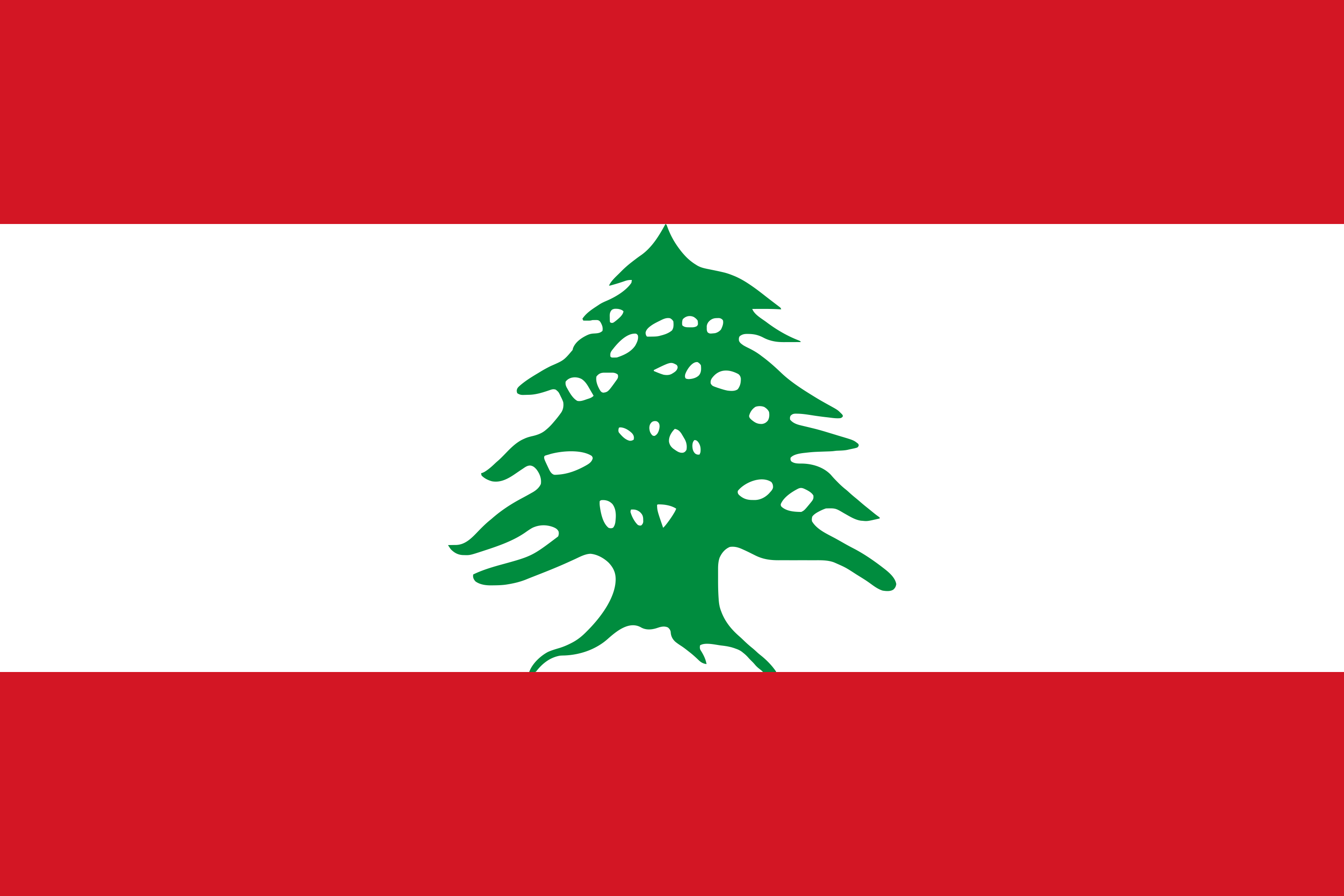
Lebanon
LBA tiny Mediterranean country where Phoenician ruins sit beside Beirut nightlife and cedar forests give way to snow-covered mountains. Lebanon has been in deep economic crisis since 2019, which has made it one of the cheapest countries in the region for visitors with hard currency. The food is reckoned the best in the Middle East and the hospitality is legendary. The security situation is unstable — check the current picture before you go.
Where to go #
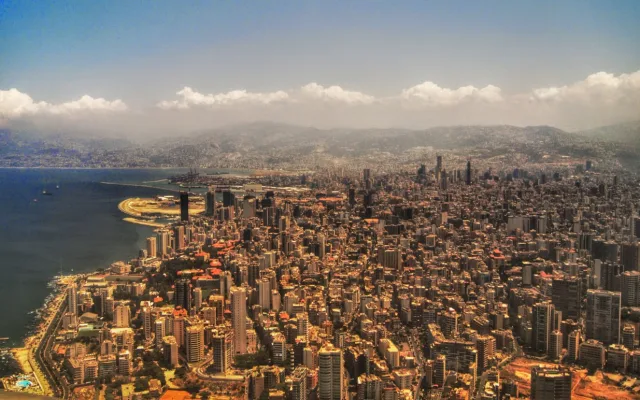
Beirut
The "Paris of the East" — Gemmayzeh nightlife, downtown ruins, mountain cooking and a seafront that has outlived every war.
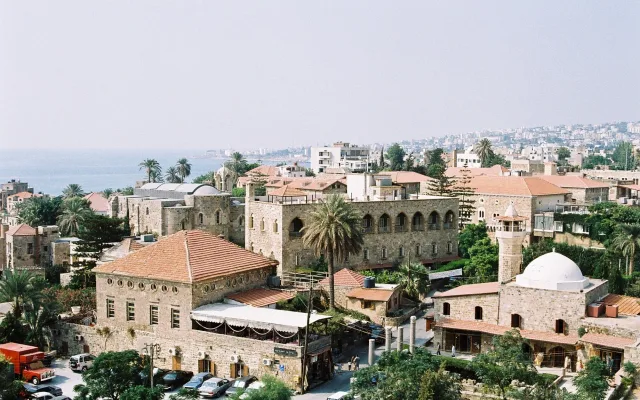
Byblos
One of the world's oldest continuously inhabited towns — a Crusader citadel above a Phoenician harbour that still works.
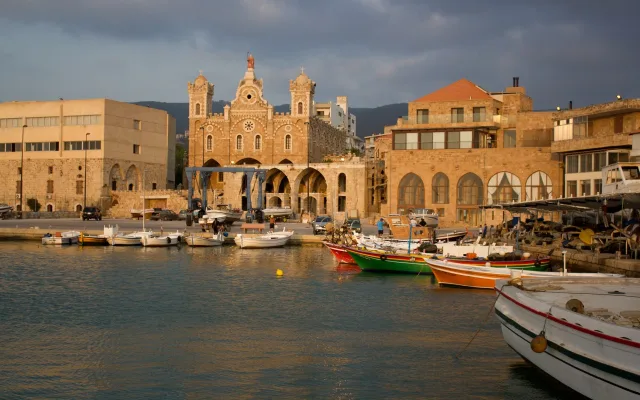
Batroun
A compact Lebanese coastal town with a Phoenician sea wall, a honey-stone souk and the country's liveliest beach clubs.
What to see #
Baalbek: The vast temples of Bacchus and Jupiter in the Bekaa valley are the thing you genuinely must see. The Roman architecture here has survived better than most of what stands in Italy itself.
Jeita Grotto: Enormous stalactites and a boat ride along an underground river make this a real event. This natural wonder sits remarkably close to the capital, so it works as a half-day trip.
Pigeon Rocks: The Raouché arches in Beirut are the perfect sunset photo. The best way to enjoy them is from the Corniche promenade with a coffee in hand.
Byblos Castle: The Crusader fortress stands on Phoenician foundations right by the sea. Around it spreads a charming old town full of souvenir shops and cafés.
The Cedars of Lebanon: The Arz el-Rab grove is the national symbol and living history high in the mountains. Ski runs operate here in winter, and in summer it is an oasis of cool air.
Harissa: The statue of Our Lady of Lebanon rises over the bay at Jounieh. Riding the Téléphérique up is a required part of any itinerary for the aerial views alone.
Prices #
Cash: In 2026 US dollars are the only dependable currency for a visitor. The Lebanese pound has collapsed in value, so everything from hotels to cafés is quoted and settled in dollars.
Cards: Card payment works erratically at best, and only in the smarter parts of Beirut. Assume you cannot rely on it, and bring your whole trip budget in cash, in small denominations. ATMs frequently do not serve foreign cards, and a Wise or Revolut card will not fix that.
Exchange: Street rates are many times better than the official bank rate. Change money at small shops in town rather than at the airport counters.
Tipping: Ten to fifteen percent in cash is normal in restaurants. Even where service is included, a small amount to the waiter is considered good manners.
| Item | Price (USD) |
|---|---|
| Falafel wrap | 1.5 |
| Manakish with cheese | 2 |
| Hummus in a café | 4 |
| Shawarma | 3.5 |
| Taxi ride | 5 |
| Street coffee | 1 |
| Bottle of arak | 8 |
| Baalbek ticket | 5 |
| Jeita ticket | 15 |
| Guesthouse night | 20 |
| Dinner for two | 30 |
| Litre of petrol | 0.9 |
| SIM card with data | 10 |
| Beer in a bar | 4 |
| Bus to Tripoli | 2.5 |
Getting around #
Taxis: For getting around Beirut, download Bolt or Uber. It is the only way to avoid endless haggling and be sure of a sensible fare.
Service taxis: The popular shared-taxi format has you splitting a car with other passengers. It is cheap, but you need to know the routes and be able to make yourself understood.
Minibuses: The basic way to move between cities is minibuses with no fixed timetable. They leave from Cola station heading south and Dora heading north, once full.
Car hire: A bold choice for confident drivers, because Lebanese traffic is chaotic. A car gives you freedom, but parking in Beirut is a permanent headache.
Coaches: Connexion runs comfortable scheduled services between the major cities. This is the most civilised way to reach Byblos or Tripoli.
From the airport: The simplest way into town is a Bolt. The official airport taxi drivers inflate fares several times over, so walk past their offers.
Where to stay #
Beirut districts: The best areas to stay are Achrafieh and Mar Mikhael, both for safety and for the nightlife. Hamra has become bleaker but still holds plenty of budget options.
Guesthouses: The warmest option is a small family-run guest house in the older quarters. They treat you as family and feed you a proper Lebanese breakfast.
Apartments: Renting through the international platforms works, but always ask about electricity. Choose buildings that have their own substantial generators.
Hotels: Many city hotels have dropped their prices, though service can be idiosyncratic. Check reviews for working Wi-Fi, because mobile data is expensive here.
Jounieh: If Beirut feels too loud, base yourself in Jounieh instead. It is a seaside suburb with good views and easy access to all the northern sights.
Mountain stays: In the Qadisha valley or near the cedar forests you will find comfortable cabins. Ideal if you want quiet and morning walks straight onto the trails.
What to eat #
Breakfast: Start the day with manakish, a hot flatbread with za'atar or cheese. It is cheap, filling and sold on every corner from hole-in-the-wall bakeries.
Mezze: The traditional spread of a dozen small dishes, from hummus to muhammara. Order one mezze for the table, because the portions are enormous and defeating it alone is impossible.
Shawarma: Lebanese shawarma is considered among the best in the region. Look for places with a long local queue, where the meat is always fresh and the marinade is a house secret.
Sweets: For the finest knafeh and baklava, go to Tripoli. Pâtisseries like Hallab are temples of sugar, and they pack desserts into handsome tins.
Drinks: Try arak, the aniseed spirit that turns milky when you add water. For something soft, fresh lemonade is essential, especially in the Batroun heat.
Food safety: Because of the electricity problems, cheaper places may not keep food properly chilled. Choose venues with heavy footfall and a working generator.
Safety #
The situation: The risk level remains unstable, so follow the news in real time and check your own government's travel advisory before and during the trip. In the tourist districts everything looks calm and life is very much going on.
Areas to avoid: Stay out of Dahieh, the southern suburbs of Beirut. Equally, do not go near the southern border zones or into refugee camps without an escort.
Electricity: The state grid supplies only a couple of hours a day. The whole city hums with generators, so a charged power bank should live in your bag permanently.
Documents: Keep the contact details of whichever mission covers your nationality, and leave your passport in the hotel safe with a copy on you.
Dress: Lebanon is a liberal country and miniskirts are normal in Beirut. In Tripoli and religious neighbourhoods, dress more modestly to avoid unwanted attention.
Protests: Roads get blocked suddenly during political flare-ups. If you see a crowd or burning tyres, simply turn around and go the other way.
Etiquette and culture #
Diversity: Lebanon recognises eighteen religious communities living on a tiny territory. Churches stand next to mosques, producing a mix you will not find elsewhere.
Hospitality: People here are extraordinarily warm and will often invite a stranger for coffee. It is a genuine wish to help, not an attempt to sell you anything.
Languages: The middle class switches effortlessly between Arabic, French and English. Do not be startled by "Hi, kifak, ça va?", which is the standard Beirut greeting.
Alcohol: Unlike many of its neighbours, Lebanon has no prohibition. The country is proud of its Bekaa valley wineries, whose history reaches back to the Phoenicians.
Nightlife: Going out here is a form of resistance to despair. The clubs of Mar Mikhael fill even in the worst periods, and the music does not stop until morning.
Places of worship: In mosques women cover their heads and men wear long trousers. Rules in churches are looser, but respect for the space is expected everywhere.
Connectivity #
Networks: There are two operators, Alfa and Touch. Buy a SIM at an official office, where your passport is required for registration.
Data: Mobile internet is reliable but the packages are not cheap. Café Wi-Fi frequently dies along with the power, so do not plan to work on it.
Offline: Download Maps.me for navigating without a signal. The tangle of Beirut's side streets is easy to get lost in and street names are often simply absent from buildings.
Social media: Messaging apps and social networks are unrestricted and no VPN is needed. Locals live on WhatsApp, which is the main tool for arranging anything.
Apps: Besides Bolt for taxis, Toters is useful for food delivery. That matters on evenings when the streets are dark from power saving and you would rather stay in.
eSIM: An Airalo-style plan activated before arrival gets you connected immediately, though local packages usually work out cheaper for a longer stay.
Etiquette: Expect long, polite preambles before anyone gets to the point. Lebanese people value small talk and real interest in their culture and their current situation.
Phrasebook #
| English | Arabic | Pronunciation |
|---|---|---|
| Hello | مرحبا | MAR-ha-ba |
| Good morning | صباح الخير | sa-BAAH el-KHEIR |
| How are you? | كيفك؟ | KEE-fak (m) / KEE-fik (f) |
| Thank you | شكراً | SHOOK-ran |
| Please | من فضلك | min FAD-lak |
| Yes / No | إيه / لأ | eh / la |
| How much? | قديش؟ | ad-DAYSH |
| Expensive | غالي | GHAA-lee |
| Food | أكل | akl |
| Water | مي | my |
| Coffee | قهوة | AH-weh |
| Tasty | طيب | TAY-yeb |
| Beautiful | حلو | HEH-lo |
| Help me | ساعدوني | sa-e-DOO-nee |
| I don't understand | ما فهمت | ma FHIM-it |
| Where is...? | وين...؟ | wayn |
| Right | يمين | ya-MEEN |
| Left | شمال | shmell |
| Let's go! | يلا | YAL-la |
| Enough, stop | خلاص | kha-LAAS |
| Goodbye | مع السلامة | maa sa-LEH-meh |
| Mate (slang) | صاحب | SAH-bee |
Good to know #
Emergency lines: Police are on 112, ambulance on 140 and the fire service on 175. Save all three before you need them.
Consular help: Most countries keep an embassy in Beirut, and it is worth noting the address and the out-of-hours number in case you lose your documents or the situation shifts.
Plugs: Lebanon uses types C, D and G. A universal adapter is genuinely necessary, because different buildings turn out to have different sockets.
Getting there: Beirut's airport is served by Middle East Airlines and international carriers from Paris, London, Frankfurt, Istanbul, Dubai and Doha, so most travellers arrive on one connection. Build slack into your schedule, since schedules change at short notice.
Medical kit: Bring your own basics for stomach upsets plus antibiotics. Because of the economic crisis, Lebanese pharmacies frequently run short of familiar medicines.
Insurance: Choose a policy with high limits and cover for unstable regions. Standard travel insurance often excludes conflict-related risks entirely, so read the exclusions.