
Where to go
#Caracas
The capital is the country's main transport hub and hard to avoid. Ride the modern cable car up Ávila for the view over the city and out to the sea. Do not linger longer than you need to, because the crime situation in the metropolis is genuinely serious.
Mérida
This university town in the Andes is the best backpacker base in Venezuela. From here it is easy to head into the mountains or arrange a wildlife trip out to the Los Llanos savannah. The town also has Mukumbarí, the highest cable car in the world.
Ciudad Bolívar
An old town on the bank of the Orinoco and the departure point for flights to Angel Falls. Independent travellers usually spend a day here before heading into the jungle. The colonial centre is genuinely picturesque and worth a slow walk.
Porlamar
The largest town on Margarita Island is known for its shopping malls. If you are going to buy anything, buy it here, since the free-trade zone prices often undercut the mainland. It is loud and built entirely around beach holidays.
Santa Elena de Uairén
A small town on the Brazilian border serving as the gateway to Roraima. This is where you find guides and hire the gear for a multi-day trek. The whole place is soaked in a genuine expedition atmosphere.
What to see
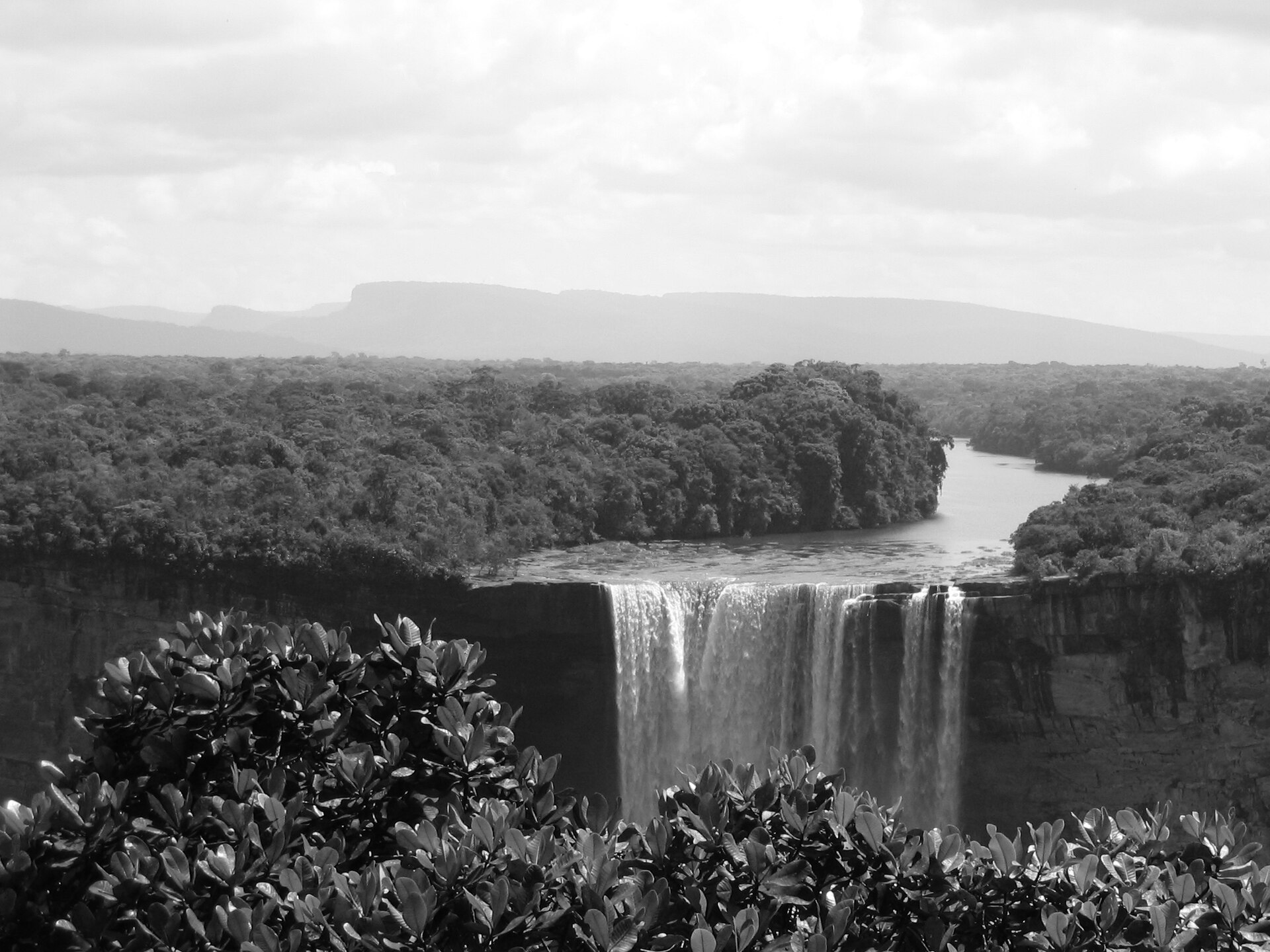
#Angel Falls: The highest waterfall on the planet drops off the side of Auyán-tepui. You can only reach it by light aircraft from Ciudad Bolívar to Canaima lagoon. There is no way to do it in a day, so budget three days for the river expedition by curiara canoe.
Mount Roraima: The table mountain where three borders meet. The trek takes six to eight days and a guide is mandatory. The views from the plateau across black rock and quartz crystal fields look like another planet entirely.
Los Llanos: These vast savannahs are ideal for wildlife watching. Worth a trip for anaconda hunting with local guides, capybara everywhere and pink river dolphins in the channels.
Los Roques archipelago: A scatter of coral islands 40 minutes' flight from Caracas. Where to go for the best snorkelling in the country. Prices are high here, but the water is fantastic.
Coro dunes: The national park surprises people with genuinely huge sand hills. The historic town next door has lovely colonial streets to wander afterwards.
Mérida cable car: The ride up Mukumbarí takes half a day. There is snow at the top, so bring a proper jacket even if you started the morning in shorts.
Prices
#Currency: The bolívar has essentially fallen out of use and become a souvenir. Everything is transacted in US dollars, though shops may display prices in both currencies.
Cash: Bring nothing but new dollar notes in perfect condition. Old or dirty bills get refused, and swapping them once you are inside the country is nearly impossible.
Small notes: Change is a critical failure across the whole economy. Stock up on ones and fives before you arrive, because instead of giving change vendors will often just offer you more goods.
Cards: Visa and Mastercard are accepted only in a handful of upmarket hotels in the capital, Amex nowhere, and ATMs are not a realistic source of cash. Plan on paper money for essentially the entire trip.
Tipping: Ten percent is welcome in restaurants where service is not included, and guides on multi-day treks expect a meaningful tip in dollars at the end.
| Item | Price (USD) |
|---|---|
| Coffee from a street stall | 0.50 |
| Filled arepa | 3.00 |
| Lunch, pabellón criollo | 6.00 |
| Seafood dinner | 15.00 |
| Polar beer 0.33 l | 1.50 |
| Bottle of rum 0.75 l | 30.00 |
| Kilo of mangoes | 1.00 |
| City taxi ride | 10.00 |
| Litre of petrol, black market | 1.50 |
| Night in a guesthouse | 25.00 |
| Surf lesson | 25.00 |
| An hour of internet | 1.00 |
| National park entry | 50.00 |
| Fridge magnet | 5.00 |
Getting around
#Getting in: International arrivals mostly route through Panama City, Bogotá, Madrid or Istanbul, and Caracas is the only realistic entry airport. Schedules change frequently, so book with an airline that will rebook you rather than the absolute cheapest fare.
Intercity coaches: Long-distance runs use comfortable coaches with toilets and ferociously powerful air conditioning. Take a warm layer into the cabin or you will spend the night shivering.
Por puesto: Shared minivans run between neighbouring towns and leave when they fill up. They are often faster than the coach, though comfort depends entirely on the age of the vehicle.
Light aircraft: Remote corners such as Canaima and Los Roques are reachable only by small propeller planes. Book directly with the operators through messaging apps, well in advance.
City taxis: Never flag a car down in the street, which is simply not safe. Use an official company or an app, and confirm the fare before you get in.
Caracas metro: The underground costs almost nothing but is worth using only in daylight. In the evening the risk of pickpocketing and robbery in the carriages rises sharply.
Car hire: You can rent a car, but driving yourself is complicated by the fuel shortage. State petrol stations regularly have queues that last for hours.
Where to stay
#Posadas: Family-run guesthouses are the most popular and most characterful option in Venezuela. Breakfast is usually included and the owners will help arrange trips and transport.
Booking: The big international booking sites show only a fraction of what exists. The best approach is to message owners directly through WhatsApp, working from recommendations.
Electricity: Rolling blackouts are common and can last several hours. When choosing a place to stay, ask specifically whether the building has its own generator.
Water: Fresh water shortages affect even the larger islands. Hot water is rare in budget places, so expect a shower at whatever temperature comes out of the tank.
Safety: In the big cities pick hotels in the guarded districts, for example in eastern Caracas. Check that the room has a safe for anything you cannot carry with you.
Quirks: Some Margarita hotels have iguanas wandering the grounds, which is entirely harmless. Do keep your case locked anyway, simply as a matter of routine.
What to eat
#Arepa: The round maize flatbread with a filling is the foundation of the local diet. Try the chicken and avocado version, the most popular combination in any arepera, and pick a place with a queue.
Pabellón criollo: A substantial plate of rice, black beans, shredded beef and fried plantain. It fills you up properly and stays cheap even in tourist areas.
Cachapa: A thick pancake of sweet young corn, usually served with a slab of soft farmhouse cheese. A perfect breakfast, and best of all at roadside cafes.
Empanadas: Deep-fried corn dough parcels stuffed with meat, cheese or fish. They are greasy, very cheap and sold on every beach in the country.
Seafood: On Coche and Margarita you can buy oysters or lobster straight from the fishermen. A couple of grilled lobsters costs around ten dollars.
Drinks: Try papelón con limón, a cold infusion of raw cane sugar with lime. Local coffee is very strong, and Venezuelan rum is among the best produced anywhere in the region.
Safety
#Street crime: Venezuela remains a high-crime country and you should plan around that. Never walk alone after dark, even inside what looks like a resort area.
Valuables: Do not display expensive watches, jewellery or electronics. Take your phone out only indoors, and navigate outside using screenshots you saved earlier.
Barrios: Entering the barrio districts on your own is out of the question. The one exception is San Agustín, and only in the company of a local guide.
Drinking water: Tap water will make you seriously ill. Buy bottled water only and check the seal on the cap every time.
Travelling: Plan your route so that every intercity transfer finishes before sunset. Roads after dark carry a real risk of armed robbery on top of appalling lighting.
Medicines: Because of chronic shortages, bring everything you might need with you. Pay particular attention to stomach remedies and a good repellent, and read your own government's travel advisory before booking.
Etiquette and culture
#Temperament: Venezuelans are open, emotional and genuinely welcoming to foreigners. Being hugged on first meeting or hearing someone sing loudly in the street is just ordinary friendliness here.
Language: English is understood only by staff at expensive hotels. Independent travel requires at least basic Spanish, or communication simply will not happen.
Time: The mañana culture is real: nobody hurries and being an hour late is not considered rude. Bring patience and do not take slow service personally.
Photography: Photographing military installations, police officers or airports is strictly forbidden. Doing it can get you detained and your equipment confiscated.
Conversation: Avoid discussing politics or criticising the government with people you barely know. These are painful subjects that can turn hostile very quickly.
Dress: The coast runs on beachwear, but the Andes demand proper warm clothing. City residents take pride in looking neat, so flip-flops in a restaurant will not go down well.
Connectivity
#Operators: Digitel and Movistar dominate the market. State-owned Movilnet performs worse, so a Digitel SIM is the sensible choice for reliable data.
Buying a SIM: You register a local number at an official office with your passport. The process can take a while, so do it on arrival at a major airport rather than in a small town.
eSIM: International eSIMs work in the larger cities and save you a trip to an office. It is more convenient for a short transit but costs more than a local tariff.
Coverage: In the Canaima jungle and on the Roraima trek there is no signal whatsoever. Warn people at home you will be offline and download all offline maps beforehand.
Internet: Hotel wifi is often painfully slow. For anything that matters, rely on mobile data, which performs decently in Caracas and Mérida.
Messaging: WhatsApp is the main tool for business and personal life alike. Taxis are booked on it, posadas are reserved on it and guides are hired on it.
Phrasebook
#| English | Spanish | Pronunciation |
|---|---|---|
| Hi, how's it going? | Hola / ¿Qué tal? | OH-la / keh TAL |
| Thank you very much | Muchas gracias | MOO-chas GRA-syas |
| Please | Por favor | por fa-VOR |
| How much is it? | ¿Cuánto cuesta? | KWAN-to KWES-ta |
| Do you have change? | ¿Tiene cambio? | TYEH-neh KAM-byo |
| Where is...? | ¿Dónde queda...? | DON-deh KEH-da |
| The bill, please | La cuenta, por favor | la KWEN-ta por fa-VOR |
| I need help | Necesito ayuda | neh-seh-SEE-to a-YOO-da |
| I don't understand | No entiendo | no en-TYEN-do |
| Right / Left | Derecha / Izquierda | deh-REH-cha / ees-KYER-da |
| Straight ahead | Derecho | deh-REH-cho |
| Hot water | Agua caliente | AH-gwa ka-LYEN-teh |
| Really tasty! | ¡Muy rico! | mwee REE-ko |
| Mate, buddy (slang) | Pana | PA-na |
| Cool, great (slang) | Chévere | CHEH-veh-reh |
| Money (slang) | Real | reh-AL |
| Girl / Guy (slang) | Chama / Chamo | CHA-ma / CHA-mo |
| Corner shop | Bodega | bo-DEH-ga |
| Tomorrow | Mañana | ma-NYA-na |
| Goodbye | Adiós | a-DYOS |
| Careful! | ¡Cuidado! | kwee-DA-do |
Good to know
#Getting help: Police and ambulance both answer on 171. If you lose your documents or run into anything serious, contact your country's consular representation, which for many nationalities covers Venezuela from Caracas or from Bogotá.
Electricity: Venezuela uses flat-pin American sockets and runs on 110 volts. Bring the adapter with you, as local shops rarely stock them.
Sun: Tropical sun does damage even under cloud. Use factor 50 or higher, wear a hat, and carry something soothing for after a long day outdoors.
Navigation: Google Maps and Maps.me both work well if you download the regions in advance. That is genuinely critical in the Andes, where the signal disappears constantly.
Hygiene: Always carry hand sanitiser and a roll of toilet paper. Public toilets and cheap posadas frequently have neither.
Documents: Photograph your passport and insurance, save the images in the cloud and keep paper copies too. Leave the originals in the hotel safe when you go out.
Frequently asked questions
#Many nationalities can enter visa-free for tourism, typically for up to 90 days, but the rules shift and are applied inconsistently at the border. Check your own passport's requirements shortly before you fly and carry a return ticket and accommodation booking.
Use only trusted taxi services booked through your hotel, and do not walk anywhere after sunset. Stay out of the barrio districts entirely and keep valuables out of sight.
Foreign cards are accepted only in a few large hotels, and cash machines are not a reliable option. You need to arrive with enough US dollars in cash, in new small denominations.
For the Roraima trek or a trip to Mérida you need properly waterproof gear and thermal layers. Temperatures at altitude can drop to around ten degrees with high humidity and strong wind.
Tickets on Conviasa are most reliably bought through the airline's own channels, including their messaging accounts. Local carrier websites frequently fail and often will not take international payments.
Digitel gives the most consistent 4G in Caracas, Mérida and on Margarita Island. An international eSIM is convenient too, but nothing works out in the jungle or up on the tepuis.
The food is excellent and cheap, especially arepas and empanadas from busy family-run places. Choose stalls with high turnover and stick to bottled water with no ice.
There is no road, so reaching the base entirely independently is not possible. You fly into Canaima and hire a motorised canoe, which necessarily means going with local guides.
Yes, but with restrictions. Registration is mandatory for a drone of any weight. A pilot licence and drone registration are required. Rules for other countries are in the drone ranking by country.
Updated
The data on this page goes out of date. Visa rules and permitted stays, border requirements, prices and budgets, transport and local conditions all change fast, and we do not re-check every page every day. We show the date of our last check where we have one, but before you travel, verify with official sources: the country’s consulate, its immigration service, its e-visa portal and your carrier.