Description
High-altitude capital at 2,600 m, home to the La Candelaria neighbourhood, the Gold Museum with 55,000 artefacts, and one of Latin America's best coffee scenes.
Wiki
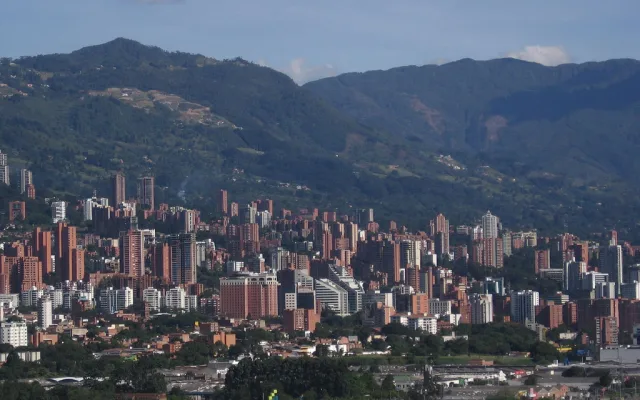
Bogotá is the high-altitude capital of Colombia, spread across a plateau in the Eastern Cordillera at around 2,640 metres. It is the country's largest, coolest and most dynamic metropolis, where a colonial past sits alongside the glass towers of the business district in the north, and eucalyptus forests darken the eastern mountain slopes.
A brief history and overview
The city was founded by the Spanish in 1538 on the lands of the Muisca people and was long known as Santa Fe de Bogotá. It served as the capital of the Viceroyalty of New Granada and, after independence, as the capital of the united Gran Colombia. Today the greater metropolitan area is home to around eight million people, making Bogotá one of the largest cities in Latin America.
The altitude gives the city an even, mild climate year-round, without the oppressive heat typical of the tropics. The thin air does not hit immediately: for the first day or so, move at a relaxed pace, drink plenty of water and avoid alcohol and overeating to steer clear of headaches and shortness of breath.
What to see
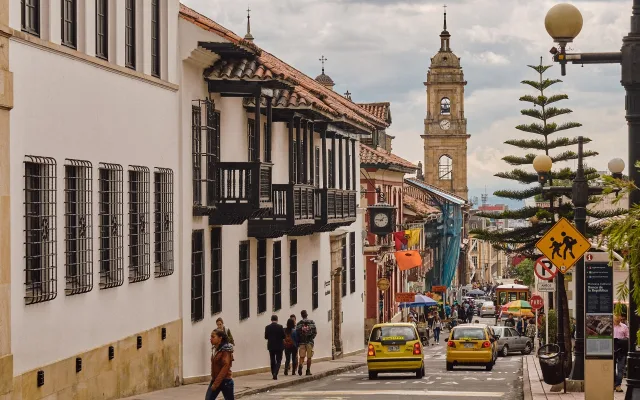
- La Candelaria — the historic quarter of cobbled lanes, brightly painted colonial facades and dozens of street murals; walking graffiti tours are popular. At its heart is the broad Plaza de Bolívar, ringed by the Cathedral, the Palace of Justice and the Capitol building.
- Museo del Oro (Gold Museum) — the country's signature attraction, holding more than 55,000 objects in gold and other materials from pre-Columbian cultures including the Muisca, Calima, Quimbaya and Tairona. On display here is the famous golden raft linked to the legend of El Dorado.
- Monserrate — a mountain of around 3,150 metres topped by a white church and pilgrimage shrine. Visitors reach the summit by cable car, funicular or a hiking trail, and the viewing platform takes in a panorama of the entire city to the horizon.
- Botero Museum — a generous gift to his home city from the artist Fernando Botero: rooms of his instantly recognisable voluminous figures alongside works by Picasso, Dalí, Monet, Renoir and other masters. Entry is free.
- Salt Cathedral of Zipaquirá — an underground church carved into a working salt mine about an hour's drive north of the city. Tunnels lined with illuminated crosses and a spacious nave leave a strong impression even on travellers with no religious inclinations.
The northern districts are also worth exploring — the business quarter, parks, and the bohemian zones of galleries, restaurants and nightlife around Zona T and La Macarena.
Food and coffee
Local cuisine is hearty and warming, well suited to the cool mountain climate. Do not miss ajiaco, a thick soup of several varieties of potato with chicken, corn, capers and cream. Also widespread are bandeja paisa (a generous plate of beans, rice, meat and fried plantain), corn flatbreads called arepas, empanadas and the drink aguapanela served with fresh cheese.
Bogotá is rightly regarded as one of the continent's coffee capitals: Colombian beans are prepared here with exceptional care, and specialist roasters and cafés offer tastings paired with explanations of the growing regions. Lunch at a modest local spot is inexpensive; dinner at a restaurant costs noticeably more but remains well below European prices.
Getting around
El Dorado International Airport (BOG) handles international flights and is a major hub for Avianca, LATAM, Copa and a number of European carriers. Within the city the most practical option is the TransMilenio rapid-bus network (a BRT system with dedicated lanes), supplemented by ride-hailing apps. Hiring a car is rarely worthwhile for visitors: traffic during rush hour can grind to a halt. On Sundays and public holidays, central roads are closed for the Ciclovía — given over entirely to cyclists, joggers and pedestrians.
When to go and a 3-day itinerary
The most comfortable periods are the dry seasons — December to March and the second half of the year; daytime temperatures typically range from 12–20 °C, though the weather is changeable, so a windproof jacket, an umbrella and comfortable shoes are all advisable. Over three days, a sensible plan is to spend the first in La Candelaria, the Gold Museum and the Botero Museum; the second going up to Monserrate and wandering the northern neighbourhoods with coffee stops along the way; and the third on a day trip to the Salt Cathedral of Zipaquirá.