 Города и дороги
Description
Once Tushpa, capital of Urartu: a rock citadel with royal tombs above the plain, the carved tenth-century church on Akdamar island, and the largest lake in Turkey, alkaline and home to a single fish.
Wiki
Van stands in eastern Turkey, five kilometres from the eastern shore of the lake that shares its name, at an altitude of about 1,700 metres; some 650,000 people live in its three central districts. Under the name Tushpa it was the capital of Urartu: around 840–830 BC King Sarduri I cut an Assyrian inscription into the rock recording the building of the citadel, and had it repeated six times. After that came the Persians, the Armenian kingdom of Vaspurakan, the Seljuks and the Ottomans. Old Van, at the foot of the rock, was destroyed in the events of 1915 and never rebuilt — the present city grew up alongside it, off to one side. It looks new, and there is a second reason for that: on 23 October 2011 an earthquake of magnitude 7.1 brought down a large part of the housing stock, and the city spent the following decade rebuilding.
Why come and what to actually see
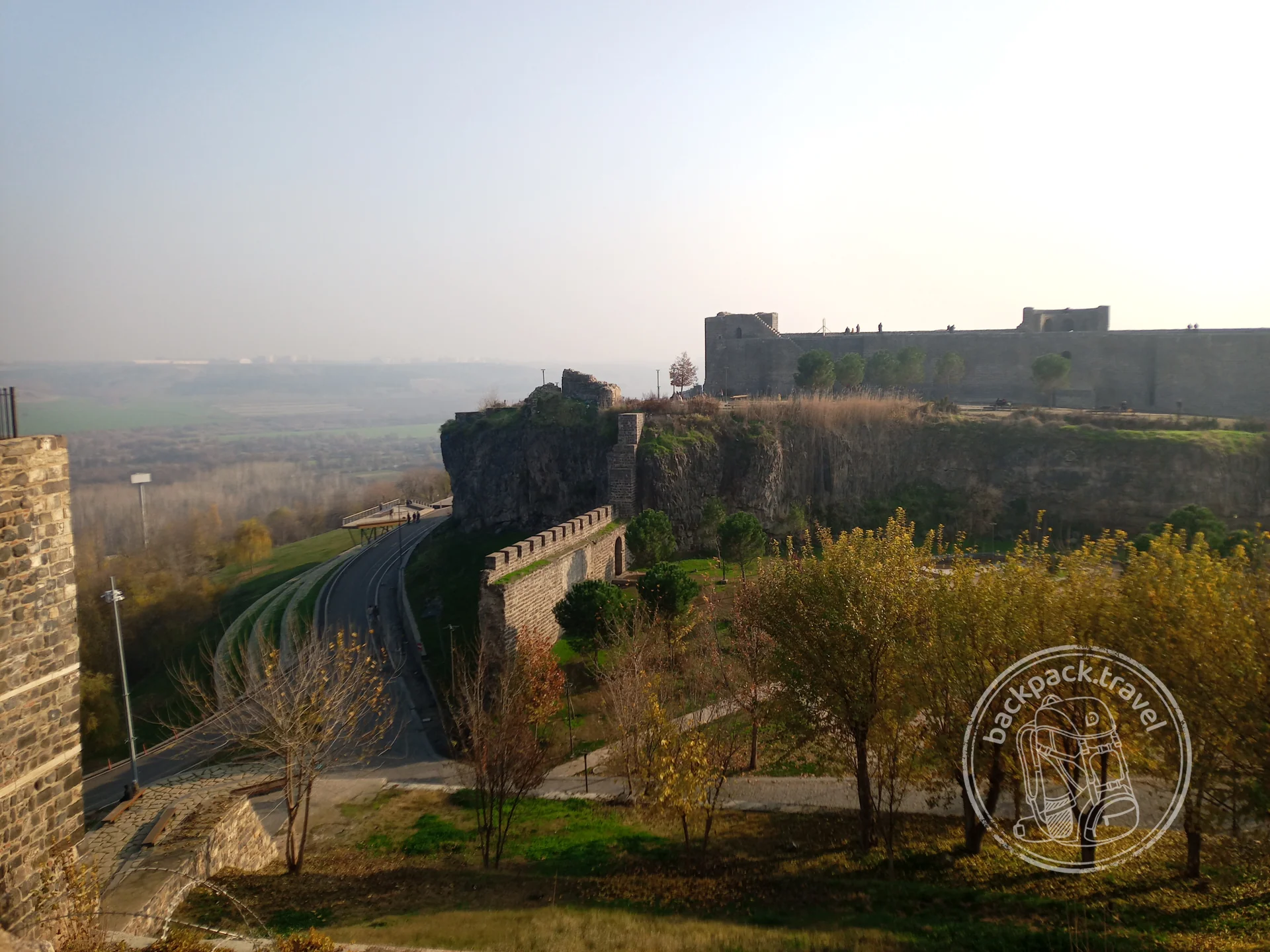
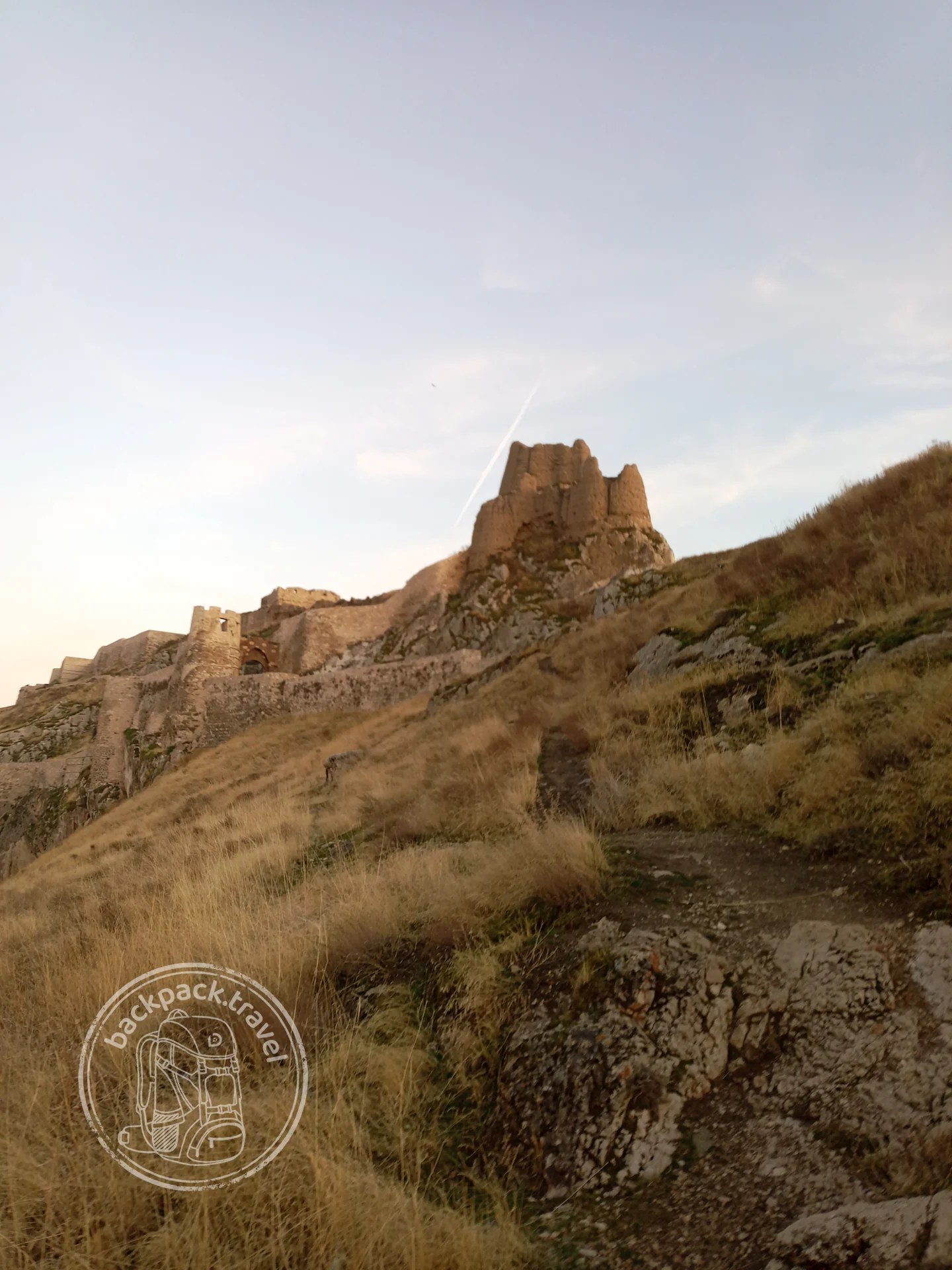
Van Castle runs along a rock ridge for almost a kilometre above the plain. What matters is not so much the walls as the stone itself: the royal tombs of Urartu are cut into it, along with niches and staircases, and on the southern face is the trilingual inscription of Xerxes, the only Achaemenid inscription in Turkey. From the upper terrace you can see the lake, and below it the empty field of Old Van, where two mosques and a minaret are all that remains of an entire city.
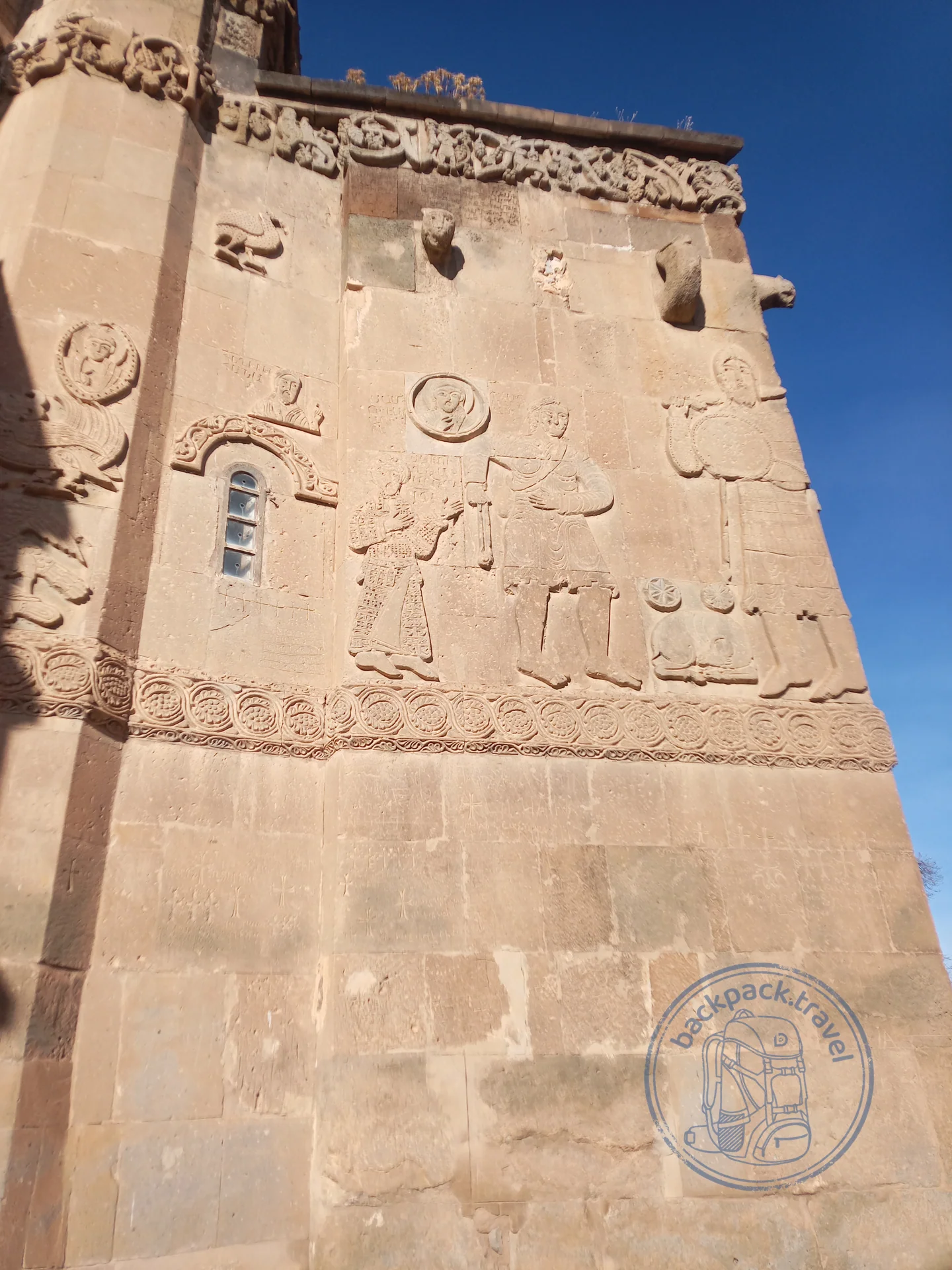
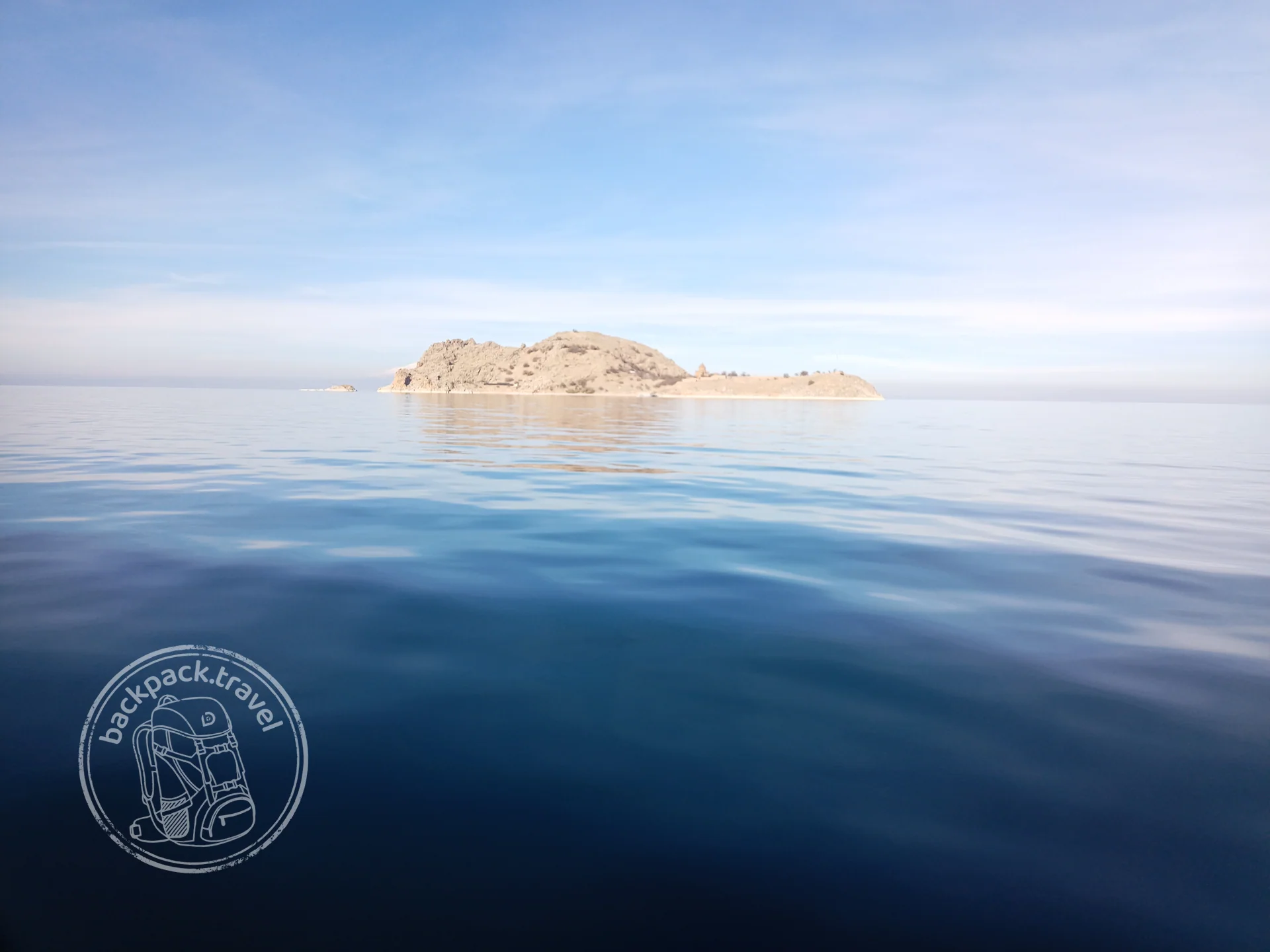
The main draw, though, is Akdamar. The Church of the Holy Cross was built in 915–921 for King Gagik Artsruni by the architect Manuel, and its outer walls are covered from top to bottom in relief carving: David and Goliath, Jonah and the whale, Adam and Eve, with a vine full of animals and hunters running along the upper band. After the restoration of 2005–2007 the church works as a museum, and since 2010 a liturgy has been celebrated here once a year, in September. The jetty is at Gevaş, 45 kilometres from the city; the boat crossing takes about 20 minutes, and out of season it waits until enough passengers have gathered.
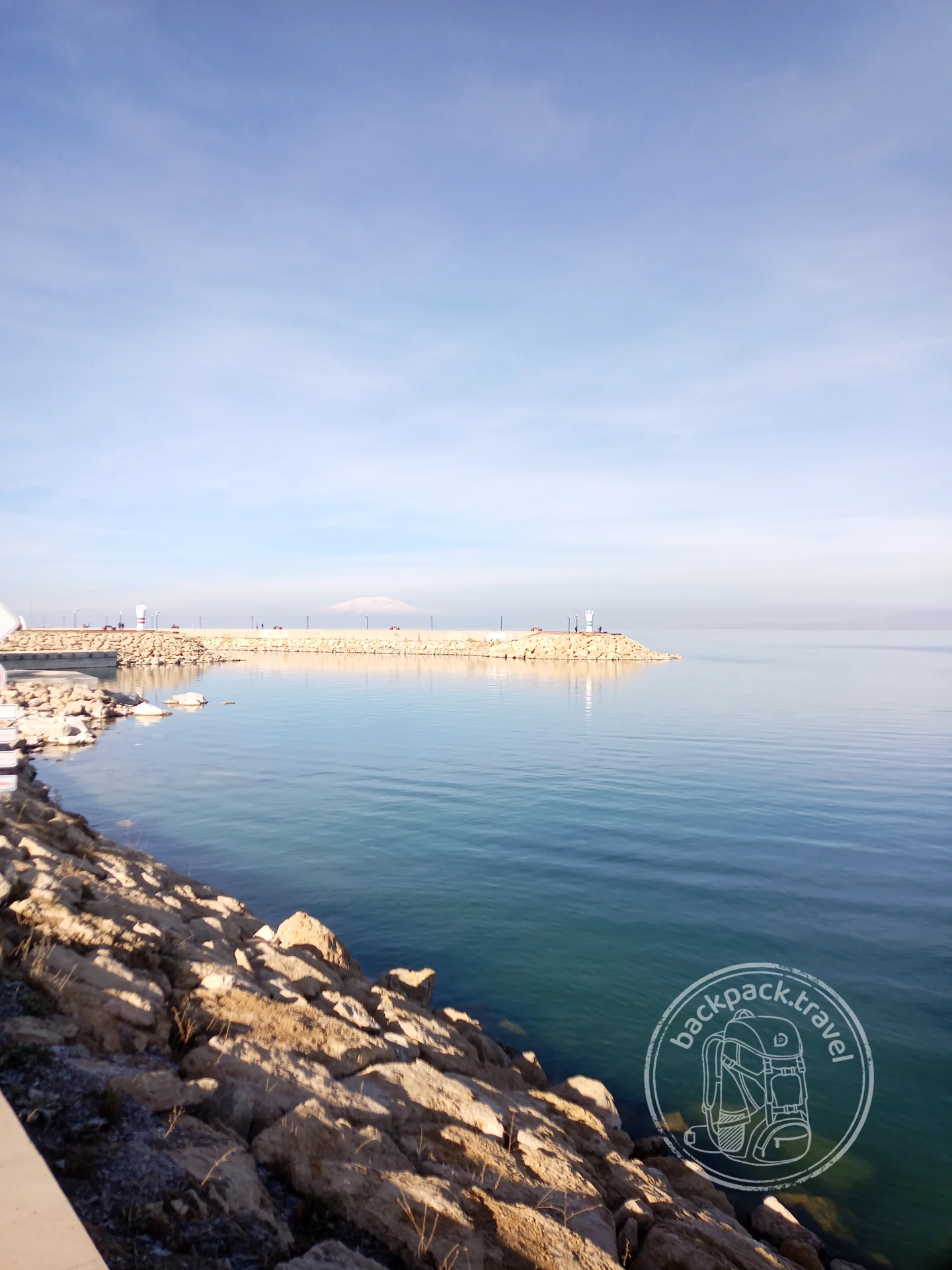
The lake itself is the largest in Turkey, roughly 3,700 square kilometres of soda water. It is alkaline, slippery to the touch and holds the body better than fresh water; you need a rinse afterwards. Only one fish lives in it, the pearl mullet, which heads up the tributaries to spawn in spring.
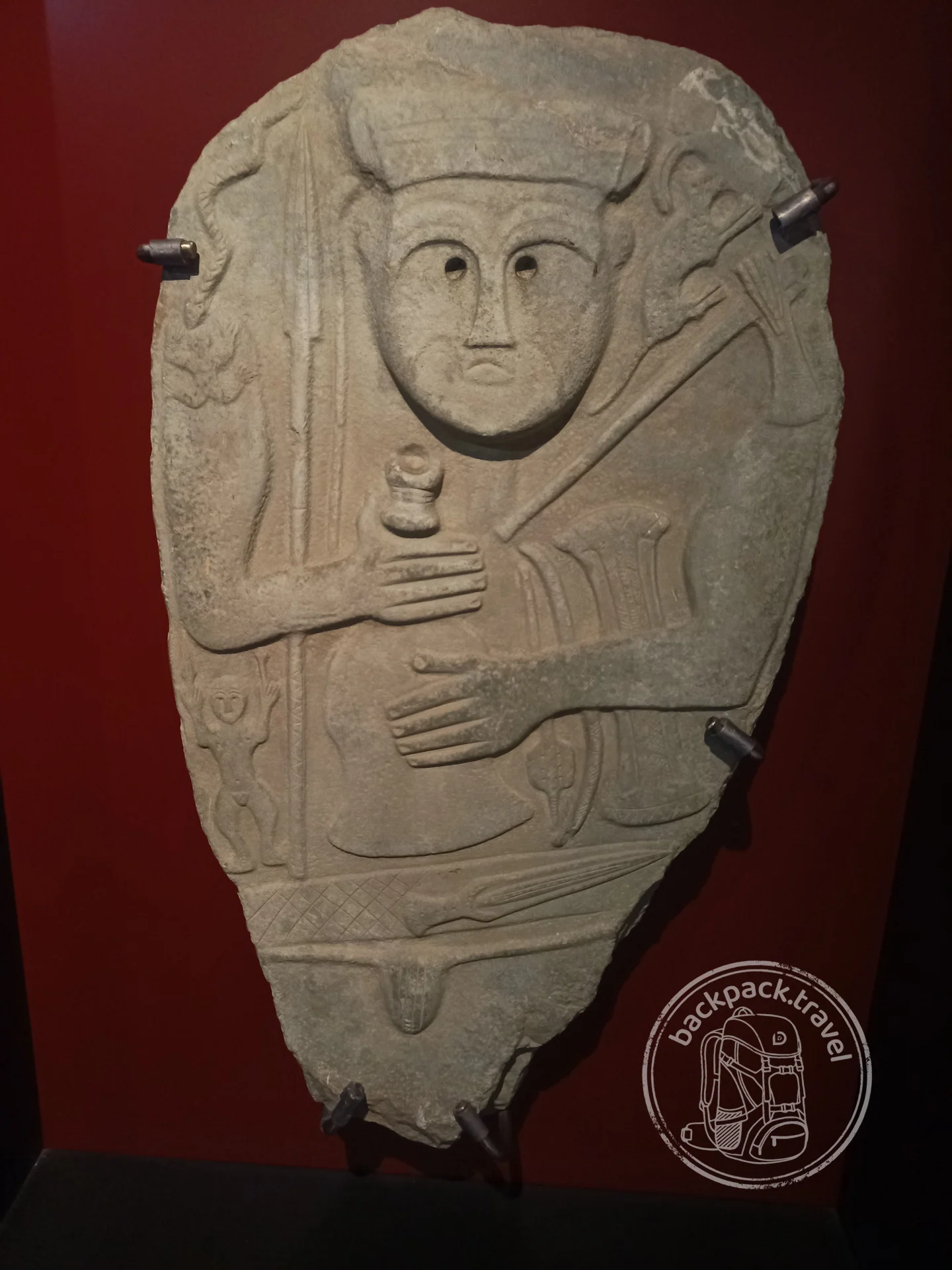
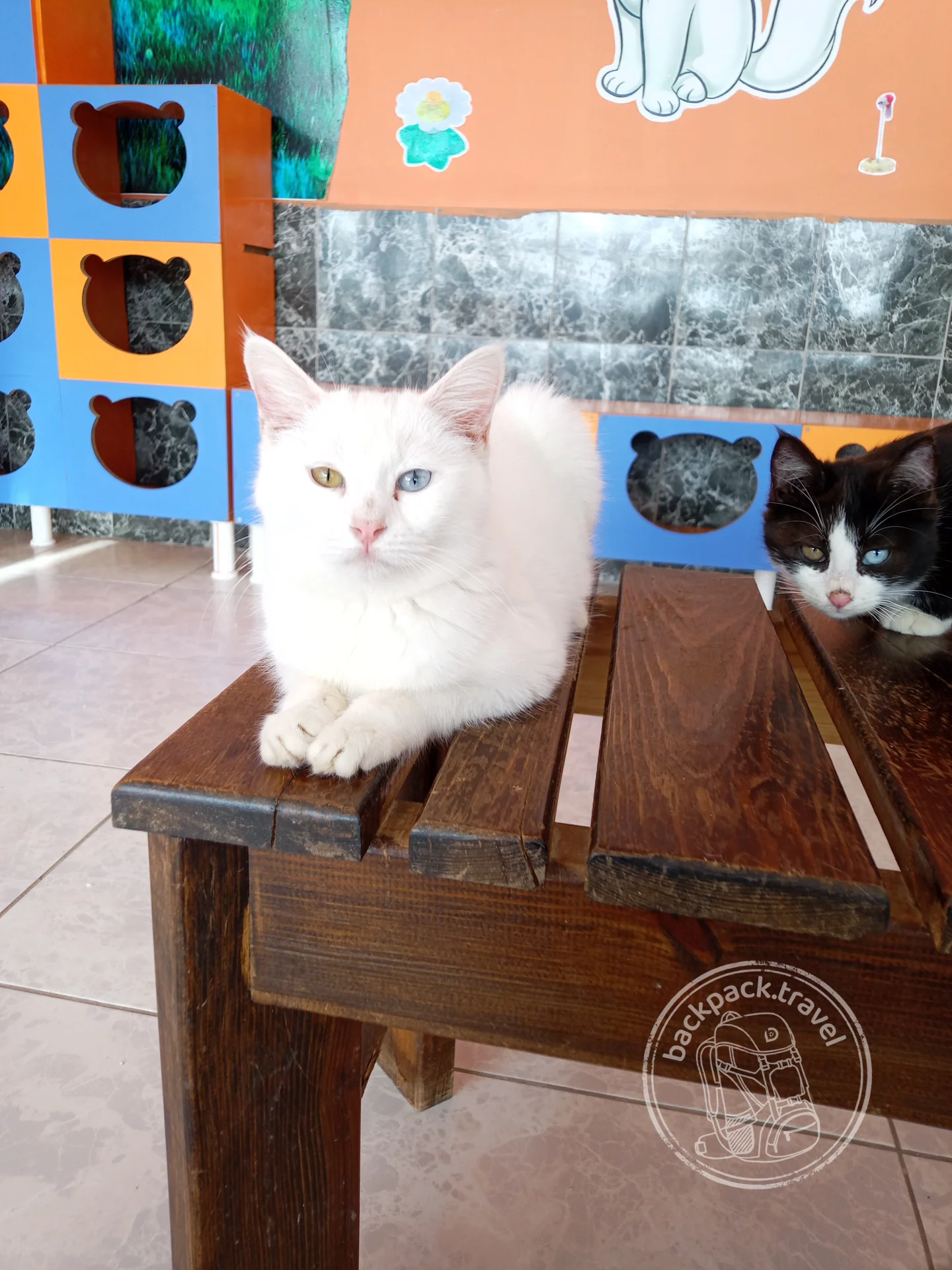
The city also has an archaeological museum with Urartian finds, and a Van cat breeding centre at Yüzüncü Yıl University: white, odd-eyed, and happy to get into the water.
Getting there and getting around
Ferit Melen Airport lies six kilometres north of the centre, with several flights a day from Istanbul and Ankara and a flying time of about two hours. The bus from Ankara takes around 20 hours, from Istanbul a full day. The Van Gölü Express runs from Ankara twice a week in 26 hours, but only as far as Tatvan on the western shore of the lake — from there it is another 150 kilometres by bus.
Dolmuşes cover the city, the centre along Cumhuriyet Avenue is walkable, and the castle is a couple of kilometres from it. Akdamar, Çavuştepe and Hoşap, on the other hand, have almost no public transport: it is either a car or a tour. The Iranian border at Kapıköy is about 100 kilometres away.
Where to stay
Hotels are concentrated in the centre, around Cumhuriyet Avenue. The choice is small and there are few stars, but prices are low even by Turkish standards. Separate from these are several hotels on the shore at Edremit: quieter, with a view of the water, though you need transport to get into the city. In July and August rooms can run out; the rest of the year there is no need to book ahead.
Day trips
Akdamar is usually combined with Gevaş itself, which has a Seljuk cemetery with carved gravestones and a fourteenth-century kümbet.
The second classic run follows the road towards Hakkari. Twenty-five kilometres from the city is Çavuştepe, the Urartian fortress of Sardurihinili built by King Sarduri II (764–735 BC); what survives are the foundations of the temple, with perfectly fitted masonry and cuneiform. Another 35 kilometres on is Hoşap, the Kurdish castle built in 1643 by Mahmudi Süleyman Bey on a crag above the village. Both fit into a single day.
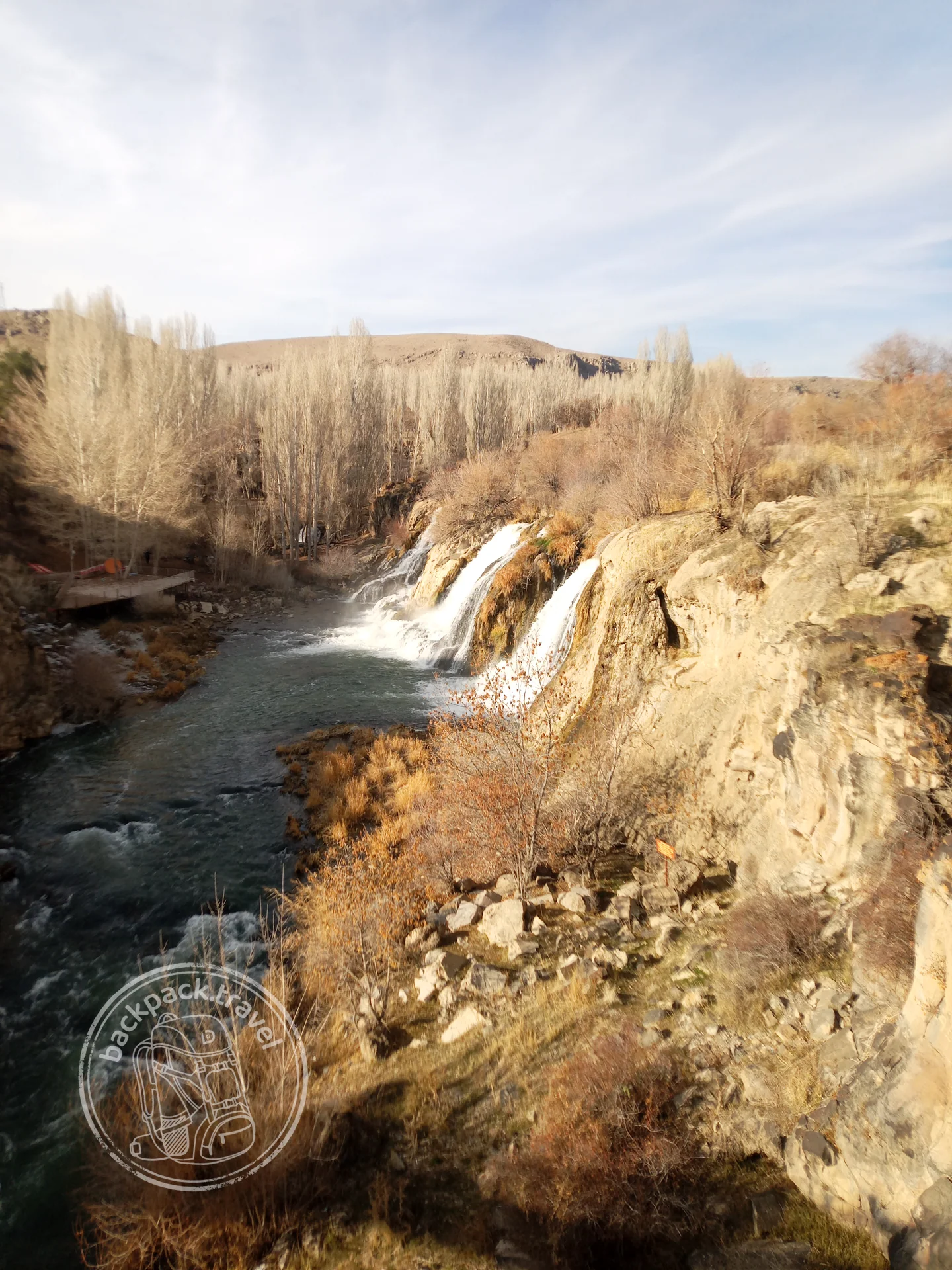
Eighty kilometres to the north is the Muradiye waterfall: small in itself, but in early summer the pearl mullet jump its rapids on the way to spawn.
When to come
The season runs from May to October. Altitude and distance from the sea make the climate sharply continental: winter brings temperatures down to minus 15, snow lies from December to March, the passes close, and some of the sites around the city become unreachable. Summer is dry and hot by day, around 30 degrees, but the height keeps the nights cold even in July.
The best months are late May and June, when the slopes are still green, the rivers full and the mullet running, and September, once the heat has eased. Swimming is possible from July to September: the altitude means the water warms up slowly.
Food and money
The Van breakfast is the city's main culinary name, and an entire street of places is given over to it. The table is assembled from twenty or thirty small dishes: otlu peynir, the herbed cheese matured in clay pots, honey with kaymak, murtuğa and kavut, both flour dishes cooked in butter, eggs, olives, jams and endless tea. It is eaten slowly and usually before midday. The rest of the cooking is eastern Anatolian and Kurdish: kebabs, stewed meat, ayran.
Cards are accepted everywhere in the city and there are enough ATMs in the centre. Cash is needed at the jetty, in village markets and on the road out to the fortresses.
What to know
Eastern Turkey is not resort country: there are more police and checkpoints on the highways than in the west, and it is worth carrying your documents. Van itself is calm and used to visitors, but more conservative than the coast — ordinary covering clothes are the norm.
The earthquake of February 2023 struck far to the south-west and did not affect Van; what shaped the local building stock was its own quake, in 2011.
The sun at this altitude is harsh and the evenings are cold year-round. English is not widely spoken outside the hotels.
Updated