 Города и дороги
Description
A village of 2,000 in the middle of Cappadocia, cut into volcanic tuff: rock-hewn churches with tenth-century frescoes, cave hotels, valley trails and balloons at dawn over the fairy chimneys.
Wiki
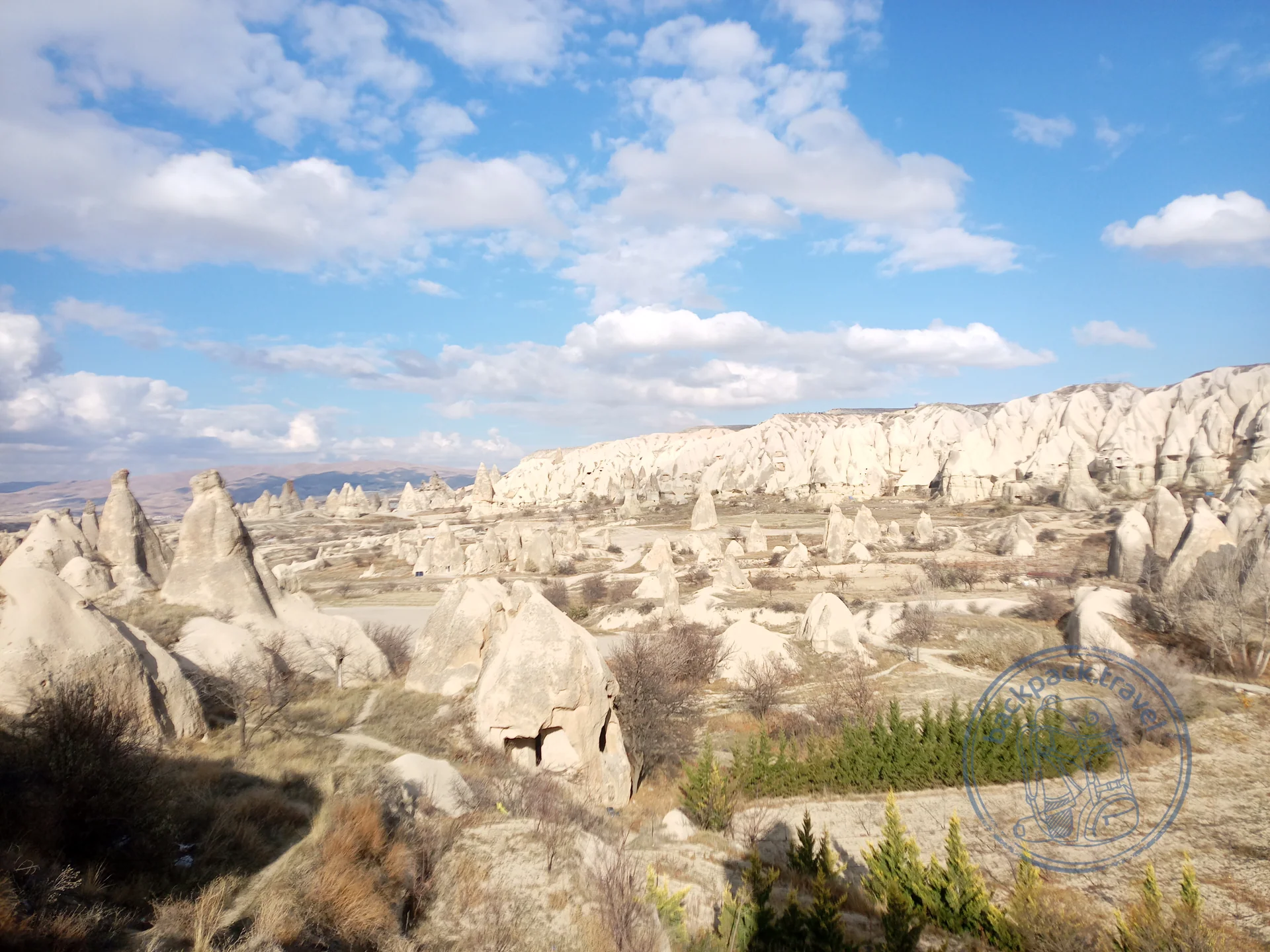
Göreme is not a town but a village: around 2,000 residents, and 15 minutes to walk across. It sits in the middle of Cappadocia, in Nevşehir province, at about 1,100 metres, among the volcanic tuff that eruptions of Erciyes and Hasandağı laid down here millions of years ago and that water and wind have since cut into columns and cones — the fairy chimneys. Tuff can be cut with a knife and hardens in the air, which is why people have spent millennia carving dwellings, storerooms, dovecotes and churches into these rocks. Until the 1970s this was a farming village; today it lives on tourism and serves as the main base for travel around Cappadocia, whose rock-cut complexes were added to the UNESCO list in 1985.
Why come and what to actually see
The Open Air Museum lies a kilometre east of the village, up the road. It is a former monastic complex: a dozen or so churches of the tenth to twelfth centuries cut into the rock and standing in a tight group. What you come for are the paintings. In the Dark Church (Karanlık Kilise) the frescoes have survived best precisely because there is only one window and the sun has not eaten them away; entry is charged separately from the main ticket, and this is a case where the extra fee is justified. Tokalı Kilise stands across the road, slightly below the entrance, is covered by the main ticket, and holds the largest fresco cycle in Cappadocia — plenty of people miss it simply by not paying attention.
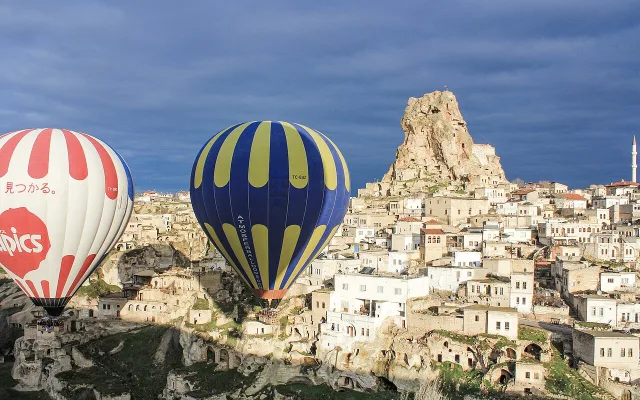
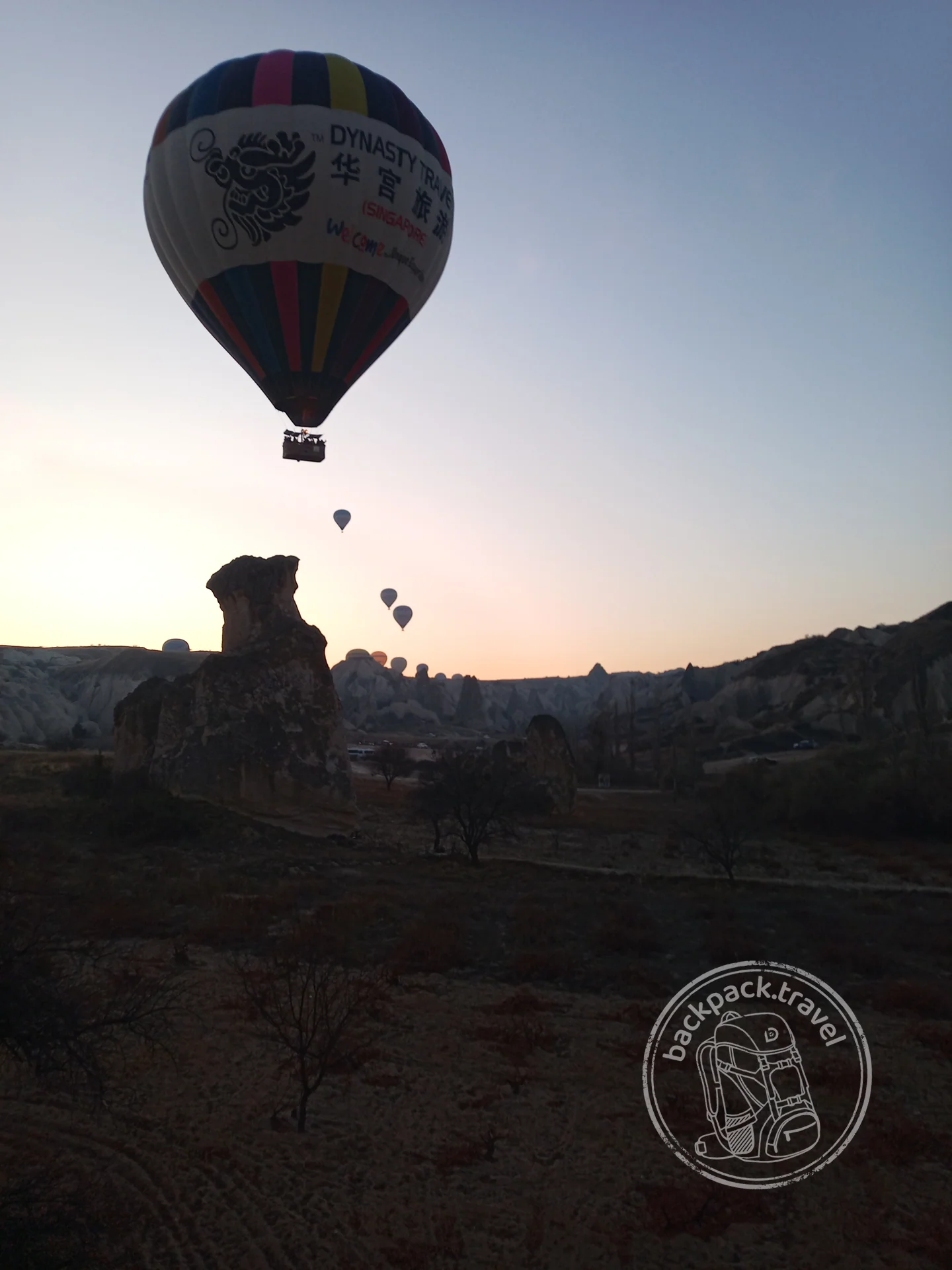
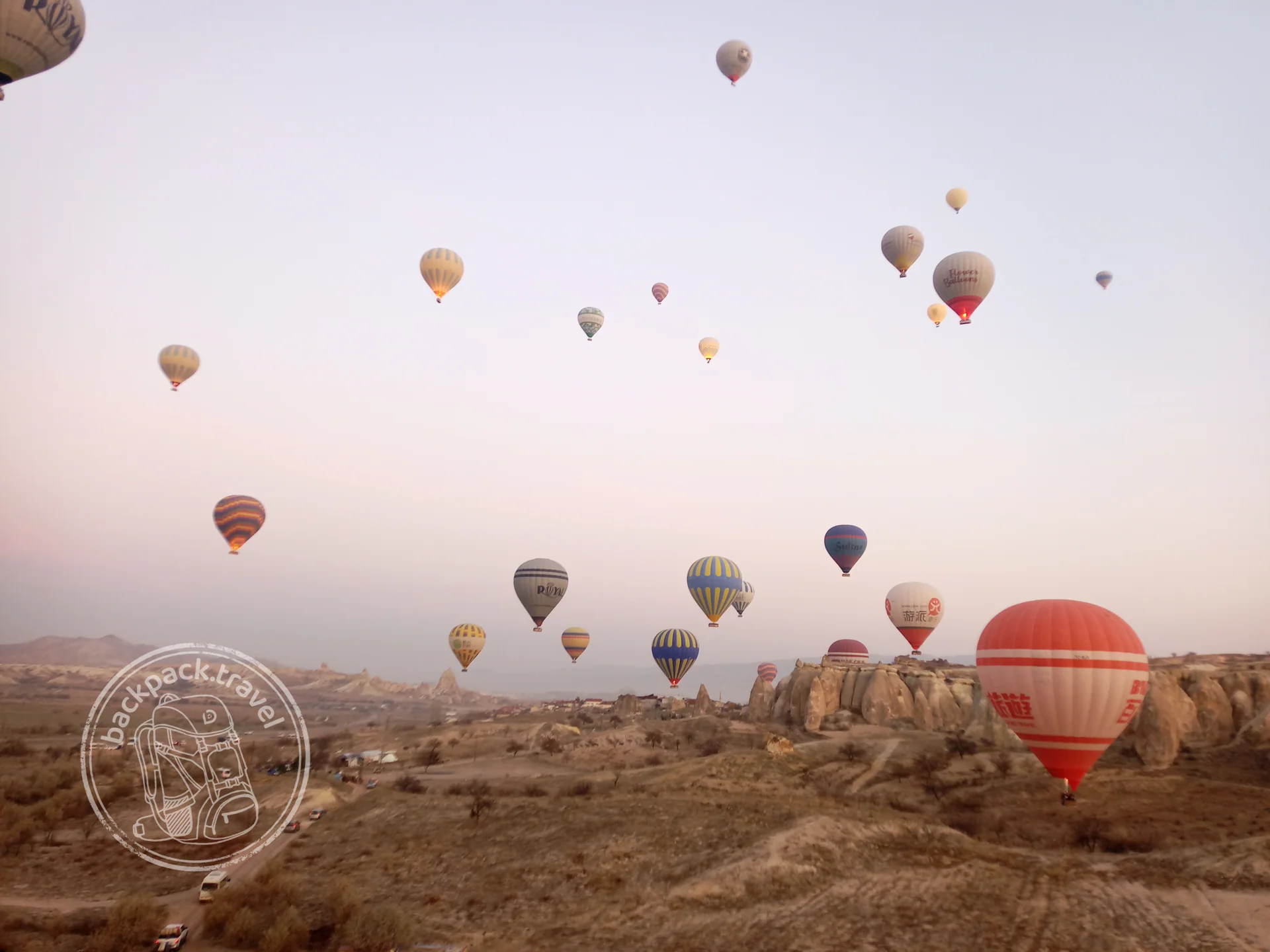
The second reason people come is the balloons. They fly at dawn, the flight lasts about an hour, and the number of baskets is capped at around 150 a day. The variable that decides everything is wind: if it picks up, launches are cancelled, and across the year roughly a third of morning departures are called off, noticeably more often in winter and almost never in August. The practical conclusion: allow at least three nights in Göreme.
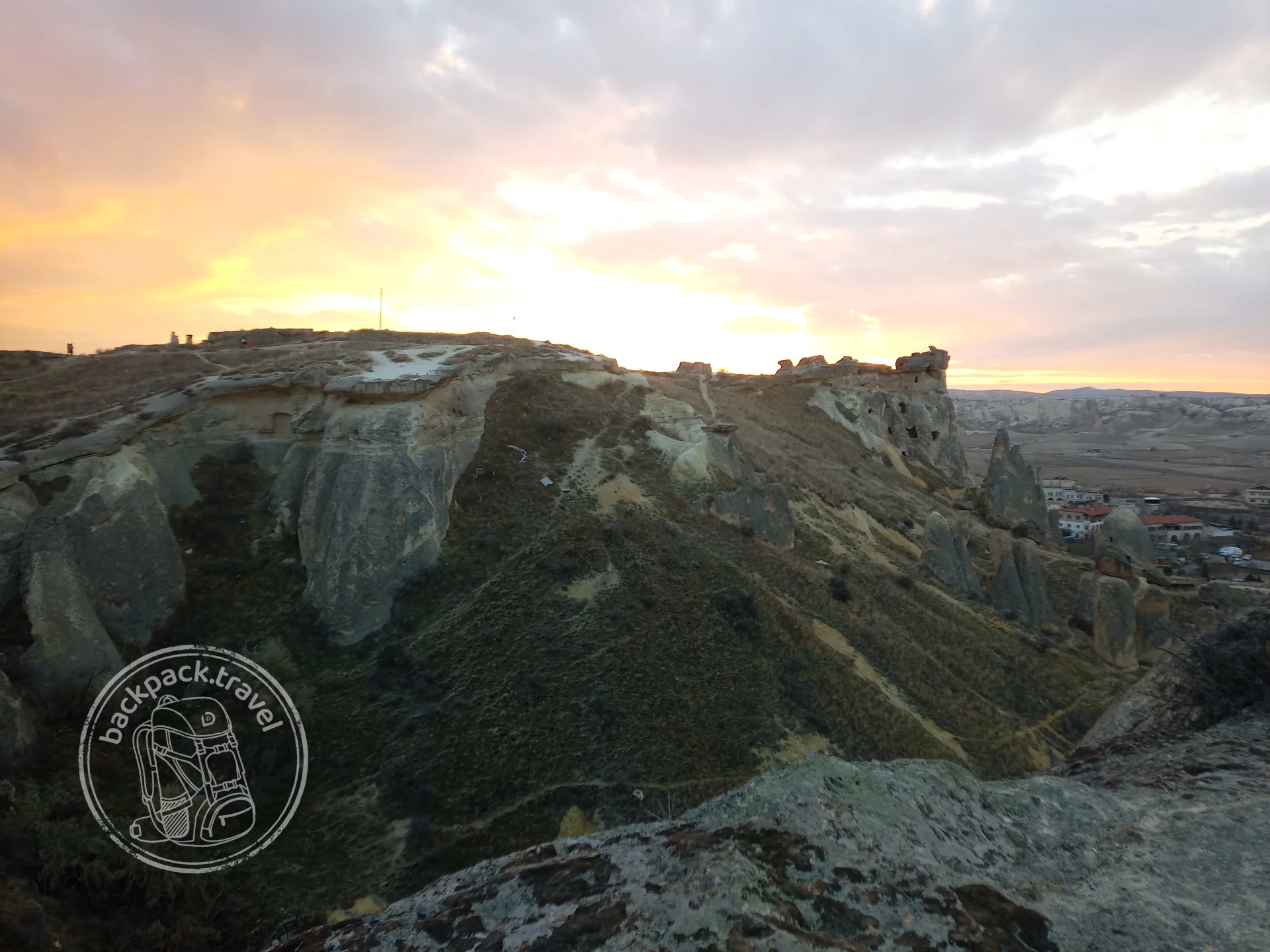
The third thing is the valleys themselves, and they are free. Trails run out from the edge of the village into the Rose and Red valleys, into Love Valley and Pigeon Valley: routes of one to three hours, poorly waymarked but not crowded. Sunset is watched from the Kızılçukur ridge.
Getting there and getting around
The nearest airport is Cappadocia, outside Nevşehir, 40 kilometres and about 35 minutes by car. The second, Erkilet near Kayseri, is further out at some 80 kilometres and a little over an hour, but has more flights and cheaper ones. Both meet arrivals with minibuses that drop passengers at their hotels.
Buses from Istanbul run overnight in about 11 hours, from Ankara in about four and a half, from Konya in three and a half; the bus station is right in the middle of the village.
Within Cappadocia a scheduled dolmuş runs the Nevşehir – Göreme – Avanos – Ürgüp loop roughly once an hour. Public transport to the underground cities and to Ihlara is awkward, so those call for a tour or a car. No transport is needed within the village, though the road up to the museum is a climb.
Where to stay
Göreme means cave hotels first of all: rooms cut into the rock or built onto it, from plain pensions to expensive boutiques. How much of a cave you get varies. Genuine rock rooms are cool and extremely quiet, but dark, sometimes with no window at all, and damp in winter; some hotels have simply faced ordinary rooms in stone.
The village is small and wholly given over to tourism, so prices here are higher than in neighbouring Ürgüp and Ortahisar, and from four in the morning the crews hauling balloons out make a racket under the windows. Anyone who values quiet stays in Uçhisar or Ortahisar, but then transport is needed.
Day trips
Uçhisar, three kilometres away, is a fortress rock with the highest point in Cappadocia and a view over the whole area; Ortahisar is similar but smaller and quieter.
To the north lie Çavuşin with its old Church of St John the Baptist, Paşabağ with mushroom-shaped pillars and monks' cells, the Zelve museum in an abandoned village, and Devrent valley; with a car this is a single day. Ten kilometres away is Avanos on the Kızılırmak, a potters' town where red clay is still turned on a kick wheel.
The underground cities: Kaymaklı at 26 kilometres and Derinkuyu at 35, nine kilometres apart from each other. Both go down several levels, Derinkuyu deeper, Kaymaklı roomier. The Ihlara valley, 80 kilometres out, is a canyon with a river and rock churches along its sides, and makes a full day.
When to come
The best months are April, May, September and October: warm by day without the heat, clear air, and a lower chance of a flight being cancelled than in winter. In summer the plateau bakes past 30 degrees and walking the valleys after midday is hard going, but balloons fly almost every morning — this is the busiest season.
Winter here is a real one, with frost and snow, and that is its point: snow-covered rock is the most photogenic version of the place, and the village empties out. The price is frequent cancellations and a short day. November and March are unpredictable and can produce either 15 degrees or a blizzard.
Food and money
The local showpiece is testi kebab, meat and vegetables slow-cooked in a sealed clay pot that is broken open at the table when served. The dish is genuine, but in Göreme it has turned into a performance and the quality varies a great deal. Also worth trying are Kayseri mantı and Cappadocian wine from local grape varieties: the vineyards here are old, and the wineries are in Ürgüp.
Cards are accepted everywhere, including by the balloon operators. Cash is useful at markets and with the potters in Avanos.
What to know
If a flight is cancelled, the money is refunded or the launch moved to the next morning — that is standard practice; the only thing that cannot be moved is your own holiday.
Göreme is overheated by tourism: the main street is agencies, shops and restaurants, and the touts work hard.
The valley trails run over scree and along the edge of drops in places, so shoes with a decent sole are needed and water is essential — there is almost no shade out there. The earthquake of February 2023 did not affect Cappadocia.
Updated