 Города и дороги
Description
A textile city in the Lycus valley and the base for Pamukkale eighteen kilometres away: the ruins of Laodicea, the Seljuk caravanserai of Akhan and cheap towels sold beside the factories.
Wiki
Denizli is an industrial city in south-western Turkey, with around seven hundred thousand people, set in the valley of the Çürüksu river below Mount Honaz. It grew on textiles: local factories make towels and home linen that sell across Europe, and that shapes the city — straight streets, new districts, a business centre with nothing old in it. The symbol of Denizli, a local breed of rooster with an unusually long crow, stands as a monument on the main square. For a traveller, Denizli matters mainly as a base: Pamukkale, with its travertines and ancient Hierapolis, is eighteen kilometres away, and several more ancient cities are scattered around, all closest from here.
Why come and what to actually see
There is almost nothing to see in the city itself, and it is fairer to say so plainly. Bayramyeri Square with the rooster, Çamlık park on the rise, and the covered textile markets — that is the whole list. The markets do make sense, though: towels and bathrobes cost less here than anywhere else in the country, because they are sold a few steps from where they are made.
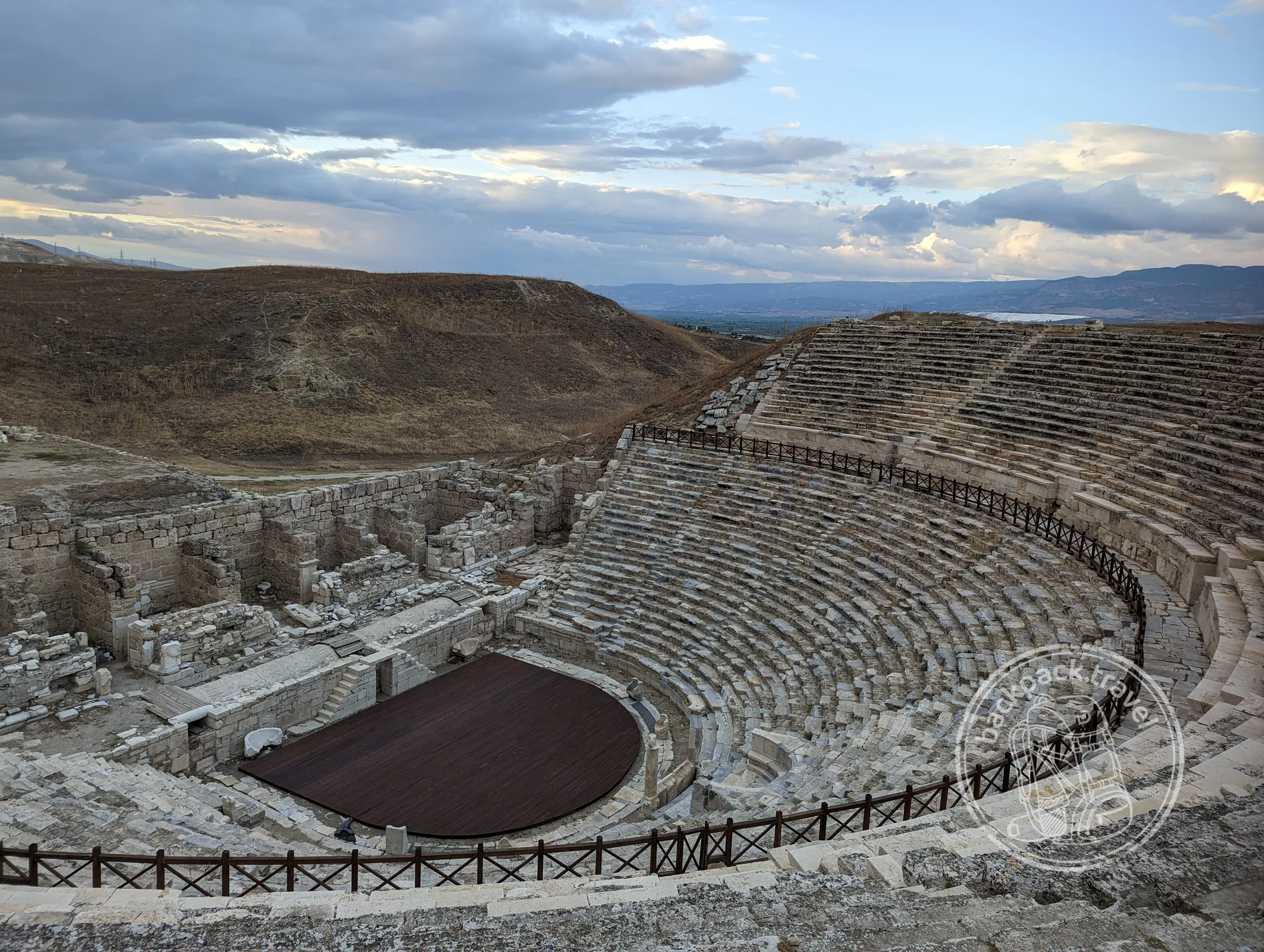
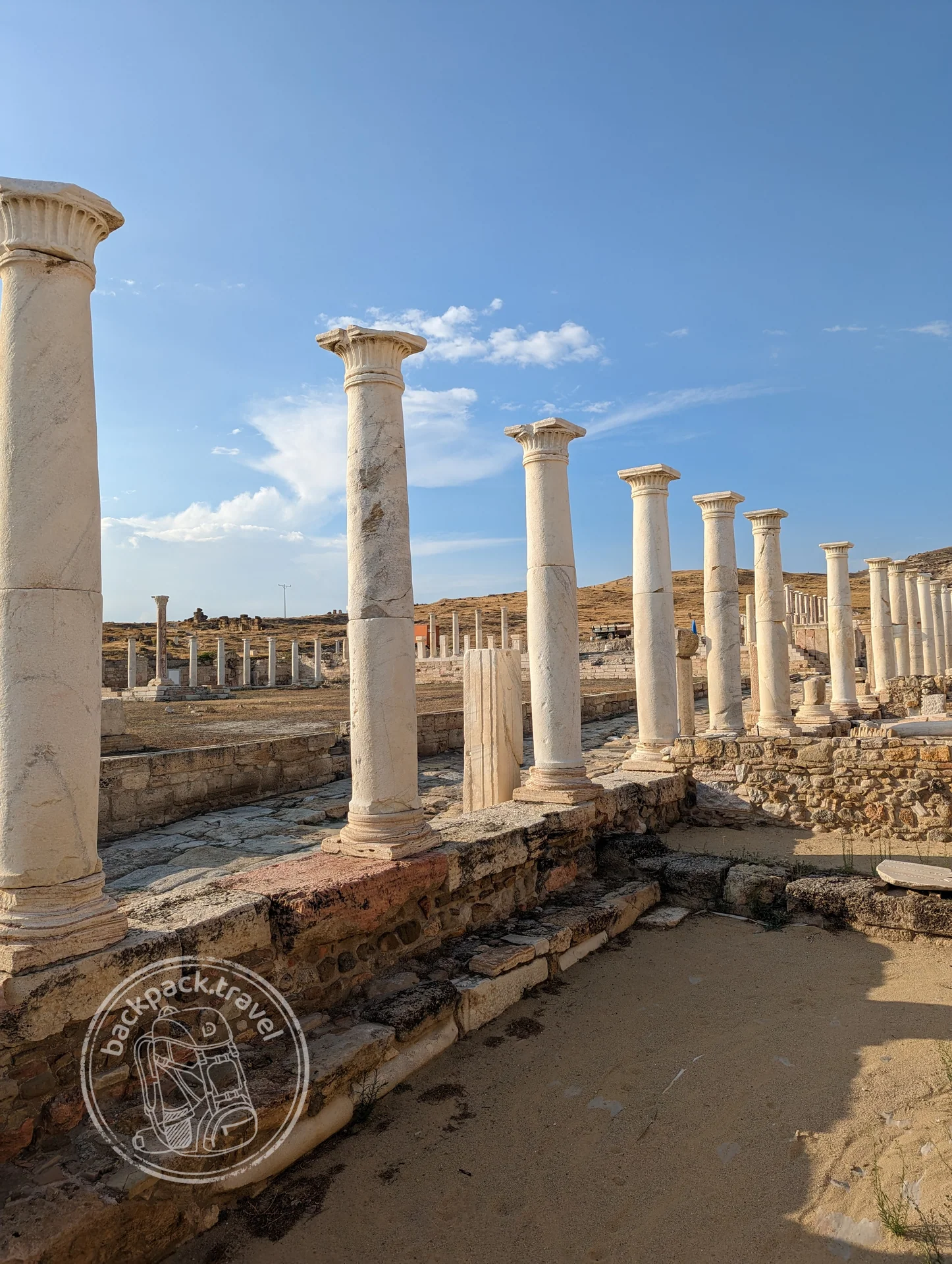
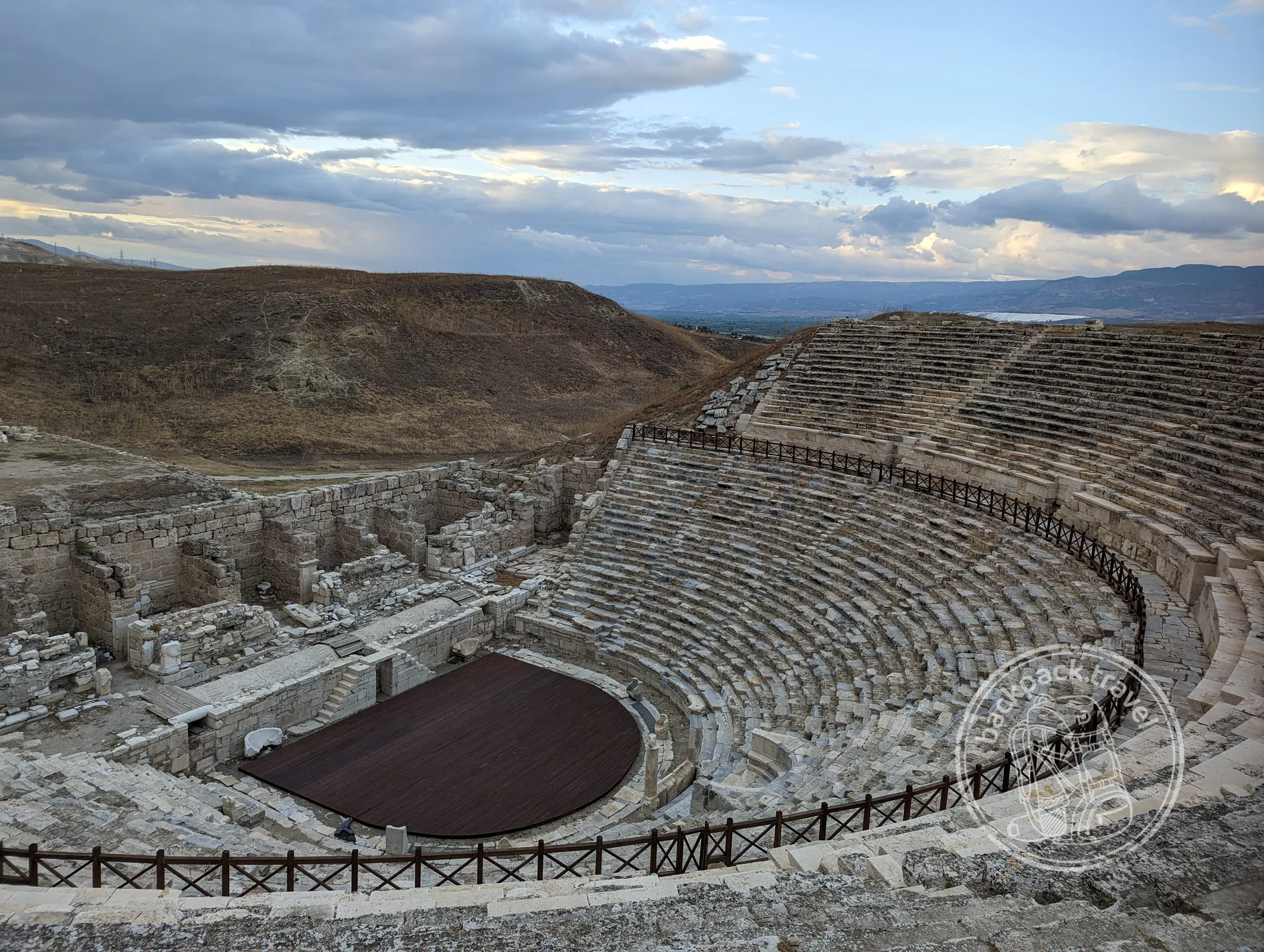
The real reason to come lies around the city. Laodicea starts ten kilometres to the north: a large Hellenistic city on a plateau, founded in the third century BC, with two theatres, a stadium and one of the oldest Christian churches, excavated in 2010. Laodicea is one of the seven churches addressed in the Book of Revelation, and excavation here is going on across a wide front, so the site is open and empty.
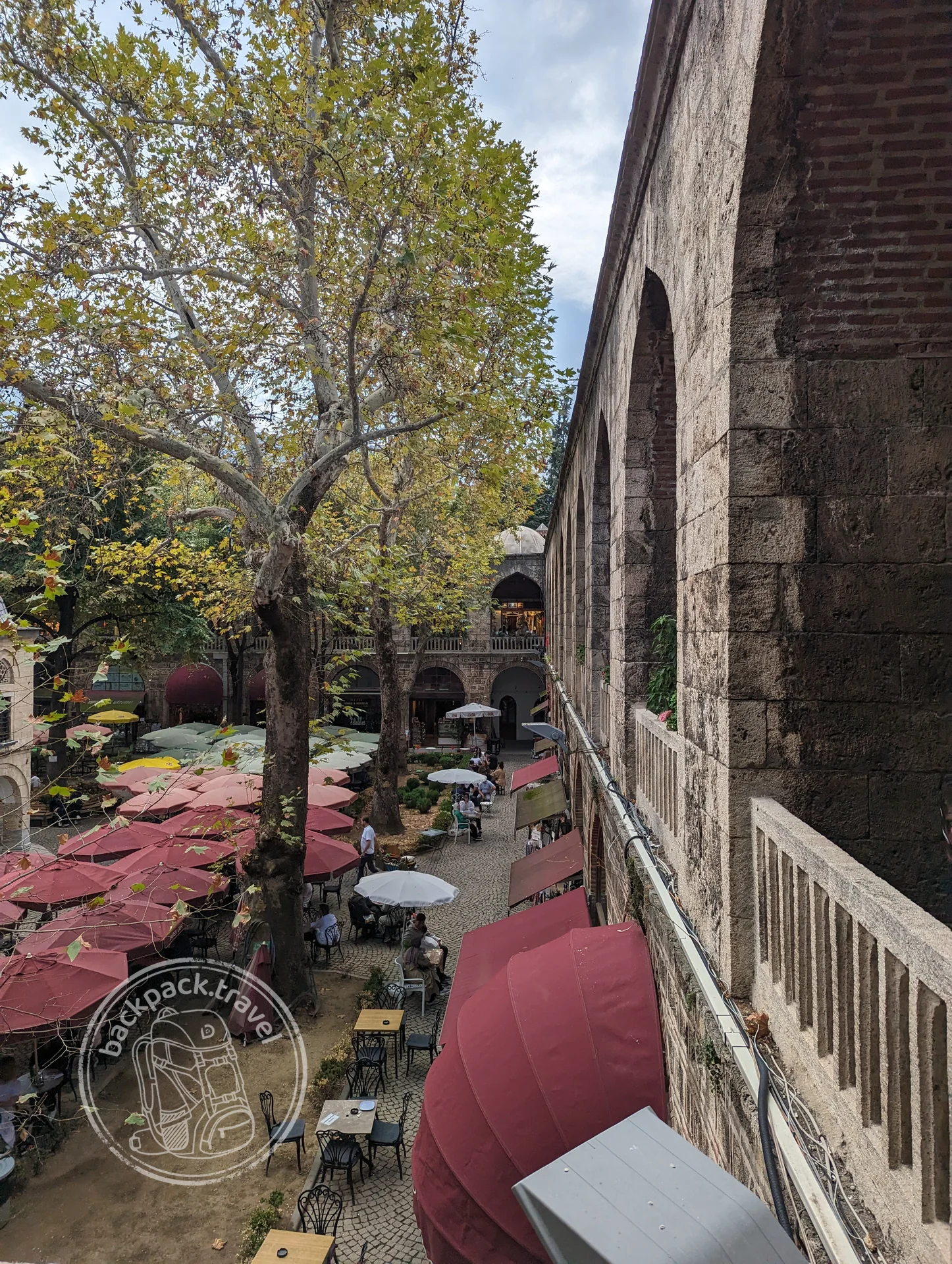
Closer still, a couple of kilometres from the centre, stands Akhan, a Seljuk caravanserai of 1253 in white marble, with a carved portal and an inner courtyard. It is surprisingly well preserved and usually deserted.
Kaklık cave, thirty-five kilometres to the north-east, is known as a small underground Pamukkale: the same limestone formations and warm water, but under a vault.
Getting there and getting around
Çardak airport is sixty-five kilometres east and takes domestic flights from Istanbul and Ankara; buses to the city are timed to arrivals.
Denizli's bus station is large, with services across the country: about four hours from İzmir, the same from Antalya, and an overnight run from Istanbul. The railway connects the city with İzmir, a journey of around five hours arriving at the station in the centre.
A dolmuş leaves for Pamukkale from the bus station every twenty minutes and takes half an hour. City buses operate, but the centre is compact and walkable.
Where to stay
Denizli's hotels are aimed mostly at business travellers: there are plenty around the bus station and in the centre, inexpensive and plain. Staying here makes sense if you have an early bus or train.
Anyone coming for the travertines is better off in Pamukkale itself or in neighbouring Karahayıt, where guesthouses look onto the white slope and the entrance is a walk away. The price difference is small, and it saves an hour in each direction.
Day trips
Pamukkale with Hierapolis is the main destination and needs a full day. Laodicea and Akhan add up to half a day and combine conveniently.
Buldan, forty kilometres away, is a weavers' town where hand looms are still in use, and also a viewpoint over the valley. Tripolis on the Meander lies nearby, recently excavated and with almost no visitors.
Mount Honaz, two and a half thousand metres high, with a national park at its foot, is the option for anyone who wants cool air and forest. On its slope are the remains of Colossae, another New Testament city, though very little of it has been excavated.
When to come
Summers here are dry and hot, above thirty-five degrees in July and August, and walking open ruins at midday becomes an ordeal. Winters are mild, around ten degrees by day, with rain and occasional snow on the peaks.
April, May and the second half of September into October are the best months. In spring the valley is green, and the white of the travertines reads most strongly against it. Autumn brings fewer visitors and soft light towards evening. In the shoulder season, bear in mind that the water in the Pamukkale pools is cool and bathing stops being a pleasure.
Food and money
The local point of pride is Denizli kebab: lamb baked in large pieces in its own juices and served with rice. Neighbouring Tavas makes a börek of the same name, a layered pie with meat.
Otherwise the cooking is standard Aegean-Anatolian: pide, köfte, vegetable meze with olive oil. Villages around the city sell grapes and figs, and dried fruit comes in from Buldan.
Cards are accepted everywhere; cash is useful at markets and on the dolmuş.
What to know
Denizli is a working city, and it is not worth coming for the city itself. It is good as a transport hub: it is a convenient place to lay out a route through the ancient sites of the Lycus valley, and that is its real value.
The region is seismic, and earthquakes have shaped the valley's landscape throughout its history; they also destroyed both Hierapolis and Laodicea. The earthquake of February 2023 struck the opposite, south-eastern edge of the country and did not affect Denizli.
The summer heat here is dry and easier to bear than on the coast, but carrying water is essential: there is no shade at all on the excavation sites.
Updated